On Thursday, the US stock market fell sharply across the board again. US President Trump stated that his postponement of the decision on tariffs for trade with Canada and Mexico under the USMCA agreement was unrelated to stock market trends, and he "didn't even look at the market," because in the long run, the USA will be strong. When asked about the decline in the US stock market, the US Secretary of Commerce downplayed the recent fluctuations and predicted substantial growth in the future, implying that it would eventually soar. Earlier this week, both Trump and the US Treasury Secretary commented on the significant drop in the US stock market, believing that the current decline is acceptable.
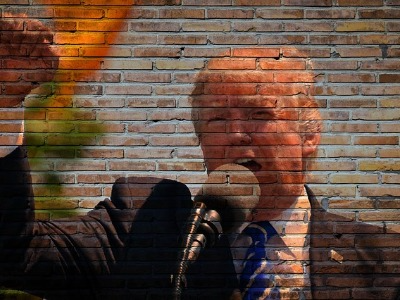
On Thursday, US President Trump spoke to reporters at the White House. He stated that the postponement of the decision on tariffs for trade with Canada and Mexico under the USMCA agreement was unrelated to the trends of the US stock market. Trump said he "didn't even look at the market," because in the long run, the USA will be strong.
When asked about the sell-off in the US stock market, Trump remarked that the behind-the-scenes mastermind of the decline is "globalists." "Those globalists foresee how wealthy our country will become, and they don't want to see such a situation."
 Earlier the same day, US Secretary of Commerce Wilbur Ross stated that the recent fluctuations in the US stock market are not a key factor in determining outcomes; he downplayed the recent decline and predicted substantial growth in the future.
Raimondo was asked during an interview with CNBC about the decline in the US stock market caused by panic over trade conflicts, and she responded:
In fact, whether the stock market is down by 0.5% or 1%, or up by 0.5% or 1%, these fluctuations are not the key factors determining our results. Our results depend on - we want to see an increase in the production capacity of American factories, and we want to see a surge in employment in the USA.
You will see an explosive rise in the stock market, and if it hasn't happened by tomorrow, it's because people have not yet understood that they should bet on Trump. If I were them, I would understand that betting on Trump in the long term is betting on him; he is a winner and will bring victory to the USA.
Raimondo stated that new manufacturing jobs in the USA will be high-paying positions, utilizing Siasun Robot&Automation and AI to reshape employment in American manufacturing.
Lutnik is another senior official from the Trump administration who has commented on the recent decline in the stock market this week. This week, both Trump and the USA Secretary of the Treasury have spoken out about the significant drop in US stocks, believing that the current decline is acceptable.
Trump continues to insist on his aggressive trade policies during a joint session of Congress. He acknowledged that the newly imposed high tariffs would bring "small disruptions," but emphasized that it is worth trying for the benefits promised by his trade policy. "Tariffs are meant to make America prosperous again, and this is happening, and the results will be seen soon. There will be some disruptions, but we can accept this, the impact won't be large."
This Tuesday, the USA Treasury Secretary Bassett stated: "In the medium term, which is our key focus, it is about the ordinary people. Wall Street is performing well, and Wall Street can continue to perform well, but our focus is on small businesses and consumers. We will rebalance the economy." Bassett also believes that the market sell-off is only a temporary phenomenon.
Currently, the S&P 500 Index has been in decline for the third consecutive week, with a cumulative drop of about 3.6% so far this week, lingering near its lowest point since early November last year, ahead of the release of the USA non-farm payroll report. As of Thursday's close, the Nasdaq fell more than 2.6%, entering a technical correction Range, while the Dow Jones Industrial Average declined by 0.99%.
On the same Thursday, Lutnik denied recent media reports, now claiming that the revenue from Trump's tariffs would not be used for the USA sovereign fund.
Since Trump's return to politics, it seems there has been a shift in the focus of his economic policies.
Unlike the frequent boasts about the rise of US stocks during the 1.0 era, this time he rarely mentions the stock market and instead focuses more on lowering long-term Bonds yields.
This change raises questions: has the stock market, once regarded as the touchstone by the Trump administration and even viewed as a 'KPI', lost its priority? Are various uncertain policies shaking market confidence?
Editor/lambor