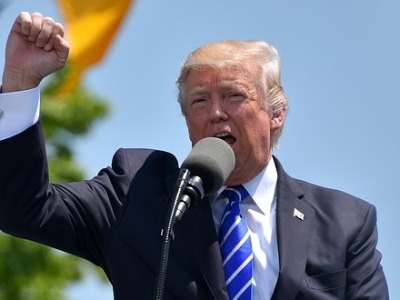
Trump stated that in retaliation for the additional tax imposed on electricity exported to the USA from Ontario, tariffs will be increased on Steel and Aluminum products imported from Canada.
On Tuesday Peking time, President Trump announced that a 25% tariff would be imposed on steel and aluminum products imported from Canada, bringing the total tariff level to 50%, in retaliation for Ontario's additional tax on electricity exported to the USA. "This measure will take effect tomorrow morning (March 12)," Trump wrote on Social Media. This decision doubled the previously planned 25% metal tariff that was set to take effect after midnight.
In addition, he mentioned that Canada spends very little on National Security and primarily relies on USA military protection, with the USA providing over $200 billion in subsidies to Canada each year. To maintain this situation, the only meaningful thing would be to make Canada the 51st state of the USA. This would eliminate all tariffs and everything else completely. Canadian taxes would be significantly reduced, and Canadians would be safer than ever before, both militarily and in other ways, with no more northern border issues, and the greatest and most powerful country in the world would be larger, better, and stronger than ever before—Canada would be an important part of it.
 In response, the Premier of Ontario, Canada stated that Ontario and Canada will not back down until President Trump's tariffs permanently disappear; if necessary, they will not hesitate to cut off the electrical supplies to the USA.
After the news was released, the USD appreciated against the CAD in the short term. The Dow and the S&P 500 Index widened their declines, while stocks related to the United States Steel Industry rose.

Trump also stated that if Canada does not remove tariffs on Dairy Products and other US goods, he would "significantly increase" tariffs on Canadian Auto Parts starting April 2. "This move will 'effectively shut down Canada's automotive manufacturing industry permanently,'" Trump said.
This is the latest escalation in the trade dispute between Trump and Canada. Previously, Trump imposed a 25% tariff on all goods from the northern neighbor but then delayed its implementation by a month. When these tariffs went into effect last week, the President quickly exempted goods covered by the United States-Mexico-Canada Agreement (USMCA), which he negotiated during his first term, within days after the market downturn and strong demands from American Auto Manufacturers.
Canada has taken a series of retaliatory measures against these tariffs, including imposing a 25% surcharge on electricity exported from Ontario to Minnesota, New York, and Michigan. The Canadian federal government also imposed tariffs on US products such as orange juice, Footwear, and motorcycles.
Trump also stated that he would declare a power emergency in the region, promising that this move would allow the USA to "quickly take necessary measures to mitigate this coercion threat posed by Canada." Trump had declared a national Energy emergency on his first day in office to open doors for utilizing special and rarely used subsidies in federal law to push the construction of pipelines, transmission lines, and other projects in new ways.
In the regions of the USA currently receiving electricity from Ontario, the Trump administration can leverage its power to force coal-fired power plants to increase generation, accelerate new power projects, or expedite the construction and approval of Electrical Utilities infrastructure.
Before this latest development, economists had generally predicted that the Bank of Canada would lower the policy interest rate to 2% this year, close to the pre-pandemic low. A Bloomberg survey indicated that the median estimate from 12 economists suggested that by October this year, the central bank would have cut rates by a cumulative 1 percentage point (the current rate is 3%), which is more aggressive than the previously expected terminal rate of 2.25%.
The Bank of Canada is expected to lower rates by another 25 basis points at its meeting this Wednesday. This revised prediction mainly stems from the impact of the Trump administration's tariff strategy—last week, after imposing tariffs on Canadian Commodities, certain exemptions were granted, while starting Wednesday, the USA plans to impose a 25% tariff on Aluminum and Steel imports. In retaliation, Canada has implemented retaliatory tariffs on approximately CAD 30 billion (USD 20.8 billion) worth of American goods, and six out of eight Analysts believe this action is justified.
Surveys show that all economists agree that Trump's trade policy is significantly affecting the accuracy of interest rate predictions for 2025-2026 and impacting Canadian business investment decisions. 60% of respondents suggested that the central bank should lower borrowing costs to the stimulation range to address the stagflation risk posed by trade conflicts; an equal proportion believes that the net effect of trade conflicts will drive up inflation.
Economists unanimously support Bank of Canada Governor Tiff Macklem's assertion to maintain the 2% inflation target unchanged in the upcoming policy framework assessment. 80% of respondents believe the central bank should reassess the "trimmed mean" and "median" core inflation indicators.
Editor/danial