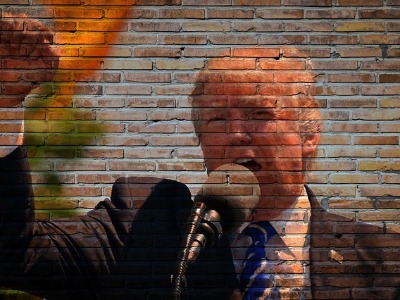
For Trump, the so-called "secondary tariffs" are essentially a hybrid of tariffs and what are known as "secondary sanctions," serving as a reasonable means to replace financial sanctions. Trump himself has stated that he is not inclined to implement financial sanctions. He believes that sanctions may accelerate "de-dollarization," whereas tariffs can be used both as a negotiation tool and as a measure to increase revenue.
By implementing "secondary tariffs" on countries buying Venezuelan oil, the Trump administration has created an unprecedented economic warfare weapon.
According to CCTV news reports, on the 24th local time, U.S. President Trump stated on his social platform "Truth Social" that the USA would impose "secondary tariffs" on Venezuelan oil or gas products, with any country purchasing oil or gas from Venezuela to pay a 25% tariff in trade with the USA. Trump also stated that the related rules would take effect on April 2.
 Analysis suggests that this "secondary tariff" is actually a mixture of tariffs and what are known as "secondary sanctions," the latter referring to financial penalties imposed on other countries or individuals that have business dealings with sanctioned entities. Considering the situation where Venezuelan oil is exported to the USA, Spain, and India, the potential target range for this tariff is quite broad.
"This is a new concept of economic warfare," said Francisco Monaldi, director of Latin American Energy Policy at the Baker Institute for Public Policy at Rice University, "How it will be executed is still unclear."
Experts indicate that for Trump, "secondary tariffs" are a reasonable means to replace financial sanctions. Trump himself has expressed reluctance to implement financial sanctions, believing that sanctions could accelerate "de-dollarization, killing the dollar and everything it represents." Tariffs can serve both as negotiation tools and as measures to increase revenue.
Regarding the objectives of the Trump administration's use of tariffs, Treasury Secretary Mnuchin has provided systematic explanations. In his view, Trump’s use of tariffs falls into three categories: a tool for gaining leverage in negotiations, a revenue-generating measure to offset the costs of extending the 2017 tax cuts, and a way to rebalance trade in favor of the USA.
So far, Trump's use of tariffs has been quite generalized. Earlier this year, Trump threatened Colombia with sanctions, tariffs, visa restrictions, and a series of other punitive measures if the country refused to accept deported immigrants. The Colombian government quickly made concessions due to concerns about a costly trade war with the USA.
Editor/Rocky