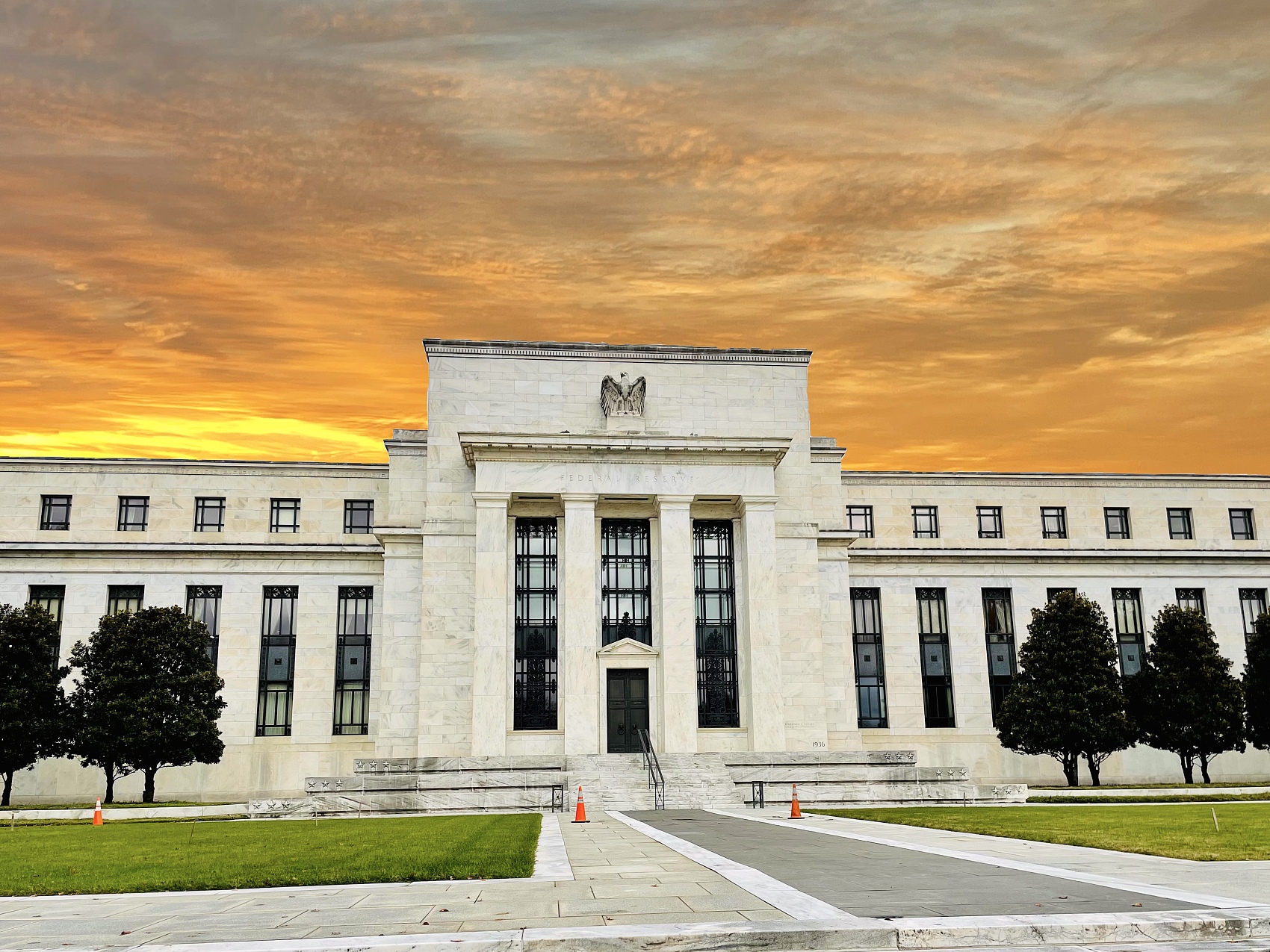
The Federal Reserve, which once profited from "printing money," is now mired in trillions of dollars in losses! The interest expenses in a high-interest environment make it difficult to see profits throughout 2025.
According to a report released by the New York Federal Reserve on Tuesday, the Federal Reserve experienced over $1 trillion in unrealized losses on assets it held last year.
The Federal Reserve stated in its annual report on the System Open Market Account (SOMA, a large amount of cash and securities held by the Federal Reserve) that the unrealized loss of $1.06 trillion in 2024 was "slightly higher" than the $948.4 billion loss in 2023.
 The report pointed out that the losses primarily stemmed from the "comprehensive rise in market interest rates across the yield curve," although the Federal Reserve's move to reduce its Bonds portfolio partially offset this impact.
The report specifically noted that these book losses reflect the difference between the book value of the securities held and their market price. Since the Federal Reserve adopts a Hold to maturity strategy, these unrealized losses neither affect monetary policy operations nor pose a substantial issue. The report anticipates that this unrealized loss situation may persist for several years.
In recent years, the Federal Reserve's balance sheet has experienced astonishing expansion—during the implementation of market stabilization and stimulus measures to respond to the COVID-19 pandemic, its size peaked at $9 trillion in 2022, more than doubling compared to pre-pandemic levels. After ongoing balance sheet reduction, the current size of the balance sheet has fallen to $6.7 trillion.
Based on current expectations of market participants, the report predicts that the Federal Reserve's Hold Positions will stabilize around $6.2 trillion by January 2026. The report noted that the final landing point remains uncertain and will depend on the demand for reserves, which is not yet clear.
The New York Federal Reserve stated that net income is likely to be negative for most of 2025.
The latest forecast from the New York Federal Reserve shows that SOMA's net income may be negative overall in 2025, with recovery to positive values not expected until 2026.
In a report released on Tuesday, the New York Federal Reserve stated: "According to calculations, SOMA's net income will remain negative for most of 2025 due to interest expenses on reserve balances, some other deposit interest expenses, and costs of reverse repurchase agreements consistently exceeding investment income."
The report noted that net income is expected to turn positive by the end of 2025, primarily due to two factors: reduced interest expenses brought about by declining short-term interest rates and increased interest income from high-yield securities obtained through reinvestment.
After consecutive interest rate cuts at the end of 2024, the Federal Reserve has maintained its benchmark interest rate at a target range of 4.25%-4.5% throughout this year. In the face of rising inflation and employment risks brought on by Trump's comprehensive tariff policies, decision-makers have taken a cautious stance regarding further policy adjustments in the short term.
The current high interest rate levels mean that the interest expenses the Federal Reserve pays on its liabilities (including reserves held by commercial banks and funds from overnight reverse repurchase agreements) have exceeded the returns from its Bonds portfolio.
Since quickly raising interest rates at the end of 2022 to combat the strongest inflation in forty years, the Federal Reserve has been in an operational loss state. Alongside these losses, the Federal Reserve is also facing pressure from other expenditures, including costs related to several renovation projects in buildings that have drawn the attention of Musk and the Department of Government Efficiency (DOGE). In May of this year, the Federal Reserve announced plans to reduce its total workforce by about 10%, primarily through natural attrition.
Editor/joryn