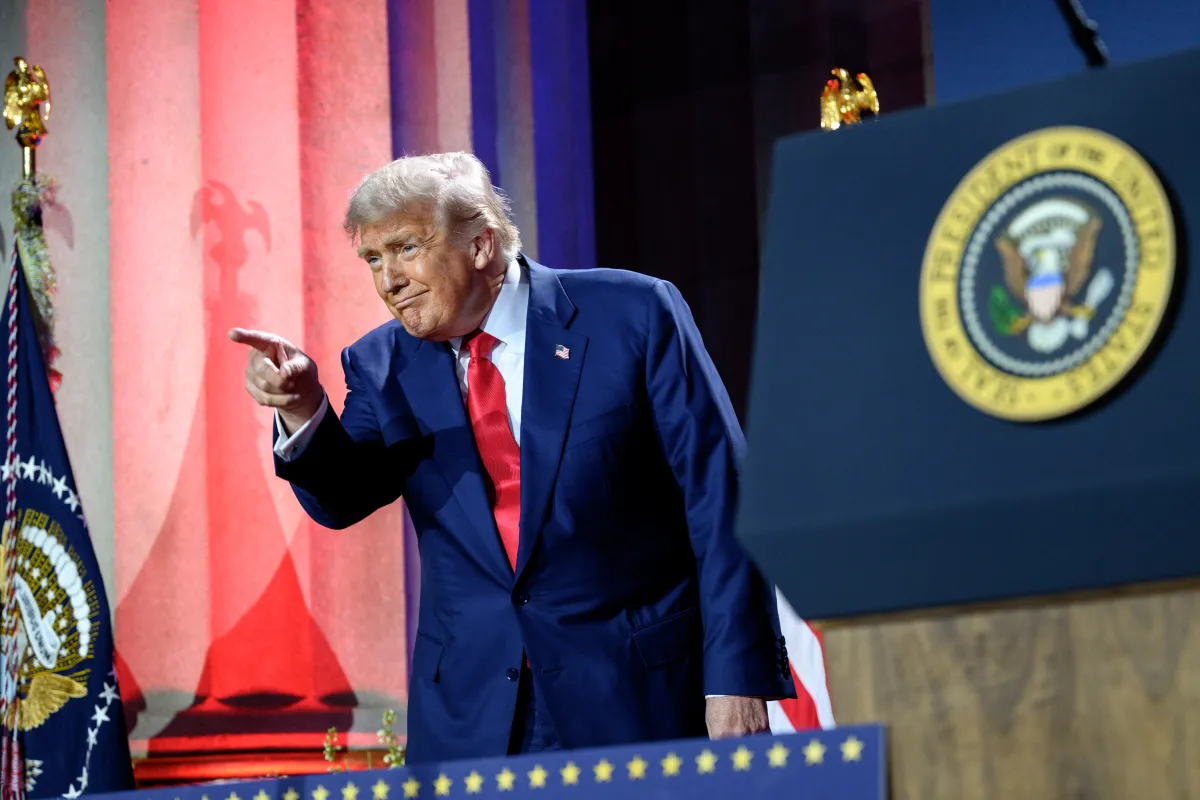
Although U.S. presidents have visited the Supreme Court for events such as the swearing-in ceremonies of justices, their presence during oral arguments is extremely rare. External analysis suggests that this ruling could determine the fate of tariffs—a cornerstone of Trump's economic agenda. If Trump loses the case, the average effective tariff rate in the United States may drop from 16.3% to at least half, and he might be compelled to refund tens of billions of dollars in taxes. Additionally, this could potentially overturn preliminary trade agreements reached between Trump and certain countries.
U.S. President Trump stated that he might personally attend the oral arguments at the Supreme Court regarding the legality of tariffs, underscoring the critical importance of this case to his tariff policy.
On Wednesday local time, Trump said at the White House that he might attend the oral arguments on the tariff case to be held at the U.S. Supreme Court on November 5:
I think I will go to the Supreme Court to watch the arguments. I haven’t done this before, although I have had some fairly significant cases. I believe this is one of the most important cases in history.
If we do not win this case, we will be in a weakened, troubled state of financial chaos for many years to come.
According to reports by Xinhua News Agency, the U.S. Federal Supreme Court previously announced that it would expedite the review of the legality of most tariffs imposed by the Trump administration and hear oral arguments on November 5. The tariffs under litigation include the 10% 'baseline tariff' imposed globally by Trump citing the 1977 International Emergency Economic Powers Act, higher tariffs levied on trading partners who have not reached trade agreements with the U.S., and the so-called 'fentanyl tariff.'
This will be the first time the Supreme Court rules on the legality of a major policy by Trump after his return to the White House, potentially determining the fate of tariffs, a 'cornerstone' of Trump’s economic agenda.
If Trump loses the case, the average effective U.S. tariff rate may drop from 16.3% to at least half, and the U.S. could be compelled to refund tens of billions of dollars in tax revenue, while preliminary trade agreements reached between Trump and certain countries might also be overturned.
Although the president has previously visited the Supreme Court for events such as the swearing-in ceremonies of justices, attending during oral arguments is extremely rare. Trump had expressed plans to visit the Supreme Court when the justices were deliberating on whether he was entitled to criminal prosecution immunity as president, but ultimately opted to hold a press conference at his Mar-a-Lago estate.
The key point of contention now lies in the Trump administration's claim that its current tariff policy is authorized under the 1977 International Emergency Economic Powers Act, which grants the president a range of tools to address national security, foreign policy, and economic emergencies.
On May 28 this year, a three-judge panel of the U.S. Court of International Trade in New York ruled in favor of small business owners and 12 U.S. states that Trump did not have the authority to invoke the International Emergency Economic Powers Act to impose the aforementioned tariffs. The U.S. Court of Appeals for the Federal Circuit subsequently heard the appeal filed by the Trump administration and, on August 29, upheld the original ruling with a 7-4 vote. The Trump administration then appealed to the U.S. Supreme Court.
U.S. Treasury Secretary Bessent and other officials have repeatedly emphasized that if the Supreme Court rules against the government, by June next year, the Trump administration may need to refund tariff payments estimated to reach up to $1 trillion, which would be catastrophic. An unfavorable ruling would also impact trade agreements already reached by the Trump administration and ongoing trade negotiations.
Editor/Rocky