
Source: Qile Club
Summary:
The English edition of Principles was published on September 19, 2017, and became a bestseller as soon as it hit the market.
 The author, Ray Dalio, is the founder of Bridgewater, the world's largest hedge fund company. His influence is immense—Dalio is not only wealthy but also intellectually profound.
Dalio is a firm believer in principles. The principles outlined in this book are the result of his years of practice, which he not only applies himself but also mandates that all employees at Bridgewater strictly adhere to and implement.
Dalio uses this set of principles to 'indoctrinate' his employees, making Bridgewater a company effectively 'armed' with his ideology… to the extent that some on Wall Street have described Bridgewater as a 'cult organization'!
Of course, the term 'cult' is an exaggeration. However, it is true that Dalio enjoys distilling, sharing, and promoting ideas, and others take him seriously. He previously made these principles available online, and they have been downloaded by three million people.
Dalio believes that the most worthwhile endeavor in life is the process of 'failing, learning, and improving.' Making a contribution to evolution is the greatest achievement one can attain in life, as well as the highest reward life can offer.
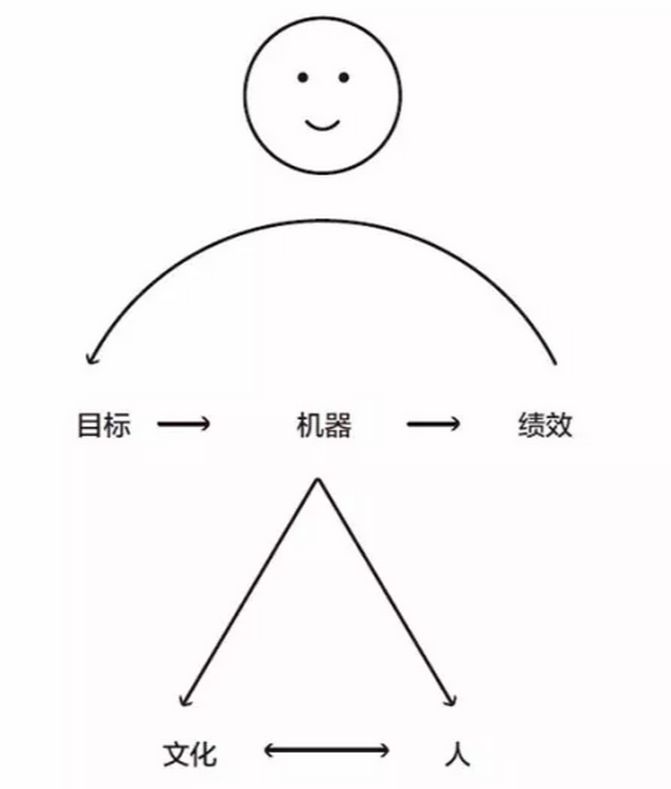
You should think of the methods used to achieve your goals as a machine. This machine consists of:
Your plan, meaning what must be done;
People, including those who can assist you, as well as yourself.
Compare the results you achieve with your goals. If you are not satisfied, continuously fine-tune this machine, including yourself, since you are also a part of this machine.
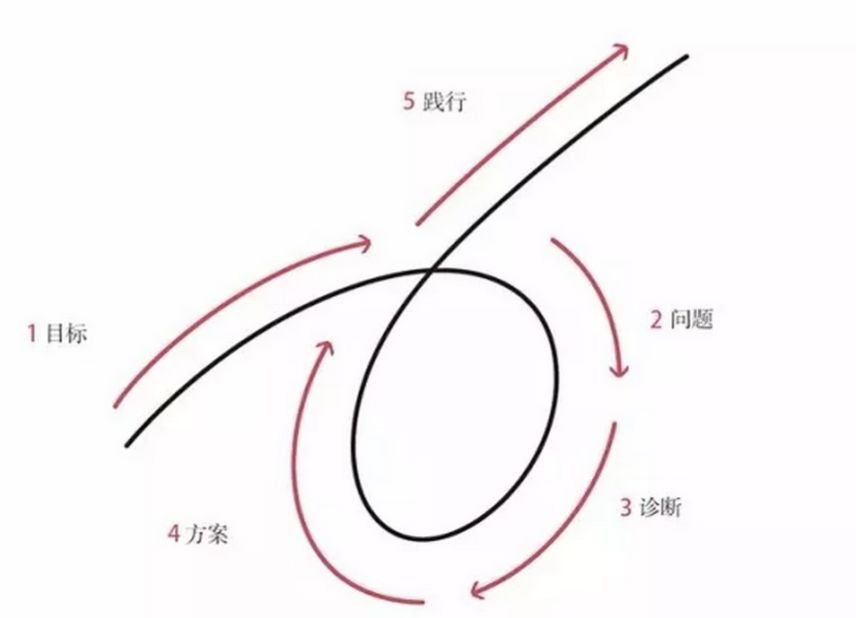
To put it another way, the entire process of how you work can be divided into five steps:
1. Set clear goals.
2. Identify the problems that are preventing you from achieving these goals, and do not tolerate such issues.
3. Accurately diagnose the problems to uncover their root causes.
4. Develop a plan that can resolve the problems.
5. Do everything necessary to implement these plans and achieve results.
Once these steps are laid out, at first glance, they may seem overly simplistic, as if there is nothing particularly remarkable about them. I share this sentiment because these steps are a natural result of logical reasoning. If you want to accomplish tasks effectively, this is undoubtedly what needs to be done.
However, the devil is in the details! If you conduct an in-depth analysis of each step, you will find that this system differs significantly from what most people typically do.
My impression is that Dalio’s principles implicitly carry on a noble tradition of Western elites, which involves continuously reflecting on one's weaknesses to overcome oneself—not conquering the world, but conquering yourself.
To truly adhere to these principles, you need to possess at least two key qualities.
The first is flexibility, which means you must accept reality and not act on subjective impulses.
In the opening statement of my 'Elite Daily Lesson,' I mentioned that the real world isn't necessarily as wonderful as we might imagine. Truly confronting reality is incredibly difficult.
Secondly, you must take full responsibility for the outcomes of every decision you make.
Ordinary people tend to complain when things go wrong, blaming either unfair treatment by others or bad luck. However, you must bear all consequences yourself. Remember, even in the worst of luck, there is always the possibility of making better choices.
The main reason why people fail to execute such a simple process is their constant attachment to subjective preferences. Today, let us focus on what it truly means to 'face reality'—in Dalio's words, you need to be extremely open-minded.
II. How to Set Goals
Goals are not simply about 'what you want.' The reality is that you may desire too much, but it’s impossible to obtain everything. A person who faces reality must distinguish between goals and desires.
I want to read novels all day, eat more delicious food, write beautiful articles, and also lose weight successfully—but I know these desires cannot all be satisfied.
Therefore, you must prioritize your wants. A goal is something you are willing to give up other things for and ultimately strive to achieve. Your values determine your goals.
Let us analyze values. When you only think about yourself, you feel like you are everything; if you die, nothing else matters, so you must be the most important thing under the heavens. However, when you consider yourself within the universe, you realize how insignificant you are. We have discussed astrophysics before, and considering the vastness of the universe, even Earth itself is negligible.
So you are both exceptionally large and exceptionally small. How should we find our place? Dalio says the key lies in how you are 'connected' to the 'whole' world.
Perhaps what you value most is your connection with your family, or you might say you belong to a company or a country, or you can choose to connect with a certain field of knowledge... All these connections define your worth. This is what we often refer to as 'something bigger than yourself': you need to decide which connections are most important to you, as life will continuously present you with choices.
Neil deGrasse Tyson said: 'I face the universe every day, but I don't feel insignificant. I feel 'connected' to the universe, and it makes me feel freer.' They were expressing the same idea!
III. Facing Yourself
Everyone talks about facing the true self, but very few actually achieve it. What we need is not empty slogans like 'I want to be strong' or 'I want to be confident,' but 'humility'.
'Humility'—in English, humility and humble—is absolutely a good word. I admire those who dare to describe themselves as 'humble.' It's not false modesty; Dalio says that humility can help you overcome two cognitive barriers.
The first barrier is the 'ego'.
We don't use this term much, and when we do, it usually carries a negative connotation, referring to an overvalued sense of self.
As we have mentioned multiple times, debates frequently occur within the human brain. One side of the debate consists of various emotions, primarily governed by the amygdala region of the brain, which operates largely at the subconscious level.
For instance, feeling upset when criticized or being afraid of making mistakes while speaking are all instinctual reactions, products of hundreds of thousands of years of evolution, and fundamentally tied to our animalistic nature.
The other school of thought is rationality, primarily governed by the prefrontal cortex of the brain. Rationality is one of the most important qualities that distinguishes humans from animals. Our rational thinking is conscious.
If you truly seek the truth, rational thinking should take precedence. Conversely, if you merely wish to appear correct, emotional thinking dominates, and you are held hostage by your amygdala.
The ego is an intensely emotional construct that builds a psychological defense mechanism for you. Because you dislike the feeling of being wrong, your instinctive reaction is to always try to forcefully refute others; when criticized, you become angry. Afraid of complexity, you tend to oversimplify problems. Your starting point is not to face reality but rather 'me, me, me, me, me,' which is the obstacle the ego presents.
The second obstacle is blind spots.
Different people view issues from very distinct perspectives. Some prefer to see the big picture, while others focus on details. Some have linear thinking and cannot adapt, while others engage in lateral thinking and tend to overanalyze.
After decades of work, Dalio’s significant life insight is that people differ greatly from one another. What others see might be something you haven't even considered.
When these two obstacles are combined, the common result is that you form a judgment based on your limited perspective and then begin to rigidly cling to it, disregarding anything else others may say.
Thus, Dalio says that the greatest weakness of individuals is acting subjectively. The ability to step beyond the limitations of the self and examine one's weaknesses from a higher level is the mark of a true expert.
While most advocate for 'having an open mind,' Dalio goes further, advocating for 'radical open-mindedness.'
IV. Radical Listening to Opinions
In the past, when we listened to historical stories, if an emperor was willing to humbly accept advice and did not get angry when criticized by loyal ministers, he was considered a good emperor. An extremely open mind does not merely mean that I do not get upset when others offer suggestions, but rather that I feel uneasy when others do not offer any.
This is not a passive but an active openness. You must always worry about not seeing the full picture; always doubt whether you have missed better options; before making significant decisions, you must try every means to gather all relevant information... This mindset is what constitutes an extremely open mind.
Therefore, I have always believed that the phrase from 'The Doctrine of the Mean,' 'Be cautious even where you are unseen, and fearful even where you are unheard,' does not refer to the idea of 'practicing self-discipline when alone' (as interpreted by some), meaning one should be careful and avoid wrongdoing when alone. Instead, it means constantly worrying about what you might not know and proactively seeking knowledge.
At this point, we still need to introduce an English word: 'synthesize.' This term roughly translates to 'integrate,' though it carries a nuance less commonly used in everyday language. Integration implies actively researching all relevant knowledge and then forming your own comprehensive judgment.
You may have read a classic book titled 'How to Read a Book,' which mentions that the highest level of reading is this integrative skill. This is fully active reading, where you gather various related books and read them together.
Whenever Dalio discusses decision-making in his book, the term 'integration' appears multiple times. If you are interested in a particular issue, you don’t simply read one book or listen to one expert and jump to conclusions. Instead, you must thoroughly examine various opinions.
However, listening to opinions does not mean accepting everyone’s views indiscriminately. Dalio has two criteria.
First, the person must be 'credible.'
A hard measure of credibility is that the person must have at least three successful experiences in the relevant field.
Second, the person must be skilled at retaining opinions that differ from others.
When ordinary people debate issues, they often fall into two common pitfalls: one is becoming embroiled in arguments for the sake of saving face and deliberately opposing others; the other is agreeing with others just to preserve their dignity. Both scenarios are essentially emotional disputes. Those who seek truth cannot afford to engage in such debates.
Let’s take an example from Dalio himself. A few years ago, during a routine medical check-up, doctors discovered an abnormality in Dalio's esophagus. The doctor explained that this condition could potentially lead to cancer, and esophageal cancer is considered incurable... effectively implying that Dalio might not have much time left. Though deeply shocked, Dalio remained relatively calm.
Five
He then proceeded to synthesize the information.
This doctor was from Johns Hopkins Hospital, already one of the top hospitals in the United States. However, Dalio sought a second opinion from another highly regarded hospital and received a completely different diagnosis. That doctor stated the condition was treatable but would require major surgery to remove a significant portion of the stomach and esophagus, with a success rate of 90%.
Upon hearing such contrasting opinions from the two doctors, Dalio decided to arrange a three-way meeting so they could discuss it together.
During the meeting, he observed an interesting dynamic: one doctor advocated for conservative management while the other pushed for aggressive surgery. Despite their differences, both maintained professional decorum, exchanging views thoroughly in search of consensus, yet ultimately retained their respective positions. The issue remained unresolved, but Dalio gained a deeper understanding of his condition.
Dalio then consulted a third expert. This doctor opined that the condition was easily treatable—requiring only periodic checks every three months and the removal of any newly formed abnormal tissue using a minimally invasive procedure, achieving results equivalent to major surgery.
For good measure, Dalio consulted two more doctors, both of whom largely agreed with the third doctor’s view. They recommended starting with a biopsy to determine whether cancer was truly present.
Having synthesized all the opinions to this extent, Dalio felt more confident about the path forward. Now, with three experts aligned on a similar approach, which also carried the least risk, he had clarity on the best course of action.
Upon conducting a biopsy, it was found that there were no lesions in Dalio's esophagus—entirely a false alarm.
Isn't the lesson from this incident profound? These world-class experts held such differing opinions on the same issue. Before making critical decisions, we must indeed 'be cautious of what we do not see and fearful of what we do not hear'!
From this, we derive the following:
1. You must know what you truly want.
2. You need to be fully aware of your weaknesses.
3. You must face reality with radical openness.
We have introduced two terms from the English-speaking world: 'ego' and 'synthesis.' The next time someone is stubborn in their opinion, you can ask if they have an excessively large ego and need to learn synthesis.
AI Portfolio Strategist!One-click insight into holdings,Fully grasp opportunities and risks.

Editor/jayden