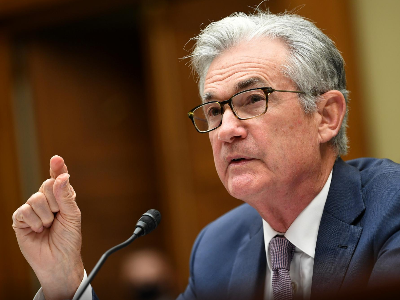
Summary of Key Points from Powell's Press Conference on December 10:
1. Monetary Policy: It is not considered a baseline assumption for anyone that the next move will be a rate hike. The current level of interest rates allows the Federal Reserve to be patient and observe how the economy evolves.
2. Labor Market: Household employment data needs to be assessed cautiously. If adjustments are made to the overestimated portions of the employment data, job growth since April may have turned slightly negative. The labor market continues to cool gradually, though perhaps more moderately than previously expected. Unreported data could lead to distortions. Technical factors might skew CPI and household employment data. The unemployment rate is expected to rise by only one or two tenths. There is no dispute that employment growth has been overstated. Artificial intelligence (AI) could be one of the reasons for sluggish employment, but its impact is not significant.
 3. Inflation: Progress has been made in non-tariff-related inflation areas in the U.S., and the impact of tariffs is expected to gradually fade next year. If the U.S. does not impose new tariffs, goods inflation may peak in the first quarter of 2026.
4. U.S. Government Shutdown in October-November: Growth expectations for 2026 have been revised upward to some extent, reflecting the end of the government shutdown during October-November.
5. Personal Future: No new plans after the term as Fed Chair ends.
On Wednesday, December 10, Eastern Time, following the Federal Open Market Committee (FOMC) meeting, the Federal Reserve announced that the target range for the federal funds rate was lowered from 3.75%-4.00% to 3.50%-3.75%, while initiating purchases of short-term U.S. Treasuries. In the press conference afterward, Fed Chair Powell stated that currently available data suggests the economic outlook remains unchanged, and Treasury purchases are expected to remain at higher levels in the coming months.
In his opening remarks at the press conference, Powell noted that although some key federal government data from the past one to two months have yet to be released, existing public and private sector data indicate that since the October meeting, there has been no significant change in the employment and inflation outlook in the U.S., with economic activity continuing to expand at a moderate pace. The labor market appears to be cooling gradually, while inflation remains slightly elevated. Consumer spending looks solid, and business fixed investment continues to grow.
He said that by comparison, activity in the real estate sector remains weak. The temporary government shutdown likely weighed on economic activity this quarter, but as the government resumes operations, these effects are expected to be largely offset by stronger growth in the next quarter.
In the Fed’s Summary of Economic Projections, the median forecast among participants showed real GDP growth expected to be 1.7% this year and 2.3% next year, slightly higher than the September projection.
Regarding the labor market, Powell stated that although the official employment data for October and November have not yet been released, existing evidence suggests that both layoffs and hiring activities remain at relatively low levels. At the same time, households’ perceptions of job opportunities and businesses’ assessments of hiring difficulties continue to decline. The unemployment rate has risen slightly to 4.4%, while employment growth has noticeably slowed compared to earlier this year. Additionally, the Federal Reserve no longer uses the phrase 'the unemployment rate remains low' in its statement.
This slowdown is largely due to slower growth in labor supply, including reduced immigration and changes in labor force participation. However, at the same time, labor demand itself has indeed weakened somewhat.
In such a less active and weakening labor market, downside risks to employment have increased in recent months. The Committee expects the unemployment rate to be around 4.5% by the end of the year, with a slight decline thereafter.
During the subsequent Q&A session, Powell noted that after adjusting for overestimation in the employment data, employment growth since April may have turned slightly negative.
“I think it’s fair to say that the labor market continues to gradually cool, albeit perhaps slightly more moderately than we previously anticipated.”
On inflation, Powell stated that inflation has significantly declined from its mid-2022 peak but remains slightly above the Federal Reserve's long-term 2% target. He mentioned that few inflation data points have been released since the October meeting. Over the 12 months ending in September, the overall Personal Consumption Expenditures (PCE) price index rose by 2.8%; core PCE inflation, excluding food and energy, also stood at 2.8%.
These readings are higher than earlier this year, primarily due to a rebound in goods inflation, reflecting the impact of tariffs.
He noted that by contrast, the downward trend in services inflation appears to be continuing. Short-term inflation expectations have receded from their earlier highs this year, as reflected in both market indicators and survey data; most measures of long-term inflation expectations remain aligned with the Federal Reserve's 2% inflation target.
In the Summary of Economic Projections, the median forecast by Federal Reserve officials for overall PCE inflation is 2.9% this year and 2.4% next year, slightly below the September projections. Thereafter, the median inflation rate is expected to return to 2%.
Powell stated that currently, inflation risks are tilted upward, while employment risks are tilted downward, presenting a challenging scenario.
In addressing the tension between employment and inflation objectives, there is no risk-free policy path.
A reasonable baseline assessment is that the impact of tariffs on inflation will be relatively short-lived, essentially representing a one-time upward shift in price levels.
Our responsibility is to ensure that this one-time price increase does not evolve into a sustained inflation problem. However, downside risks to employment have risen in recent months, and the overall balance of risks has shifted.
Our policy framework requires balancing the two aspects of our dual mandate. Therefore, we believe it is appropriate to lower the policy rate by 25 basis points at this meeting.
With today’s rate cut, the Federal Reserve has cumulatively reduced the policy rate by 75 basis points over the past three meetings. Powell stated that this will help guide inflation back to 2% gradually after the effects of tariffs dissipate.
He noted that adjustments made to the policy stance since September have brought the policy rate within the range of various estimates of the “neutral rate.”the Federal Open Market CommitteeThe median projection among members indicates that the appropriate level for the federal funds rate will be 3.4% by the end of 2026 and 3.1% by the end of 2027, unchanged from the September forecast.
Due to stalled progress in bringing down inflation, Fed officials had signaled ahead of this week’s decision that further rate cuts may require evidence of a weakening labor market. Powell stated during the press conference:
“Our current position allows us to be patient and observe how the economy evolves going forward.”
Launch U.S. Treasury bond purchases
Powell stated that, as an independent decision, the Federal Reserve has also decided to initiate the purchase of short-term U.S. Treasury securities, with the sole aim of maintaining an ample supply of reserves over the longer term to ensure the Fed can effectively control policy rates. He emphasized that these issues are separate from the stance of monetary policy itself and do not represent a change in policy direction.
He noted that, given the persistent rise in money market rates relative to the Fed’s administered rates, along with other indicators of reserve conditions, the Committee believes that the level of reserves will decline to 'ample levels.'
Therefore, increasing our holdings of securities will help ensure that the federal funds rate remains within the target range. This is necessary because, as the economy grows, public demand for cash and reserves will also increase.
Powell stated that, according to the announcement by the New York Fed, the initial scale of asset purchases will reach $40 billion in the first month and may remain at elevated levels in the following months to alleviate anticipated short-term money market pressures. Afterward, the purchase scale is expected to decline, with the pace depending on market conditions.
Under our operating framework, 'ample reserves' means that the federal funds rate and other short-term rates are primarily controlled through our administered rates rather than relying on daily money market operations.
He explained that, under this mechanism, the standing repo facility is crucial for ensuring that the federal funds rate remains stable within the target range during periods of heightened money market stress. With this in mind, the Committee reassessed and adjusted the cap on repo operations to support the implementation of monetary policy and smooth market functioning, and these tools will be utilized when economic conditions warrant.
Below is a transcript of the Q&A session from the press conference:
Q1: The statement today included the phrase 'when considering the extent and timing of further adjustments.' Does this imply that the Fed will now remain on hold until clearer signals emerge from employment data or the economy evolving along the baseline scenario? Considering the upward revision in GDP growth, inflation levels, and relatively stable unemployment rates, this appears to form a fairly consistent economic outlook for next year. How was this outlook formed? Is it related to the early development of artificial intelligence and improvements in productivity? What are the main driving factors?
Powell: Yes. The adjustments since September have brought our policy rate into a fairly broad estimated range of the 'neutral rate.' As we mentioned in today’s statement, whether and how to make further adjustments will depend on our observations of the latest data and our assessment of the balance of risks to employment and inflation.
The new language emphasizes that we will carefully evaluate incoming data. I would also like to point out that, since September, we have cumulatively cut rates by 75 basis points, and since last September, by 175 basis points. The federal funds rate is now within a broad estimated range of the neutral rate, which provides us with good conditions to exercise patience and wait to see how the economy evolves further.
There are multiple factors driving the changes in forecast results. If you look beyond the Federal Reserve’s forecasts, you can see that many other forecasting institutions have also revised their growth expectations upward. On one hand, consumer spending remains resilient; on the other hand, the construction of data centers related to artificial intelligence (AI) and AI investment are supporting corporate fixed asset investment.
Overall, whether within the Fed or among external forecasts, the baseline expectation for next year is a recovery from the current relatively low 1.7% growth. As I mentioned earlier, the September Summary of Economic Projections (SEP) forecasted 1.2% growth for this year, which has now been revised to 1.7%, with a projection of 2.3% for next year. Part of this change is related to the government shutdown, which could shift approximately 0.2 percentage points from this year to next year. Thus, it could be interpreted as roughly 1.9% for this year and 2.1% for next year.
In general, fiscal policy will continue to provide support, AI-related expenditures are expected to persist, and consumers are still continuing to spend. Therefore, from a baseline scenario perspective, next year’s economic growth appears to be on track for steady performance.
Q2: You previously described this round of rate cuts using a “risk management framework.” Are we now in a phase of rate cuts based on risk management? In other words, has the Federal Reserve already “bought enough insurance” ahead of potentially weak or volatile employment data that may be released next week? You’ve significantly raised your growth forecasts, but the decline in employment figures has been relatively modest. That is, growth is higher, but employment hasn’t weakened significantly?
Powell: Before the January meeting, we will receive a substantial amount of new data, and I believe we will further discuss these issues at that time. All of this data will be factored into our policy considerations.
However, yes, looking back at the situation: We maintained the policy rate at 5.4% for more than a year because inflation was very high, extremely high, while unemployment and labor market conditions were quite robust. Subsequently, in the summer of 2024, inflation began to decline, and the labor market gradually started showing real signs of weakness.
Therefore, according to our policy framework, when the risks to our dual mandate become more balanced, we should transition from a previous focus primarily on addressing one objective—in this case, inflation—toward a more balanced and neutral policy stance.
This is precisely what we did. We first implemented several rate cuts, then paused for a period to observe the evolution of economic conditions mid-year, and resumed rate cuts in October, cumulatively lowering rates by 175 basis points. As I just mentioned, we believe our current position allows us to observe how the economy will develop with relative ease.
The implication behind “higher growth without significant weakening in employment” is often an increase in productivity. Some of this may be related to artificial intelligence. At the same time, I believe that productivity itself has shown a relatively structural upward trend over the past few years.
If we interpret potential productivity growth as being around 2% annually, then the economy can sustain a higher growth rate without significantly increasing employment, and household incomes will rise over time. From this perspective, this is a positive outcome, and this is essentially what these forecasts reflect.
Q3: Today's decision clearly reflects significant divisions. Not only did two members formally vote against it, but four others expressed somewhat milder dissenting views. I would like to know if multiple members are hesitant about continuing rate cuts, implying that the threshold for another cut in the short term has significantly increased? If the current policy stance is considered 'appropriate,' what exactly does the committee need to see to support a rate cut in January?
Powell: Well. Let me clarify one point first. As I mentioned earlier, there is indeed some tension between our two objectives at this moment.
Interestingly, all FOMC participants unanimously agreed that inflation remains too high and that we want to see it continue to decline. At the same time, everyone also acknowledged signs of cooling in the labor market, with risks of further weakening ahead. On this point, there was complete consensus.
The divergence lies in how to balance these risks, individual assessments of the outlook, and ultimately, which side poses greater risks.
Such clear tension between the two parts of our dual mandate is uncommon, and when it does occur, we usually see situations like the one we are experiencing now, and indeed, we are seeing it.
Meanwhile, I must say the quality of our internal discussions has been very high, among the best I have seen in my 14 years at the Fed. The discussions were very serious, rational, and respectful. Everyone had strong viewpoints, but ultimately, we needed to make a decision. Today, we made a decision supported by 9 out of 12 committee members, indicating fairly broad agreement. However, this is not the usual case where everyone agrees highly on direction and approach; instead, opinions were more dispersed.
I believe this is precisely the result determined by the current situation itself. As for what we need to see next, I think everyone has their own assessment of the outlook. But ultimately, after having cumulatively cut rates by 75 basis points, the impact of this 75-basis-point policy easing, as I have repeatedly mentioned, is just beginning to gradually take effect.
The current policy stance places us in a position where we can be patient and observe how the economy evolves. We will see quite a bit of data going forward.
By the way, since we're talking about data, I want to emphasize that we need to be particularly cautious in interpreting certain data, especially household survey data. Due to technical reasons related to the data collection methods themselves, statistics on inflation and the labor market may not only be more volatile but could even be biased.
This is mainly because some data for October and the first half of November were not collected as usual. Therefore, while we will indeed receive data in the future, before the January meeting, we need to interpret these data with greater prudence, or even a degree of skepticism.
Nevertheless, by January, we will still have a considerable amount of December data at our disposal. Therefore, whether it is the CPI or household survey data, we will analyze them very carefully and fully take into account any distortions that these technical factors may introduce.
Q4: You expressed a rather positive attitude towards the divergence in this complex economic environment just now. But could there be a situation where an increase in opposing views actually negatively affects the Federal Reserve’s communication and the messaging regarding future policy paths?
Powell: I don’t think we are at that stage yet, at least not by any means.
To reiterate, these discussions are high-quality, well-considered, and mutually respectful. You will hear some committee members’ perspectives, and you will also hear many external analysts saying the same thing — under the current circumstances, both positions actually make sense.
I can personally argue for either side. It is a very close judgment call. We have to make a decision. Of course, we always hope that the data will provide us with clear guidance, but in the current situation, there are indeed competing risks.
If you look closely at the Summary of Economic Projections, you will find that quite a few participants believe that unemployment faces upside risks, and inflation similarly faces upside risks. So what should we do? We only have one tool, and we cannot simultaneously take actions in different directions for two goals. Thus, the question becomes: What is the pace of action? Which side should we focus on first? And how do we time it?
This is a very challenging situation. And as I said earlier, our current position allows us to patiently wait and observe how the economy evolves further.
Q5: The market has mentioned the situation in the 1990s. At that time, the committee had conducted two rounds of consecutive rate cuts, each consisting of three cuts of 25 basis points, one round from 1995 to 1996, and the other in 1998. After these two rounds, the next move in interest rates was upward, not downward. Now that the policy rate is closer to the neutral level, can we assume that the next rate adjustment will definitely be downward? Or, starting from now, is the policy risk truly two-way?
Powell: I think that currently, no one takes a rate hike as the baseline assumption. I haven't heard such opinions. What we see now is that some people think the policy can stay here, believing that the current position is appropriate and only needs to wait and see; others think that another cut, or even more than one cut, is needed this year or next year.
But when committee members write down their judgments on the policy path and the appropriate level of interest rates, they mostly focus on several scenarios: either maintaining the current level, or slightly cutting rates, or making somewhat larger rate cuts. I don’t think the mainstream scenario includes a rate hike.
Of course, with only two instances in history—now three including the current one—it cannot be considered a large dataset. However, the two instances of 'three consecutive rate cuts' in the 1990s that you mentioned do indeed exist.
Q6: The unemployment rate has been rising very slowly over the past nearly two years, and the statement today no longer uses the phrase 'the unemployment rate remains low.' In sectors such as housing and other industries highly sensitive to interest rates, which are still bearing the impact of tightening policies—even after cumulative rate cuts totaling 150 basis points prior to today—what gives you confidence that the unemployment rate will not continue to rise through 2026?
Powell: Our assessment is that, following an additional 75-basis-point reduction in interest rates, the policy rate has now entered a fairly broad and reasonable range for estimating the neutral rate.
Being in this position helps stabilize the labor market or, at most, allows for only a modest increase of one to two percentage points, without leading to significantly more severe downturns. So far, we have seen no signs of any sharp deterioration whatsoever.
Meanwhile, the current policy stance still cannot be considered accommodative. We believe progress has been made this year on non-tariff-related inflation. As the impact of tariffs gradually feeds through, these effects will become apparent next year.
As I mentioned earlier, our current position allows us to patiently observe how these changes will ultimately unfold. This is our baseline expectation, but the data to be released will tell us whether this judgment is correct.
Q7: Many interpreted your remarks at the October meeting as follows: in situations where the outlook is unclear and there is 'fog,' the Federal Reserve would slow its pace, meaning no rate cut now, but waiting until January. So why did the committee ultimately decide to act today rather than wait until January?
Powell: Yes, in October, I did say that there was no certainty that action would necessarily be taken, and that was indeed the case. I also said at the time that the possibility of action existed, and you could interpret it that way, but I was careful to note that others might have different interpretations.
So why did we choose to act today? I think there are several main reasons. First, there have been continued signs of a gradual cooling in the labor market. The unemployment rate has risen by 0.3 percentage points from June to September. Since April, nonfarm payrolls have increased by an average of about 40,000 per month. We believe these figures are overestimated by approximately 60,000, and after adjustment, the actual figure may indicate a decrease of about 20,000 per month.
Another important point to emphasize is that both household surveys and business surveys show declines in both labor supply and demand. Therefore, I believe it can be said that the labor market continues to cool gradually and may be doing so slightly more noticeably than we previously anticipated.
On the inflation front, the data came in slightly below previous expectations. I believe there is increasing evidence that the current situation reflects a decline in service sector inflation while goods inflation is rising; and the rise in goods inflation is almost entirely concentrated in areas affected by tariffs.
This further reinforces the current assessment. So far, it still remains more of a framework for judgment: namely, that the primary source of inflation exceeding the target is goods, and within goods inflation, more than half stems from tariffs. This raises the question of what we should expect regarding the impact of tariffs?
In this regard, we will observe broader macroeconomic 'heat.' Is the economy overheating? Are there significant supply constraints? What is the state of wages? You also saw today's Employment Cost Index (ECI) report. Judging from these indicators, the current economic conditions do not resemble an 'overheated economy' that would typically trigger Phillips curve-style inflation.
After considering these factors comprehensively, we believe this is a juncture where decisions need to be made. The decision was obviously not unanimous, but overall, it represents the committee’s judgment, and it is why we are taking action today.
Q8: Let me ask another question about reserves. How concerned is the committee about some recent signs of stress in the money markets?
Powell: I wouldn't call it 'concern.' Here's what happened: the contraction of the balance sheet, commonly referred to as QT, has been proceeding as planned, and we have a clear monitoring framework in place. Nothing unusual occurred during this period, and usage of the overnight repo facility nearly fell to zero.
However, starting in September, the federal funds rate began to move closer to the upper bound of the target range, almost reaching the upper limit of the ample reserves zone. This itself is not problematic; it simply indicates that we have entered a regime where reserve levels are becoming tighter.
We anticipated this situation would arise, though it came slightly earlier than expected. However, we are fully prepared to take the previously outlined actions if necessary, and those actions are precisely the measures we announced today.
Thus, we announced the resumption of asset purchases related to reserve management. This is entirely separate from the stance of monetary policy itself and is aimed solely at maintaining adequate reserves within the system.
As for why the scale is so large, the reason is that looking ahead, the April 15 tax filing deadline is approaching. Under our operational framework, even during periods of temporary reserve declines, it is essential to ensure that reserves remain sufficient. The tax filing deadline is a time when reserves experience a noticeable but temporary decline because significant funds flow out of the banking system into the government.
Therefore, the seasonal reserve replenishment that will occur in the coming months is something that would naturally happen simply because April 15th is bound to arrive.
Moreover, there is a long-term, structural growth trend within the balance sheet itself. To maintain the relative level of reserves stable within the banking system and the broader economy, this alone requires us to increase reserves by approximately $20 billion to $25 billion each month. And that is just a small part of it.
All these factors, combined with the advance preparations over several months to smoothly navigate the tax filing season in mid-April, form the full context of our current arrangements for reserve operations.
Q9: This is the last FOMC press conference before the Supreme Court holds an important hearing next month. Could you share your thoughts on how you hope the Supreme Court will rule? Additionally, I’m curious why the Federal Reserve has remained relatively restrained on such a critical issue.
Powell: I don’t wish to discuss this here. We are not legal commentators, and the matter is currently within the judicial process. We believe that engaging in public discussions about it would not be constructive.
Q10: Do you consider the 1990s to be a useful reference model for understanding the current economic situation?
Powell: I don’t think it rises to that level of reference. Indeed, in one particular year — was it 2019 or 2000? — we did cut rates three times consecutively, but the current situation is highly unique.
At the very least, one thing is clear: this is not the scenario of the 1970s. However, we are indeed facing tension between our dual mandates.
This situation is unique during my tenure at the Federal Reserve, and even looking further back into history, similar circumstances are rarely seen.
As you know, within our policy framework, when such situations arise, we attempt to strike a balanced approach between the two objectives. We assess how far they are from their targets and how long it will take for each to return to target levels.
To a large extent, this is a subjective judgment, but the message it conveys is: when the risks facing two objectives are roughly equivalent and the degree of threat is similar, the policy stance should be as close to neutral as possible. Because if the policy leans toward being loose or tight, it would essentially be favoring one objective over the other.
Therefore, we have been adjusting the policy stance towards neutrality. At present, we are within the neutral range, and I would say, possibly at the higher end of that range. This is precisely where we stand right now.
It happens that we have cut interest rates three times. We have not yet made any decisions regarding January, but as I previously mentioned, we believe we are currently in a position where we can patiently wait and observe economic performance.
Q11: The Summary of Economic Projections shows that inflation expectations have moderated somewhat. Do you think the price increases caused by tariffs will gradually pass through in the next three months? Is this a process that lasts about six months before it concludes? During this period, will it pose a threat to employment?
Powell: Regarding the impact of tariffs, it typically works like this: first, there is the announcement of tariffs, then it takes some time for the effects to be reflected in prices because goods need to be transported from other regions. In other words, it often takes quite a long time for a single tariff to fully manifest its impact.
But once the impact actually materializes, the key question becomes: is this a one-time price increase, or will it continue to push up inflation?
We will comprehensively review all announcements related to tariffs. On the whole, each tariff corresponds to a ‘full transmission’ time window.
If we assume no new tariffs are announced — of course, we do not know whether that will be the case, but let’s assume there are no new tariffs — then goods inflation will likely peak around the first quarter of next year. We cannot predict this very precisely; no one can, but it can generally be assumed to reach its peak around the first quarter of next year.
From now until then, the upward movement in goods inflation should not be too significant, probably only a few tenths of a percentage point, or even less. We do not have a very precise assessment of this.
After that, if no new tariffs are introduced, the tariff impact on goods prices will take approximately nine months to fully dissipate — again, this nine-month period is just an estimate — so in the second half of next year, you should see this part of inflation begin to decline.
Q12: The media has recently openly discussed the possibility of a new Federal Reserve Chair. Will this interfere with your current work or alter your present judgment?
Powell: No.
Q13: Since you began cutting interest rates in September 2024, the 10-year U.S. Treasury yield has risen by 50 basis points, and the yield curve has generally continued to steepen. In the absence of new data, why do you believe that continuing to cut interest rates now can lower long-term interest rates, which have the greatest impact on the economy?
Powell: Our focus is on the real economy. When long-term government bond yields fluctuate, the key is to understand why they are moving up or down.
If you look at inflation compensation, namely breakeven inflation rates, these are components that affect long-term interest rates. Currently, these indicators are at very comfortable levels. Especially after the short-term impacts have faded, breakeven inflation rates are very low, consistent with the long-term 2% inflation target.
Therefore, the current rise in interest rates does not reflect market concerns about long-term inflation or similar factors. I monitor these indicators very frequently; survey data also show that the public understands our commitment to the 2% inflation target and believes we will return to it.
So, why are interest rates rising? It must be other factors at play, likely expectations of higher economic growth or similar reasons. This is an important part of the current situation. As you have seen, there was a significant upward move in interest rates at the end of last year, which was not directly caused by our policies but driven by other developments.
Q14: You just mentioned that the public believes you will bring inflation back to 2%. But for most Americans, high prices and inflation remain their top concern. Can you explain to them why you are now placing more emphasis on the labor market, which appears relatively stable for most people, rather than the inflation issue they care about most?
Powell: As you know, we have a very extensive network of connections in the U.S. economy through the 12 regional Federal Reserve Banks, providing us with almost unparalleled information. We clearly hear the public’s concerns about the cost of living—it is indeed very high.
However, a significant portion of this is not due to the current inflation rate but stems from the price levels that became entrenched during the high inflation periods of 2022 and 2023—these 'embedded' high costs represent the reality people are currently experiencing.
Therefore, the most important thing we can do is to bring inflation back to the 2% target level, and our policy is precisely aimed in this direction. At the same time, we also want to keep the economy strong, ensuring sustained growth in real wages so that people have jobs and income.
In the future, there needs to be a period when real wages are significantly positive, meaning nominal wage growth must consistently exceed the inflation rate, for people to truly start feeling better about the issue of 'affordability.' Therefore, we are striving to achieve both: controlling inflation while supporting the labor market and wage growth, enabling people to earn sufficient income and regain a sense that economic conditions are improving.
Q15: This year, you have already cut interest rates three times, yet inflation remains around 3%. So, is the message you want to convey that, at this stage, as long as the public understands that you will eventually bring inflation back to 2%, you are comfortable with inflation temporarily remaining at its current level? Because inflation at this level appears relatively stable.
Powell: Everyone should understand, and survey data shows they do understand, that we are firmly committed to the 2% inflation target, and we will certainly achieve the 2% inflation target.
However, the current situation is indeed very complex and exceptionally challenging. On one hand, the labor market is under pressure, and employment growth may actually have turned negative. Meanwhile, labor supply has also significantly declined, which is why the unemployment rate has not risen sharply.
This is a labor market with significant downside risks, and people are highly concerned about it. It affects their jobs and their ability to find work if laid off or just entering the labor market, which is crucial for ordinary citizens.
As for inflation, we are also clearly aware that, to some extent, this still falls within a 'judgment framework.' If tariff factors are excluded, the inflation level is actually slightly above 2%. In other words, the main source of current inflation exceeding the target is indeed tariffs.
Under the current circumstances, we believe that tariffs are more likely to manifest as a one-time price increase. Our responsibility is to ensure that it remains a one-off price adjustment rather than evolving into sustained inflation, and we will fulfill this duty.
But there is indeed a very difficult balancing act at present. Risks exist on both the employment and inflation fronts, and there is no completely risk-free policy path.
If it were only an inflation issue while the labor market remained very strong, then interest rates should naturally be higher, as was the case for over a year. At that time, we hardly had to worry about employment because, when inflation was very high, unemployment was also very low, and labor shortages were severe, allowing us to focus entirely on curbing inflation.
But the situation is different now. Both objectives are currently at risk.
I believe we are doing our utmost to serve the public. People care about both their jobs and the cost of living and affordability. The most important thing we can do is ensure that inflation will eventually stabilize back around 2% as the inflationary impact of tariffs gradually fades, while supporting economic activity.
Q16: You have repeatedly mentioned that employment growth may turn negative. Why do you think employment growth is worse than what some official data suggests? In other words, following up on your earlier point about employment growth, why do you believe the actual situation is much weaker than what the official data shows?
Powell: This question is not new, nor do I think it is particularly controversial. Estimating employment growth in real time has always been extremely challenging. It is impossible to survey everyone every day or every night.
We have long been aware of a systemic overestimation issue. Related data undergoes revisions twice a year. During the last revision, we initially anticipated an adjustment range of around 800,000 to 900,000 — I don’t recall the exact figure now, but the result was indeed close to that — so we believe this overestimation has continued into the present.
Therefore, we believe there is still an overestimation in the non-farm payroll data, which will be revised later. I do not have a specific month in mind for when the adjustment will occur.
I think most forecasters understand this as well. We estimate the overestimation to be approximately 60,000 per month. This means that if official data shows an increase of 40,000 jobs per month, the actual figure might be a decrease of 20,000. Of course, this estimate itself could have a margin of error of plus or minus 10,000 to 20,000.
However, regardless of the details, employment growth itself reflects labor demand. Meanwhile, there has also been a fairly significant decline in labor supply.
If we are in a scenario where the labor force is barely growing, even modest job gains could still maintain full employment. Some people believe this might be exactly the situation we are in right now.
But if job creation really turns negative, I believe we must pay very close attention to this situation and ensure that our policies do not exert additional downward pressure on employment growth at this time.
Q17: When discussing labor supply, we also see large American employers like Amazon mentioning that artificial intelligence is leading to layoffs. To what extent have you incorporated the AI factor into your analysis of the current weakening of the job market?
Powell: It is part of the story, but it is not yet fully established as the main narrative, and it is unclear whether it will become the dominant theme in the future.
However, one cannot ignore the significant layoff announcements and some companies publicly stating that they will not hire for a considerable period, explicitly citing artificial intelligence as the reason. These situations are indeed occurring.
At the same time, there has not been a surge in unemployment insurance claims. The current re-employment rate, or the speed at which people find new jobs, remains very low. If there were mass layoffs, you would expect an increase in both the number of continuing unemployment claims and new applications, but in reality, these indicators have not shown noticeable changes. This is somewhat intriguing.
In the longer term, the real question is what will happen next, and we do not yet know. In previous periods of major technological change, we have seen certain jobs eliminated while new ones emerged.
From hundreds of years of historical experience, the ultimate outcome has often been increased productivity, the emergence of new jobs, and still sufficient overall employment opportunities, with people’s incomes rising accordingly.
Whether this time will be different remains to be seen over time. With every wave of technological advancement, people worry: will this leave a large portion of the population unemployed, and what will they do? Historically, however, more jobs, higher productivity, and higher incomes have eventually emerged.
As for how things will unfold this time, we can only continue to observe. But at least at this stage, the impact is still in its early stages and has not yet significantly appeared in the layoff data.
Q18: Considering the diversity of views within the policy committee, why is there such a noticeable divergence of opinions between regional Fed presidents and board members?
Powell: The situation is not so starkly divided. In fact, the views within both groups are themselves highly diverse. There are certainly some differences, but I want to emphasize that within both groups, there are individuals on different sides of the spectrum. I wouldn’t overinterpret this distinction based on their roles.
Q19: Against the backdrop of your upward revision of economic growth forecasts, if the Supreme Court ultimately overturns the tariff measures currently under discussion, what impact would this have on economic growth and inflation?
Powell: I really can't provide an answer. It will depend on many factors that are currently unclear, so I am unable to offer a meaningful judgment on this issue.
Q20: Many high-income households, due to holding assets such as stocks, are seeing their wealth continuously boosted by rising asset prices; however, households with less wealth have been predominantly affected by the 'price level' itself—rather than the current inflation rate—in the roughly five years of rising prices, and are still struggling with the accumulated high costs. In this context, how long can the so-called 'K-shaped economy' last? How does the Federal Reserve view the risks posed by this structural divergence in the future?
Powell: We frequently study this issue through various outreach networks and household balance sheet data. If you listen to the earnings calls of consumer goods companies targeting low- and middle-income groups, you will find they are almost all saying the same thing: consumers are tightening their belts, switching to cheaper products, and reducing purchases—these signs are very evident.
Meanwhile, it is also clear that asset prices, such as those for real estate and stocks, are at relatively high levels, and these assets are mostly held by people with higher income and wealth levels.
As for how long this situation can last, it is also difficult for me to give a definitive answer. The reality is that most consumption does indeed come from people with greater purchasing power. For instance, the top third of income earners account for a share of consumption far exceeding one-third.
Therefore, it is indeed a good question about how sustainable this structure really is. The best thing we can do is maintain price stability while sustaining a strong labor market.
For example, in the ultra-long expansion cycle that ended just before the pandemic, we experienced a period of expansion lasting about 10 years and 8 months, the longest on record. In the final two years, the largest wage increases went to the bottom quartile of the income distribution, namely low- and middle-income groups.
From a societal perspective, maintaining a strong labor market over the long term is highly beneficial for these low-income families, and this is precisely the state we hope to return to. But to achieve this, we must realize both price stability and full employment or maximum employment.
Q21: You mentioned earlier that the overall real estate market remains weak. Despite multiple interest rate cuts, is there any opportunity in the future to make housing more affordable and allow more people to benefit from this wealth accumulation? The median age of first-time homebuyers is now 40, which has reached a record high.
Powell: Yes, the housing market is facing some very serious challenges. I don't think that another 25 basis point cut in the federal funds rate will bring much direct change to the average homebuyer.
Currently, there is an insufficient supply of housing, and many households are still holding ultra-low interest rate mortgages locked in during the pandemic, repeatedly refinancing to keep rates very low. For them, the cost of moving or changing houses might be very high, so they won’t act easily. It may take a long time for this situation to change.
In addition, the number of newly built homes in the U.S. has been insufficient for many years, and many studies suggest that we are broadly lacking in various types of housing.
Therefore, the housing issue will persist in the future. As for tools, the main measures the Fed can take are raising or lowering interest rates, but we do not have direct instruments to address long-term or structural housing shortages.
Q22: You mentioned earlier that service sector inflation is at a relatively low level, and goods inflation appears to be nearing its peak. You also mentioned today's wage report, which indicates that wage growth is slowing. In your view, where exactly does the inflation risk lie? It seems that inflation is cooling down, while at the same time, hiring may even turn negative. In such an environment, why aren't we hearing more discussions about further interest rate cuts?
Powell: I believe the inflation risks are fairly clear. As I mentioned earlier, the part of inflation currently above target mainly comes from the goods sector.
We believe, we estimate, and most committee members expect that this round of inflation is more like a one-time price increase, which will then recede.
However, the issue is that we have just gone through a period when the persistence of inflation far exceeded almost everyone’s expectations. Could this happen again? That itself is a risk.
The risk here is that the inflation caused by tariffs may eventually prove to be more persistent than we currently anticipate. For instance, some companies are still absorbing the tariff costs without fully passing them on to consumers. If this transfer continues and happens in phases, it could prolong inflationary pressures.
Another possibility, which I think is much less likely, is that the labor market tightens again or the overall economy becomes overheated, leading to more traditional forms of inflation.
I don't think this scenario is particularly likely to occur. But as I said, within the committee, everyone's basic assessment of the current situation is actually very close; the divergence mainly lies in how to view the risks.
It is true that some members place greater emphasis on inflation risks, and such a perspective cannot be easily dismissed, nor would I dismiss it. However, ultimately we must make trade-offs, and this is the judgment we have made this time.
Q23: Do you believe that the United States is experiencing a positive productivity shock, whether from artificial intelligence or other factors such as policy? To what extent is this factor driving the upward revision of GDP growth expectations in the Summary of Economic Projections? Does this imply that the neutral rate of interest will rise, thus making the appropriate policy interest rate higher as well?
Powell: Yes. I never thought I would see five or six consecutive years of relatively rapid productivity growth.
The current level of productivity is indeed higher, significantly higher, and this trend had already emerged before artificial intelligence was widely credited.
At the same time, if you look at what artificial intelligence can do — if you've used it in your personal life, as many of us have — you can intuitively feel its potential to enhance productivity. I believe it truly makes those who use it more efficient.
Of course, this may also mean that some people will need to seek new jobs.
Therefore, while artificial intelligence may enhance productivity, it could also bring impacts to society and the labor market, which are not issues we currently have direct tools to address.
What is certain is that we are indeed seeing higher levels of productivity. It may be too early to assert that this is the result of generative artificial intelligence, but I cannot rule out this possibility either.
Additionally, the pandemic might have prompted companies to adopt more automation, replacing some manual labor with computers and technology, which would increase output per hour and thus boost productivity.
All else being equal, yes, the neutral rate level would rise. But in reality, not all conditions are the same. Many factors are simultaneously acting in different directions, influencing the level of the neutral rate. However, this perspective does exist and is indeed a view that arises in committee discussions.
Q24: Starting from today, you have only three meetings left as Federal Reserve Chair. Since you assumed the position, you've navigated multiple rounds of trade wars, the COVID-19 pandemic, and subsequently a period of high inflation. I know your term doesn’t end until May, but I’d like to ask: Have you reflected on what you hope your “historical legacy” or “political heritage” will be? Have you given further thought to, or can you share more about, whether you plan to remain on the Federal Reserve Board after your term as chair ends?
Powell: My “legacy”? My thoughts are actually quite simple: What I truly want to do is hand over this job to the next chair with the economy in a very strong state.
I want inflation to be under control and return to 2%. I want the labor market to remain robust. That’s what I aim to achieve.
All my efforts have been aimed at bringing the economy to this point. It has always been this way. As for broader considerations, I haven’t had time to think about them. I hope there will be many years ahead to contemplate these things slowly, but for now, there is already enough on my plate.
My full attention is focused on the remainder of my term as chair. There is no new information I can provide at this time.
Q25: Although the price levels of many goods and services remain elevated, with the reduction of the federal funds rate, savings rates—or more accurately, deposit and investment yields—appear to have peaked. Meanwhile, key borrowing rates remain at relatively high levels. In light of the fact that many American households still face pressures such as insufficient savings and high energy costs, is this situation merely an “incidental damage” or “unintended consequence” of policy implementation, since the Federal Reserve's tools cannot directly address household-level financial constraints?
Powell: I don’t consider this to be “collateral damage” of our policies. In the long run, everything we do is aimed at achieving price stability and maximum employment, both of which are of immense value to everyone we serve.
When we lower inflation by raising interest rates, we do so by slowing the economy. But now, we have reduced the policy rate to a level that is no longer significantly restrictive. I believe the current policy stance is roughly within a neutral range.
This is precisely the state we’ve been striving to achieve, and I hope the public can understand this.
I believe what people are truly feeling right now is the pressure brought about by rising price levels. This is not a phenomenon unique to the United States but rather a global wave of inflation. In comparison, the U.S. is performing much better, significantly outpacing other countries, with stronger economic growth as well. We have an exceptionally robust economy, where people are highly innovative and diligent. Therefore, for everyone engaged in economic policy work, being able to operate within the U.S. economic system is an incredibly fortunate opportunity.
Looking to pick stocks or analyze them? Want to know the opportunities and risks in your portfolio?For all your investment-related questions, just ask Futubull AI!

Editor/Joryn