
The 2025 crypto asset market trend constitutes a textbook 'policy-driven' cycle in financial history.
From the executive order at the beginning of the year to the legislative peak in the middle of the year, and then to the macroeconomic turbulence in the fourth quarter, the policy baton of the Trump administration became the core variable in market pricing.
This article aims to review the quadruple market sonata led by the White House in 2025, analyzing how policy evolved from an 'emotional catalyst' to a 'fundamental cornerstone,' and pointing out that the crypto market is shifting entirely from a technical narrative to a new paradigm dominated by macroeconomic narratives.
Conclusion: The 2025 epic cycle of the U.S. policy-directed crypto market.
 Policy as the K-line: The high volatility of the 2025 market no longer primarily stems from technological iterations or on-chain data but directly responds to executive directives from Washington. The issuance of policies shows a strong positive correlation with $Bitcoin (BTC.CC)$ sharp price fluctuations.
Realization of compliance premium: With the implementation of the stablecoin bill, obstacles for traditional financial capital like Wall Street entering the market have been removed. Bitcoin breaking through $123,000 is not only a victory of liquidity but also the full release of the 'compliance premium.'
Macro cannot decouple: The '1011' crash proved that even with favorable crypto policies, crypto assets still cannot remain immune to systemic risks arising from macroeconomic factors such as trade wars or liquidity tightening.
Review of the 2025 market cycle: The quadruple wave drawn by the White House.
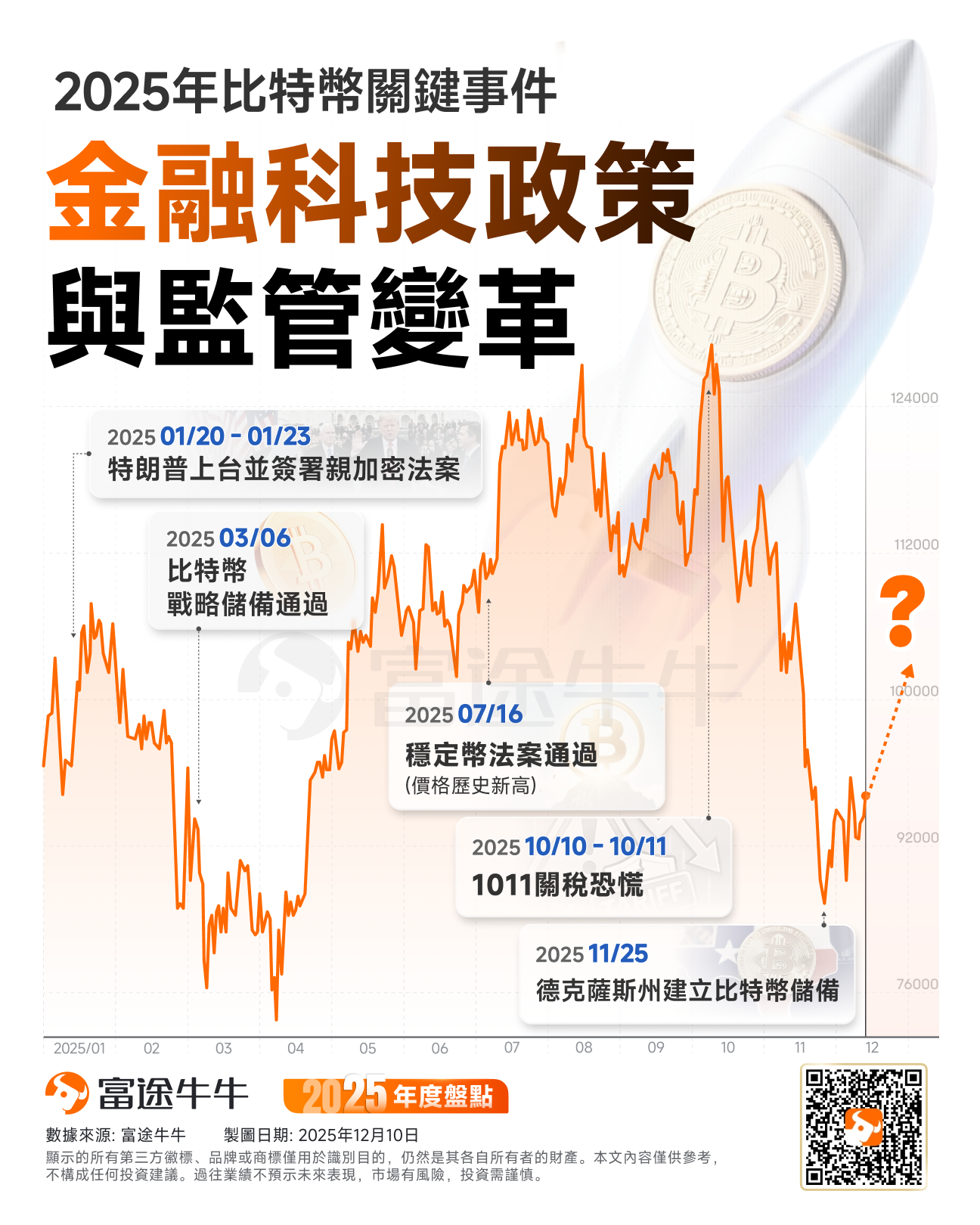
Phase One: Bull market initiation — 'Trump trades' under the executive order (January-March)
Key Event: On January 20, Trump took office and signed a pro-crypto bill.
Market Performance: On January 20, BTC hit a phase high of $109,640.
The market logic at the beginning of 2025 is extremely clear: valuation revision driven by political certainty. Upon taking office, the Trump administration fulfilled its campaign promise, explicitly opposing central bank digital currencies (CBDC) and establishing the strategic position of the private crypto industry. This move directly eliminated the 'regulatory Sword of Damocles' that had troubled the market for years. The market quickly entered 'Trump trade' mode, with capital aggressively accumulating positions amid expectations of 'policy friendliness.'
Phase Two: Rebound and Rebirth – 'National Strategic Reserve' boost interrupted by tariff conflict (March-June).
Key Event: On March 6, Trump signed the 'Executive Order to Establish a Strategic Bitcoin Reserve.'
Market Implication: Fundamental redefinition of asset attributes.
If in the first phase Bitcoin was seen as the 'victory of the free market,' then in the second phase it was elevated to a 'sovereign-grade asset.' Although specific implementation details of the executive order were initially vague, the expectation that 'the U.S. government will become a Holder' successfully transformed Bitcoin from a pure risk asset into a strategic reserve akin to gold. This injection of national-level credibility provided the strongest theoretical support for subsequent institutional allocation, significantly raising the market floor.
However, during this period, BTC pricing still could not ignore macro factors; the boost from 'national strategic reserve' status was disrupted by tariff conflicts. Amid escalating risks from Trump’s tariff disputes between March and April, risk assets came under pressure, with BTC once retreating to a low of $74,508. Subsequently, as concerns over tariff risks gradually eased, coupled with rising expectations of interest rate cuts, BTC steadily rebounded.
Phase Three: Main Surge – Legislation finalized and new all-time highs reached (July).
Key Event: On July 18, the 'GENIUS Stablecoin Act' was officially passed.
Market performance: BTC broke new highs (ATH) to reach a peak of $124,474.
This marks the main upward phase and highlight of BTC for the entire year. The passage of the stablecoin bill not only signifies the compliance of a trillion-dollar payment market but is also viewed by Wall Street as the 'starting gun' for large-scale entry. The bill addresses the key concerns of institutional funds regarding compliance with inflows, outflows, and custody.
The rally in July was no longer driven by speculative sentiment but by substantial liquidity injections. In July 2025, U.S. Bitcoin spot ETF inflows reached their highest level for the year, while the net asset value of Bitcoin ETFs also peaked for the year.
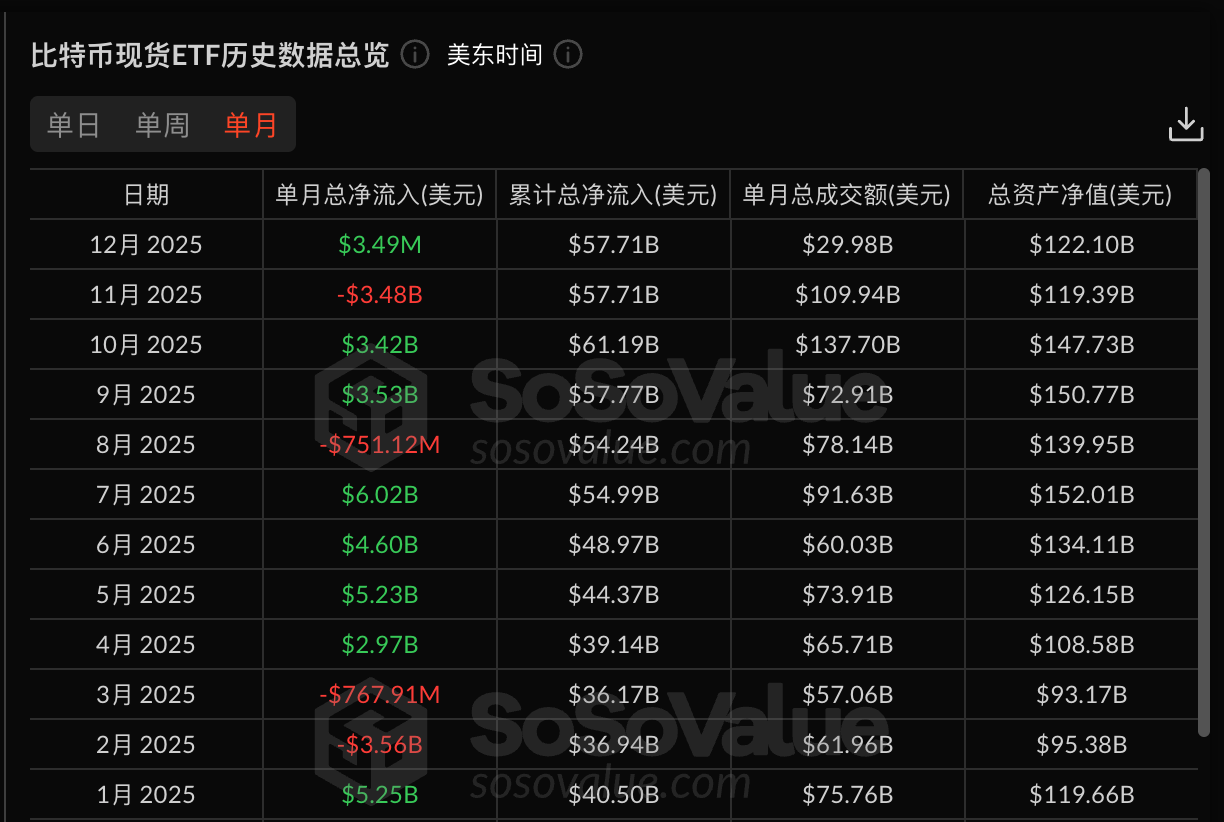
Data source: Sosovalue, data as of December 11, 2025.
Phase Four: Plunge – Resonance of macroeconomic and liquidity risks (October-November).
Key events:
October 10-11: Aggressive tariff policies triggered macroeconomic panic, resulting in nearly $20 billion in liquidations across the network. ('1011 Crash')
On November 25, Texas established a Bitcoin reserve.
Market Performance:
BTC continued to surge during China's National Day holiday in October, reaching a high of $126,000 on October 7. However, the crash on October 11 dampened market enthusiasm. Trump’s tariff comments sparked global risk aversion, exposing the vulnerability of the highly leveraged cryptocurrency market to macro liquidity shocks.
In November, BTC prices continued to decline under the influence of macro factors, hitting a low of $80,600 and erasing all yearly gains. The core reason was a series of macro policy shocks and market dynamics.TechnicallyThe result of adjustments and short-term liquidity tightening. The '1011' tariff black swan event triggered a chain reaction of liquidations, leading to severe market liquidity shortages. Meanwhile, the US government shutdown exacerbated macroeconomic uncertainty. After the government reopened, concerns resurfaced over the Fed’s hawkish rate cut in December. Coupled with doubts about the valuation of AI tech stocks in the US equity market, risk assets came under pressure.
On November 25, Lee Bratcher, Chairman of the Texas Blockchain Council, revealed that they had purchased $5 million worth of Blackrock's spot Bitcoin ETF ( $iShares Bitcoin Trust (IBIT.US)$ ). Although the initial investment of $5 million is relatively small compared to Texas’ overall fiscal scale, the logic behind this transaction holds far greater significance than the monetary amount. This move by Texas effectively implements Trump's executive order on the National Strategic Reserve and sets a model template for other states.
However, this event did not have a substantial impact on BTC prices. BTC's price continues to fluctuate between $80,000 and $95,000, primarily influenced by macro factors. This serves as a warning to investors: positive industry developments cannot offset macro headwinds.
Retrospective Analysis: A Paradigm Shift in Crypto Asset Pricing Logic
Looking back at 2025, we must acknowledge that the investment logic of cryptocurrencies has undergone a profound paradigm shift. In the past, excess returns (Alpha) often stemmed from technological innovations (such as DeFi, NFTs, L2). In 2025, the biggest source of Alpha was the ability to anticipate shifts in US policy, including macro monetary policy (Fed rate cuts), fiscal policy (tariffs), and micro-level crypto-specific policies.
With the growing adoption of ETFs and regulatory frameworks, the price drivers of BTC are gradually shifting towards “macro narratives” and “geopolitical” systemic fluctuations. Future traders will need to understand not only on-chain data but also macro policies.
What’s next for BTC? A look back at five years of Christmas season trends
Reviewing BTC’s performance in December and January over the past five years, the data shows that Bitcoin’s performance around Christmas has become highly polarized in recent years, reflecting shifts in the market’s core drivers at different stages.
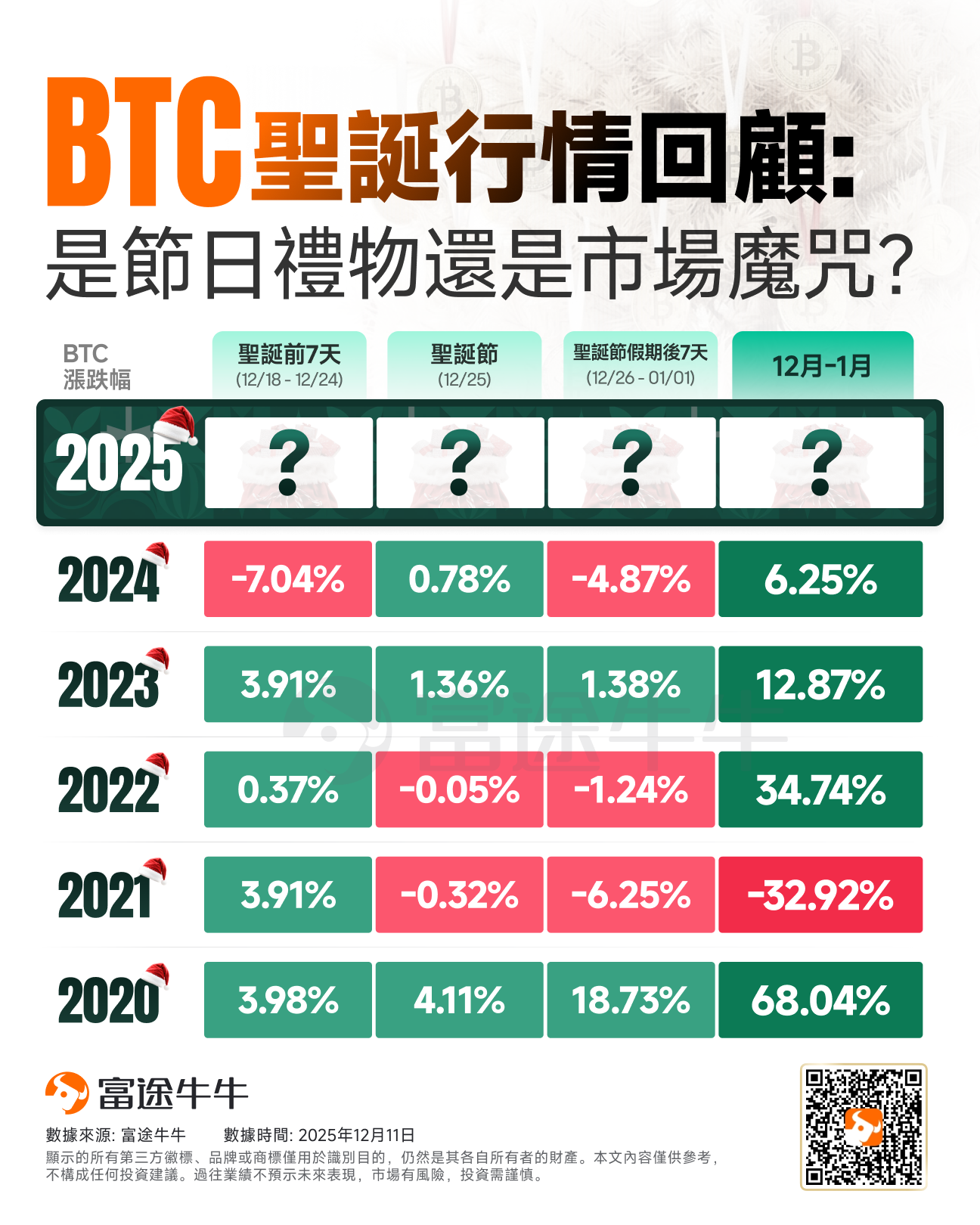
The year 2020 was undoubtedly a classic example of the 'holiday gift' phenomenon. Under an accommodative monetary environment, not only did BTC rise in the week leading up to and on the holiday, but it also recorded a staggering 18.73% increase in the week following the holiday. The cumulative gains from December to January of the following year reached as high as 68.04%.
However, the dynamics were markedly different in 2021. After reaching an all-time high in November, the market faced profit-taking pressures and expectations of the Federal Reserve tapering. Although there was a minor rebound before Christmas, the price fell by 6.25% in the week after the holiday, with a significant drawdown of 32.92% over the December-January period.
The Christmas effect in 2022 was minimal, with the market remaining subdued during a harsh winter; however, the bear market was nearing its end, followed by a strong upward momentum initiated in January 2023. In December 2023, the anticipation of Bitcoin spot ETF approval continued to build, providing a solid floor for the market and a clear direction forward, resulting in increasingly stable performance.
The policy-driven logic extended and intensified into 2024, with expectations of pro-crypto policies under Trump significantly heating up after his election. Despite fluctuations around Christmas, this pushed BTC to a phase high in January of the following year.
 What kind of market behavior will BTC exhibit during the Christmas season in December this year?
What do fellow investors think?
Conclusion
In 2025, the cryptocurrency market completed a full cycle within the wave of Trump's policies, characterized by a 'narrative-driven mini bull run—macro洗礼 correction—regulatory implementation main rally—macro risk resonance.'
The previous four-year cycle of BTC has been disrupted, and cryptocurrencies have entered the purview of mainstream financial institutions following the implementation of policies. National strategic reserves, ETF inflows, and corporate stockpiling have collectively reduced Bitcoin's volatility. In this new policy-driven crypto cycle, the market is transitioning into an era characterized by high compliance and strong macroeconomic correlations.

Editor/Doris