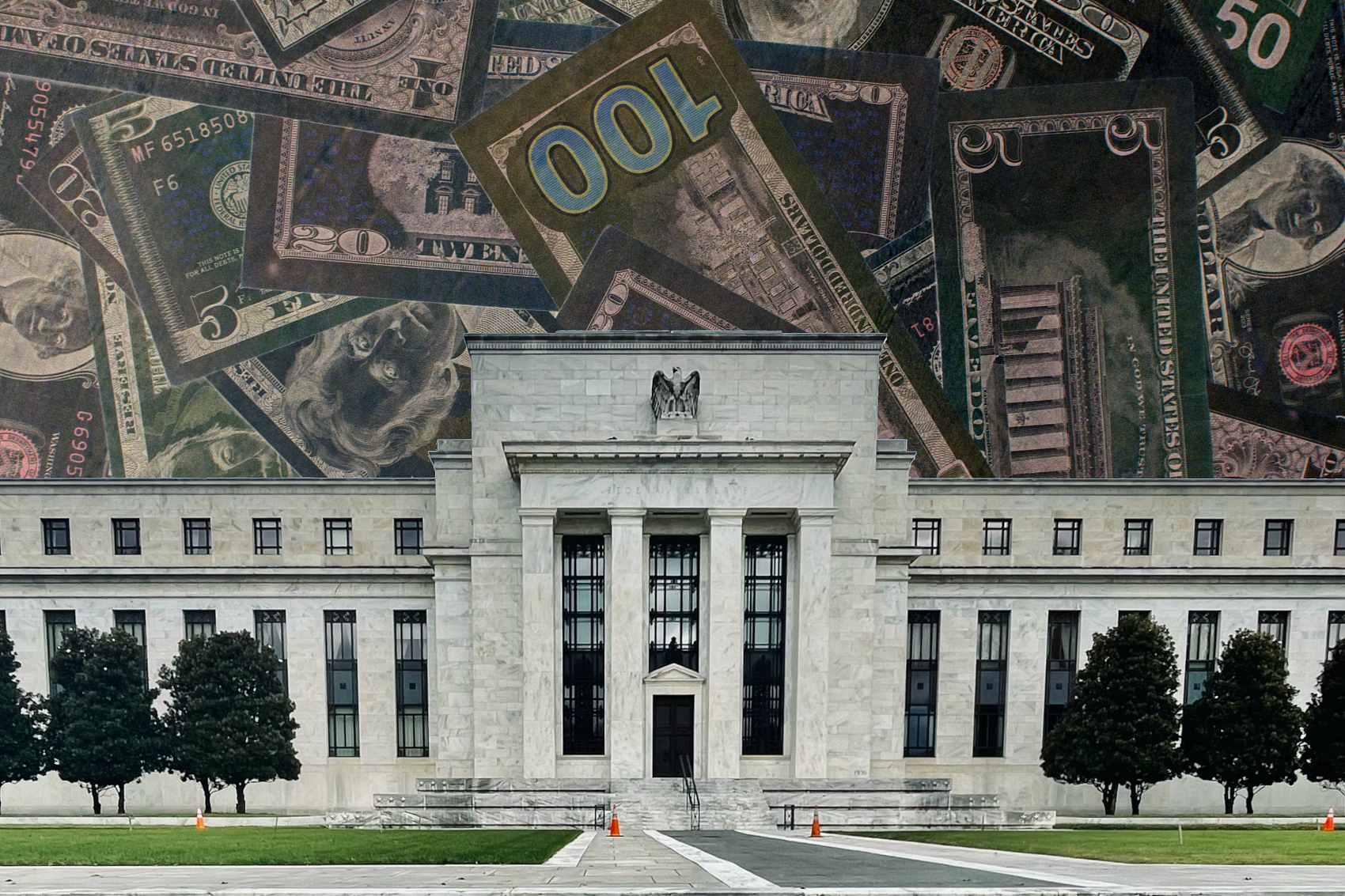
① In the process of selecting the next Federal Reserve Chair, Bessent has openly deepened his institutional critique of the Fed through essays and public commentary.
② He has essentially constructed a policy framework to support Trump’s complaints about interest rates.
The independence of central banks, like all other forms of institutional integrity, seems to have fallen out of favor in Washington today…
 Those who were once the staunchest advocates and defenders of the Fed's independence are gradually fading from the scene, replaced by outspoken partisans and monetary policy mavericks. With Fed Chair Powell set to step down in May next year, this gives President Trump an opportunity to reverse his 2018 appointment decision, which he later regretted.
The strict control over the selection process by U.S. Treasury Secretary Scott Bessent also suggests that whoever ultimately takes the position, this Treasury Secretary may “effectively” dominate the Fed.
Trump has repeatedly criticized Powell in public—accusing him of moving too slowly on rate cuts, calling him a “fool” and “Mr. Too Late,” and authorizing Bessent to oversee the vetting of candidates for the Fed Chair. Earlier this month, Trump said he had narrowed the list to one candidate, with widespread speculation that the White House would choose between two “Kevins”—Kevin Hassett, director of the White House National Economic Council, and Kevin Warsh, former Fed governor.
In the process of selecting the next Federal Reserve Chair, Bessent has made no secret of deepening his institutional critique of the Fed through essays and public comments—he has essentially built a policy framework to support Trump’s complaints about interest rates.
While Bessent continues to verbally emphasize the importance of Fed independence, he then explicitly stated that his definition of independence does not align with the widely accepted definition.
In a recent article published in an academic journal, Bessent pointed out that the Fed has deviated from its traditional functions. During the 2007-2009 financial crisis and the 2020 pandemic, the Fed innovatively developed various tools, significantly expanding its role in the economy but lacking democratic legitimacy and oversight mechanisms.
Bessent believes this is particularly evident in the Fed's balance sheet—which still stood at approximately $6.6 trillion as of this month. The Fed has transformed asset purchase programs originally intended for crisis response into another policy tool for economic stimulus, one that disproportionately benefits asset holders such as homeowners and stockholders.
Bessent criticized the Federal Reserve for consistently overestimating the effects of fiscal stimulus measures while underestimating the role of tax cuts and deregulation in promoting economic growth. Bessent also noted that after the financial crisis and the introduction of the 2010 Dodd-Frank Act, the scope of the Fed's responsibilities expanded further to include not only financial regulation but also issues such as gender equality and climate change.
Notably, although Bessent did not propose specific structural solutions, other critics of the Federal Reserve have advocated for revisiting the 1951 Federal Reserve-Treasury Accord.
This verbal agreement allowed the Federal Reserve to control its own balance sheet, thereby ending the wartime arrangement that handed control to the Treasury. It was also the most significant step toward the independence of the Federal Reserve as a central bank since Andrew Mellon, the former U.S. Treasury Secretary who stepped down from the Federal Reserve Board in 1932 — he was the last person to hold positions in both institutions simultaneously.
Today, however, Trump is clearly challenging this 'arms-length' relationship.
The Chairman of the White House Council of Economic Advisers, Milan, has taken leave from the White House over the past few months to assume a vacant seat on the Federal Reserve Board. Moreover, despite the U.S. Supreme Court not yet ruling on whether President Trump can dismiss Cook, a governor appointed by former President Biden, the current administration has openly stated its goal of ensuring that Trump-appointed individuals hold the majority of seats on the Board.
According to government statements, the selection criteria established by Bessent for replacing Powell are clear in their objectives:
Any regulatory agenda must align with the White House; interest rates should be significantly reduced (as concerns about inflation caused by tariffs have been artificially exaggerated); and the issuance and management of government debt should fall under the jurisdiction of the Treasury rather than the Federal Reserve.
In some respects, the Federal Reserve has indeed been moving towards the balance preferred by Bessent. Bowman, the newly appointed Vice Chair for Supervision appointed by Trump, has already begun reducing bank regulatory staff by 30%. Just before Trump’s inauguration in January 2025, the Federal Reserve withdrew from the global central bank alliance on climate risk, stating that the coalition's responsibilities exceeded the central bank's mandate. Even defenders of the Federal Reserve — including former regulatory official Daniel Tarullo — have acknowledged recent instances of overreach by the institution.
Stephen Blitz, Chief U.S. Economist at TS Lombard, wrote in a recent report that as the boundaries between the U.S. Treasury and the Federal Reserve become increasingly blurred, their balance sheets are moving towards a 'merger,' with Bessent effectively becoming the 'shadow Fed Chair' within this new framework.
However, this growing political interference and functional ambiguity are quietly eroding the institutional credibility that the Federal Reserve has gradually built since World War II.
To maintain financial stability and preserve its role as the lender of last resort, the Federal Reserve must employ effective tools to monitor, regulate, and manage financial and macroeconomic risks. Trump has repeatedly undermined the authority of the institution by demanding interest rate cuts and calling for Powell's resignation. The core elements of his trade policy change arbitrarily on a daily basis; he fired the government’s chief statistician due to dissatisfaction with employment data, and has fueled speculative frenzies in the unregulated cryptocurrency sector—while his family holds hundreds of millions of dollars in such assets.
The United States will sooner or later face a new round of economic or financial crisis. If the Federal Reserve loses its independence, the government will then wield greater power. A central bank needs to earn public trust and credibility in order to effectively control inflation and safeguard credit stability—qualities that Trump’s Treasury Secretary has failed to provide.
More dangerously, once the market forms a widespread expectation that 'the Federal Reserve has become politicized,' its policy signals will lose effectiveness, ultimately undermining the stability of the U.S. economy and the global credibility of the dollar.
Editor/melody