
The first quarter of 2026 brings new expectations for Bitcoin, with the core driver not being the implementation of bank-issued stablecoins but rather the accelerated opening of traditional wealth channels. Vanguard Group and Bank of America have successively relaxed restrictions on cryptocurrency investments, combined with seasonal tailwinds, potentially offsetting market turbulence at the end of 2025.
Vanguard Group, which manages $11 trillion in assets, lifted its ban on cryptocurrency investments in early December, granting its 50 million clients access to spot ETF trading for Bitcoin, Ethereum, and other cryptocurrencies. Although it does not issue its own crypto products, its extensive retail reach injects potential incremental demand into the market.
Starting January 5th, Bank of America will allow Merrill Lynch and private banking advisors to proactively recommend crypto ETPs, guiding suitable clients to allocate 1%-4% of their assets to mainstream U.S. Bitcoin ETFs. This means that hundreds of billions of dollars in wealth previously excluded will gain access to the market.
 According to River data, nearly 60% of the 25 largest banks in the United States are currently at some stage of directly selling, custodizing, or providing Bitcoin advisory services.
Buyers at the beginning of 2026 are more likely to be retirement accounts adding a 2% Bitcoin position rather than highly leveraged crypto funds.
Since 2013, Bitcoin's average February return has been approximately 15%, with average Q1 gains exceeding 50%. However, Q1 2025 recorded its worst performance in a decade (a 12% decline), confirming that historical patterns are not absolute.
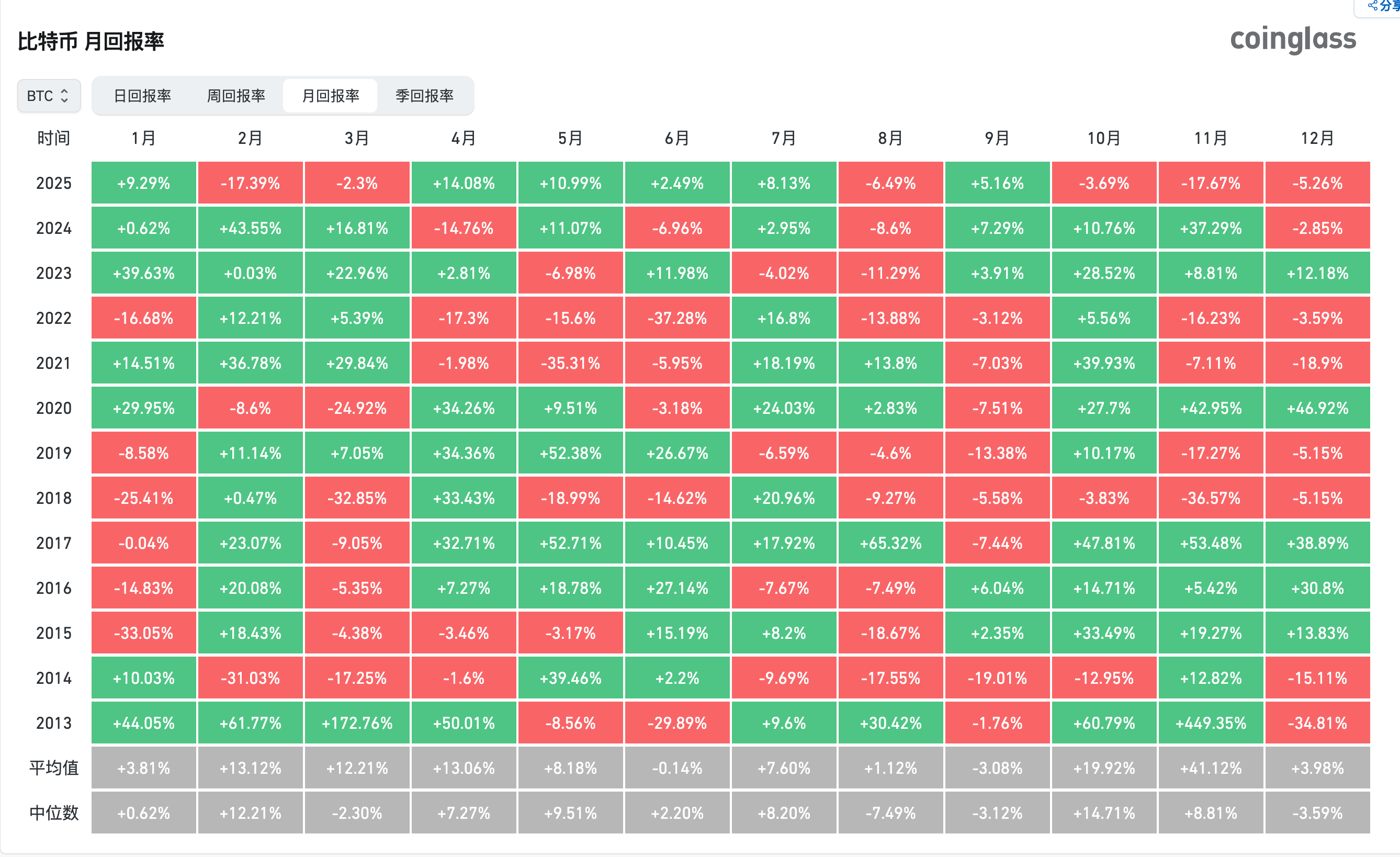
Current market expectations have been revised downward, with Standard Chartered reducing its 2026 Bitcoin price target from $300,000 to $150,000. A rebound now depends more on actual capital inflows than momentum chasing.
Additionally, a proposed rule published on December 16 paves the way for state-chartered bank subsidiaries to issue 'payment stablecoins,' requiring 1:1 reserve backing and prohibiting arbitrary rehypothecation.
However, this rule must undergo a 60-day public consultation period and is unlikely to be implemented before late 2026, with scale formation expected only by 2027, rendering it irrelevant to Q1.
Nevertheless, its long-term value is significant. Bank-issued compliant stablecoins can serve as settlement assets for ETF market makers, enhancing liquidity in derivatives markets and transforming public blockchains into trusted institutional settlement layers.
Thus, the Q1 market performance has turned into a mathematical formula: how many new clients of Vanguard Group will add 1%-2% Bitcoin positions, and how much capital inflow can Bank of America's channels bring?
Editor/Doris