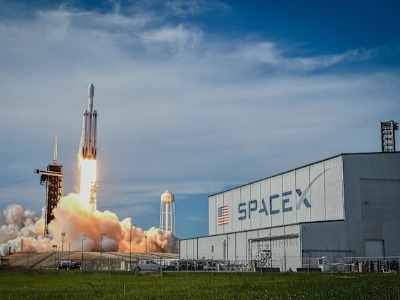
Source: Smart Investors
In a conversation with CNBC on December 17, Ron Baron, founder of Baron Capital, discussed one of the most closely watched topics in the current market: the potential public listing of SpaceX and its possible valuation.
The dialogue was brief but extremely information-dense. The reason is simple: among all long-term investors who have bet on Elon Musk, Baron is undoubtedly one of the most successful and representative figures.
 Starting from his first meeting with Musk in 2010, it has now been a full fifteen years. Ron initially invested in Tesla between 2014 and 2016,$Tesla (TSLA.US)$with an investment of approximately $400 million, which has since generated returns of about $8 billion.
Even after a significant rise in Tesla's stock price, Baron Capital still holds Tesla shares worth approximately $5 billion, and his assessment is that Tesla could potentially generate several times the return over the next decade.
The bet on SpaceX carries even more long-term significance.
Ron mentioned in the interview that Baron Capital began investing in SpaceX in 2017, with cumulative investments totaling around $1.5 billion. The current book value of these investments is close to $10 billion, making it their largest single holding.
He believes there is a high likelihood that SpaceX will go public next summer, jokingly adding, “It might be on June 28, because that’s Elon Musk’s birthday.”
However, in Ron’s view, what truly deserves repeated emphasis are not just these numbers.
He elaborated on why he was willing to bet on Musk despite extreme uncertainty back then, and why he has become even more confident in this bet as the company has grown to employ hundreds of thousands of people.
The answer is not complicated: Musk's companies are no longer 'one-man shows,' and their growth is no longer linear but exponential.
What he values is Musk’s consistent application of first principles, delegating responsibility to the best people, allowing for failure, and having the courage to overturn previous investments and start over as long as a better solution emerges. This mechanism will ultimately crystallize into an organizational culture capable of self-replication.
Under the same logic, Ron explained the structure of his current investment portfolio and why he continues to allocate resources to companies that are 'under short-term profit pressure but severely undervalued in terms of long-term potential,' even as the market focuses on AI and leading technology firms.
The case study of FactSet he shared at the end was very interesting. The Smart Investor has translated and compiled it to share with everyone.
01, Regarding the Initial Investment in Tesla
Host: Ron, among those you mentioned who 'have almost achieved all the conditions,' there is one person you have been collaborating with for more than a decade—Elon Musk.
Ron: It's already been 15 years.
Host: You mentioned Tesla and SpaceX, which are now your largest holdings, and you also invested in xAI. Musk's story is unique; over the past two decades, he has almost become the symbol of American technological innovation.
So, what initially attracted you to this individual, prompting you to invest in him and the companies he manages?
Ron: Oh, he is incredibly intelligent—there is no doubt about that.
We first met him in 2010, when Tesla was about to go public. At the time, we thought: 'We would love to invest with him,' but also felt that his chances of success were slim.
Back then, he was only producing a few thousand cars a year, yet he claimed that one day he would manufacture 20 million vehicles annually, which sounded quite unrealistic.
However, after our first two-hour conversation with him, we decided to keep an eye on him.
Over the following years, we continued to visit him, stay in touch, and maintain communication with the executives at his company. By 2014, one thing had become abundantly clear: there was very strong market demand for his cars.
Between 2014 and 2016, we invested a total of $400 million, and so far, we have made approximately $8 billion in returns.
Host: You also started investing in SpaceX later, right?
Ron: Yes, we had actually been keeping an eye on SpaceX all along.
By the way, I worked at the U.S. Patent Office in the 1960s. I chose that job because it allowed me to avoid military service and not be sent to Vietnam—I thought it was a pretty good deal (laughs).
My work area was in chemistry, which was also my university major. Back then, I was responsible for reviewing patents for coatings on rocket nose cones—special materials designed to prevent burning during re-entry into the atmosphere.
That was when I first became involved with this kind of technology.
In 2017, we officially began investing in SpaceX, and to date, we have invested approximately USD 1.5 billion, with the current market value being around USD 10 billion.
We believe they are highly likely to go public next summer. There have been reports in the media suggesting that the valuation could reach USD 1.5 trillion. The current valuation is approximately USD 800 billion, whereas just a week ago, it was only USD 400 billion.
02, Regarding Elon Musk's management style
Host: So why is that? What exactly sets them apart from others?
Ron: A few weeks ago, I attended a board meeting in New York. They invited me to meet with a few directors, and during our discussions, we talked about Elon Musk and mentioned something: today’s young people are genuinely eager to work for him.
They currently have about 120,000 employees and hire 30,000 new staff annually. For these 30,000 positions, they receive millions of resumes each year.
The chairman of Tesla shared a detail with me. He said Elon Musk often gathers thirty or forty young engineers, or senior experts in a particular field, whether in software or hardware, into a conference room for discussions that last several hours.
He asks each person individually: What are you working on? Why are you doing it this way? His questions become progressively more in-depth, digging deeper and deeper. At first, the conversation may be general, but then it gets increasingly detailed and profound.
After the meeting concludes, those young individuals experiencing this type of meeting for the first time often walk out of the conference room shaking their heads, saying things like, “Can you believe what we just learned?” “Can you believe what we just heard?” “Wow, I’m so glad I made it through that meeting.”
Therefore, many people are well aware that the reason they come here to work is because they want to work with this individual.
Of course, investing in Tesla in its early days carried significant risks, as the entire company rested on the shoulders of a single individual.
But that is no longer the case. The company now has 120,000 to 130,000 employees, and its business growth is no longer linear but exponential. This is no longer a one-person company.
As a company grows larger, the risk associated with relying on any single individual diminishes. What you are truly investing in is a company with a strong culture.
And what we need to clarify when investing is precisely this: what is the true culture of the company?
This is the essence of the 'first principles' approach. You need to understand what values have been instilled in the people within the company.
Elon Musk’s style is as follows: he delegates responsibility to talented individuals and then fully unleashes their capabilities.
If you have a better idea than what I consider to be the best solution, tell me. If you can prove that your solution works, even if I’ve already invested $20 million, $30 million, or $50 million in another approach, we will immediately abandon the old one and start over.
He is not afraid of failure—and indeed, he has consistently operated this way.
Therefore, what we are looking for are certain personality traits in these managers that give us confidence: they have a higher probability of success.
03. About SpaceX's IPO
Host: I would like to follow up on your earlier statement. You mentioned that your 'most likely prediction' is for SpaceX to go public next summer. Did you previously suggest it might be in June?
Ron: Yes, it could be June 28th, because that’s Elon Musk’s birthday (laughs).
Host: I like this prediction because at least we have a specific date to refer to. Do you think they will actually go public at that time?
Ron: They have already communicated this plan with their shareholders. There are also valuation speculations circulating in the media.
Host: In your view, what do you think SpaceX's valuation will be around the time of its IPO?
Ron: The current valuation is $800 billion, and media speculation suggests it could double by next summer.
For us, this is already our largest investment to date. Our position in SpaceX is approximately $10 billion, while our Tesla holdings are around $5 billion.
Tesla’s share price is currently between $460 and $480, whereas our cost basis was $12.
In my view, over the next decade, we could potentially make five times or even more on our Tesla investment.
As for SpaceX, I have consistently underestimated its performance so far. My figures are here, and Elon Musk’s targets are there—let’s wait and see.
However, I must say, I wouldn't bet on myself winning (laugh).
Host: You may not bet on yourself, but it seems like many people are betting on you now.
Ron: Yes, a lot of people are indeed doing that now (laugh).
04. On Baron's Investment Directions
Host: You mentioned the concept of 'the best ideas' earlier, which is about constantly challenging the status quo and proposing better alternatives. So, returning to Baron Capital’s portfolio, as a fund manager, where do you think the 'best ideas' are concentrated right now?
Everyone is talking about AI and technology. But if we look a bit deeper, are there any specific sectors or themes that have caught your attention?
Ron: We believe the portfolio needs to maintain sufficient diversification.
Yes, AI is the hot topic everyone is discussing now, and it has performed well over the past few years. However, at the same time, a significant portion of the market has been left behind, particularly small- and mid-cap companies.
We have just recently launched our first small- and mid-cap growth portfolio, with very attractive valuations, especially in an environment where interest rates are falling; these companies should theoretically perform better.
More importantly, we have found that companies that continue to invest in themselves are not receiving the recognition they deserve in the market. Investors are reluctant to see companies investing (in the future) because this depresses short-term profits; when profits decline, valuation multiples also drop, resulting in a 'double whammy.'
And this is precisely the situation we relish.
We are able to identify these companies, truly understand what they can achieve, invest in them at highly attractive valuations, and then accompany them throughout their entire value realization cycle.
The value realization of two companies has already begun to show results.
One of them is $Guidewire Software (GWRE.US)$ , which is transitioning all its clients from on-premise software deployments to the cloud, and this transformation has already started to bear fruit. An increasing number of clients are not only signing contracts but also adopting more modules.
Another one is $IDEXX Laboratories Inc (IDXX.US)$ , specializing in pet diagnostic systems. They spent a considerable amount of time developing new testing solutions, launched one last year, and we believe another will be introduced this year. Usage is growing, profitability is improving, and valuations are rising accordingly.
However, there are still many such companies in our portfolio that are investing heavily in themselves but are being penalized by the market (with prices failing to rise).
For long-term equity investors, now is an excellent time to invest in these companies and wait for their value to materialize.
05, On Specific Investment Cases
Host: Then let me follow up with another question. You have already launched five ETFs. Do you have any plans to expand your product line? What criteria will you use to consider adding new products in the future?
Ron: The current focus is to do a good job with these five first, and then talk about the next steps.
Host: Have you ever imagined yourself sitting on the podium of the New York Stock Exchange, ringing the opening bell, and launching a listed product? Looking back, how does that feel for you personally and for your family?
Ron: I'm from California (laughs). Have you been to Asbury Park?
That’s where I grew up. Imagine the boardwalk by the beach, the convention hall— that’s where I come from.
And then suddenly, you’re standing at the New York Stock Exchange as the person in charge of a company going public. It’s just so surreal.
The way I view my life can be summed up in one word: incredible.
Host: So what do you think the next chapter of your life will be?
Ron: For me, there is no such thing as a 'next chapter.' I will continue doing what I’m currently doing.
Over the next decade, I expect our business to grow significantly larger than it is now. As I mentioned earlier, I believe we will make five times more.
Over the past 40 years, we have generated approximately USD 57 billion in profits, and I believe that in the next decade, we could potentially create USD 2.5 trillion in profits.
I am extremely excited about this, whether for our employees at Baron Capital or for all investors.
There are currently too many overlooked good companies in the market. Everyone’s attention is focused on technology.
I have a very good friend, Henry Fernandez, the founder and chairman of MSCI.
I like MSCI very much and greatly admire Henry.
He once said something to me that I think was very accurate: one of the rare qualities we possess is the ability to see 'what does not yet exist.'
MSCI itself is an example of this.
We invested when he founded the company.
He originally came from Nicaragua, fleeing his hometown during a coup with nothing to his name when he arrived in the United States. Later, he established MSCI within Morgan Stanley and took it public in 2008.
He once said: without us, he might not have been able to achieve this.
The stock price was around 10 to 12 US dollars at the time of the company's IPO, then rose to 30, and fell back to 15 after the market crash. We have been buying continuously.
Now the stock price has risen to 600 US dollars.
I believe MSCI still has significant room for growth in the future.
They are repurchasing shares, and Henry himself has been consistently increasing his holdings. He says he is trying to 'catch up with us,' while I say I am trying to 'catch up with him.'
Another company is FactSet, which we have held for many years.
At the time, we were unable to invest in Bloomberg, and in a sense, FactSet is an 'investable version' of Bloomberg.
We have invested for about ten to twenty years and made many times our initial investment.
This stock has pulled back this year. However, I find one aspect particularly interesting —
FactSet recently changed its management team, and the new CEO is a young man with a very unique background.
He grew up on a farm in India, in a poor family, and later gained admission to India’s top IT school and engineering institute.
Afterward, he joined McKinsey and worked as a consultant for some time.
During the financial crisis, he was 33 years old and was sent to New York, presumably on some type of visa. He was assigned to advise the U.S. government and financial regulatory agencies, assisting in stabilizing the entire financial system. He was only 33 at the time.
Later, he was recruited by JPMorgan.
At that company, which had thousands of employees, he was among the top ten candidates considered to succeed Jamie Dimon (President of JPMorgan).
He indeed made it into the top ten.
However, when he wasn't selected as the successor, he said: 'Alright, then I'll leave.'
Where did he go? He went to FactSet.
At the time, FactSet was looking for a new CEO. Now, he has officially become the new Chief Executive Officer of FactSet.
I have always told Michael: Imagine you have a company like this. It's a very cool company with tremendous opportunities, somewhat like Bloomberg, but younger and more growth-oriented. Then you put someone like this in charge – a tough player, 51 or 52 years old.
Now think about it: what would be the effect of placing a 51- or 52-year-old Jamie Dimon at the helm of a company?
This just happened.
So, essentially, what you need to do is: find such companies, find such people, and then tell yourself one thing: I must invest alongside this person.
This stock has indeed fallen by half this year, but mainly due to some short-term factors that have now ended and were unsustainable. Therefore, we are actually very excited right now.
Moreover, such opportunities are not confined to a single industry. Whether in hotels, real estate, financial institutions, or consumer goods companies, they are everywhere.
This is exactly what excites me the most at the moment.
In our investment portfolio, about 30% to 40% consists of highly aggressive companies with extremely rapid growth but also high risk.
Then, 50% to 55% are high-quality companies with steady double-digit growth. Finally, there’s another 10% to 15% consisting of companies whose short-term profitability has been suppressed but which could potentially grow significantly in the future.
And it is precisely these 10% to 15% of companies that almost no one is willing to invest in before things become obvious.
However, we allocate a portion of our portfolio specifically for investing in these companies.
This is also one of the key reasons why we have been able to maintain strong performance over the long term.
 Futubull[Opportunity Page]The tracking feature for celebrity portfolio opportunities has been officially launched! Explore a variety of portfolios held by renowned investors, follow their strategies with a single click, precisely target high-quality assets, and invest with greater confidence!
Editor /rice