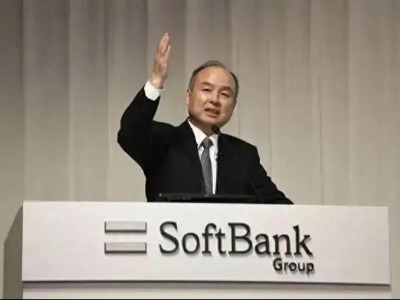
Selling all NVIDIA shares, leveraging Arm as collateral: Masayoshi Son's grand AI ambitions are now fully vested in OpenAI.
Citing sources familiar with the matter, a media outlet reported that SoftBank Group, the Japanese investment giant founded and led by legendary investor Masayoshi Son,$SoftBank Group (ADR) (SFTBY.US)$is racing against time to fulfill a funding commitment of up to $225 billion for OpenAI, the developer of ChatGPT, by the end of the year through a series of financing solutions. These include selling part of its long-held investments and potentially leveraging its valuable equity stake in Arm Holdings, a leading chip design company,$Arm Holdings (ARM.US)$to borrow against unused margin loans.
This substantial bet by SoftBank Group on OpenAI represents one of the largest moves into artificial intelligence made by SoftBank CEO Masayoshi Son to date. The Japanese billionaire, renowned for his early investment in Alibaba, is seeking to establish SoftBank Group as a central player in the global AI race. To raise funds, Son has already sold all of SoftBank’s highly profitable $58 billion stake in NVIDIA, a super-leader in 'AI chips,'$NVIDIA (NVDA.US)$as well as offloading $48 billion worth of shares in T-Mobile US, one of the major American telecom operators,$T-Mobile US (TMUS.US)$and implemented significant layoffs.
 Masayoshi Son, the 67-year-old founder of SoftBank, envisions an 'AI Super Blueprint'—focusing on positioning SoftBank, under his leadership, to play a role as pivotal as NVIDIA in the global proliferation of AI. Undoubtedly, Son, who gained fame from his early bet on Alibaba, aims to capitalize on the massive returns expected from the upcoming global AI boom. At the heart of this push is Arm Holdings, the leading chip designer in which SoftBank holds a 90% stake,$Arm Holdings (ARM.US)$, alongside collaborations with OpenAI, $Oracle (ORCL.US)$CoreWeave, and the Abu Dhabi-based tech investment fund MGX on a $5 trillion 'Stargate' (i.e., StarGate) ultra-large-scale data center project in the United States. Additionally, SoftBank is making substantial long-term investments in AI leaders such as OpenAI and Taiwan Semiconductor.
Two insiders informed the media that Masayoshi Son has slowed down most other deal-making activities within SoftBank’s Vision Fund to a near standstill, with any transaction over $50 million now requiring his explicit approval.
Sources indicated that SoftBank, led by Masayoshi Son, is advancing the initial public offering (IPO) of its digital payment app operator PayPay. The IPO, originally scheduled for this month, was fully postponed due to the 43-day-long U.S. government shutdown, which ended in November. Sources stated that PayPay’s market debut, potentially raising over $20 billion, is now expected to occur in the first quarter of next year.
One directly informed insider revealed that the Japanese conglomerate is also seeking to monetize part of its stake in Didi Global, the dominant ride-hailing platform operator in China. The two sources mentioned that investment managers at SoftBank’s Vision Fund are being personally guided by Son to shift their focus toward the OpenAI deal.
SoftBank’s frantic fundraising efforts have offered a glimpse into the fact that even one of the world’s largest dealmakers faces pressure when competing to finance a multi-thousand-billion-dollar grand AI data center project. SoftBank officials declined to comment.
SoftBank has multiple options
Insiders stated that OpenAI has not yet received the remaining funds, but the money is expected to be fully delivered by the end of 2025 as per the contractual agreement.
According to sources familiar with the matter,$SoftBank Group (ADR) (SFTBY.US)$Possesses a variety of available cash sources, including margin loans, cash on the balance sheet, stakes in publicly listed companies, and corporate bonds or bridge loans.
Masayoshi Son has compelling reasons to utilize multiple financing mechanisms to fulfill funding obligations related to OpenAI. In April, SoftBank Group reached an agreement to invest in OpenAI at a valuation of $300 billion. Since then, OpenAI’s valuation has significantly increased, and the AI startup is actively engaged in negotiations, including$Amazon (AMZN.US)$a potential multi-billion-dollar investment that could raise its valuation to nearly $900 billion, representing a threefold increase; once the transaction is completed, this substantial investment in OpenAI will generate significant paper profits for SoftBank Group.
A major pool of funds for SoftBank comes from its undrawn margin loan capacity secured by its stake in Arm Holdings,$Arm Holdings (ARM.US)$the UK-based semiconductor and software design company. It is understood that,$SoftBank Group (ADR) (SFTBY.US)$SoftBank recently increased its margin loan facility by $6.5 billion, bringing the total undrawn amount to $11.5 billion. Meanwhile, Arm's share price has tripled from its IPO price, providing SoftBank with larger collateral value to expand its financing and borrowing capabilities.
SoftBank reported that it held approximately ¥4.2 trillion ($27.16 billion) in cash at the parent company level as of September 30. According to LSEG data, the group still owns$T-Mobile US (TMUS.US)$about 4% of T-Mobile US and remains the second-largest shareholder of the American wireless operator; as of the end of September, this stake was valued at approximately $11 billion.
Moreover, although SoftBank's pace of investment has slowed compared to previous levels, it continues to support AI startups such as Sierra and Skild AI.
OpenAI desperately needs this capital, and so does Oracle.
OpenAI and SoftBank are the central participants in 'Stargate,' a $500 billion initiative aimed at constructing hyperscale AI data centers for training and inference within the United States.
This race to build data centers has also prompted companies including$Oracle (ORCL.US)$、$Microsoft (MSFT.US)$CoreWeave and Meta Platforms,$Meta Platforms (META.US)$The ultra-large-scale technology giants, including others, have committed to investing unprecedented amounts of capital into these projects—projects that require an immense number of AI chips, electricity, cooling equipment, and massive server clusters, while introducing well-funded partners to share the risks. Since November, when these tech giants aggressively issued debt and Oracle, the cloud computing leader deeply invested in AI computing power clusters, failed to deliver a satisfactory earnings report, the substantial capital expenditures of these tech giants have raised serious concerns about 'what will happen if these investments do not yield commensurate returns,' thereby intensifying fears about the specter of an 'AI bubble' bursting.
$SoftBank Group (ADR) (SFTBY.US)$In April, a commitment was made to invest up to $30 billion in OpenAI—$10 billion of which was delivered to the startup that month. The remaining funds are contingent upon the AI startup transitioning to a for-profit company by the end of the year—a bold endeavor that OpenAI had already achieved in October.
This new funding is crucial for covering OpenAI's rising costs of training and running its cutting-edge large AI models, as competitive pressures from$Alphabet-A (GOOGL.US)$are intensifying. OpenAI CEO Sam Altman recently told employees that the company is entering a 'code red' phase, making every effort to improve ChatGPT—even delaying the launch of other products to counter the strong momentum of Google Gemini.
In October, Altman stated that OpenAI aims to build 30 gigawatts of AI computing infrastructure at a cost of $1.4 trillion. He noted that he ultimately wants OpenAI to add one gigawatt of computing power per week—a colossal and seemingly unattainable goal, as each gigawatt currently entails over $40 billion in AI-related capital costs.
This massive financing round from SoftBank Group is not only critical for OpenAI but also pivotal for Oracle's financial fundamentals and the sustainability of the AI investment boom across the U.S. equity market. Markets have started to worry that OpenAI may not generate sufficient revenue to cover its significant commitments to AI computing infrastructure with$Oracle (ORCL.US)$and$CoreWeave (CRWV.US)$and other cloud computing companies. Such concerns have even led to Oracle being downgraded by Barclays, with its credit default swap (CDS) spreads spiking to about 156 basis points—the highest level in 16 years—and markets have begun pricing in the risk of bankruptcy over the next five years.
Therefore, this round of OpenAI financing has a significant boosting effect on the AI computing power supply chain. The funds obtained by OpenAI will primarily be used to cover computing costs, meaning that AI data center service providers like Oracle will secure a continuous and stable source of revenue.
Editor/melody