Top News
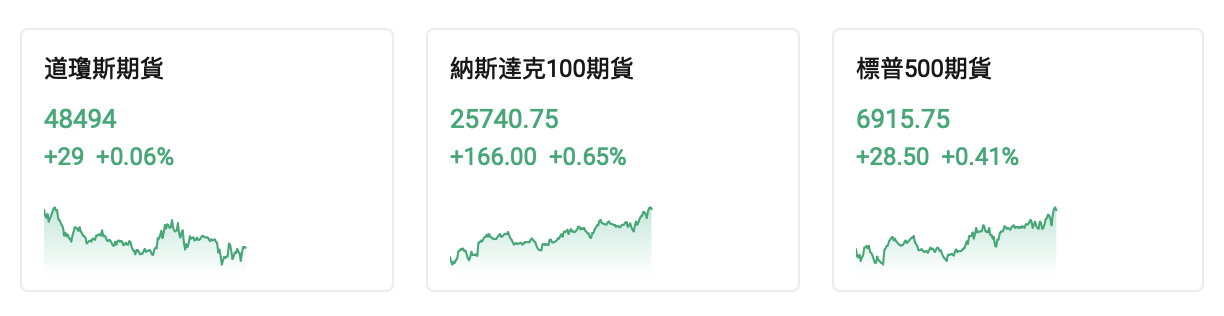
Before the market opened on Monday, the three major futures indexes collectively rose, with the Dow Jones futures up 0.06%, Nasdaq futures rising 0.65%, and S&P 500 futures increasing by 0.41%.
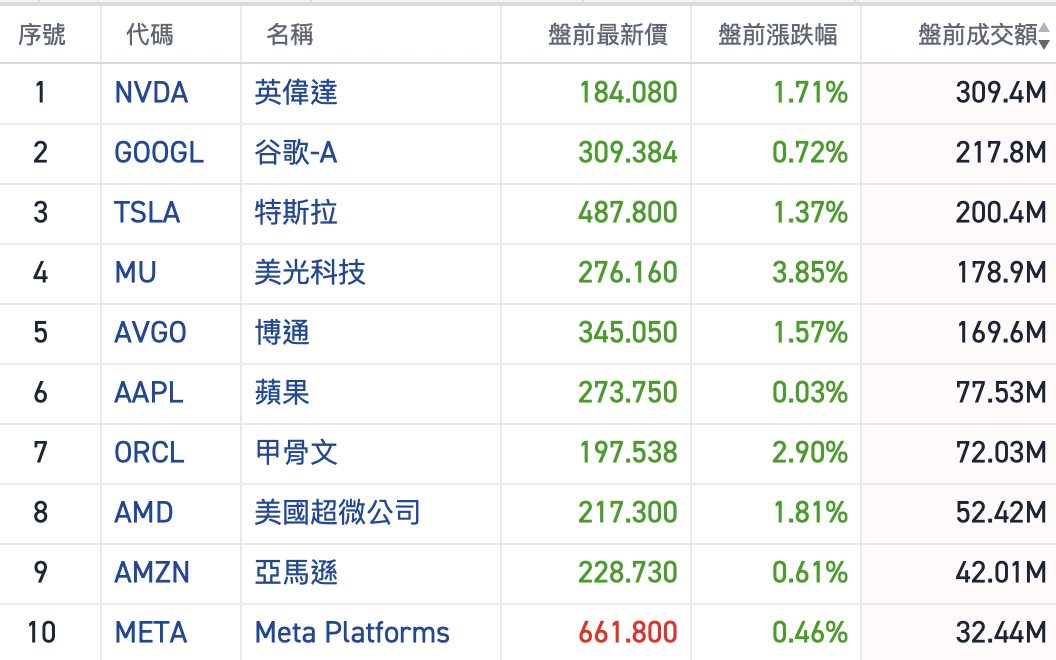
$明星科技股(LIST2518.US)$ All rose before the market opened, $Oracle (ORCL.US)$ Up nearly 3%, $Micron Technology (MU.US)$ up nearly 4%,$Tesla (TSLA.US)$ 、 $Advanced Micro Devices (AMD.US)$ 、 $NVIDIA (NVDA.US)$ Surged over 1%.
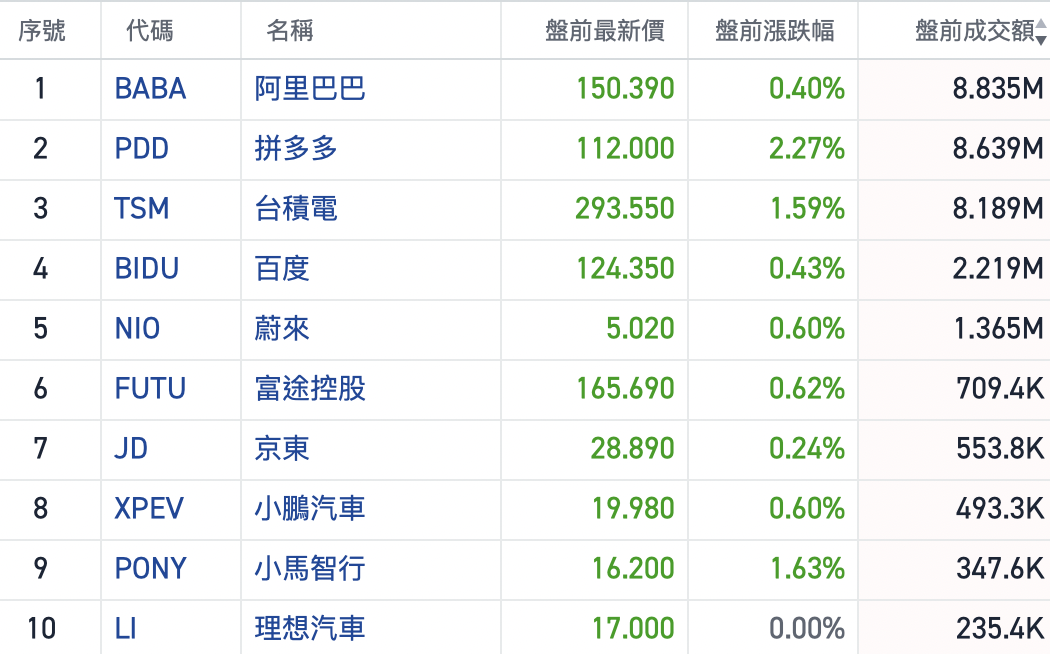
$热门中概股(LIST2517.US)$ Pre-market trading higher, $PDD Holdings (PDD.US)$ Up more than 2%, $Taiwan Semiconductor (TSM.US)$ 、 $Pony AI (PONY.US)$ with gains exceeding 1.5%.
 Gold and silver prices continued to hit record highs, with gold and silver stocks rising before the market opened. Driven by expectations of further interest rate cuts by the Federal Reserve, sustained safe-haven demand, and a weakening US dollar, spot gold broke through $4,420 per ounce, repeatedly setting new records, with an accumulated increase of over 68% year-to-date; spot silver prices surpassed $69 per ounce, also hitting new highs, with an accumulated rise of over 140% year-to-date.
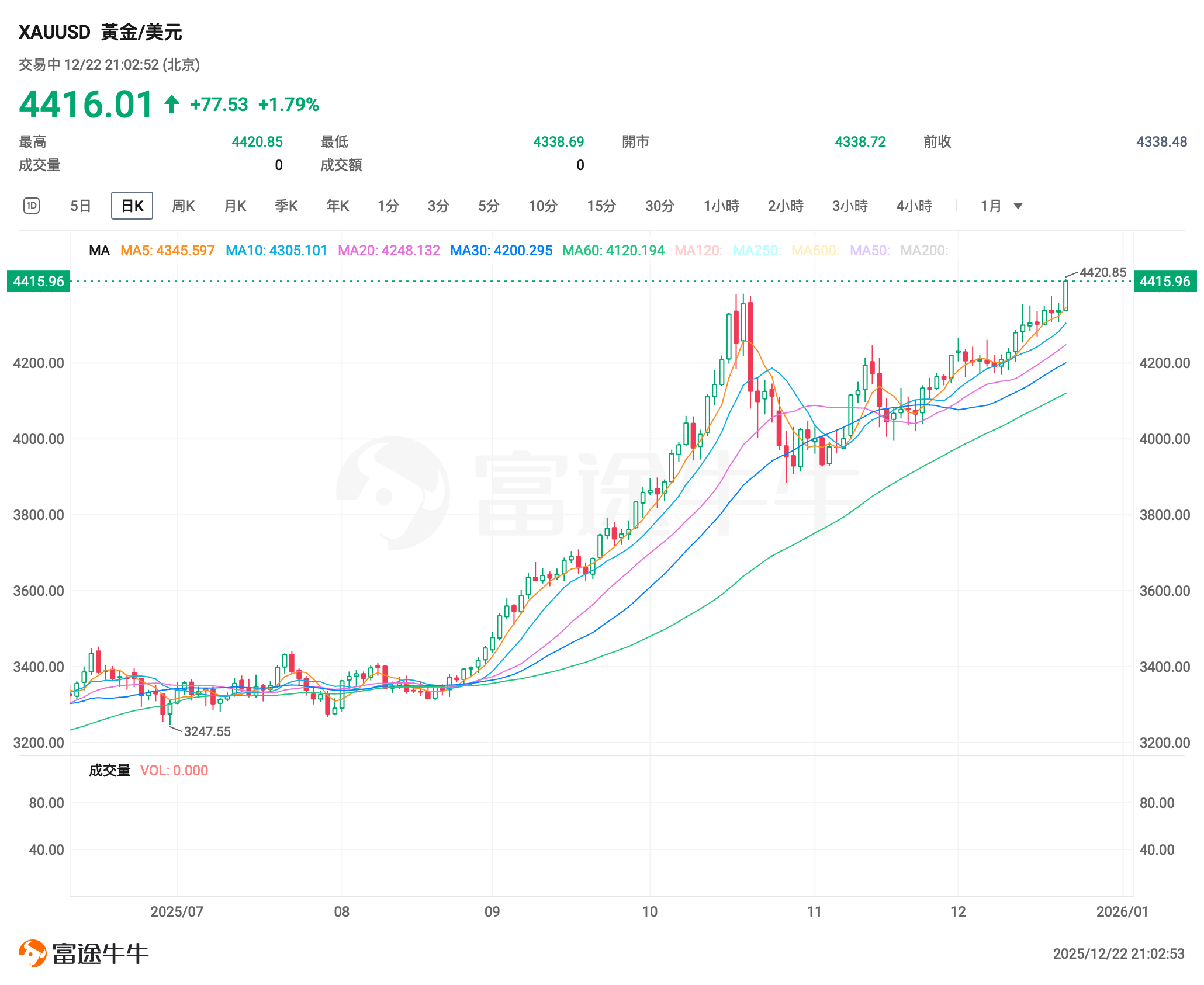
$黄金(LIST2110.US)$ Rising pre-market, $Hycroft Mining(HYMC.US)$ Surged over 17%, $Coeur Mining, Inc. (CDE.US)$ up over 5%, $AngloGold Ashanti(AU.US)$ up more than 4%.
$Silver (LIST2093.US)$ Concept stocks collectively advanced before the market opened. $First Majestic Silver(AG.US)$ surging over 4%, $Endeavour Silver (EXK.US)$ 、 $Dolly Varden Silver (DVS.US)$ Up more than 5%.

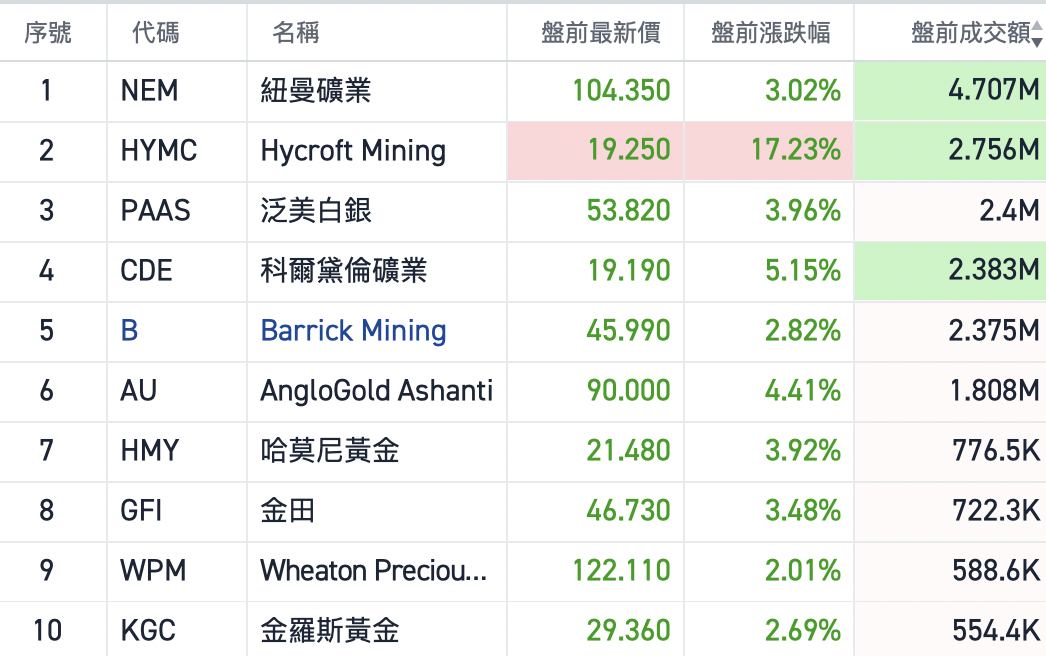
$太空概念(LIST2556.US)$ Rose before the market opened. $Sidus Space(SIDU.US)$ Increased nearly 26%, $Destiny Tech100(DXYZ.US)$ Surged over 7%, $Redwire(RDW.US)$ Up nearly 7%, $Rocket Lab(RKLB.US)$ 、 $AST SpaceMobile(ASTS.US)$ up more than 4%.
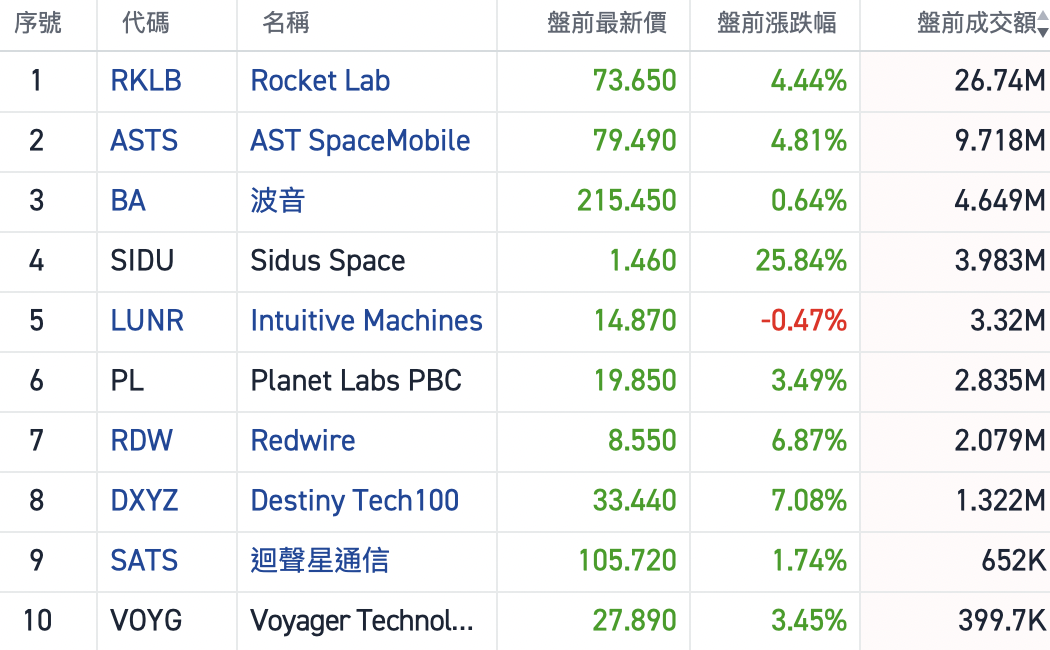
BTC reclaimed $90,000, with cryptocurrency concept stocks collectively rising before the market opened. $IREN Ltd(IREN.US)$ Surged over 7%, $Bitmine Immersion Technologies(BMNR.US)$ up over 5%, $Trump Media & Technology (DJT.US)$ 、 $Cipher Mining(CIFR.US)$ approaching a 4% increase.

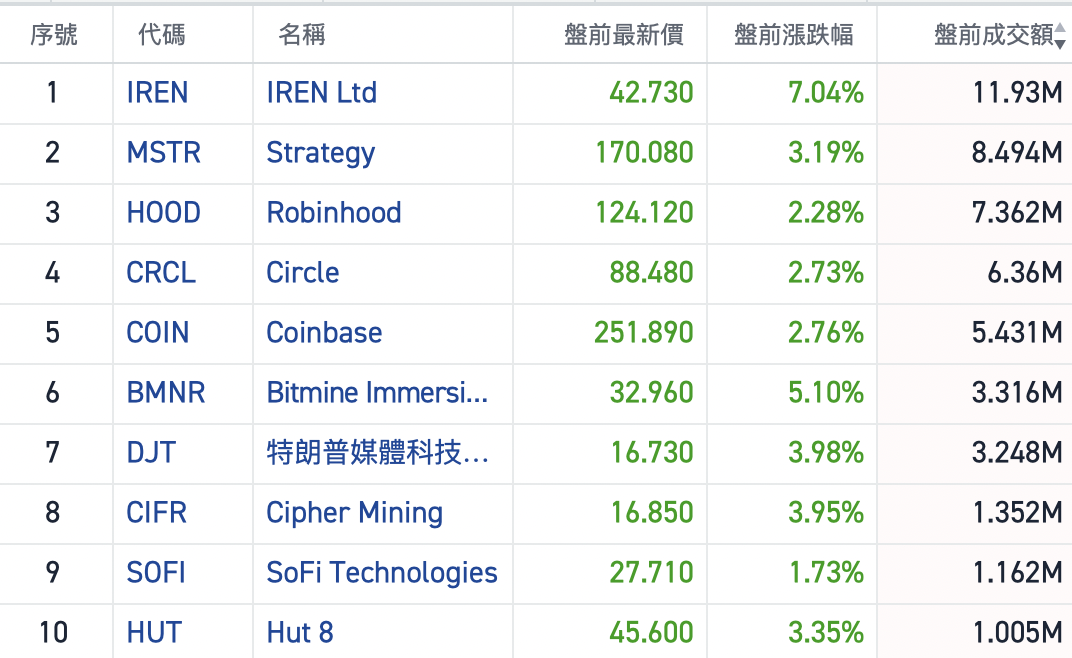
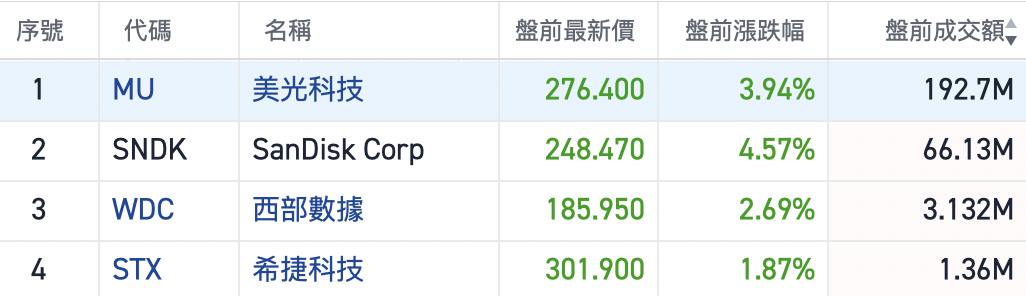
Memory concept stocks rose collectively before the market opened, as institutions forecast that NAND prices would increase by 25%-30% in the first quarter of next year. $Micron Technology (MU.US)$ 、 $SanDisk Corp (SNDK.US)$ up over 3%; $Western Digital (WDC.US)$ Up more than 2%, $Seagate Technology (STX.US)$ An increase of over 1%. In terms of news, CFM Flash Memory Market forecasts that mobile/PC NAND prices will rise by 25% to 30% in the first quarter of next year, while mobile/PC DRAM will increase by 30% to 35%. Additionally, Micron Technology's Chairman and CEO Sanjay Mehrotra recently revealed that the company has reached agreements with customers on both price and volume for its entire high-bandwidth memory (HBM) supply for 2026, which is now fully booked. He also conveyed an important signal to the market: the undersupply in the memory market is not a short-term phenomenon but represents a structural shift, with supply constraints expected to 'continue beyond the 2026 calendar year.'
Major banks like Bank of America are remarkably unanimous: the bull market for AI chip stocks will continue into next year, with NVIDIA's position remaining unshakable!
Despite recent overall pullbacks in tech stocks, Wall Street analysts remain bullish on semiconductor stocks, believing that the artificial intelligence 'party' is far from over. Analysts at Bank of America and Jefferies predict that $NVIDIA (NVDA.US)$ 、 $Broadcom (AVGO.US)$ selected semiconductor stocks will continue to show strong growth momentum next year.
The latest market forecasts indicate that $NVIDIA (NVDA.US)$ shipments of GB300 AI server racks are expected to reach 55,000 units next year, marking a 129% year-over-year increase, primarily driven by giants such as Microsoft and Meta Platforms. More notably, the next-generation Vera Rubin 200 platform is expected to begin shipping in the fourth quarter of next year, providing sustained growth momentum for supply chain manufacturers like Hon Hai Precision Industry and Quanta Computer. Some manufacturers already have order visibility extending as far as 2027.
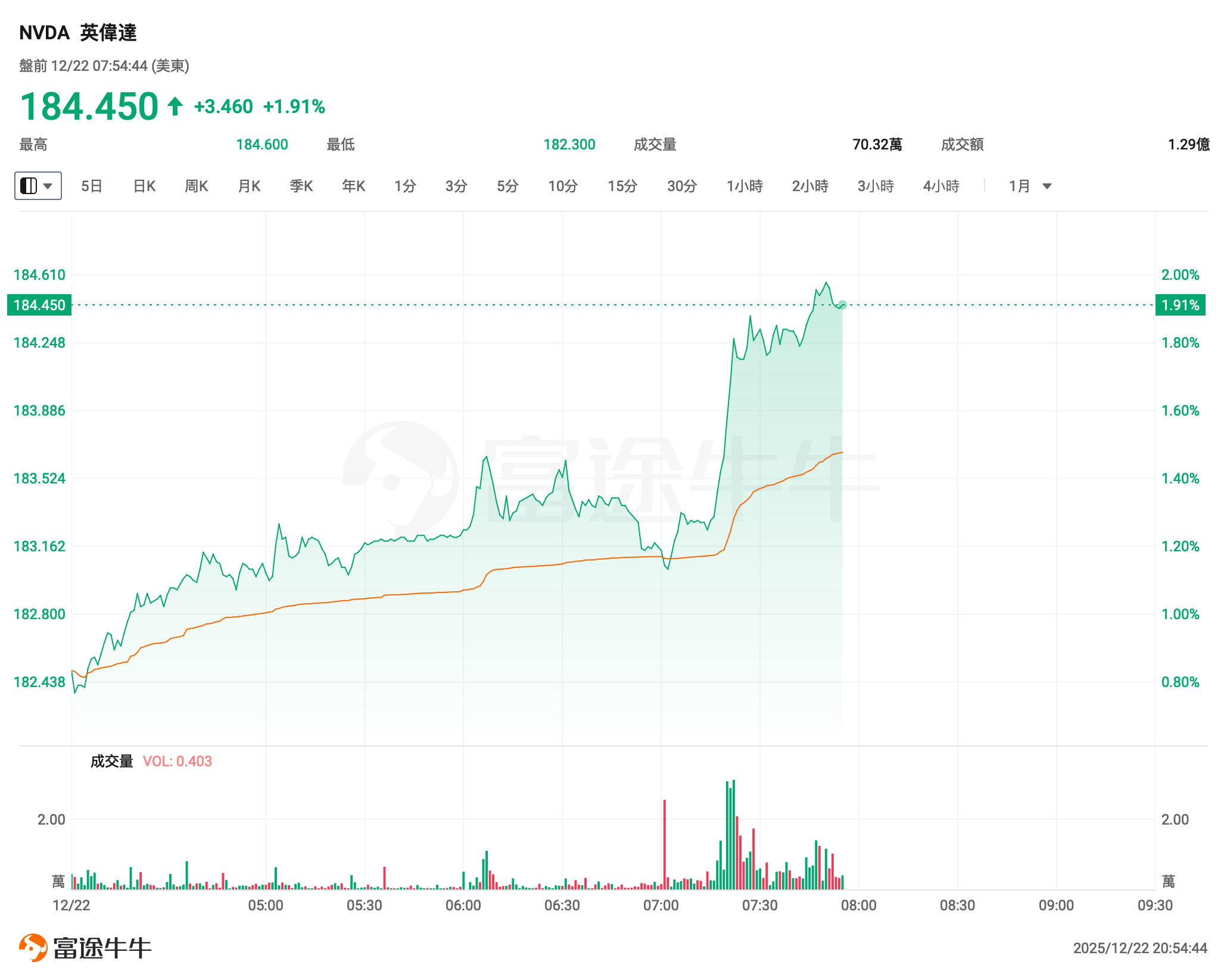
According to reports, $NVIDIA (NVDA.US)$ plans to begin the first deliveries of H200 artificial intelligence chips to China by mid-February next year. NVIDIA's stock surged nearly 2% in pre-market trading.
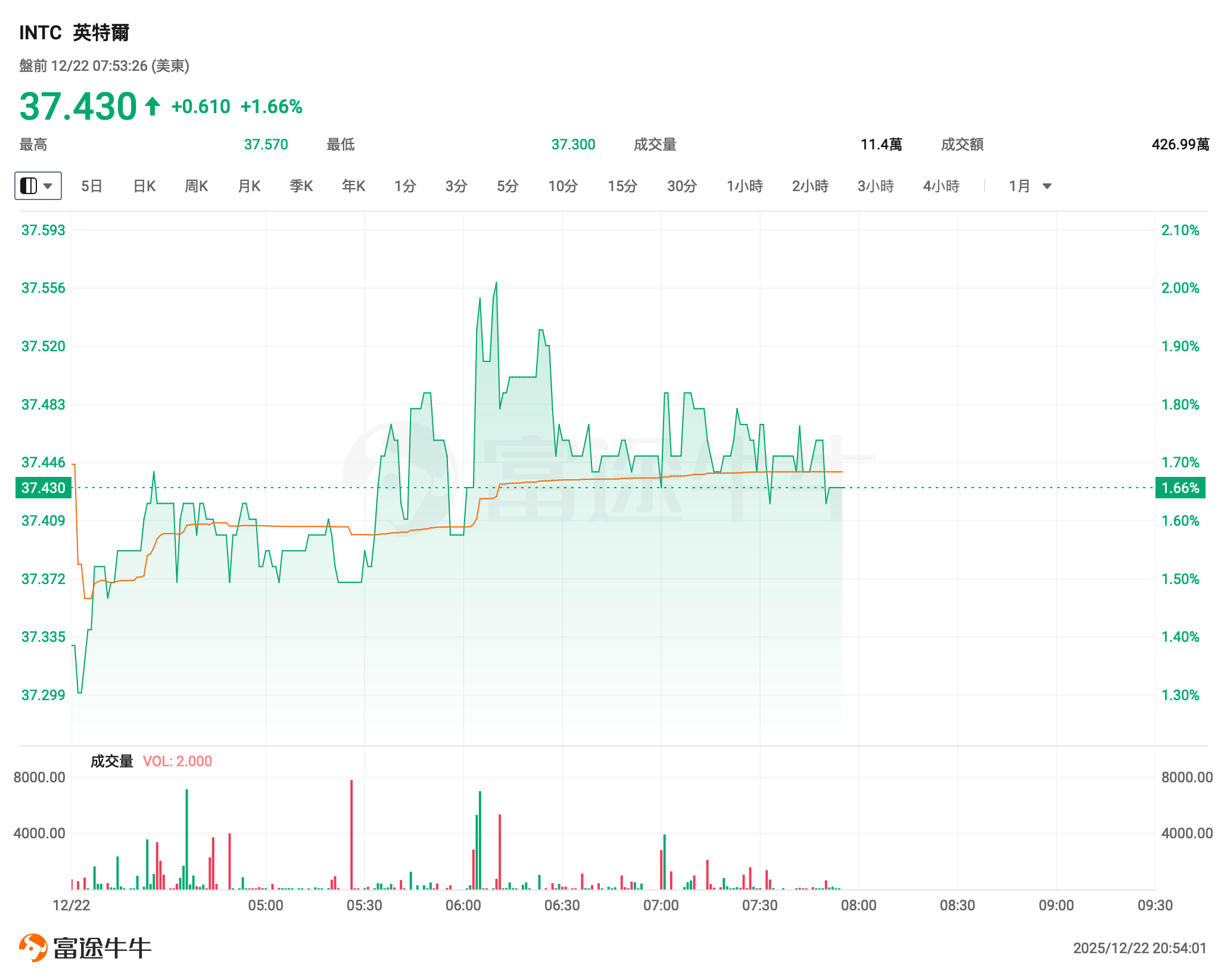
Intel continued its upward trend with a gain of over 1% in pre-market trading. The U.S. Federal Trade Commission (FTC) approved NVIDIA's $5 billion investment in Intel.
shares closed up 1.49% last Friday, $Intel (INTC.US)$ and continued to rise 1.66% in pre-market trading today. On the news front, the U.S. Federal Trade Commission (FTC) has approved NVIDIA’s investment in Intel, though it did not disclose specific details of the transaction. In September this year, $NVIDIA (NVDA.US)$It was announced that $5 billion will be invested in the struggling Intel, a move seen as significant support for the domestic semiconductor industry.
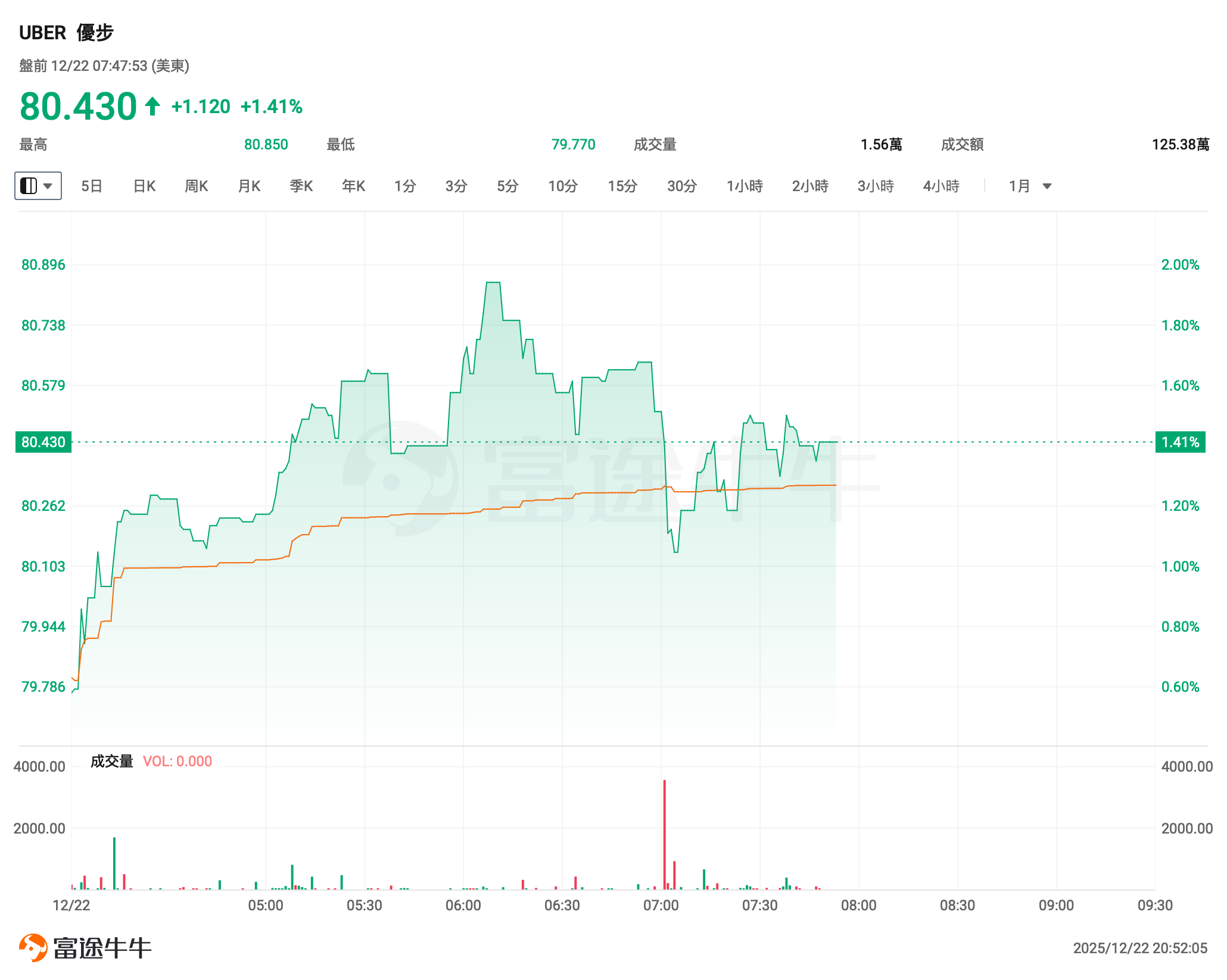
Following Waymo! Uber partners with Baidu to launch autonomous driving services in London.
$Uber Technologies(UBER.US)$Today it was announced that will be with$Baidu(BIDU.US)$Under its subsidiary, LoBo Kuai Pao, a partnership is conducting trial runs of self-driving taxis in the UK, closely following the American autonomous driving company Waymo. Uber has stated that it plans to launch a pilot project using Baidu's Apollo Go RT6 model in London in the first half of 2026, with expectations to officially commence operations by the end of 2026. Previously, Waymo had initiated related testing in London at the beginning of December, significantly accelerating the global deployment of autonomous ride-hailing services.
Currently,$Baidu(BIDU.US)$ 、 $WeRide (WRD.US)$Waiting for Chinese companies andGoogle (GOOGL.US)Waymo, a subsidiary, is in a leading position in the industry. Uber and WeRide have launched autonomous driving operations in Abu Dhabi and plan to expand to other regions in the Middle East, while Baidu is simultaneously testing in Abu Dhabi, Dubai, and Switzerland. Other ride-hailing platforms are also adopting similar strategic layouts; Lyft has signed a contract with Baidu to launch services in Europe, and the Southeast Asian platform Grab has also established partnerships with Chinese companies such as WeRide and Momenta.
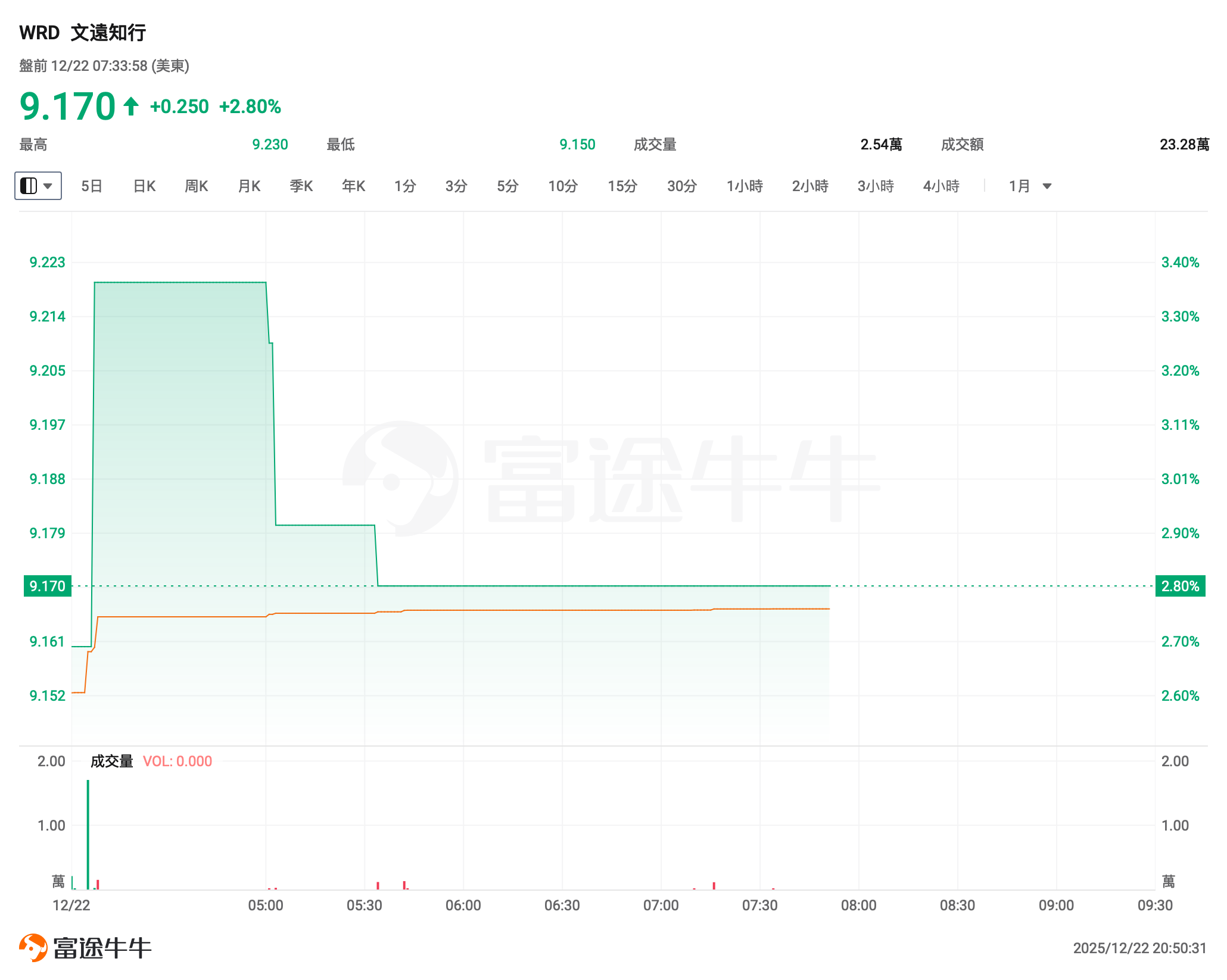
Wenyan Zhixing rose nearly 3% before the market, and H-shares closed up nearly 6% today, accelerating the commercialization of L4 products.
$WeRide-W (00800.HK)$The Hong Kong stock market closed up nearly 6% today, driving$WeRide (WRD.US)$U.S. stocks rose nearly 3% before the market opened. In news, the first batch of L3-level conditional autonomous driving vehicle permits in our country has been officially announced, namely the Changan SC7000AAARBEV pure electric sedan and the Arcfox BJ7001A61NBEV pure electric sedan.
WeRide is a global leader in L4 autonomous driving products and solutions. The company is accelerating the commercial deployment of its L4 products. On November 20, its Robotaxi received a fully driverless license from the Swiss Federal Roads Office, making it a technology company holding autonomous driving licenses in Switzerland, China, the UAE, Saudi Arabia, Singapore, France, Belgium, and the United States.
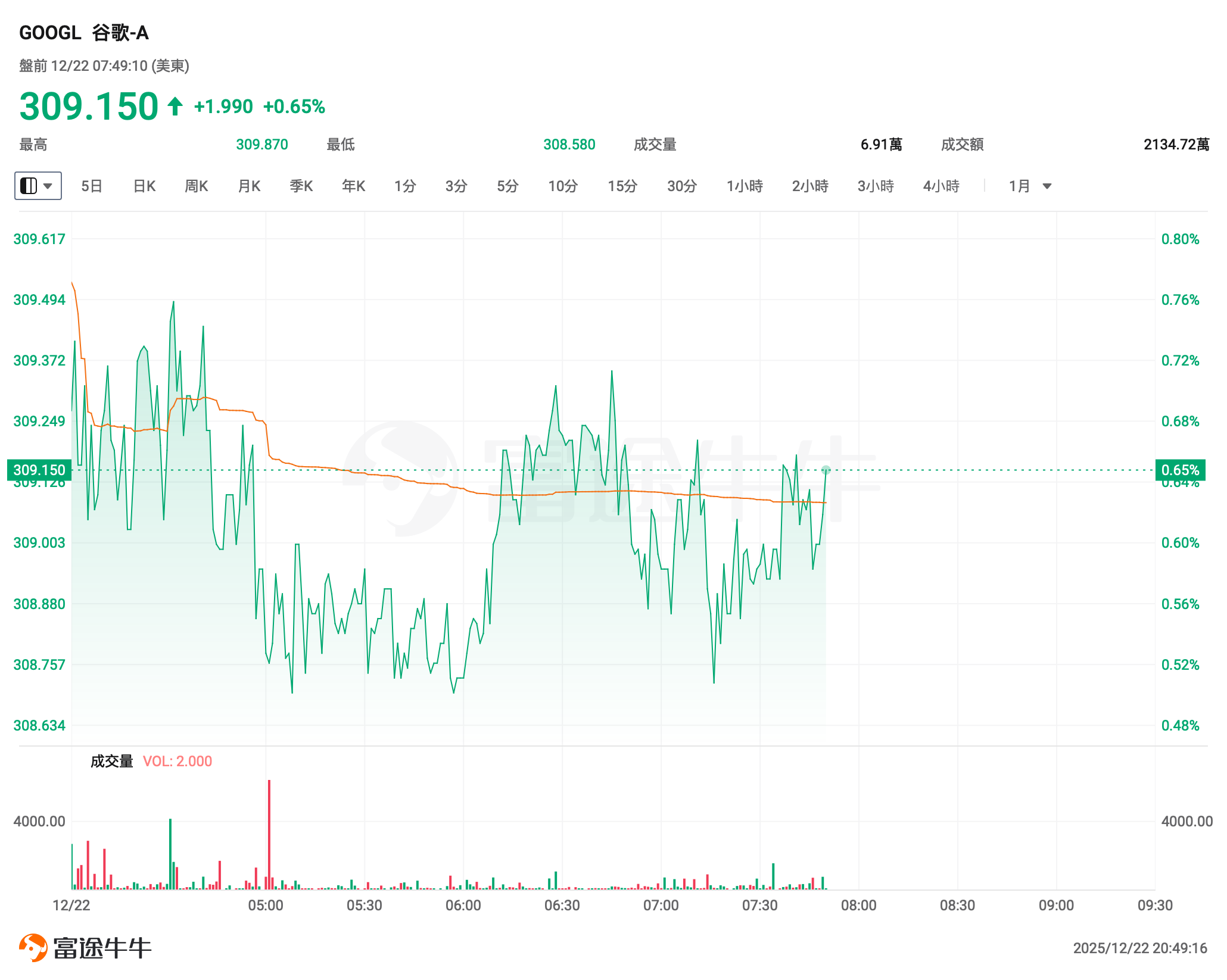
San Francisco Blackout Becomes Robotaxi Testing Ground: Google Rushes to Tow Cars, Musk Calmly Boasts
Last weekend, San Francisco, USA, experienced a major power outage, leaving large numbers ofGoogle (GOOGL.US) Waymo autonomous vehicles stranded on roads as an iconic scene; with traffic disruptions caused by the immobilization of autonomous vehicles, Waymo temporarily suspended operations across the city. Meanwhile, Elon Musk stated on social media that Tesla vehicles relying on the FSD system were unaffected.
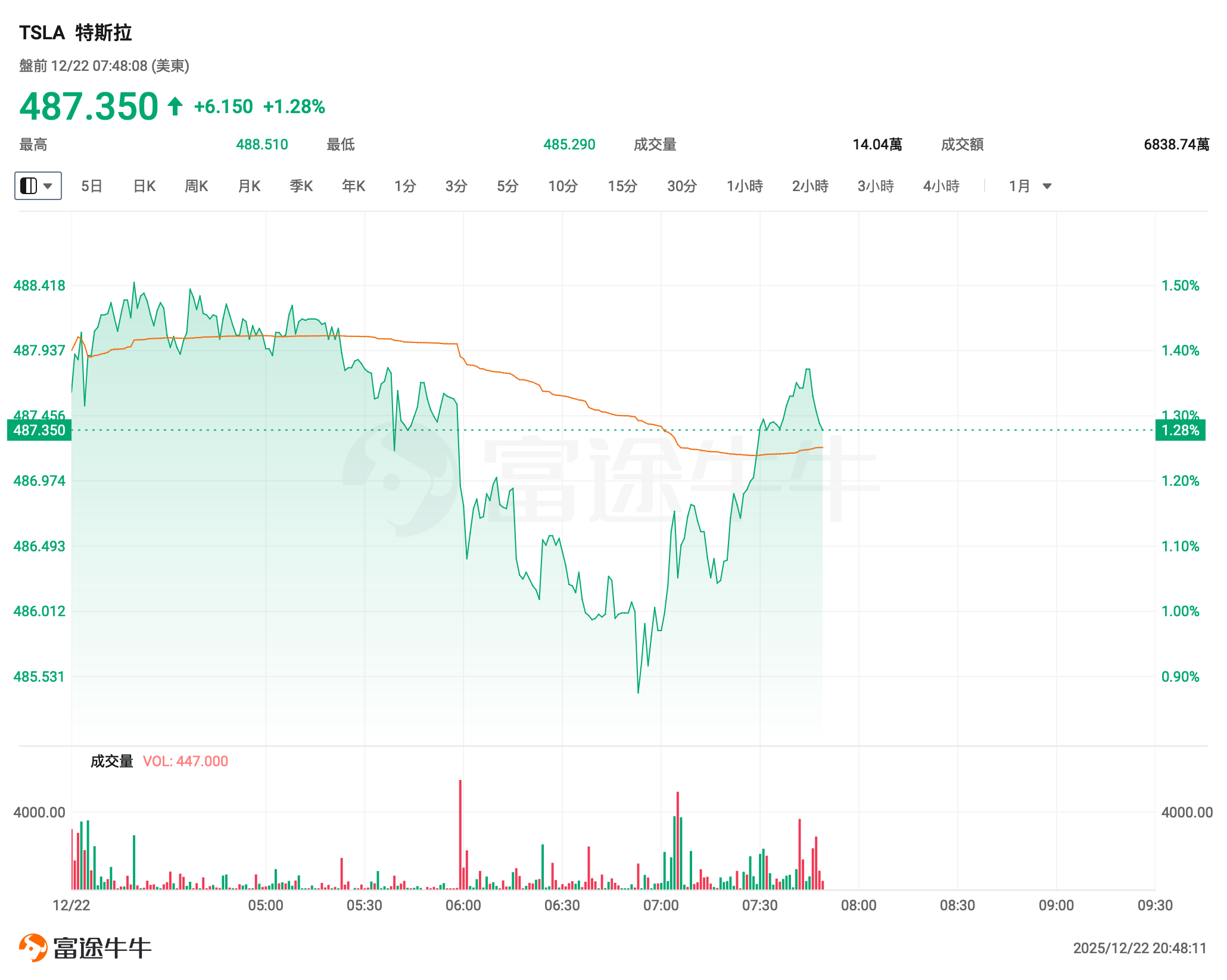
Deutsche Bank: Tesla's Q4 deliveries expected to decrease by 14% year-over-year to approximately 405,000 units; target price raised to $500.
Deutsche Bank analyst Edison Yu forecasts $Tesla (TSLA.US)$ deliveries for the fourth quarter of 2025 to be approximately 405,000 units, representing a 14% year-over-year decline and a 19% quarter-over-quarter decrease, falling short of market consensus and the bank’s previous estimates. Yu predicts that the shortfall will primarily affect Tesla’s core Western markets, with deliveries in Europe and North America expected to drop by 34% and 33%, respectively; deliveries in China are projected to decline by approximately 10%.
Despite short-term pressures on delivery volumes and gross margins, analysts believe that the development of Robotaxis remains a key pillar supporting Tesla's valuation. Elon Musk previously announced plans to deploy around 1,000 Robotaxis in the San Francisco Bay Area and over 500 in Austin. However, Deutsche Bank tracking data suggests these goals are unlikely to be achieved in the near term. Nevertheless, Tesla’s recent removal of safety drivers for internal validation testing in Austin indicates broader implementation may be on the horizon, according to Yu.
Based on increased valuations tied to Robotaxi and humanoid robot initiatives, Deutsche Bank raised Tesla’s buy rating target price by $30 to $500, though this was partially offset by downward adjustments to delivery forecasts for the core automotive business.
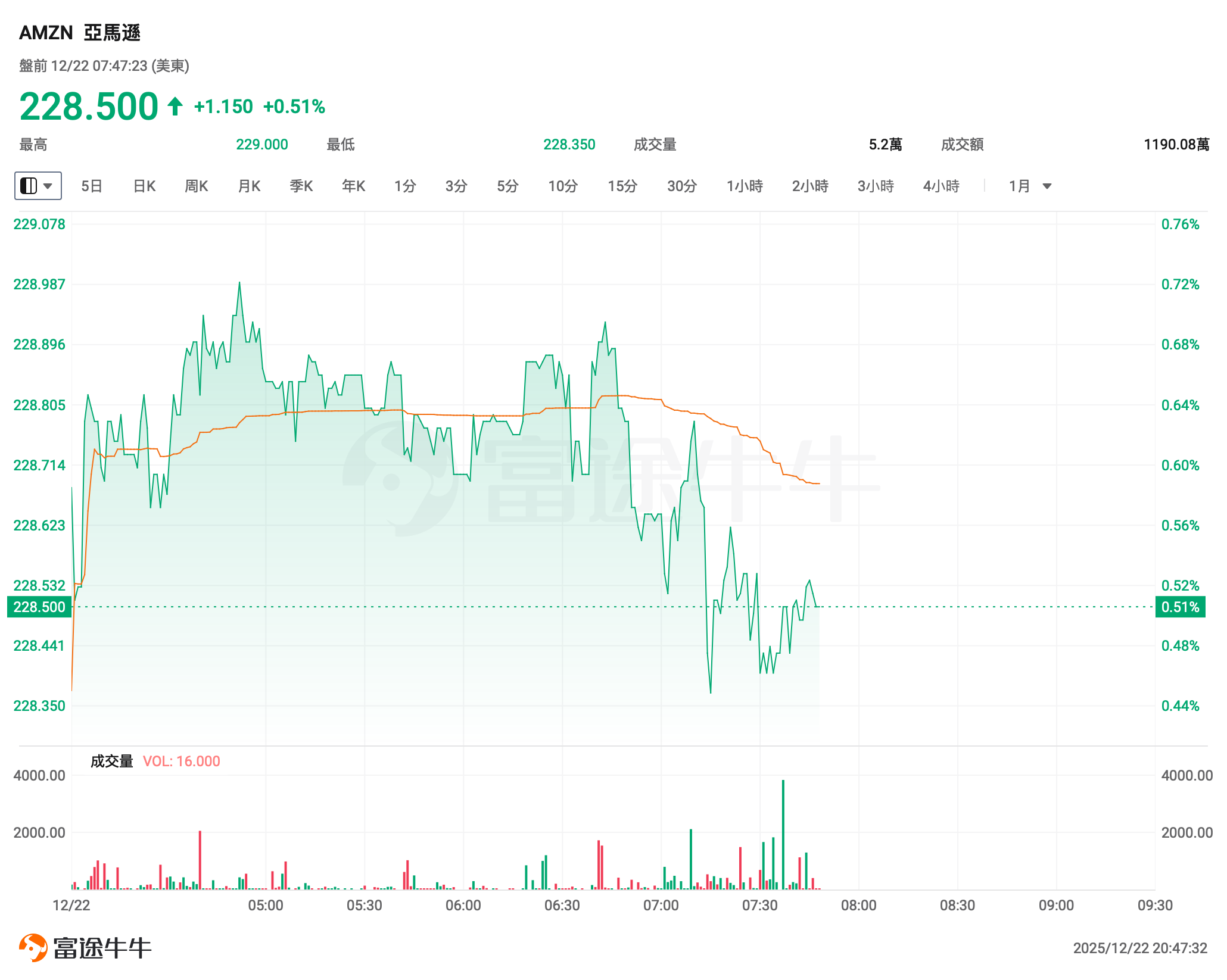
The 'Big Short' trader: The AI market does indeed have a bubble, but remains optimistic about Amazon, Google, Meta, and Microsoft.
Danny Moses, the trader known for “The Big Short,” believes there are indeed signs of a bubble in the AI market. He emphasized that while AI investment represents a genuine long-term growth story, parallels can be drawn with past internet and technology booms, urging investors to exercise caution. He pointed out that although growth is real, mathematical models no longer hold up, and we are approaching a critical point where mathematics begins to break down.
His perspective on potential issues in the AI market does not advocate shorting the entire industry but serves as a reminder for investors to conduct thorough research and identify high-quality targets capable of benefiting from market growth. He advises investors to focus on the most dominant companies within the technology sector—those with resources for sustained expansion and less constrained by the limitations faced by small and medium-sized enterprises. Prime examples include $Amazon(AMZN.US)$ 、 $Google-C (GOOG.US)$ 、 $Meta Platforms(META.US)$ and $Microsoft(MSFT.US)$ 。
Moses is not optimistic about all leaders of large technology companies. For example, $Oracle (ORCL.US)$ the company has high debt and requires substantial cash flow to fulfill AI-related orders. He also mentioned $Advanced Micro Devices (AMD.US)$ and $CoreWeave(CRWV.US)$ highly volatile tech stocks such as $Palantir Technologies Inc(PLTR.CA)$, which are among the riskier investments in the AI sector.
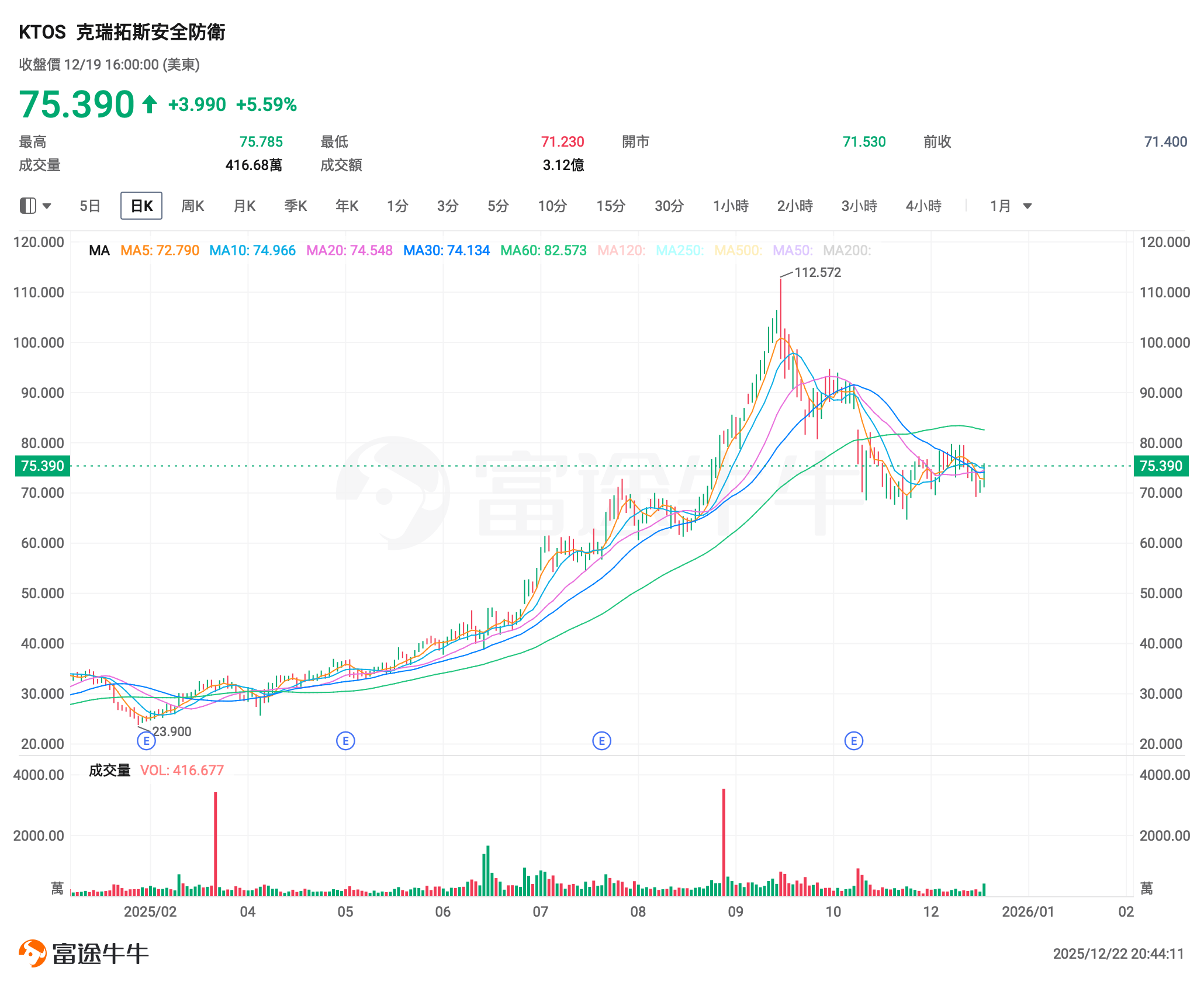
Outperforming the 'Magnificent Seven'! Are defense stocks transforming into hyper-growth stocks amid a dramatic shift in the nature of warfare?
This year, emerging defense companies that have stood out in terms of stock price increases include drone manufacturer $Kratos Defense & Security Solutions(KTOS.US)$ , satellite intelligence firm $Planet Labs PBC(PL.US)$ , and data analytics company $Palantir Technologies Inc(PLTR.CA)$ ; the share prices of these companies have at least doubled within the year.
The rise of these companies coincides with a transformation in the nature of warfare, as evidenced by the drone-dominated battlefield in Ukraine. Meanwhile, U.S. President Trump is upending long-standing Western alliance systems, prompting countries in Europe and Asia to increase their investments in military strength and defense capabilities. Some of these funds are expected to flow to American contractors.
The S&P 1500 Aerospace & Defense sector, which covers 24 companies, has risen 41% year-to-date and is on track for its largest gain since 2013. This is more than double the increase of the S&P 500 Index and approximately 16 percentage points higher than the overall rise of the 'Magnificent Seven.'
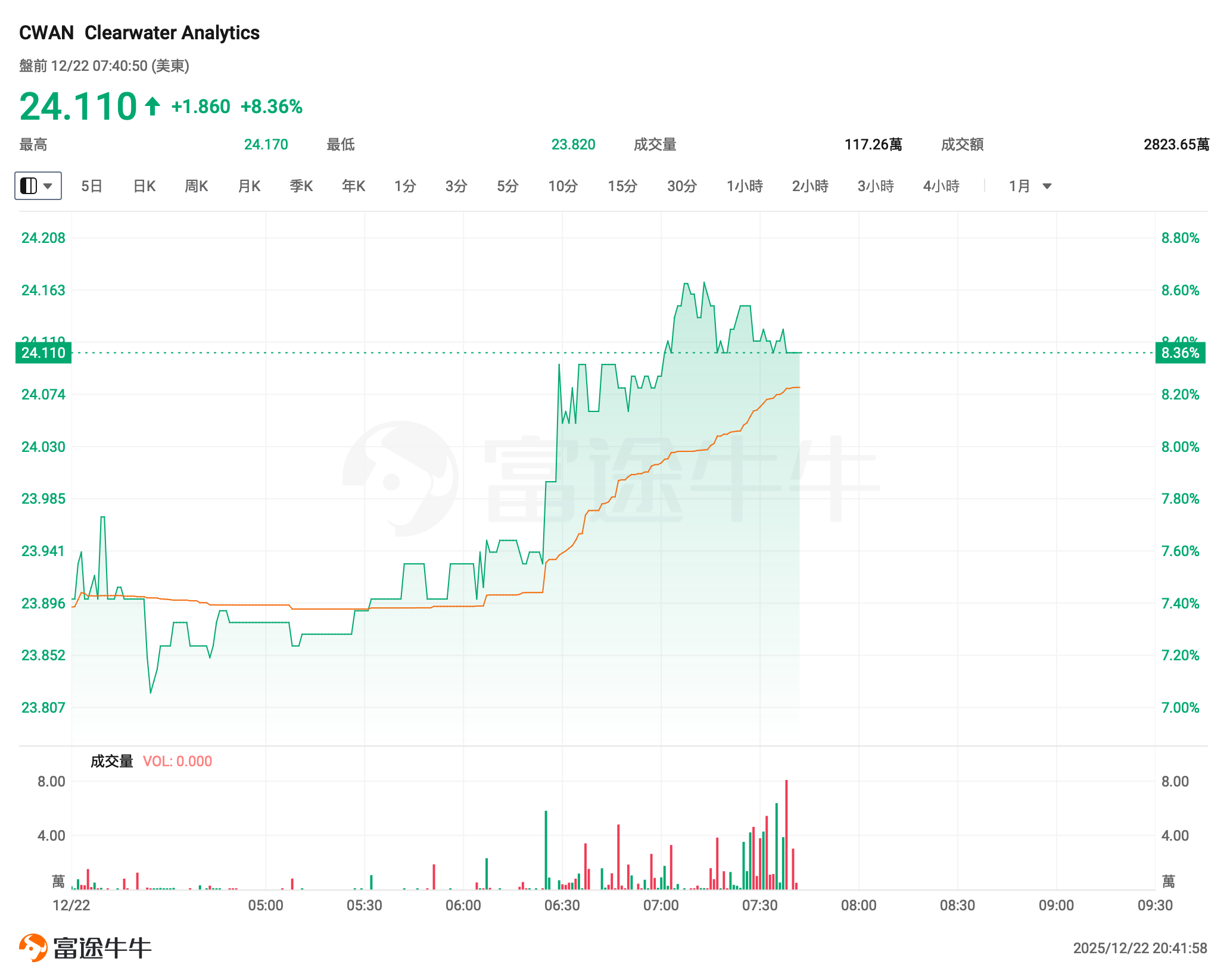
Private equity giant Permira, along with Warburg Pincus, led the acquisition of Clearwater Analytics, valuing the company at $8.4 billion, with pre-market shares rising over 8%.
A consortium of private equity firms led by Permira and Warburg Pincus has agreed to acquire investment and accounting software maker $Clearwater Analytics(CWAN.US)$ , in a deal valuing the company at $8.4 billion including debt. According to a statement, Clearwater’s shareholders will receive $24.55 per share in cash, representing an equity value of approximately $7 billion. The company stated that this price is about 10% higher than the last closing price of the stock and represents a premium of 47% compared to the share price before reports emerged that the two acquiring firms were in negotiations to purchase the company.
The statement noted that the private equity consortium also includes participation from Singapore’s state-owned investment firm Temasek Holdings and received critical support from Francisco Partners. The transaction is expected to close in the first half of 2026, prior to which Clearwater will have a "go-shop period" (ending on January 23) during which it can consider competitive acquisition offers.
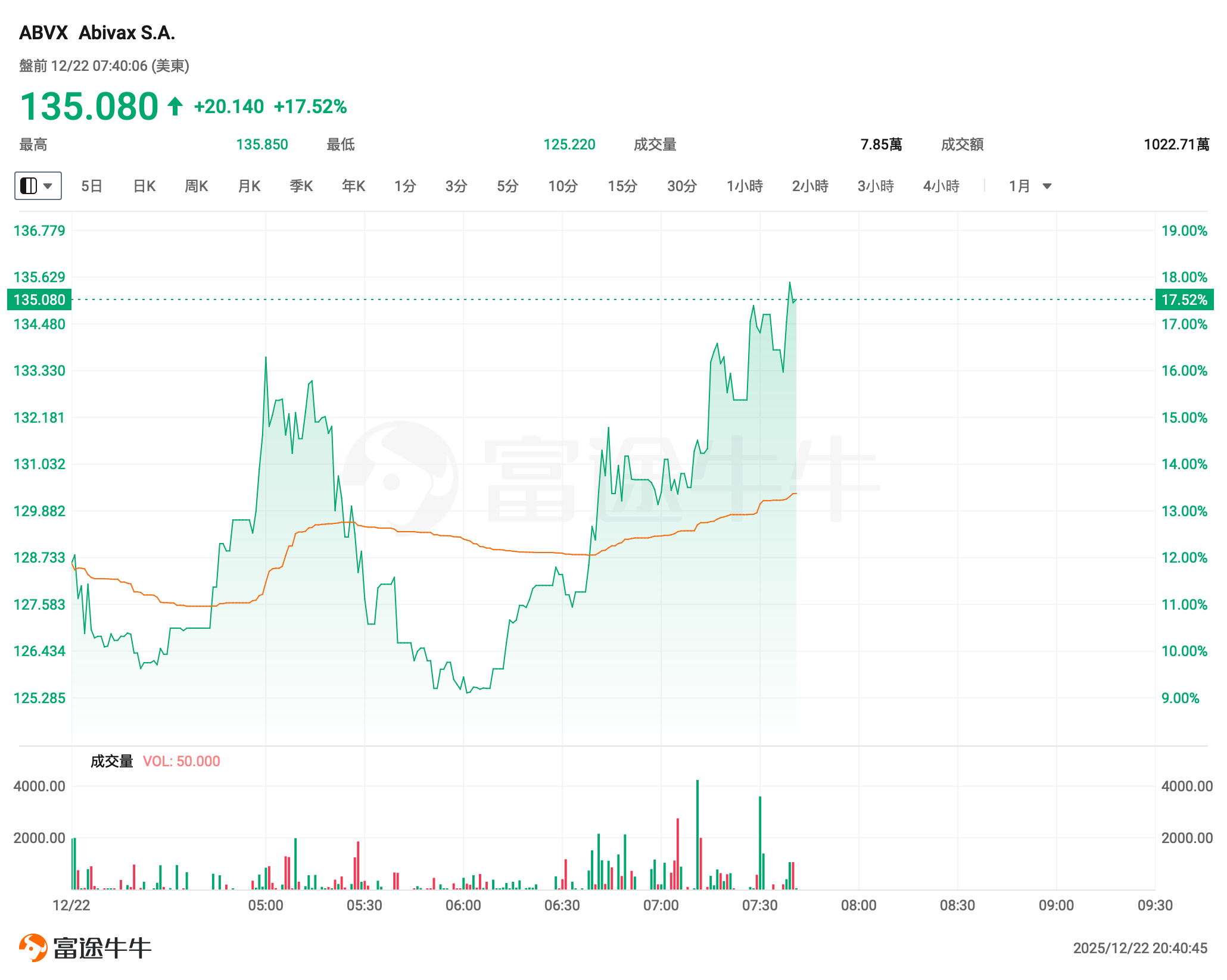
$Abivax S.A.(ABVX.US)$It will be included in the Nasdaq Biotechnology Index, effective before the market opens on December 22, 2025, with the company's pre-market rise exceeding 17%.
Global macro
The Federal Reserve plans to inject approximately $6.8 billion into the market today.
On December 22, the Federal Reserve plans to inject approximately $6.8 billion into the financial markets through repurchase agreements at 10 PM Beijing time tonight. Over the past 10 days, the Federal Reserve has injected about $38 billion as part of its year-end liquidity management.
Repurchase agreements (referred to as repos) are a core tool for managing liquidity in the daily financial system. In a repurchase agreement, the Federal Reserve provides cash loans to banks, secured by high-quality collateral (usually government bonds). Banks quickly repay the loans to reclaim their assets, typically within a day. This move aims to address year-end liquidity pressures and the Federal Reserve's recent adjustments to its standing repo facility. Although officials describe these measures as routine, some investors view them as a positive signal for risk assets.
Is the "Santa Claus Rally" poised to set an optimistic tone for the U.S. stock market in 2026?
The upward momentum of the U.S. stock market appeared to stall in early December, with nearly flat performance as of the last full trading week of the year. However, analysts suggest this does not mean the much-anticipated 'Santa Claus Rally' will not occur.
"Santa Claus Rally" refers to a seasonal trend where, based on historical data, the stock market typically rises during the last five trading days of December and the first two trading days of January. This year, the rally is expected to begin on December 24th (Christmas Eve). If the year-end rally occurs as anticipated, it may set the tone for the market in the new year—currently, investors are actively discussing how much longer this bull market, which has lasted for over three years, can continue.
The Federal Reserve may remain on hold in January next year, but its hawkish stance is unlikely to last long!
The Federal Reserve cut interest rates as expected in December, lowering the federal funds target rate to a range of 3.5%-3.75%. The overall tone of this meeting was on the hawkish side, but perhaps less so than market expectations. Fed Chair Powell stated that the federal funds rate is "within a broad range of estimates for its neutral level" and "the Federal Open Market Committeeis well prepared, waiting to observe economic developments."
The Financial Times' monetary policy radar team in the UK believes that Powell's statements confirm their expectation that the Federal Reserve will maintain the current interest rate level at its next meeting at the end of January next year. However, the team believes that the hawkish hints from the December meeting should be viewed with caution. They think that the weakness in the labor market may continue into next year, and the Federal Reserve may be willing to act again early next year, implementing another 25 basis point rate cut in March.
Trump's economic advisor: It is unlikely that tariffs will be rolled back, and there is hope to fulfill the promise of "tariff dividends" next year.
Trump's chief economic advisor, Hassett, stated that if the Supreme Court rules to abolish Trump's tariffs and requires the refund of tariffs already collected, it will trigger significant administrative issues, and the government is unlikely to refund the tariffs that have been collected; Hassett believes that the improvement in the U.S. economy and government finances makes the Trump administration's promise to issue $2,000 checks to Americans more likely to be realized, and it is expected that the president will propose related measures to Congress next year.
$170 billion is in place! Trump's "Immigration Crackdown" 2.0 is about to begin.
U.S. President Trump is preparing to use new funding in 2026 to implement more aggressive immigration crackdowns, including raiding more workplaces—despite growing opposition ahead of next year’s midterm elections.
Following the passage of a massive spending plan by the Republican-controlled Congress in July, U.S. Immigration and Customs Enforcement (ICE) and the Border Patrol will receive an additional $170 billion in funding through September 2029—a substantial increase compared to their current annual budget of approximately $19 billion.
Wedbush's Top Ten Tech Investment Predictions for 2026: The overall increase in U.S. tech stocks is expected to exceed 20%.
Wedbush noted that 2026 is likely to become a turning point for the AI industry as it transitions from early-stage planning to a critical phase of construction, listing ten major investment predictions for the technology sector.
As the AI wave enters a deeper phase, second-, third-, and even fourth-wave derivative applications are gradually being implemented across software, chips, and infrastructure sectors, which will serve as new growth drivers, potentially propelling overall gains in tech stocks by over 20% in 2026.
Goldman Sachs: The global stock market bull run will continue into 2026, with recommendations for diversified investments.
In a recent report from Wall Street’s Goldman Sachs, it was stated that the bullish trend in global equity markets in 2026 is expected to extend further, driven by continued earnings growth across various markets, with investment returns no longer concentrated solely in U.S. tech stocks.
The average return on global equities is approximately 13%, primarily driven by corporate earnings; the report emphasizes diversified investment and notes increasing opportunities across different sectors. Goldman Sachs believes investors should broaden their investment scope, focusing on emerging markets and diversifying allocations across various fields.
2025: The Year Geopolitical Risk Premium Disappears from the Oil Market
In 2025, the global oil market encountered multiple black swan events—including the Israel-Iran war and Ukraine’s attack on Russian refineries—but remained largely unaffected. Even as the world grows increasingly perilous, calm may become the new normal in this era of energy abundance.
Global benchmark Brent crude futures rose from $69 per barrel on June 12 to a peak of $78.85 per barrel a week later before quickly retreating. By June 24, when a ceasefire agreement between Israel and Iran was brokered by the U.S., prices had already returned to pre-war levels. Even at their peak, prices did not exceed the highest levels seen earlier in 2025.

OpenAI’s profit potential continues to rise! Key internal metrics reportedly double from early last year.
According to industry insiders, OpenAI's computational profit margin has increased to 70%, up significantly from 52% at the end of 2024 and its level in January 2024; despite this improvement, OpenAI has yet to achieve profitability due to high computational and infrastructure costs. OpenAI is aggressively promoting commercial versions and paid software features to enhance profitability, but faces intense competition. Compared to its biggest competitor Anthropic, OpenAI has gained an edge in computational profit margins, though Anthropic is reportedly more efficient in controlling server expenditures.
Positive signals for peace between Russia and Ukraine emerge again, with U.S. and Ukrainian representatives expressing that the series of talks in Florida were “productive.”
According to reports by CCTV News and other media, on December 21 local time, U.S. President's envoy Whitkoff stated that over the past three days, the Ukrainian delegation held a series of productive and constructive meetings with American and European partners in Florida, United States. The U.S. and Ukraine also held separate constructive meetings. Whitkoff posted on the social media platform X on Sunday, stating that the talks on Sunday were "productive and constructive," focusing on "a common strategic approach among Ukraine, the U.S., and Europe."
Could fiscal stimulus backfire? Former BOJ official warns: rate hikes may exceed expectations, with interest rates reaching 1.5%.
A former member of the Bank of Japan’s policy board predicted that during Kazuo Ueda’s term, there may be three additional interest rate hikes to reach 1.5%, with the next rate hike window likely in June or July next year. Although the central bank is moving towards a neutral interest rate (approximately 1.75%), future pace will be constrained by economic and political resistance between the U.S. and Japan. He warned that aggressive fiscal expansion by the government could exacerbate inflation and damage credibility, triggering yen depreciation and bond market volatility, thereby disrupting the process of policy normalization.
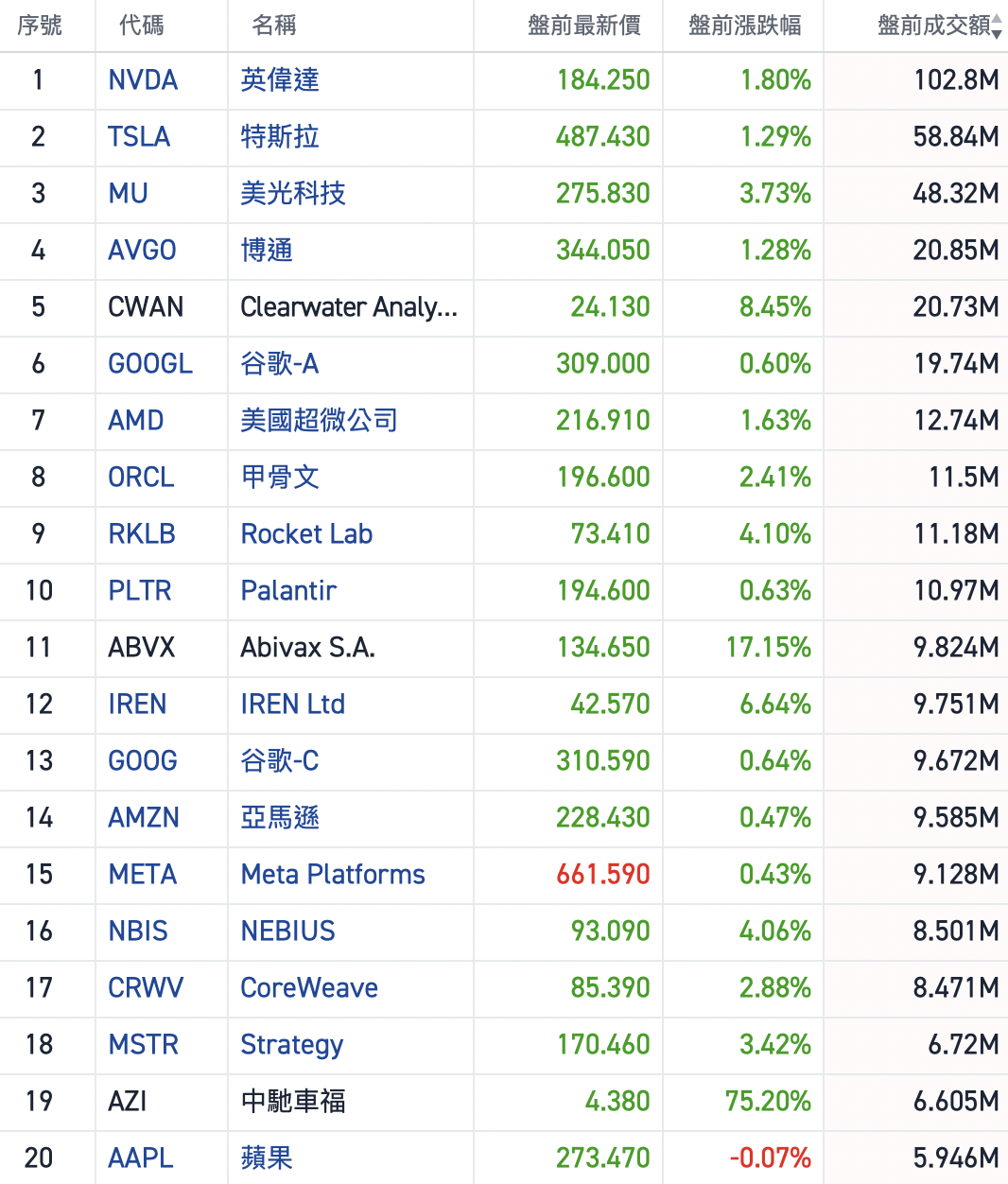
Top 20 pre-market trading volume stocks in the U.S. stock market
Looking to pick stocks or analyze them? Want to know the opportunities and risks in your portfolio? For all investment-related questions,just ask Futubull AI!

Editor/Doris