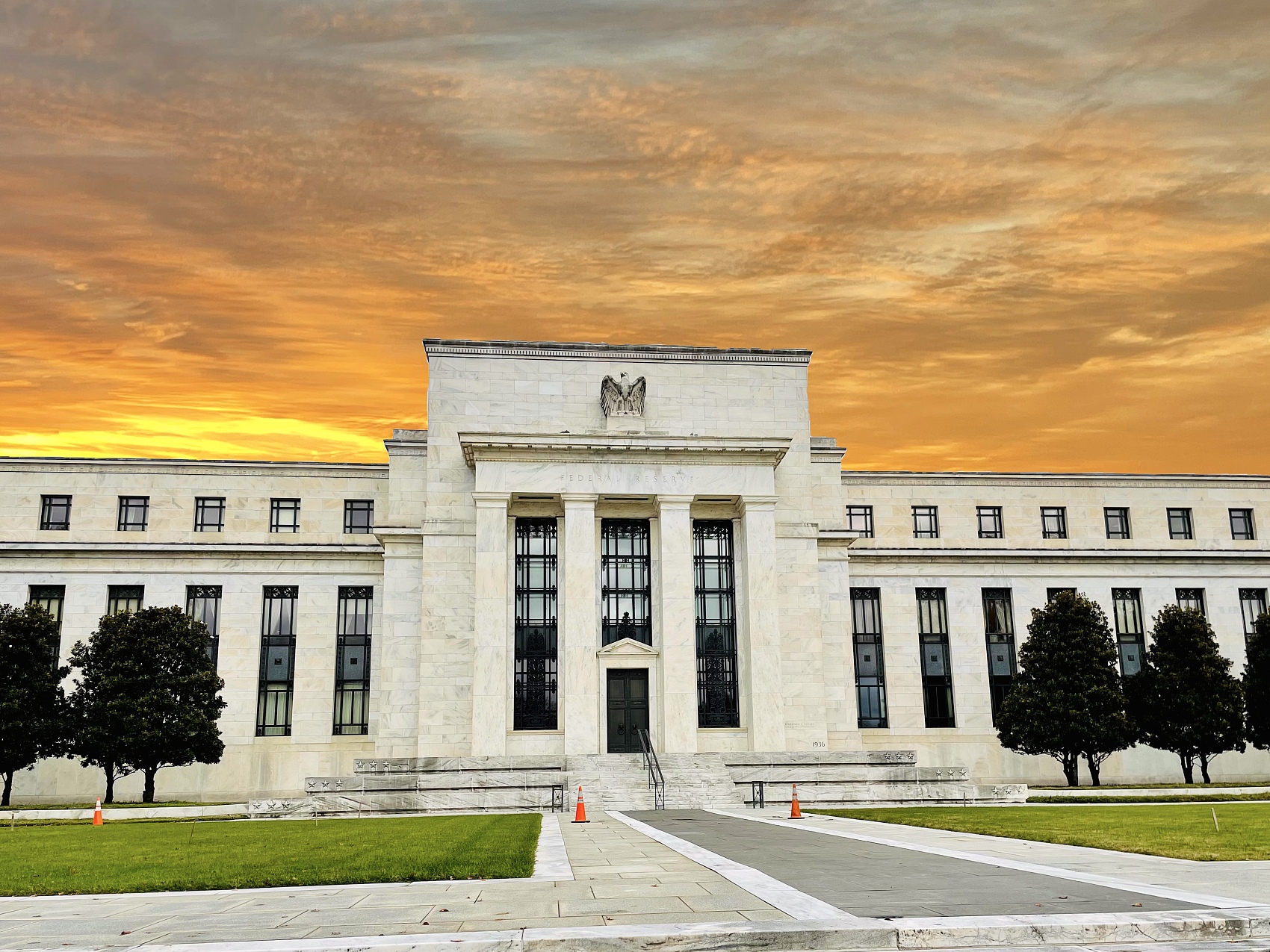
Looking ahead to 2026, as Powell's term is set to expire, the next Federal Reserve Chair will not only face a deeply divided committee but also need to carefully balance the tightrope between inflation and employment…
Over the past year, the Federal Reserve has witnessed a conflict between its two Congressionally mandated goals—maximum employment and price stability—a situation not seen since the stagflation of the 1970s. This has led to a division within the Fed not witnessed in years, evidenced by starkly opposing dissents on interest rate policy. This situation is expected to persist until 2026.
Matthew Luzzetti, Chief U.S. Economist at Deutsche Bank, noted that despite internal divisions, Fed Chair Powell managed to forge consensus this year for three rate cuts. However, with inflation remaining high and the job market still sluggish, the incoming Fed Chair may find it much harder to build consensus.
 Luzzetti stated, "While the most likely path forward is further rate cuts, there is a risk scenario where the next chair faces a committee leaning towards raising rates."
Ian Wyatt, Chief Economist at Huntington Bank, added, "The new chair will face an extremely challenging task of coordination and consensus-building in this environment, especially if their views are significantly out of sync with the majority of the board members."
Trump's influence grows stronger
In 2025, U.S. President Trump implemented a series of dizzying adjustments to economic policy, from roller-coaster-like new tariff rates to closing borders to curb immigration. These moves left the Federal Reserve in a wait-and-see mode for much of this year as officials tried to assess their impact on the economy, inflation, and employment.
The Fed's wait-and-see stance frustrated Trump, who lashed out at the central bank demanding lower rates and attempted to remove Powell using technicalities. The threat to fire Powell over policy disagreements raised concerns about jeopardizing the Fed's independence and rattled the markets.
Although Trump did not fire Powell, he attempted to remove Fed Governor Cook on allegations of mortgage fraud. The matter remains in litigation, with the Supreme Court set to hear the case early next year.
Meanwhile, Fed Governor Kugler resigned in the summer, and Trump subsequently appointed Milan, Chair of the White House Council of Economic Advisers, to fill the remainder of her five-month term. Milan did not resign from his position at the White House but instead took an unpaid leave. This move raised concerns among many Fed observers about the erosion of the Fed's independence.
Tariffs and a weak job market
Initially, many within the Federal Reserve believed that tariffs would only cause a one-time increase in prices, rather than translating into more persistent inflation. However, when 'Tax Freedom Day' arrived on April 2 and Trump imposed the highest and broadest tariffs in a century, more officials began to worry that tariffs might lead to longer-lasting inflation.
Federal Reserve officials used the summer months to monitor and evaluate. By July, signs of cooling emerged in the labor market. The Fed held a policy meeting and maintained interest rates unchanged, consistent with its actions throughout the year. This prompted dissents from Governor Waller and Governor Bowman, both of whom favored a rate cut as a preemptive move to cushion the labor market. This was the clearest evidence yet of divisions within the Fed regarding the stickiness of inflation and how much attention officials should pay to weakening employment.
As summer ended, employment data revealed larger-than-expected cracks, prompting Powell to lay the groundwork for a rate cut in September during his August remarks.
In the fall, the U.S. also experienced its longest-ever government shutdown, forcing the Federal Reserve to make critical interest rate decisions without official government data. Officials relied on private-sector data, which was relatively abundant for the labor market but not for inflation and price trends.
By December, divisions within the Federal Reserve had become apparent. Despite ultimately proceeding with a third rate cut this month, two voting members—Chicago Fed President Goolsbee and Kansas City Fed President Schmid—dissented, as both preferred to keep rates unchanged due to inflation concerns. On the other hand, Milan also dissented, favoring a larger 50-basis-point rate cut. Additionally, six non-voting members also leaned against a rate cut this month.
Although concerns about tariffs fueling inflation persisted, the impact this year was milder than feared. Some at the Fed, including Powell and Waller, projected that tariff-driven inflation would peak in the first quarter of next year before beginning to recede. Others, however, including two voting members for next year—Cleveland Fed President Hamak and Dallas Fed President Logan—worried that inflation could prove sticky and remain elevated for a longer period.
A Cautious Start to 2026
With three so-called 'insurance rate cuts' completed and inflation still elevated, the FOMC has signaled that it will now take some time to observe and assess economic conditions before pursuing any further rate cuts.
After significant delays, more data began to emerge, but the economic picture remained murky due to statistical distortions caused by the government shutdown. The inability to obtain a clearer economic outlook increased the challenges for the Fed in forecasting and formulating appropriate policies.
The latest inflation report in November showed a significant slowdown in price increases as rent declines were factored into calculations. However, given the data gaps caused by the shutdown, many questioned its accuracy.
New York Fed President Williams stated that he believes the latest Consumer Price Index (CPI) may have underestimated inflation by 0.1 percentage points, while Hamak believes it could be underestimated by 0.2 or 0.3 percentage points. Meanwhile, the unemployment rate has edged up to 4.6%.
Looking ahead to 2026, officials expect only one more rate cut. Although the labor market is cooling, they do not see this softening as an emergency. Meanwhile, inflation remains above their 2% target, and officials anticipate economic growth will accelerate next year due to fiscal tailwinds from the tax bill and a rebound following shutdowns.
LPL Financial Chief Economist Jeffrey Roach said he expects inflation data in the coming months to fluctuate but believes inflation will decline next year, paving the way for a few more rate cuts.
“With higher-than-expected tax refunds in early 2026 boosting demand, we may see hotter data, but we should expect inflation to cool in the second half of next year,” he said.
Esther George, former president of the Kansas City Fed, expects the unemployment rate to stabilize next year, albeit at elevated levels, while inflation will remain high amid large fiscal deficits, ongoing questions about the Fed’s independence, and accommodative financial conditions.
“Due to disruptions in official data releases, the FOMC may proceed cautiously but will retain its inclination to lower rates in 2026, citing these cuts as moving the policy rate toward a neutral setting,” George said.
Next year, the Federal Reserve will also welcome its first new chair in eight years. It is widely expected that Trump will nominate a candidate supportive of low interest rates. Even so, if inflation remains stubbornly high, the new chair may still struggle to build consensus on lowering rates. Cleveland Fed President Hamak, who will have voting rights next year, has already indicated she favors keeping rates steady until spring.
Wilmer Stith, bond portfolio manager at Wilmington Trust, said he expects the divisions next year to persist, with more dissent likely to emerge within the committee if the new chair attempts to push through rate cuts against opposition from other members. He also anticipates continued pressure from the Trump administration to lower rates.
However, Powell’s term as chair will continue until May of next year, Stith noted, so there will not be many rate cuts in the first half of the year. He expects one rate cut between January and May next year.
“I think once we have a new chair in place, there will be several rate cuts throughout the year,” Stith said. “This will be a central bank more closely aligned with the government than we’ve seen in a long time. So, I think rate cuts are coming.”
Editor /rice