
①The United States has deployed additional special operations aircraft and military personnel and equipment to the Caribbean region to further exert pressure on the Venezuelan government; ②Previously, the U.S. seized multiple oil tankers linked to Venezuela under the pretext of drug enforcement, drawing significant attention from international markets and causing fluctuations in oil prices; ③Venezuela may respond with measures including escorting tankers with gunboats and considering deploying armed soldiers on oil tankers, but these actions could escalate tensions.
According to reports from multiple media outlets, the United States has deployed additional special operations aircraft to the Caribbean region and is transporting U.S. military personnel and equipment, planning to further pressure the Venezuelan government.
Over the past few weeks, the U.S. has seized multiple oil tankers related to Venezuela under the guise of drug enforcement, raising concerns and vigilance in international markets. President Trump also warned that a land-based strike against Venezuelan “drug traffickers” would soon take place, fueling market fears that the U.S. might undertake military action in Venezuela, which could restrict the normal trade of Venezuelan energy resources.
 Venezuela strongly condemned these actions, and criticism from the international community was not scarce. Russian Foreign Minister Sergey Lavrov stated on Monday that the U.S. actions in the Caribbean pose a threat to international shipping, and Russia will fully support and stand in solidarity with the leaders and people of Venezuela.
Sun Lei, China's Deputy Permanent Representative to the United Nations, spoke at an urgent public meeting on the situation in the Caribbean region held on the 23rd, stating that the U.S. actions near Venezuelan waters in the Caribbean Sea threaten peace and security in Latin America and the Caribbean.
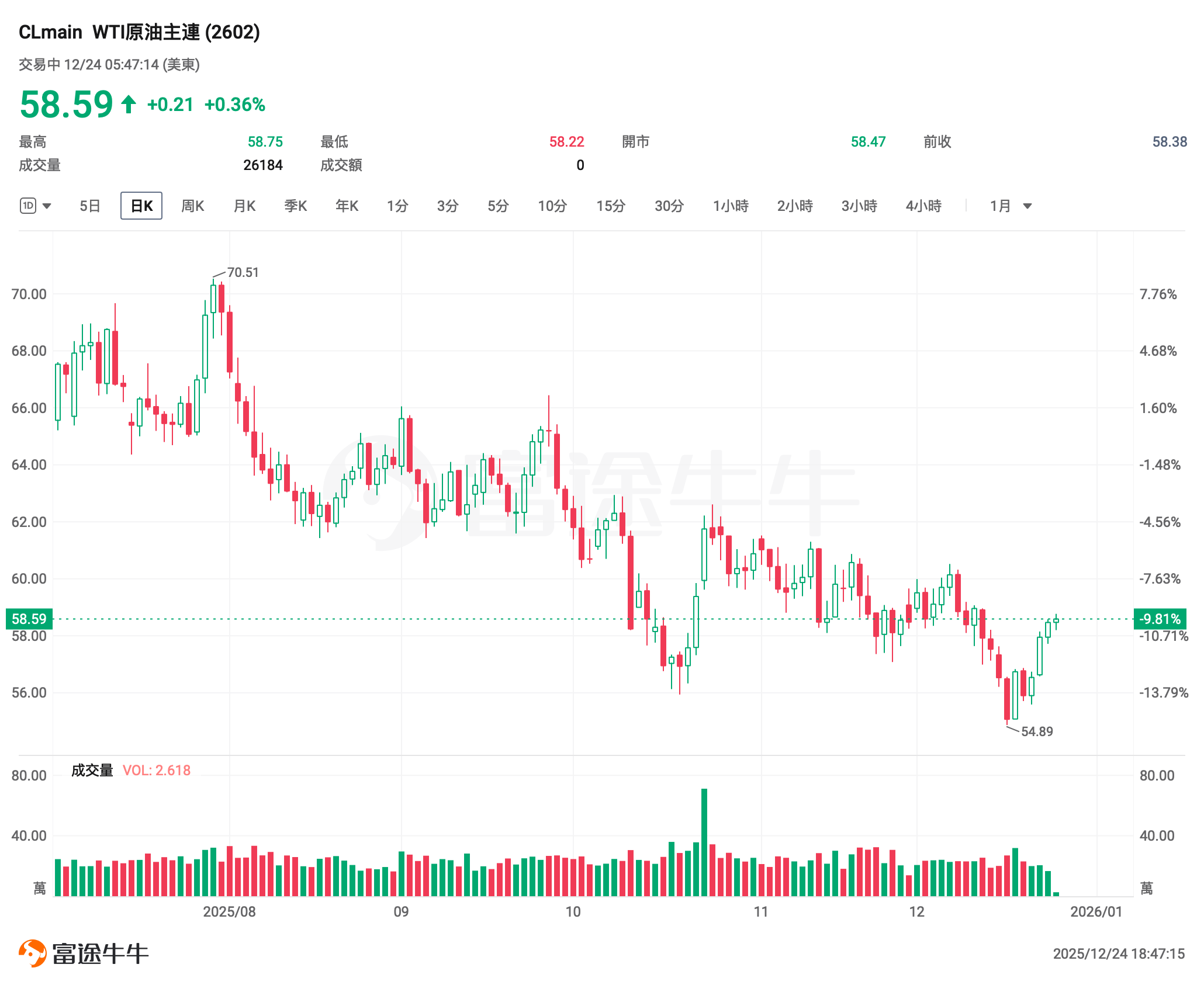
Signs of unusual movements have already appeared in the crude oil market, with the U.S. WTI crude oil futures price rebounding for three consecutive days, stabilizing above $58 per barrel, while Brent crude oil futures fluctuated above $62 per barrel. The market had initially expected oil prices to continue declining due to oversupply fundamentals.
In a difficult situation
Currently, a large number of oil tankers fully loaded with oil are stranded at Venezuelan ports, and officials are concerned that once these tankers sail into international waters, they will be seized by the U.S. Shipping data shows that some oil tankers destined for Venezuela have turned back mid-route. Informed sources revealed that shipowners are canceling crude oil loading agreements.
In response, the Venezuelan government is planning countermeasures. Venezuelan gunboats have begun escorting vessels carrying Venezuelan oil and petroleum products, but the escort missions stop at the country’s territorial sea boundary.
Additionally, Venezuela is considering the possibility of deploying armed soldiers on oil tankers. However, once Venezuela deploys troops, it may complicate interception attempts by the U.S. Coast Guard and could potentially lead to military conflicts between Venezuela and the U.S. naval fleet.
Some industry insiders believe that the situation currently facing Venezuela's oil industry is extremely severe due to limited crude oil storage capacity, which may force Venezuela to interrupt its extraction operations. Oil is a crucial export pillar for Venezuela, accounting for the majority of the country’s foreign exchange revenue.
Editor/Doris