
Top News
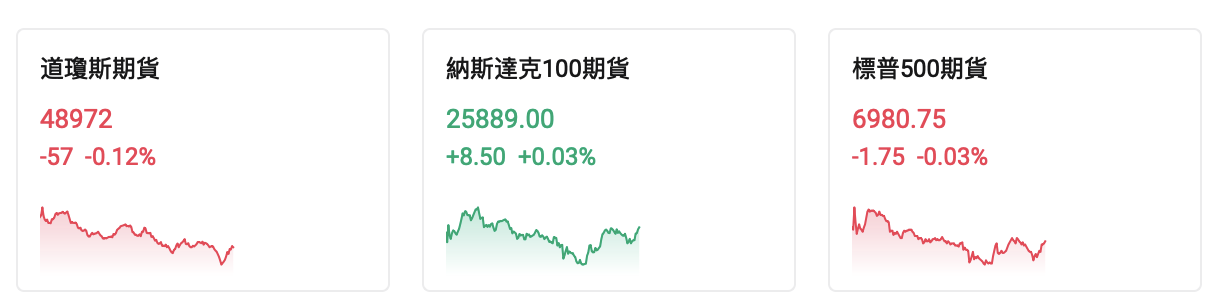
Before the market opened on Friday, the three major futures indexes showed mixed performance, with Dow Jones futures down 0.12%, Nasdaq futures up 0.03%, and S&P 500 futures down 0.03%.
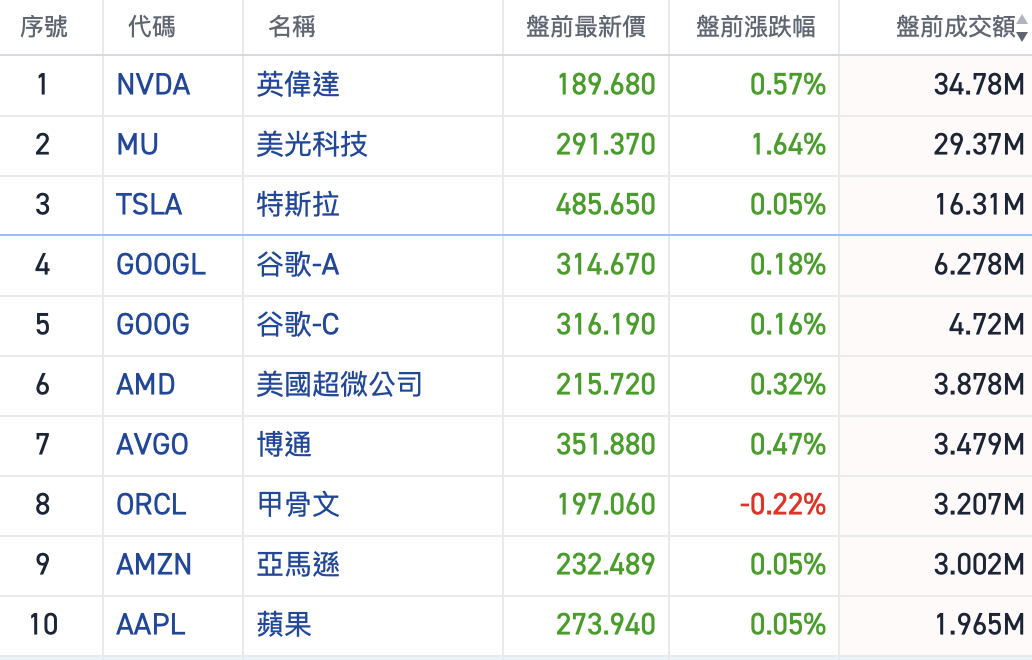
$Star Tech Stocks (LIST2518.US)$ Most stocks rose before the market opened, $Micron Technology (MU.US)$ rose nearly 2%.
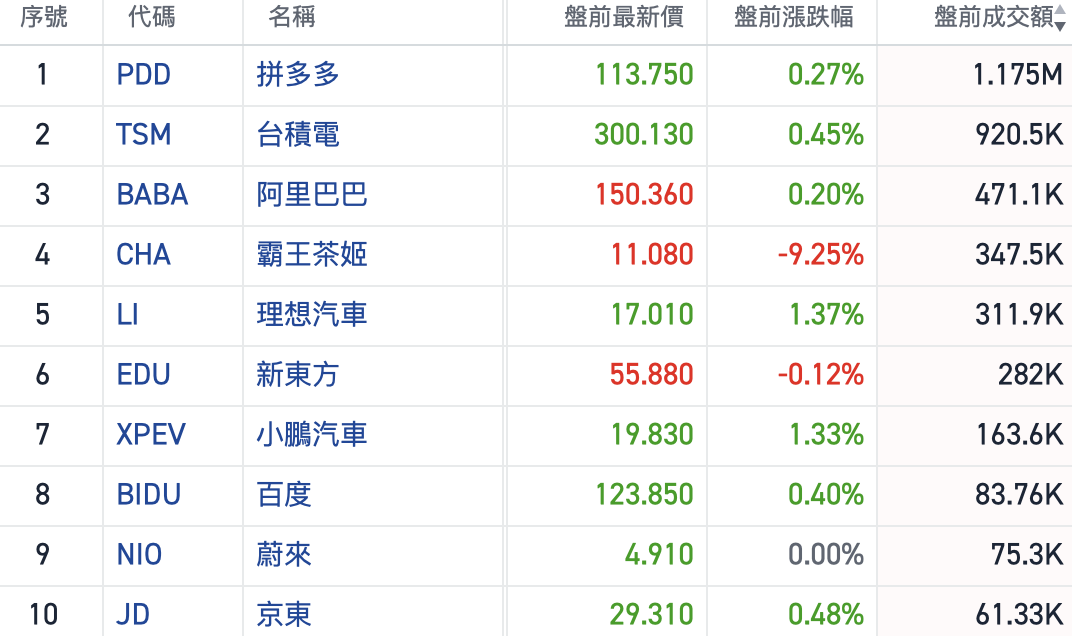
$Popular Chinese Concept Stocks (LIST2517.US)$ There were mixed movements before the market opened, $Chagee (CHA.US)$ Fell more than 9% in pre-market trading, $Li Auto(LI.US)$ 、 $XPeng Motors (XPEV.US)$ Surged over 1%.
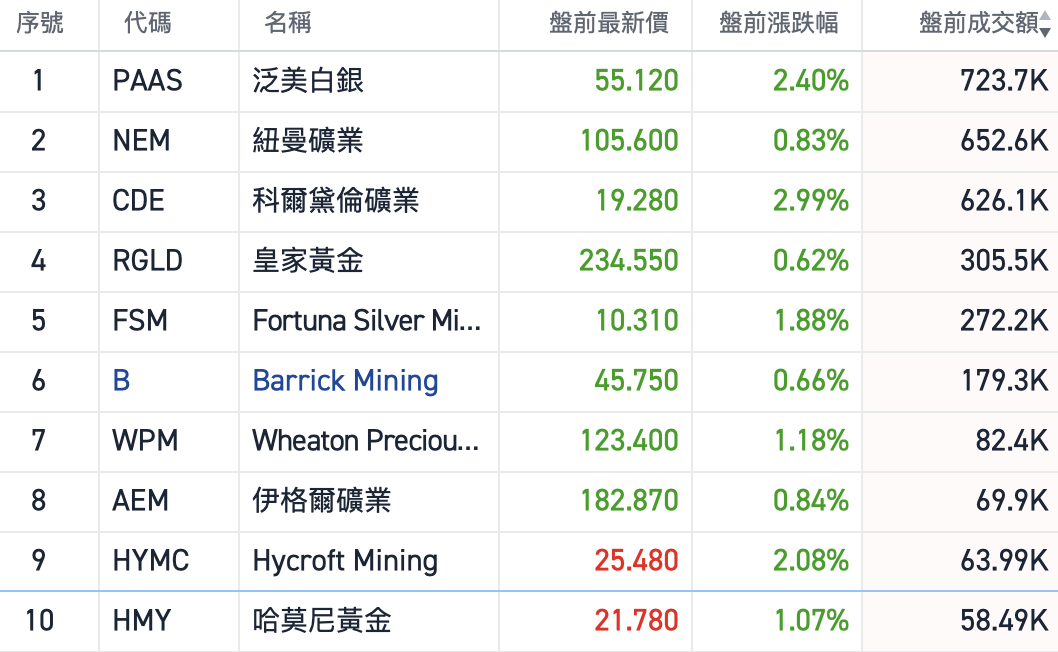
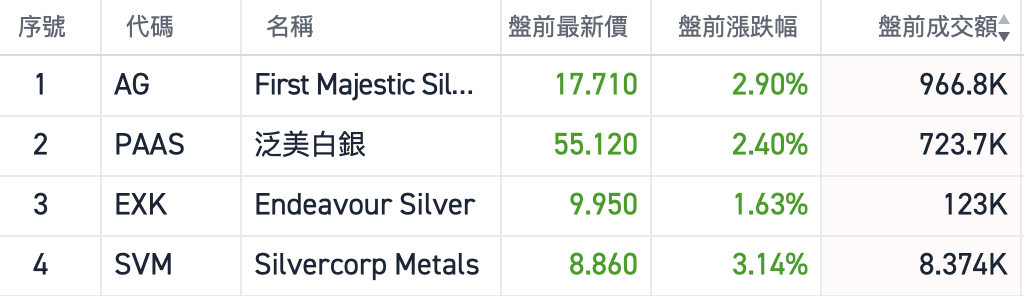
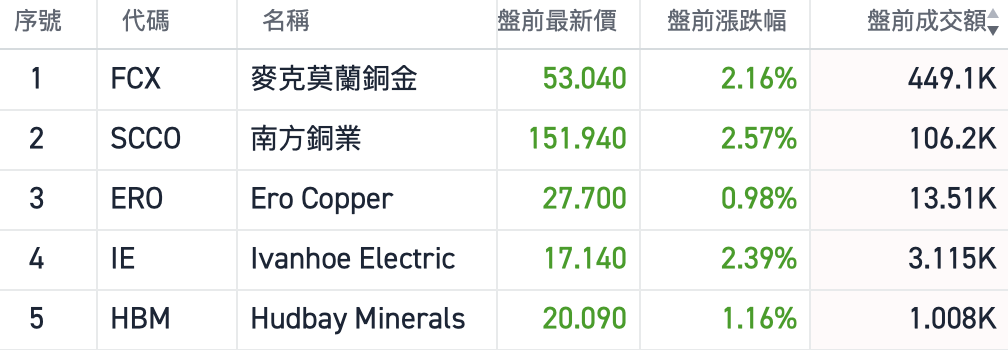
 After gold, silver, and copper hit new highs, $黄金(LIST2110.US)$ 、 $Silver (LIST2093.US)$ 、 $Copper (LIST2510.US)$ Rose in pre-market trading. $Coeur Mining, Inc. (CDE.US)$ Up nearly 3%, $Pan American Silver (PAAS.US)$ 、 $Hycroft Mining(HYMC.US)$Increased by over 2%;$Silvercorp Metals (SVM.US)$ rising over 3%.
$存储概念股(LIST23925.US)$ Rose in pre-market trading as institutions forecast that AI demand will drive a 40% price increase for NAND next year. $SanDisk Corp (SNDK.US)$ with a rise of over 3%, $Micron Technology (MU.US)$ Increased by over 1%. According to international market research firm Omdia, the memory product market is experiencing an unprecedented upward cycle. Regarding NAND, given the current low starting point and tightening supply conditions, this upward trend will clearly continue until 2026. Omdia expects AI demand to drive a 40% increase in NAND prices by 2026.

Is NVIDIA in a tight spot? Possibly cornered by Google's TPU, Jensen Huang spares no expense in his bid to acquire Groq.
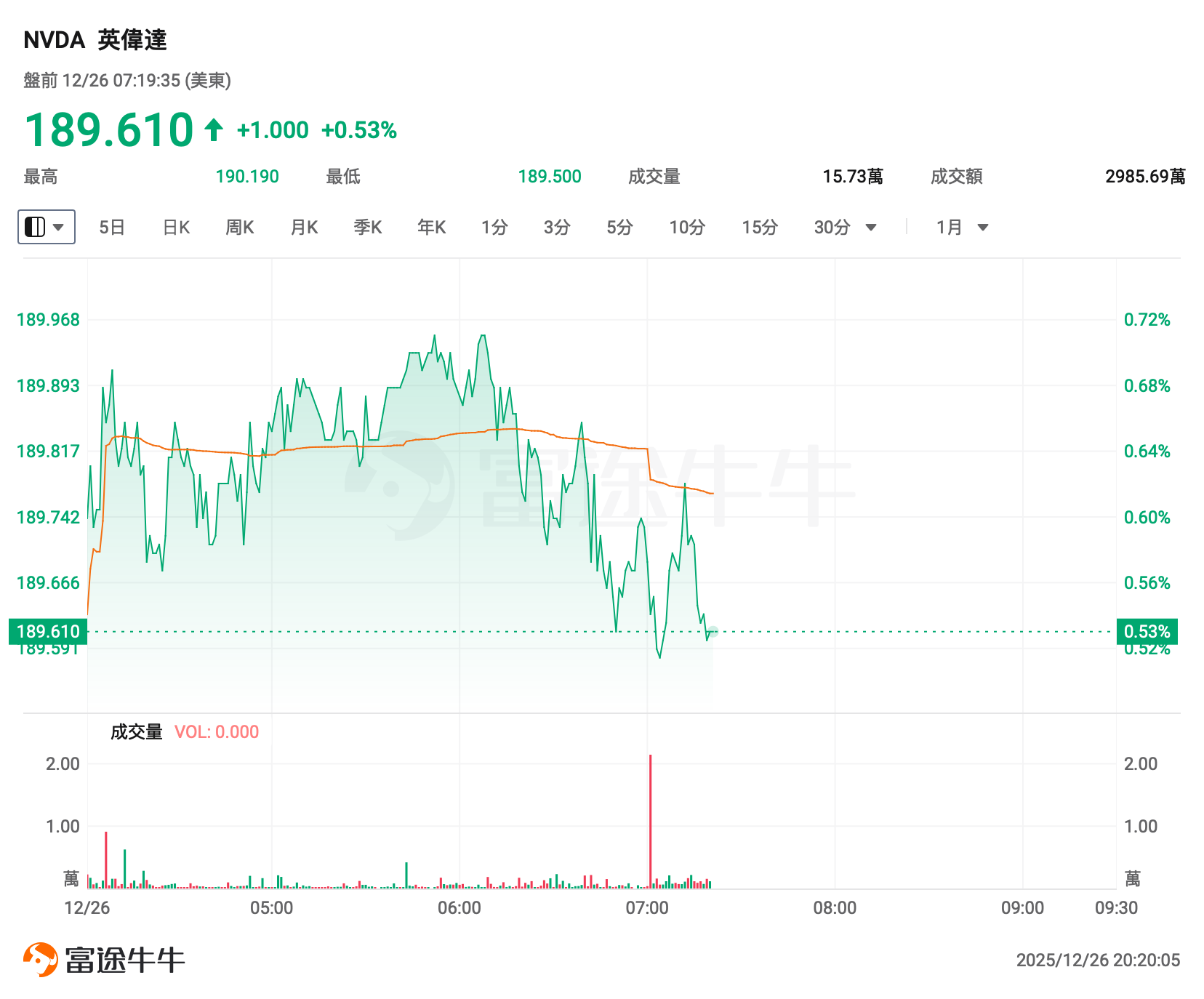
$NVIDIA (NVDA.US)$ Recently reached a non-exclusive technology licensing agreement with Groq. According to the disclosure, NVIDIA will integrate Groq's AI inference technology into its future product ecosystem. Groq's founder and CEO Jonathan Ross, President Sunny Madra, and some key engineering personnel will join NVIDIA. Groq will remain independently operated, and its cloud service, Groq Cloud, will continue to provide external services.
The technical licensing agreement with Groq and the integration of its core team essentially represent NVIDIA's direct response to the rise of Google's TPU. As the focus of AI competition shifts from training to inference, the long-standing dominance of GPUs has started to show signs of weakening. The advantages of TPUs in terms of efficiency and cost structure are gradually becoming apparent, positioning them as a potential key competitive moat for Google Cloud over the next decade. Against this backdrop, Jensen Huang has displayed anxiety for the first time, signaling a sense of being cornered.
Microsoft and Google have entered a 'chip rush' mode, stationing employees in South Korea. Failure to secure chips from Samsung and SK Hynix could result in layoffs.
As global competition for AI computing power intensifies, high-performance memory such as HBM has become a key strategic resource. $Microsoft(MSFT.US)$ 、 $Google-C (GOOG.US)$ 、 $Meta Platforms(META.US)$ Industry giants have stationed their core procurement teams in South Korea to compete for the limited production capacity of Samsung and SK Hynix. However, the advanced production lines of the two Korean companies are already operating at full capacity, making it difficult to meet all demands. To address this, tech companies are accelerating the relocation of procurement and supply chain management positions to Asia and recruiting experts with both technical and business capabilities, aiming to build supply advantages by being closer to manufacturing and addressing the increasingly severe 'chip shortage' challenge.
Apple and other brand smartphones saw sales in China double year-over-year in November.
According to an analysis of the latest data released by the China Academy of Information and Communications Technology (CAICT) by Yicai, $Apple(AAPL.US)$ foreign brands' smartphones in China experienced a significant year-over-year sales increase of 128.4% in November. During the same period, overall smartphone shipments in China grew by less than 2% year-over-year. Apple expects its revenue to grow by 10% during this holiday season. Additionally, Counterpoint Research predicts that Apple is likely to maintain its leading position in global smartphone shipments in 2026.

The UAE is actively introducing new technologies, with Tesla's Full Self-Driving (FSD) system expected to launch locally as early as next month.
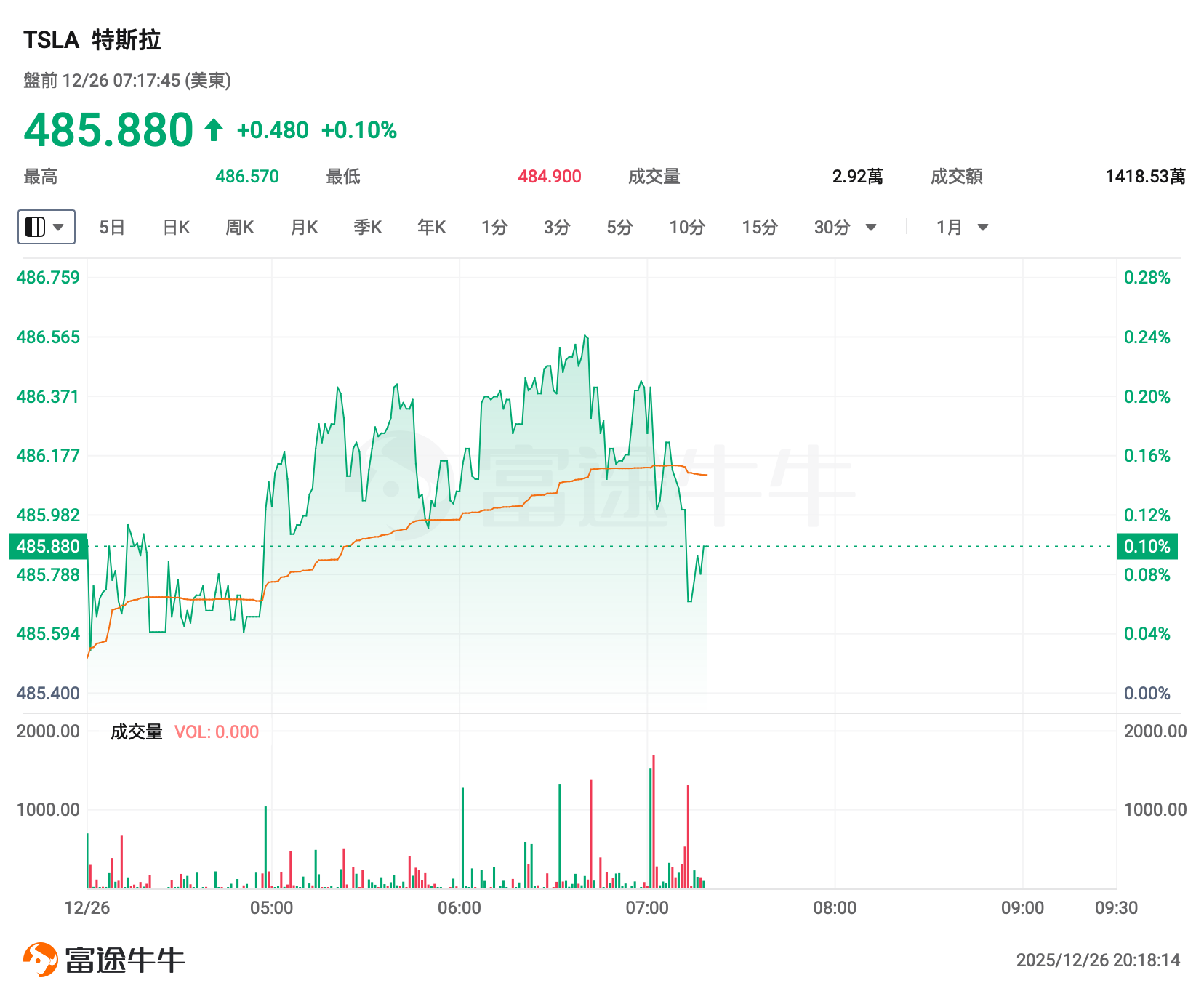
Elon Musk recently stated $Tesla (TSLA.US)$ that the Full Self-Driving (FSD) system will be launched in the UAE as early as next month; the system is a supervised advanced driver-assistance feature capable of assisting with steering, braking, lane changes, urban navigation, and parking operations. During Musk’s recent meeting with the President and Vice President of the UAE, both parties discussed the global application and future development of cutting-edge technologies such as artificial intelligence and space exploration.
Alphabet's autonomous driving division Waymo temporarily suspended its San Francisco services again due to flood warnings.
According to Google (GOOGL.US) Customer notifications on the app of Waymo, Alphabet's autonomous driving division, indicated that due to anticipated storms in the San Francisco Bay Area, Waymo temporarily suspended its autonomous taxi service in the region on Thursday. The U.S. National Weather Service extended the flood warning for the entire San Francisco Bay Area until 10 PM local time on Friday. The notification read: 'Services are temporarily suspended due to a flash flood warning issued by the U.S. National Weather Service.'

The standalone app 'JD.com AI Shop' is undergoing internal testing, enabling intelligent agents to assist with shopping and food delivery.
Reports indicate that JD.com is developing a super-entry app for shopping and lifestyle services called “JD AI Shop,” which is positioned as a “thoughtful, capable of shopping, and caring” lifestyle assistant. Currently in the internal testing phase, it incorporates JD’s self-developed Yanxi large model, potentially rivaling Meituan's AI service assistant tool app “Xiao Mei.” The homepage of “JD AI Shop” breaks away from the traditional “ask-and-answer” model by proactively pushing shopping strategies, discount notifications, outfit inspirations, and lifestyle services. Users can summon a personal shopping assistant by entering “I want” in the input box to obtain consumption decision references and product matches. “JD AI Shop” also supports one-click order generation; for instance, users can input “Order another fresh orange Americano I had yesterday” to instantly create an order, with payment completing the purchase.

XPeng Motors rose over 1% in pre-market trading after officially entering the Mauritius market.
$XPeng Motors (XPEV.US)$The stock rose over 1% in pre-market trading. News-wise, XPeng Motors announced its progress in the Middle East and Africa markets. Following its official entry into the Qatar market, XPeng Motors reached a strategic cooperation agreement with a Mauritius partner in December, officially entering the Mauritius market.

Johnson & Johnson’s subcutaneous dual antibody injection has been approved for marketing in China, reducing administration time to approximately five minutes.
December 25th,$Johnson & Johnson(JNJ.US)$On December 25, the company announced that its innovative therapeutic drug Riketra® – Amivantamab Injection (Subcutaneous Injection) – had officially received approval from China’s NMPA for treating patients with advanced non-small cell lung cancer (NSCLC) carrying epidermal growth factor receptor (EGFR) mutations. The subcutaneous injection formulation of Amivantamab offers higher convenience to patients, reducing administration time from several hours to about five minutes, while also decreasing infusion-related adverse reaction rates by 80% compared to intravenous injections.
The withdrawal of national subsidies coupled with diplomatic fluctuations has led to a 12% plunge in Toyota's sales in China, dragging down its global performance.
Due to the suspension of national subsidies for automobiles in China, $Toyota Motor(TM.US)$Toyota Motor’s global sales and production both declined in November, with a significant contraction in the Chinese market being the main cause. The Japanese automaker reported on Thursday that its operations (including subsidiaries Daihatsu Motor and Hino Motors) saw global sales drop by 1.9% year-over-year in November to 965,919 units, while production fell by 3.4% year-over-year to 934,001 units during the same period.
Biohaven’s depression drug failed in a mid-stage trial, causing an almost 16% drop in after-hours trading.
$Biohaven(BHVN.US)$The company stated on Wednesday that its experimental depression drug failed to meet the primary endpoint in a mid-stage trial. This marks the latest in a series of trial and regulatory setbacks the company has faced this year. Its shares fell nearly 16% in pre-market trading, with the stock having already dropped more than 70% year-to-date.
Previously, the company encountered a clinical trial failure in March, and its drug troriluzole, intended for treating a rare neurodegenerative disease (spinocerebellar ataxia), was rejected by U.S. health regulators.

Coupang's pre-market trading rose more than 5% after the company identified the perpetrator of an information leak and recovered all involved devices.
South Korean e-commerce giant $Coupang(CPNG.US)$ saw its pre-market trading rise more than 5%. News indicates that Coupang announced yesterday that it identified a former employee who leaked user information based on evidence obtained through digital forensics. The company has also recovered all devices and hard drives used to steal user information. Investigation results show that the perpetrator accessed basic information of 33 million user accounts using security keys but only retained user information from approximately 3,000 accounts. After seeing news reports about the incident, the perpetrator deleted all stored information and did not transmit it to any third party.

Despite an 18% pullback in its stock price, JPMorgan has strongly recommended 'increased holdings.' What signal is AT&T sending?
Investment bank JPMorgan has just released its highly anticipated list of 47 select stocks for 2026. This is a carefully curated selection of companies expected to achieve excess returns in the coming year. The list spans multiple industries, including technology, healthcare, finance, energy, and consumer goods. However, only one company from the telecommunications sector made the cut — AT&T (T.US) 。
JPMorgan has assigned AT&T a 'Buy' rating with a target price of $33, indicating an approximate 35% upside from recent trading levels. Currently, the stock offers an expected dividend yield of around 4.5%, making it one of the highest-yielding large-cap stocks in the market. Despite an 8% rise in its share price over the past year and its attractive income stream, AT&T's stock has fallen 18% from its September high of $29.79 per share.
Aomeiluo Pharmaceuticals fell in pre-market trading, following a 75% surge in the previous session that pushed the stock to its highest level in over four and a half years.
$Omeros Corporation (OMER.US)$ fell more than 1% in pre-market trading; the stock surged 75.54% at the close of the previous trading day (December 24), with intraday prices reaching their highest level in over four and a half years since May 2021. In terms of news, the company announced that the U.S. Food and Drug Administration (FDA) approved YARTEMLEA (narsoplimab-wuug) for the treatment of transplant-associated thrombotic microangiopathy (TA-TMA), a typically fatal stem cell transplant complication caused by activation of the complement lectin pathway. YARTEMLEA is the first and only approved lectin pathway inhibitor.

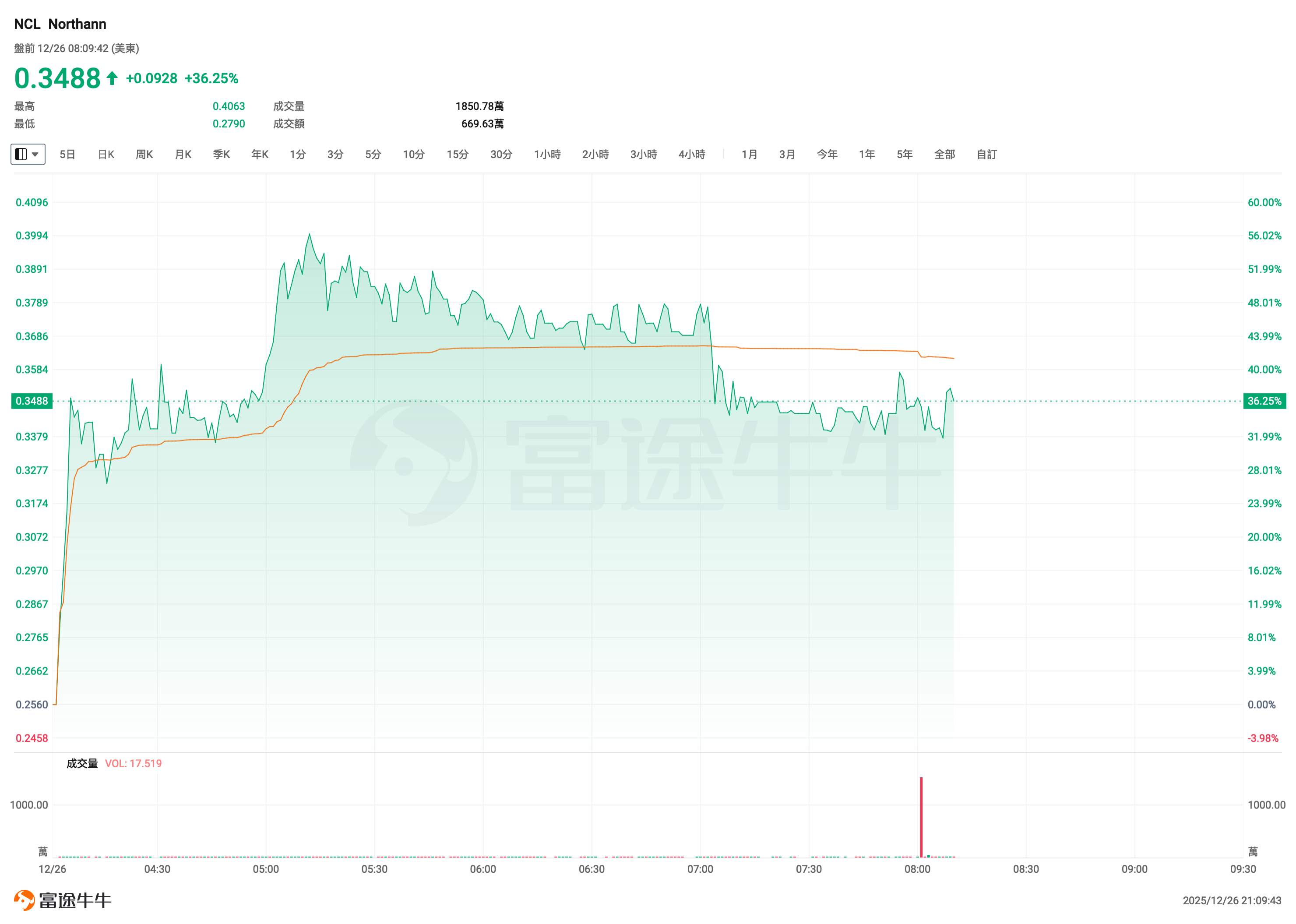
$Northann (NCL.US)$ soared more than 36% in pre-market trading as DBS Bank initiated coverage with a 'Buy' rating and a target price of $0.97.
Space stock $Sidus Space(SIDU.US)$ continued its surge in pre-market trading, with cumulative gains exceeding 150% over the past four trading days.

U.S. macroeconomics
On Christmas Eve, two major U.S. stock indexes simultaneously hit record highs, with investors watching whether the 'Santa Claus rally' will continue.
The U.S. stock market was closed on Thursday for Christmas, with early closure on Wednesday and light trading activity. Trading volume is expected to remain low ahead of the shortened week due to the New Year holiday. Earlier this week, the S&P 500 index hit a new record high on Wednesday, buoyed by stronger-than-expected U.S. economic growth in the third quarter.
After markets return to normal trading on Friday, trading may remain subdued amid thin volumes, but attention will be on whether the 'Santa Claus rally' can continue.
Collective surge in the metals market: Gold, silver, and copper all hit new highs.
The global precious metals market rebounded strongly after a brief adjustment: Spot silver hit an all-time high of $75.66; spot platinum soared 8% to $2,476 per ounce, also setting a new record; gold steadily recovered, with spot gold reaching as high as $4,531. Meanwhile, base metals also saw widespread gains, with New York copper futures and the main Shanghai copper contract both hitting record highs.
Moody's Chief Economist: While Expectations for the Fed to Cut Interest Rates Next Year Are Reasonable, Patience Is Required
During the COVID-19 pandemic, the Federal Reserve's interest rate hikes came swiftly and aggressively, but inflation failed to cooperate, leaving the Fed feeling as if it were in emergency mode. However, the emergency phase has ended, with inflation retreating from its peak, and the U.S. economy demonstrating resilience. This progress continues to fuel growing optimism that the Fed will ease policy further next year.
Nonetheless, Mark Zandi, chief economist at Moody's, did not refute this notion but urged investors to exercise patience. According to CNBC, in recent comments, Zandi stated that the Federal Reserve might implement multiple rate cuts in 2026—not because of economic prosperity but because he believes the economy has entered a delicate balance.

False Prosperity of U.S. GDP: The AI Sector Booms While Other Industries Face a Bleak Winter.
Data from the U.S. Bureau of Economic Analysis shows that the U.S. GDP grew by 4.3% year-over-year in the third quarter, surpassing expectations of 3.2%. However, many Wall Street analysts questioned whether the strong GDP growth was primarily driven by the artificial intelligence sector, while other industries outside AI faced sluggish investment and a harsh winter.
US tech billionaires generated $550 billion in wealth over the past year, fueled by a $2.5 trillion AI boom.
The wealthiest technology billionaires in the United States have collectively added over $550 billion to their net worth this year, benefiting from investors' fervent pursuit of leading artificial intelligence companies.
Bloomberg data shows that by the close of the New York market on Christmas Eve, the total value of cash, stocks, and other investment assets held by the top ten technology founders and CEOs in the United States exceeded $2.5 trillion. This figure marks a significant increase from $1.9 trillion at the beginning of the year, with the S&P 500 index rising by more than 18% during the same period.
K-shaped economy! Divergent performance between large and small businesses in the U.S.
The U.S. economy is experiencing a pronounced 'K-shaped divergence': large corporations are riding the wave of AI, with both profits and stock prices soaring, while small businesses are mired in layoffs and profitability challenges due to the combined pressures of inflation, tariffs, and consumer downgrading. This dichotomy between enterprises is exacerbating structural rifts in the labor market and widening the gap between rich and poor in society.

U.S. Job Market in 2025: Layoffs Surge by 50% Year-on-Year, Hiring Rates Near Pandemic Levels.
In this economic environment defined by uncertainty, artificial intelligence, and global tensions, the issue of 'employment difficulties' in the United States persisted throughout 2025. This year, large companies such as Amazon, United Parcel Service (UPS), Nestlé, Microsoft, and Verizon witnessed significant layoffs.
Ultimately, the Department of Labor reported that as of November this year, 7.8 million people in the United States were classified as unemployed, compared to 7.1 million in November of last year. Compounding the problem, it will be difficult for those unemployed this year to find new jobs, as the hiring rate has hovered near the low levels seen in 2020 and 2013.
Supply Chain Gridlock! Leather Goods Hit by 'Precision Tariff Strikes,' Could Price Hikes in the U.S. Become More Pronounced Next Year?
Which category of goods in the U.S. domestic market has been most severely impacted by Trump's tariffs? The answer may well be: leather goods… Many American manufacturers and retailers have already sold out their pre-tariff inventories, while the cost of replenishing stock has skyrocketed. Industry experts note that most products currently on shelves are made from 'more expensive' leather, undergo 'costlier' overseas processing, and incur freight charges that are 'higher' than last year’s goods.
Trump Pushes for 'Trump-Class' Battleships; Experts Criticize Them as Expensive and Impractical
U.S. President Trump recently unveiled plans to construct a new type of battleship but faced overwhelming criticism. Military experts argue that the battleships Trump intends to build are not only exorbitantly priced but also fail to align with modern combat doctrines, lacking practicality.
Zelenskyy: Upcoming Meeting with Trump Expected to Finalize Multiple Agreements Before New Year
On Friday local time, Ukrainian President Zelenskyy stated that he plans to meet with U.S. President Trump soon, adding that many things could be finalized before the arrival of the new year. Zelenskyy noted that some documents are 'nearly complete,' while others are 'fully prepared.' These documents form part of a broader framework aimed at ending the conflict and ensuring Ukraine’s reconstruction.
Wishing for Bitcoin this Christmas? Surprising shifts are occurring in American consumer behavior.
During the Christmas season, U.S. consumers’ expectations of receiving cryptocurrency as a gift have increased, with 28% of adults expressing willingness to accept it, rising to 45% among younger generations. Amid inflationary pressures, consumers are utilizing price comparison tools and artificial intelligence to find discounts and save on expenses. This positions cryptocurrency as a flexible gifting option amid budget constraints, while also being viewed as an entry point into investment.

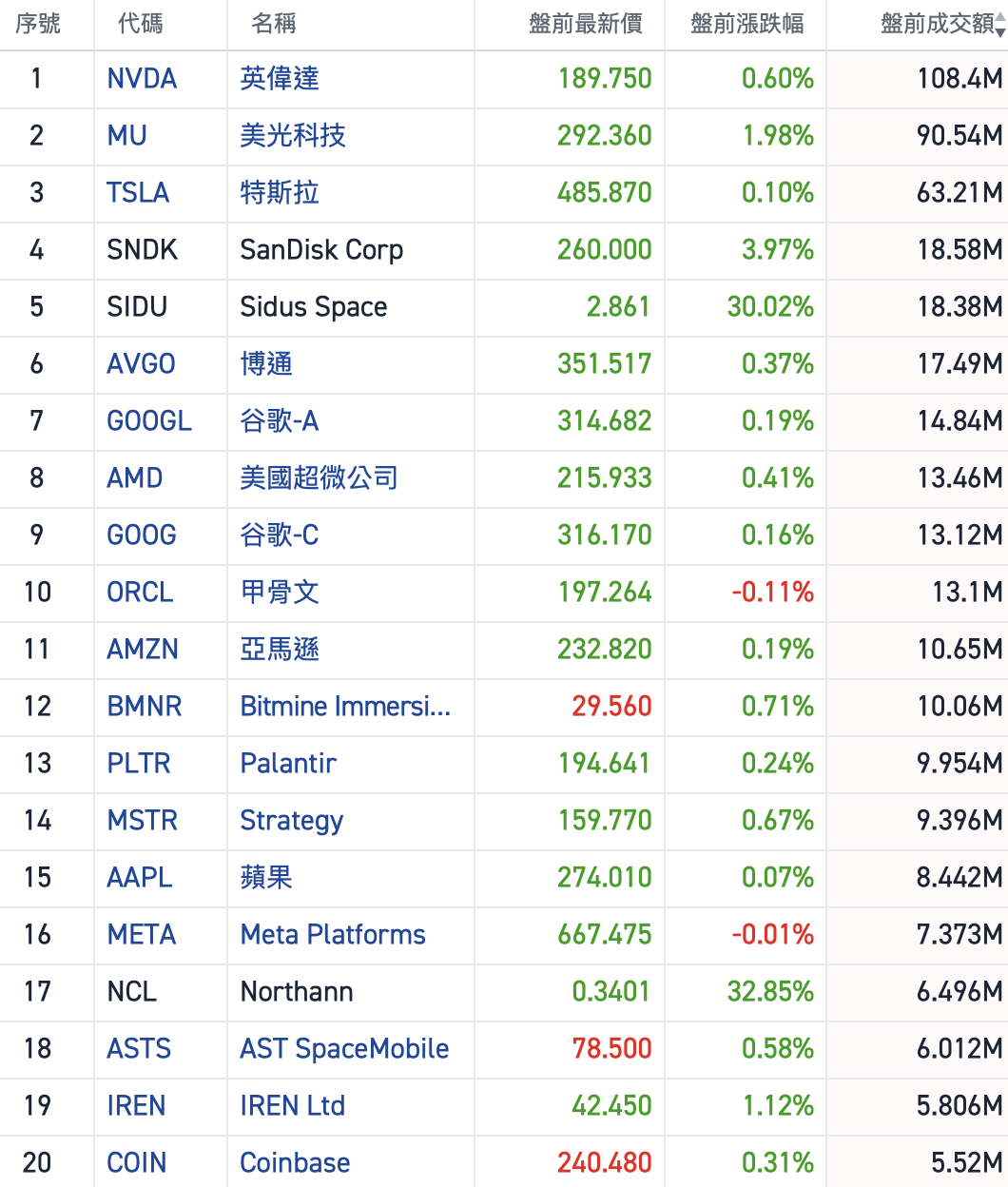
Top 20 pre-market trading volume stocks in the U.S. stock market
Looking to pick stocks or analyze them? Want to know the opportunities and risks in your portfolio? For all investment-related questions,just ask Futubull AI!

Editor/Doris