
Japan's Cabinet has approved a record-high annual budget totaling 122.3 trillion yen, with expectations of achieving the nation’s first primary fiscal surplus since 1998 in the fiscal year 2026. According to projections by the Ministry of Finance, the primary fiscal balance is expected to reach a surplus of 1.34 trillion yen.
Japan has announced that it expects to achieve its first primary budget surplus at the national level since 1998 in the fiscal year 2026. On Friday, Japan's Cabinet approved an annual budget totaling 122.3 trillion yen, marking the largest fiscal plan in the country’s history. Japanese Prime Minister Sanae Takaichi emphasized that the budget “balances robust growth with fiscal discipline.”
On December 26, following the Cabinet’s approval of the fiscal year 2026 budget, Sanae Takaichi stated, "The initial budget of the national government is projected to achieve a primary budget surplus for the first time since 1998. We believe we have crafted a budget that balances robust economic growth with fiscal sustainability." According to projections by the Ministry of Finance, the budget is expected to generate a primary fiscal surplus of 1.34 trillion yen at the national level.
 Achieving a fiscal surplus has been a goal of the Japanese government for over two decades. The primary balance is a key indicator of the government’s fiscal health, representing the difference between revenue and expenditures excluding debt servicing costs. Despite the government’s emphasis on shifting focus to other fiscal indicators, achieving a primary budget surplus provides support for its expansionary fiscal policy.
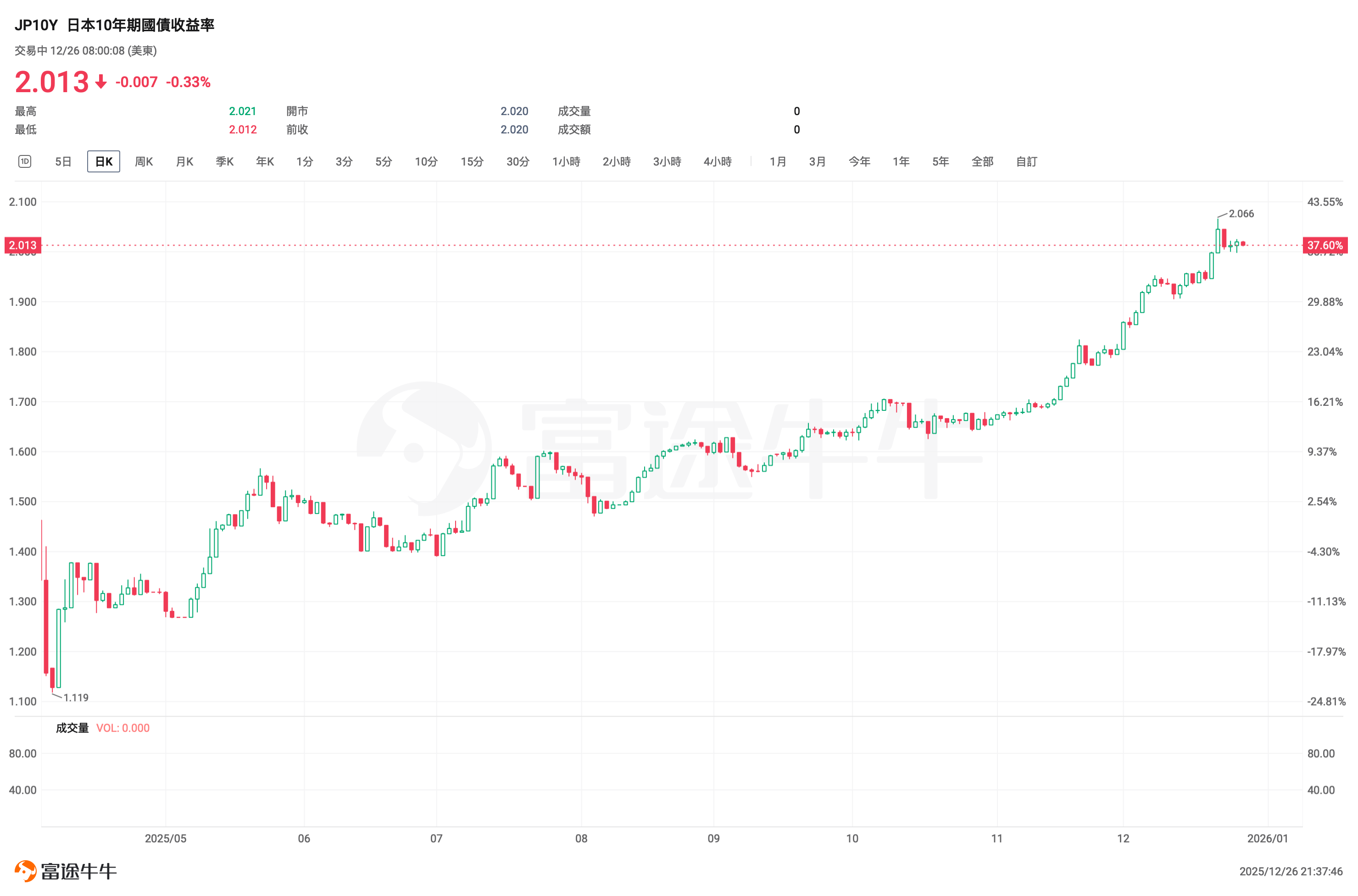
This progress comes amid a sustained rise in Japanese government bond yields. Partially driven by market concerns over Japan’s heavy debt burden and potential spending excesses, the benchmark 10-year government bond yield once rose to 2.1%, reaching a 27-year high. In response, the government’s budget proposal includes measures to reduce the issuance of ultra-long-term bonds and tighten overall control over new bond issuance.
Achieving the fiscal surplus target remains uncertain.
Japan’s journey toward achieving its primary fiscal surplus target has spanned nearly three decades. Initially set for fiscal year 2011, the goal has faced repeated delays for over a decade. Next month, the Cabinet Office will release comprehensive data including local governments, which is expected to confirm the milestone’s achievement. In recent years, many local governments in Japan have already achieved primary fiscal surpluses.
However, this progress may still be influenced by subsequent fiscal arrangements. If the Japanese government introduces additional supplementary budgets in the next fiscal year, the status of achieving this target could face uncertainties.
Notably, the Japanese government has gradually downplayed the significance of the primary balance as a core indicator of fiscal health, instead placing greater emphasis on reducing the debt-to-GDP ratio. In an inflationary environment, this objective is relatively easier to achieve. According to Bloomberg, Finance Minister Satsuki Katayama noted that the government has not entirely abandoned the primary balance as a reference for fiscal discipline but is now assessing it within a multi-year framework rather than focusing solely on annual data.
Significant Reduction in Ultra-Long-Term Bond Issuance to Calm Markets
Amid mounting pressure from the continued rise in government bond yields to multi-year highs, Japan’s Ministry of Finance has slashed the issuance of ultra-long-term government bonds in the new fiscal year budget to 17.4 trillion yen, a reduction of nearly one-fifth compared to the previous year, marking the lowest level in seventeen years.
As the most debt-burdened country among major developed nations, Japan's government debt has exceeded twice its economic output, making it particularly sensitive to rising borrowing costs. The recent increase in yields primarily reflects market concerns that the government's expansionary fiscal policy could further exacerbate risks to debt sustainability.
To address market concerns and enhance policy transparency, the Ministry of Finance announced that it will hold hearings with market participants around June each year starting from the next fiscal year to gather feedback and adjust issuance plans flexibly as needed. This arrangement stems from the bond market sell-off pressure in June this year, when the Ministry of Finance made a rare interim revision to its plan, reducing the issuance of super-long-term bonds from 24.6 trillion yen to 21.4 trillion yen.
Overall, the total issuance scale of government bonds for the new fiscal year (including super-long-term bonds) is set at 180.7 trillion yen, marking a nearly 5% decrease compared to the total amount including supplementary budgets for the current fiscal year. In terms of maturity structure, the Ministry of Finance maintained stable issuance of 10-year benchmark government bonds while increasing the combined issuance of 2-year and 5-year government bonds by 2.4 trillion yen.
Debt dependency reaches the lowest level since 1998
Against the backdrop of the new fiscal year’s record-high budget total, the Japanese government successfully kept the issuance of new government bonds at 29.6 trillion yen, representing only a slight increase of 1 trillion yen compared to the current fiscal year and marking the first time that new bond issuance remained below 30 trillion yen. Debt dependency also dropped to 24.2%, the lowest level since 1998.
Finance Minister Satsuki Katayama noted that although the budget total hit another record high, its share of nominal GDP has remained stable for three consecutive years, indicating that the budget expansion is not excessive relative to the size of the economy. Tax revenue is projected to grow by 7.6% to reach a record 83.7 trillion yen, providing an important funding source for additional expenditures.
However, the growth in tax revenue remains insufficient to fully cover fiscal spending pressures. Debt servicing costs are expected to surge by 10.8% to 31.3 trillion yen, assuming an interest rate of 3.0%, which would mark the highest level in 29 years, reflecting the repayment pressures faced by Japan during its exit from ultra-loose monetary policy. Meanwhile, rigid expenditures such as social security and defense continue to rise steadily.
Editor/Doris