
① On the first trading day after Christmas, Target's stock price initially surged over 3% at the market open. News spread that activist investor TCIM had established a position, which was seen as a signal that the board and management might be pressured to accelerate improvements in capital returns and push for strategic adjustments; ② Amid ongoing poor performance and the impending CEO transition, Target has reached a critical juncture where change is imperative.
Cailian Press reported on December 27 (Editor: Shi Zhengchi) that on the first trading day after Christmas, a major U.S. retail giant$Target (TGT.US)$saw its shares surge over 3% at the opening of the market. Reports indicate that activist investor TCIM has reportedly established a position in the company, sparking market speculation that the management might be pressured to take actions to improve capital returns.
As background, Target is the second-largest discount retailer in the United States, following Walmart. After the stock price plunged due to an 'earnings shock' at the end of last year, there was a brief recovery, but it turned out to be only the beginning of another downward spiral. Compared with the high point of $145 in early January this year, Target's share price has still fallen by more than 30%, and compared with its historical peak at the end of 2021, the decline exceeds 60%.$Walmart (WMT.US)$The second largest discount retailer. The company's stock price experienced a brief "rebound" after plummeting due to a "financial report explosion" at the end of last year, but little did they know that was just the starting point of another abyss. Compared to the peak of $145 in early January this year, Target's stock price has since evaporated by more than 30%, and compared to the historical high at the end of 2021, it has more than halved by over 60%.
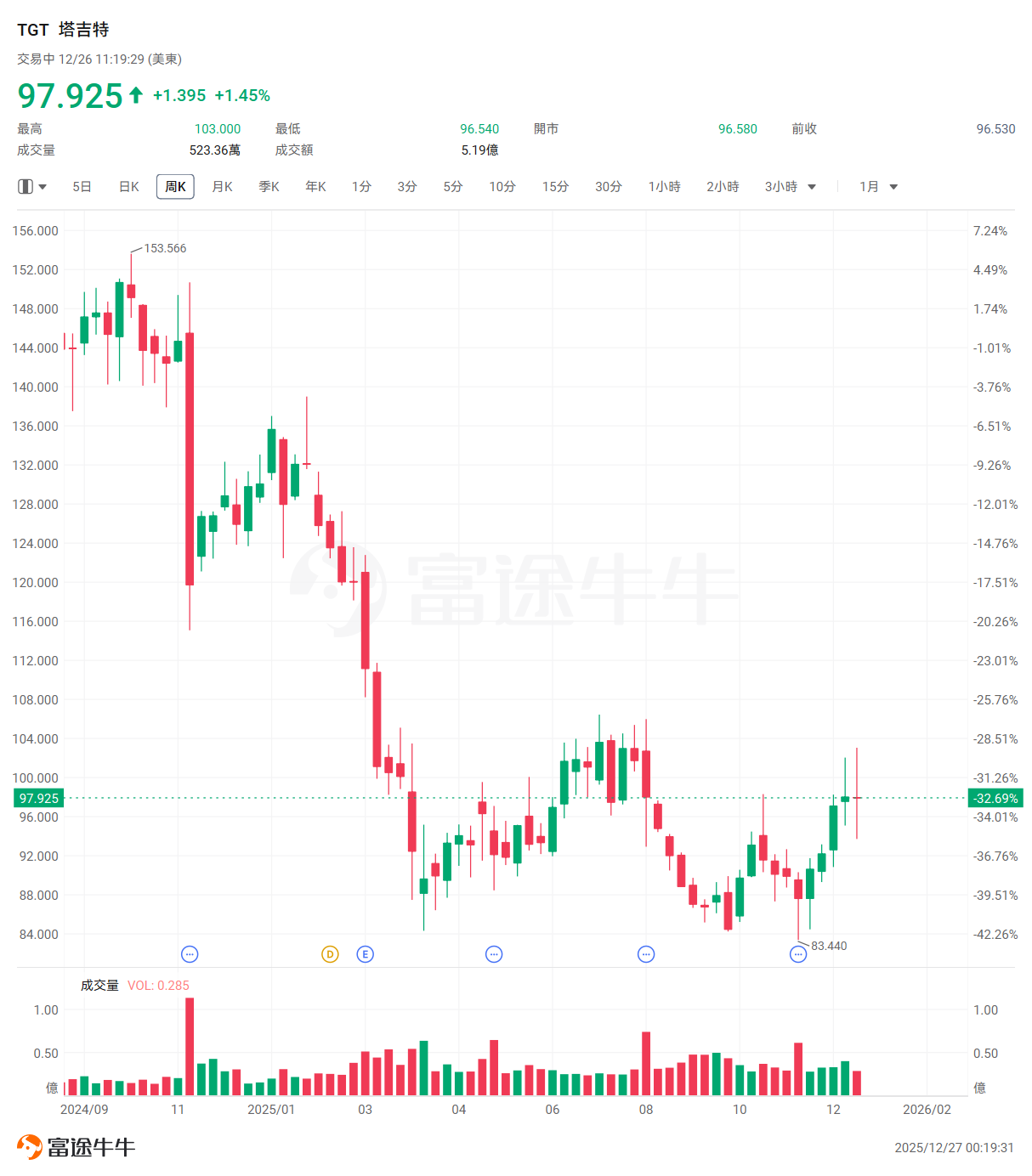
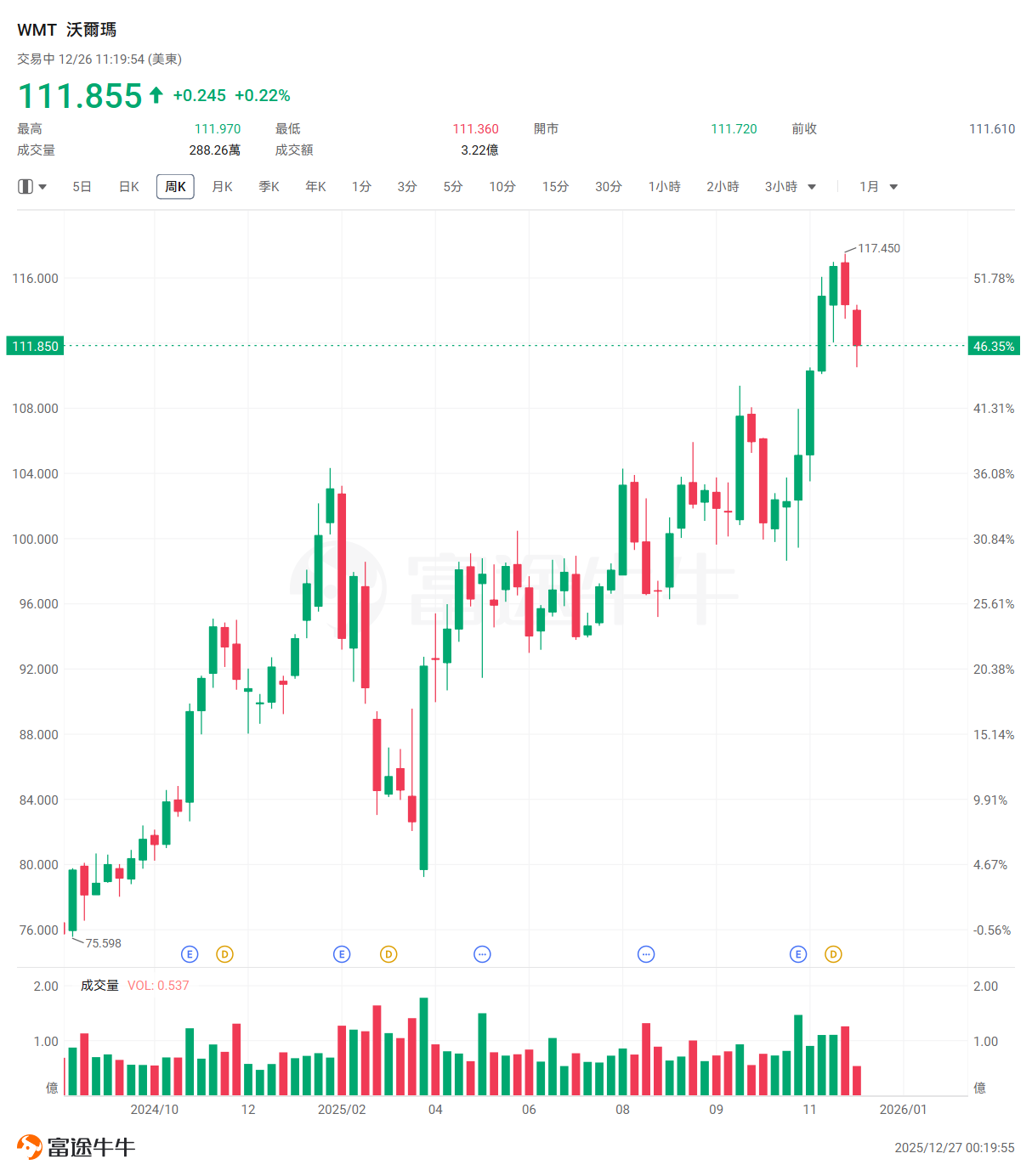
 Investors are increasingly frustrated as competitor Walmart’s stock continues to hit new highs, while Costco Wholesale's stock has doubled over the past five years.
As such, TCIM's (Toms Capital Investment Management) stake-building is also being viewed as a sign of activist investors 'teaching the board how to do their job,' receiving positive reactions from the capital markets.
According to insiders, TCIM previously built a position in Kenvue, the producer of Tylenol, before Kimberly-Clark acquired it for $48.7 billion. It has now made a 'significant investment' in Target. As of press time, Target’s latest market capitalization stood at $44.5 billion.
In addition to Kenvue, TCIM has recently also taken positions in Kellanova, the parent company of Pringles chips, and U.S. Steel, pushing management toward strategic adjustments.
Given the timing of the position building, it does seem that Target has reached a point where change is unavoidable.
First, Brian Cornell, who has served as CEO of Target since 2014, has announced that he will step down on February 1 next year. Michael Fiddelke, the Chief Operating Officer with over two decades at the company, will take over. Including the latest earnings report released in November, this retail giant has experienced nearly zero or negative sales growth for 12 consecutive quarters.
Amid growing attention to 'consumer affordability' as a buzzword in both U.S. politics and business circles, Target, which is more reliant on non-essential goods sales, has been hit harder than its competitors.
At last month’s investor conference, Fiddelke also stated that next year the company will allocate $5 billion toward initiatives such as store renovations, product updates, and enhancing the digital channel experience, an increase of $1 billion from this year. In October, Target conducted a round of layoffs involving over a thousand employees and closed nearly 800 vacant positions at its corporate headquarters.
From Wall Street's perspective, Target also possesses operational expertise and strategies for rapid monetization. First, 75% of the U.S. population lives within 10 miles of one of Target’s nearly 2,000 stores, a proportion second only to Walmart. A recent report by UBS Group also noted that 78% of Target’s stores are company-owned, presenting opportunities for real estate monetization.
Looking to pick stocks or analyze them? Want to know the opportunities and risks in your portfolio? For all investment-related questions,just ask Futubull AI!

Editor/Stephen