Michael Burry, the prototype of 'The Big Short,' has once again bet against NVIDIA and Palantir, asserting that the AI boom is a repeat of the internet bubble. He criticized NVIDIA for using accounting logic to obscure the risk of future asset write-downs by clients, pointing out that its official response is misleading. Despite frequent criticism that his predictions are premature, Burry remains steadfast in his bearish stance, stating, 'I may be early, but I am not wrong!'
Michael Burry, the prototype character in the movie 'The Big Short,' has once again positioned himself against the mainstream consensus on Wall Street. This time, his targets are the two AI giants propping up the U.S. stock market bull run - $NVIDIA (NVDA.US)$ and $Palantir (PLTR.US)$ . Burry firmly believes that the market has become disconnected from reality, and the AI industry is forming a massive bubble akin to the dot-com bubble. He has already taken bearish positions through the options market, attempting to profit from potential declines in the share prices of these two tech behemoths.
The debate between this investor, who accurately predicted the subprime mortgage crisis, and the world’s most valuable company has intensified significantly in recent weeks. Not only has Burry publicly disclosed his short positions, but he has also launched a scathing critique of NVIDIA’s internal memo released in response to his accusations, calling the document full of “straw man arguments” and reading “like a scam.” He bluntly pointed out that genuine risks are being concealed — as technological iteration accelerates, NVIDIA’s clients face future asset write-down risks due to their massive capital expenditures.
 Relevant content:Right on schedule! The "Big Short" releases a重磅 article declaring war on NVIDIA, officially launching a battle against the "AI bubble."
According to disclosures made on November 3, Burry established these short positions by purchasing put options, with the current cost of this bet amounting to approximately $10 million. If the market crashes as he anticipates, the potential return on this investment could exceed $1 billion.
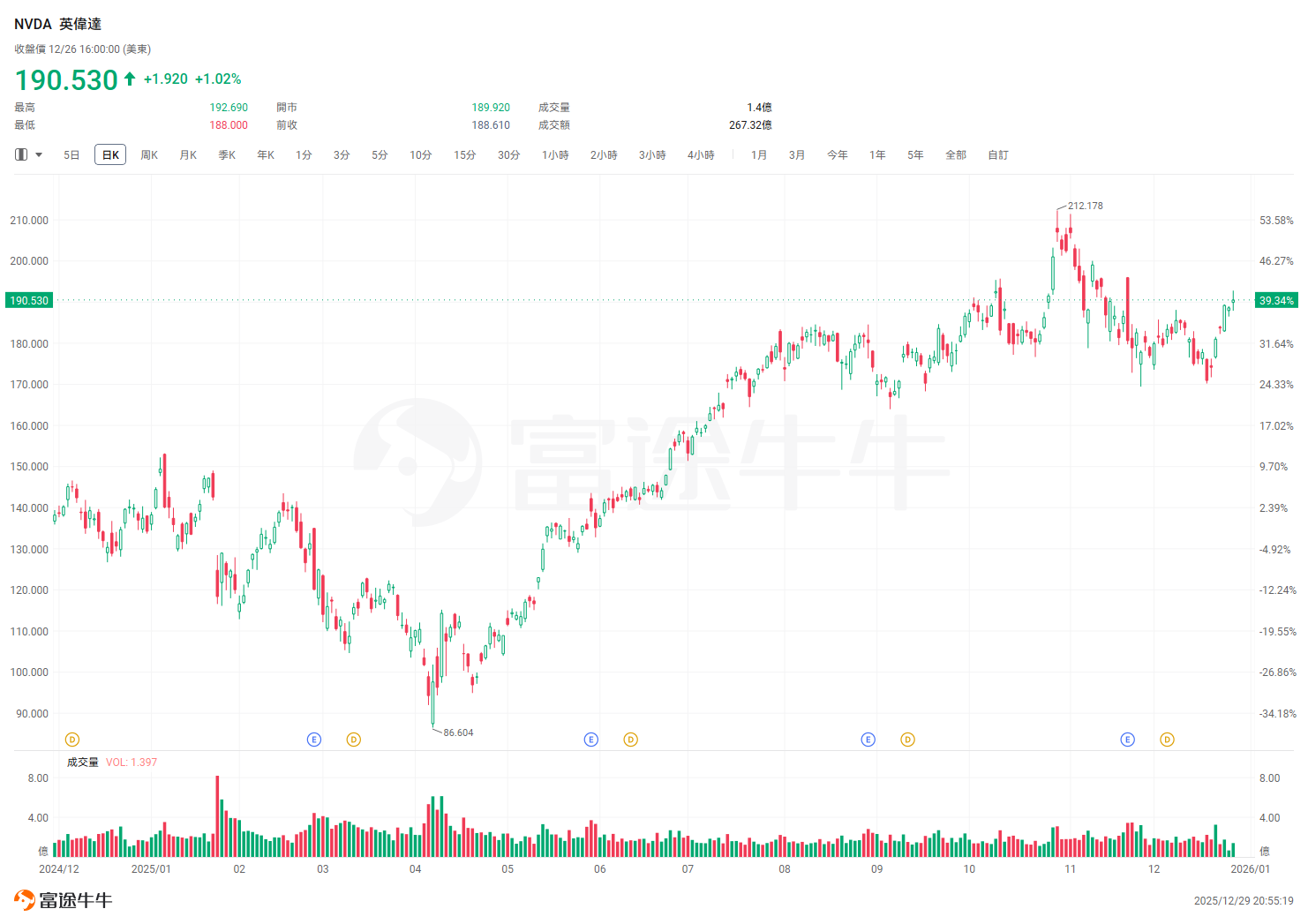
“It’s like something out of a movie,” Burry quoted his famous line from 'The Big Short': “I may be early, but I’m not wrong.” He acknowledged having entered too early during both the dot-com bubble and the housing bubble, but he believes the current AI hype mirrors the earlier “data transfer bubble.” Through his newly launched newsletter, “Cassandra Unchained,” he is presenting this grand narrative to investors, warning that a bubble burst is inevitable, just a matter of time.
Head-to-Head: The Memo Controversy and the “Straw Man”
The focus of the debate between the two sides has shifted from mere valuation issues to deeper discussions about accounting practices and the logic of technological iteration. According to a previous article by Wall Street Wisdom, in response to criticism, NVIDIA recently distributed a seven-page memo to analysts, emphasizing the robustness of its business operations, transparency in financial reporting, and denying allegations of “circular financing” and accounting fraud. In the memo, NVIDIA argued that its clients typically set GPU depreciation periods at four to six years, consistent with the actual useful life of the equipment.
However, Burry remains unconvinced. He rebutted each point on Substack, calling NVIDIA’s response “disappointing” and an example of a “straw man argument” — attacking claims that were never made. Burry noted that as a chip design company, NVIDIA’s own depreciation policies are irrelevant; his primary concern lies with its clients (such as Microsoft, Meta, and other hyperscale data centers).
Burry warned that NVIDIA’s clients, in an effort to embellish short-term profits, have extended the accounting lifespan of chips to five or six years. However, with AI technology advancing rapidly, newer chips could render existing hardware functionally obsolete between 2026 and 2028. Citing Microsoft CEO Satya Nadella’s remarks about slowing down data center construction as evidence, he pointed out that overbuilding and rapid technological iteration will lead to significant asset write-down risks in the future.
Michael Green, Chief Strategist at Simplify Asset Management, noted that Burry’s biggest issue historically has been that he was “too early,” whether during the dot-com bubble or the housing bubble, facing immense pressure for premature positioning. On social media platform X, Burry responded by quoting a line from Christian Bale’s character in the movie 'The Big Short':
“It seems it will pay off. I may be early, but I am not wrong.”
Specific short-selling logic targeting NVIDIA and Palantir
Burry stated in a podcast hosted by writer Michael Lewis that NVIDIA and Palantir are 'two of the luckiest companies on Earth,' but his short-selling rationale for the two firms, while distinct, is interconnected.
Regarding Palantir, Burry believes the company is overly reliant on tightfisted government contracts and provides excessively generous compensation to its executives. He also pointed out that Palantir is facing fierce competition from rivals such as International Business Machines.
For NVIDIA, the world's most valuable company by market capitalization, Burry’s concerns mainly focus on its customer relationships and accounting issues. He highlighted complex problems between NVIDIA and clients such as Oracle and Meta. Burry accused NVIDIA of propping up sales by funding customers to purchase its products, a practice similar to Enron's financial support for suppliers to buy its products. Burry warned that once the bubble bursts, a chain reaction of declining profits, shrinking stock prices, and reduced investments will severely impact NVIDIA’s future sales.
Past achievements and market controversies
Although Burry gained fame for his performance during the 2008 financial crisis, many of his crash predictions over the past 15 years have not all come true. Social media is rife with mockery, joking that he has 'successfully predicted twenty recessions in the past two downturns.'
On January 31, 2023, Burry posted urging his followers to 'SELL.' Although Silicon Valley Bank collapsed two months later, the S&P 500 index has risen by about 70% since then. Burry subsequently acknowledged that this call was incorrect but defended his record on X, stating that he had revised his stance and recommended buying at the bottom after two banks failed and the market declined.
Currently, Burry faces the risk of being 'too early' again. As depicted in the movie 'The Big Short,' if his judgment on the AI bubble proves correct, he will reap enormous rewards; if his judgment is wrong or mistimed, his short positions could become worthless within a few quarters.
 Looking to pick stocks or analyze them? Want to know the opportunities and risks in your portfolio? For all investment-related questions,just ask Futubull AI!

Editor /rice