
The upcoming CES in Las Vegas will serve as a critical proving ground for whether AI hardware can break into the mass market. Tech giants such as NVIDIA, Samsung, and Lenovo must demonstrate to consumers that AI is not just停留在技术演示层面,而是具备实际购买价值。展会焦点将集中于AI智能眼镜、人形机器人及健康可穿戴设备等品类。
The annual Consumer Electronics Show (CES) is set to kick off next week in Las Vegas, $NVIDIA (NVDA.US)$ tech giants such as Samsung and Lenovo will face a critical test: proving to ordinary consumers that AI hardware is worth purchasing. This annual technology event will no longer be confined to conceptual showcases but will become an important litmus test for real market demand for AI products. Companies need to demonstrate to the market that AI can not only be 'developed' but also 'sold.'
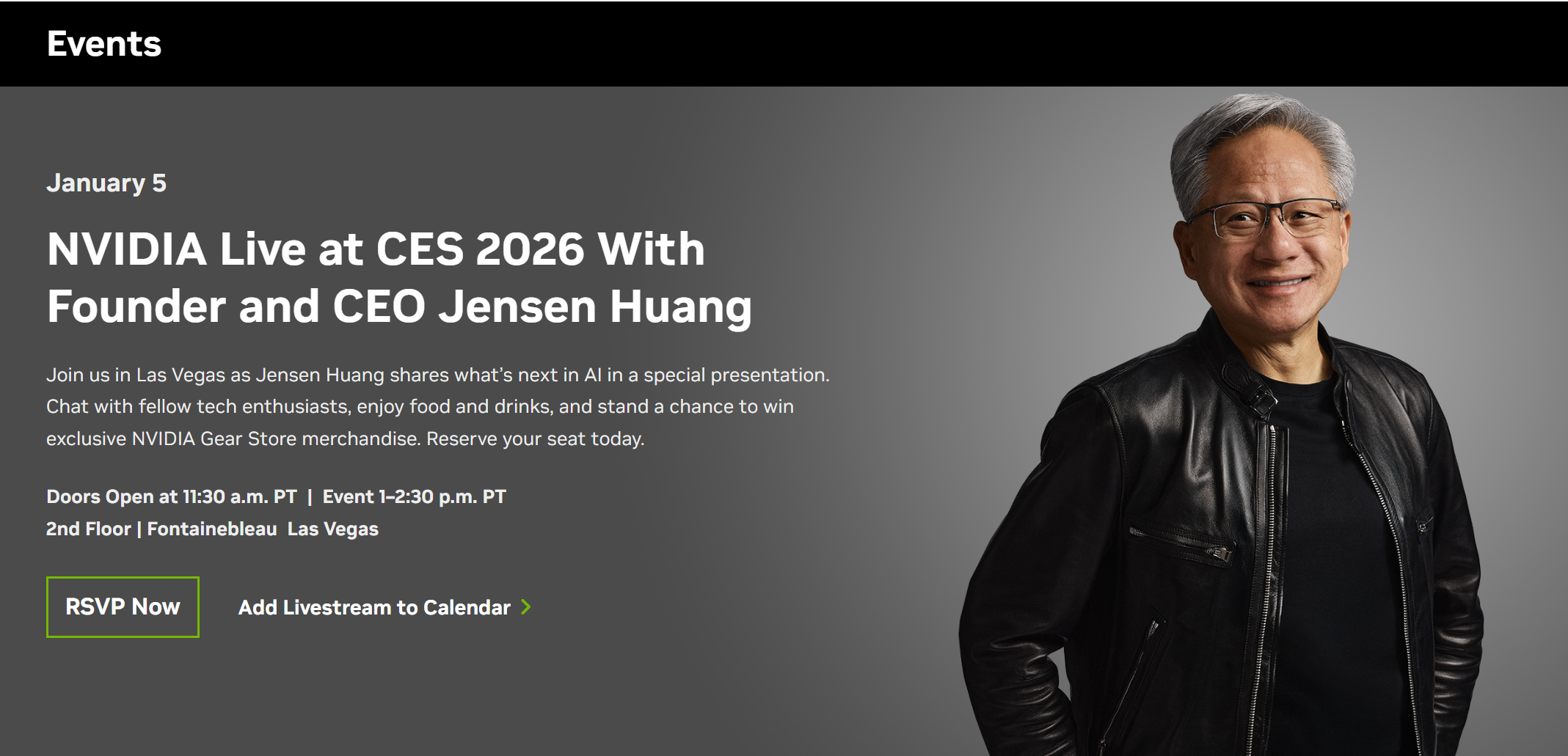
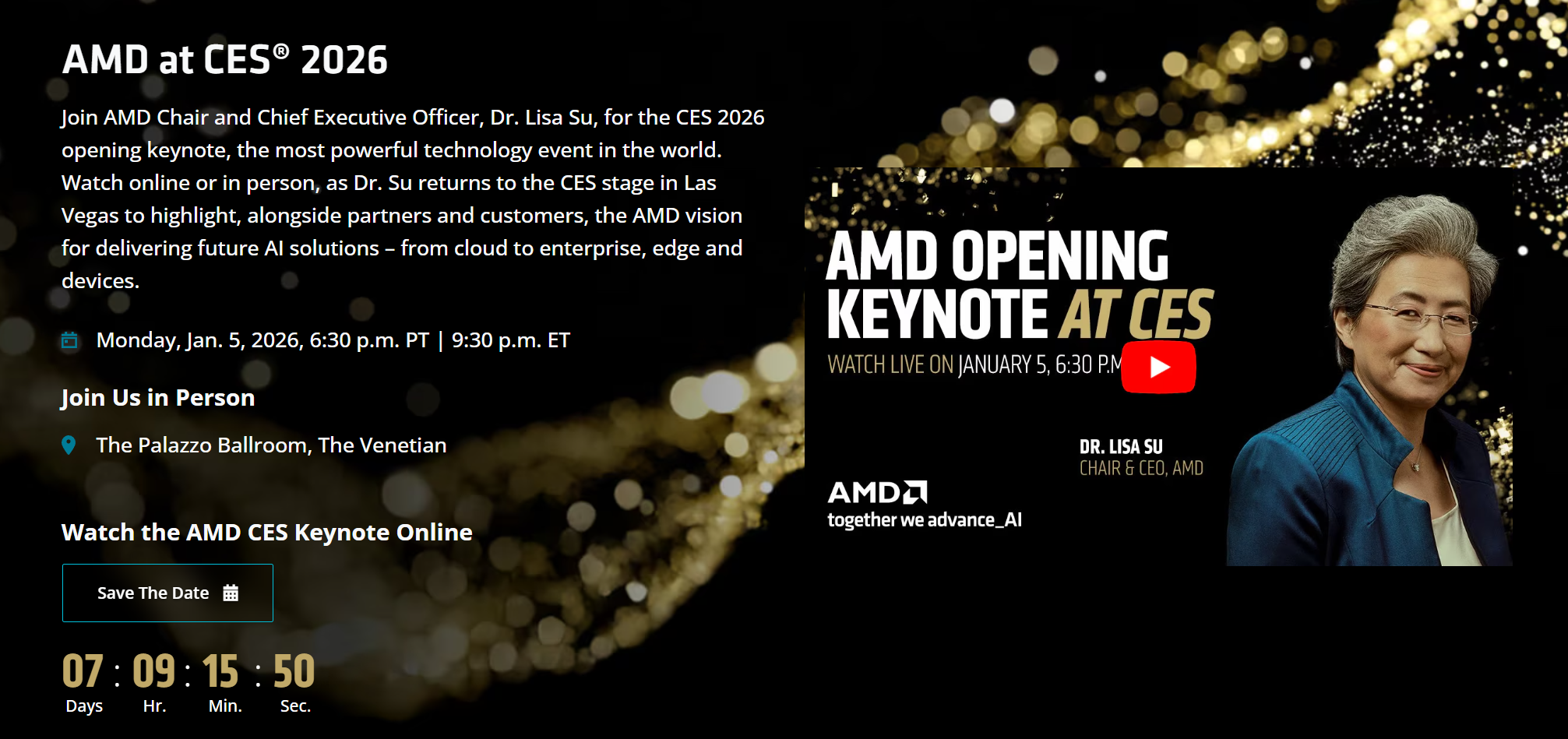
According to the schedule, the CES conference will be held from January 6 to 9, 2026. Jensen Huang, CEO of NVIDIA, and Lisa Su, CEO of Advanced Micro Devices, will deliver keynote speeches on January 5 local time (January 6 Beijing time) in sequence.
 In a report released on Monday, the Wedbush Securities team led by well-known Wall Street tech stock bull Dan Ives wrote: "We expect Jensen Huang to heavily focus on data centers, physical AI, and robotics during his keynote speech. We believe that when looking ahead to 2026, Jensen Huang will also emphasize the latest progress of the Cosmos foundational model platform in accelerating AI system development, using it as an entry point to discuss autonomous technologies such as self-driving cars."
Samsung, Lenovo, $Advanced Micro Devices (AMD.US)$ will unveil a wide range of consumer-grade products with AI as their core selling point. Previously, AI hardware products such as the Humane AI Pin and Rabbit R1 faced commercial failures due to poor reviews, serving as a wake-up call for the industry.
Analysts expect that in her keynote speech, Lisa Su will focus on introducing the latest advancements of AMD's Ryzen processors and Radeon graphics cards in AI PCs and gaming fields. She is also likely to further discuss AMD’s EPYC server processors and Instinct series GPUs.
This year's exhibition will prominently feature AI-powered smart glasses, humanoid robots, wearable devices, and other hardware products. The organizer, the Consumer Technology Association, has dedicated an entire exhibition hall to robot displays, underscoring the significance of this category.
AI glasses emerge as one of the focal points
Smart glasses will be one of the key highlights at this year’s CES. According to Bloomberg, the exhibition is expected to feature a surge of AI-powered eyewear products. $Snap Inc (SNAP.US)$ and $Apple (AAPL.US)$ are all planning to launch their respective smart glasses products by the end of 2026, continuing the momentum in this category driven by $Meta Platforms (META.US)$ companies such as Vuzix.
Although both Meta and Snap have confirmed their participation, the primary hardware releases are anticipated to come from emerging brands such as Xreal, Vuzix, Halliday Global, Rokid, and Even Realities. Meta has already launched its first smart glasses equipped with a built-in screen, and its presence at the exhibition may focus on showcasing new software or iterative features rather than hardware updates. Snap is also unlikely to announce specific pricing or release plans for its 'Specs' glasses during this event.
In addition to smart glasses, the exhibition will also present AI hardware in other forms, such as rings, designed to enable users to directly access AI assistant functionalities without relying on smartphones. This reflects the tech industry’s ongoing exploration and investment in an 'AI-first' interaction paradigm.
Humanoid robots to receive concentrated showcase
Humanoid robots will also become one of the key focal areas at this year’s CES. According to disclosures by the Consumer Technology Association, the exhibition has allocated an entire hall to present robotic products, covering a wide range of application scenarios including home services, industrial manufacturing, logistics transportation, and food service.
Several companies will exhibit AI-integrated robotic solutions. Artly Coffee and VenHub Global will respectively demonstrate AI-powered robotic cafés and unmanned convenience store technologies; California-based startup Tombot plans to launch Jennie, a companion robot dog designed for the elderly and individuals with cognitive impairments.
This year, numerous humanoid robot manufacturers are advancing their technical demonstrations from single-task execution to multi-step complex operations, such as simultaneously achieving functions like clothing recognition, grasping, and folding. Major technology companies like LG are also expected to unveil their robotic concept products.
However, there is typically still a significant gap between the performance in controlled demonstration environments and the commercial capabilities promised by manufacturers. During exhibitions, vendors need to demonstrate to the audience that their products have achieved practical commercial viability in areas such as battery life, motion flexibility, cost control, and safety reliability, rather than merely showcasing technological concepts.
Incremental innovation in televisions and smartphones
Televisions have historically been a focal exhibit at CES, with brands like Samsung, LG, TCL, and Hisense continuing to showcase their flagship models for the year. In recent years, Sony Group has gradually shifted its television product launches to spring, correspondingly reducing the scale of its exhibits at CES.
Entering 2026, as high-end televisions have generally met consumer demands in terms of brightness and resolution, manufacturers are expected to focus more on technological advancements in wide color gamut reproduction and other features that enhance picture realism. Additionally, the 'artistic design' trend sparked by Samsung's The Frame series has prompted industry-wide adoption, and this emphasis on aesthetic integration is likely to continue at this year’s exhibition.
Although CES is not a primary stage for smartphone launches, Motorola may be an exception. Its parent company, Lenovo, is delivering an evening keynote speech at the event for the first time, and Motorola's teaser packages sent to the media strongly suggest the unveiling of a book-style foldable phone. If confirmed, this would mark the company's first venture into this form factor after years of focusing on the Razr flip-style foldable phones.
Wearable devices expand health monitoring capabilities
Wearable devices are continuously pushing beyond the boundaries of traditional fitness tracking, with deeper integration of functionalities found in professional medical-grade equipment. This year’s exhibition will feature innovative products such as smart night guards, which not only prevent teeth grinding but also claim to monitor multidimensional health indicators like sleep apnea, heart rate, respiratory rhythm, and sleep cycles.
Overall, the wearable device industry is expected to further focus on areas such as women's health management, continuous glucose monitoring, advanced cardiovascular tracking, longevity technology, and chronic disease management. These functional expansions indicate that manufacturers are striving to transform wearable devices from auxiliary sports accessories into comprehensive tools covering daily health monitoring and management.
Looking to pick stocks or analyze them? Want to know the opportunities and risks in your portfolio? For all investment-related questions,just ask Futubull AI!

Editor/Stephen