①According to the official website of the World Economic Forum, this year's Davos Forum is scheduled to be held in Davos, Switzerland, from January 19 to 23. This year’s annual meeting will focus on the theme of 'The Spirit of Dialogue,' with the organizers claiming it will set a record for attendance; ②It is expected that nearly 3,000 representatives will attend during the four-day forum, including approximately 400 political figures, nearly 65 heads of state and government leaders, as well as nearly 850 CEOs and chairpersons.
Cailian Press, January 20 (Editor: Xiaoxiang) The 2026 Davos Forum, amidst the biting cold air of the Alps, carries an unprecedented sense of urgency. This snowy land, which once witnessed the most glorious moments of globalization, is once again hosting a grand contest over the boundaries of power.
For a long time, the annual meeting of the World Economic Forum has been an important platform for discussing global economic trends and promoting cooperative development, often referred to as the 'barometer of the world economy.' This year, against the backdrop of increasingly complex and fragmented global geopolitics, more insightful individuals are undoubtedly calling on the international community to use this conference to bridge differences through dialogue.
 According to the official website of the World Economic Forum, this year's Davos Forum is scheduled to be held in Davos, Switzerland, from January 19 to 23. This year’s annual meeting will focus on the theme of 'The Spirit of Dialogue,' with the organizers claiming it will set a record for attendance. It is expected that nearly 3,000 representatives will attend during the four-day forum, including approximately 400 political figures, nearly 65 heads of state and government leaders, as well as nearly 850 CEOs and chairpersons.
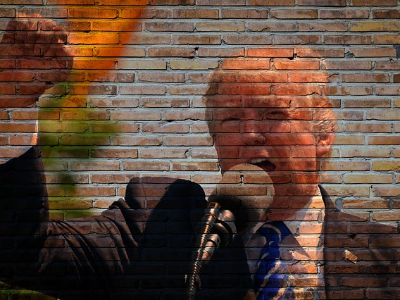
Among them, the U.S. delegation led by President Trump is said to be the 'largest ever'—with over 300 members, including Secretary of State Rubio, Treasury Secretary Bessent, Commerce Secretary Lutnick, Special Envoy Witkoff, and other key cabinet members. Trump himself will deliver a speech on Wednesday.
In addition to Trump, the press release from the World Economic Forum also lists several other dignitaries, including Chinese Vice Premier He Lifeng, French President Macron, German Chancellor Merz, European Commission President von der Leyen, and Ukrainian President Zelenskyy. Also on the list are the heads of the International Monetary Fund, the World Trade Organization, and the United Nations—organizations that were originally established to prevent conflicts from engulfing the business realm but now find themselves in an era where 'business itself has become one of the battlefields of conflict.'
According to the 'Global Risks Report 2026' published by the World Economic Forum, 'geoeconomic confrontation' is emerging as the top risk for 2026, followed by interstate armed conflicts, extreme weather events, societal polarization, and misinformation. Half of the respondents anticipate turbulence over the next two years, while only 1% expect calm.
The global economy appears to be entering a new normal; war shapes commerce as much as diplomacy does; artificial intelligence is transitioning from a marvel of science fiction to infrastructure; and voters are gripped by anxiety over the 'cost of living,' making every policy choice feel like a bill someone is trying to pass on to others.
From Tariffs to Hot Wars: This Is the 'Season of Guidance' for the Entire World.
'Geoeconomic confrontation' may sound abstract, but when translated into the daily paperwork of businesses, it becomes concrete: tariffs reshape input costs for companies, export controls turn product roadmaps into legal challenges; investment reviews make business expansion dependent on political acceptance; procurement rules quietly redraw who can sell what to whom.
Saadia Zahidi, Managing Director of the World Economic Forum, offered a sharper explanation – she described geo-economic confrontation as what occurs when economic policy tools essentially become weapons rather than a basis for cooperation, pointing to tariffs, foreign investment reviews, and stricter controls on critical mineral supplies.
The United States is entering Davos with already imposed tariffs and more pending. Trump’s assertive “America First” stance is putting the global order that Davos has long taken for granted under comprehensive pressure testing. The timing is particularly challenging: the White House just labeled the 25% national security tariff on certain high-end semiconductors as a “Phase One” measure, with officials hinting at further actions depending on negotiation progress – including the possibility of imposing a 100% tariff on non-US-made chips.
A European diplomat who wished to remain anonymous stated that after Trump announced additional tariffs on eight European countries last Saturday – until the US was permitted to purchase Greenland – the issue of Greenland was also added to the agenda of a previously scheduled meeting.
Meanwhile, the US Supreme Court has yet to rule on a case involving Trump’s tariff authority – but a decision may come this week, leaving the legal ceiling for all these tariff actions still unclear.
In a sense, within the logic of the Trump administration, “tariff relief” is no longer a principle-based negotiating term but rather a tradable “favor.” Even Switzerland, the so-called “neutral country” hosting this dialogue, has not only been presiding over the discussions but was also drawn into tariff disputes last year. CEOs who once profited from “quiet supply chains” are now facing an unsettling reality: tariffs are no longer just numbers on a balance sheet; they are becoming an aggressive political emblem. This is no longer a game about economic costs but a naked test of allegiance.
The narrative of the trade war is loud enough in the corridors of Davos, while talk of actual warfare has consistently surfaced in the same conversations.
The World Economic Forum survey mentioned that the US invasion of Venezuela is becoming part of the anxiety backdrop this year. A group of top oil executives is expected to return to Davos – an industry whose attendance had been sporadic in recent years. This year, Trump’s rhetoric of energy dominance is an attraction, and the energy constraints driven by data centers and artificial intelligence have made oil discussions unavoidable even in rooms where talking about oil was once considered impolite.
Trump’s return to Davos is significant because, in many dynamics of “geo-economic confrontation,” the United States acts both as a driver and an enforcer.
The United States remains at the core of the global technology, capital, and security systems and possesses an exceptionally powerful toolkit to reshape the rules of these three systems. US trade policy has become a forward-guidance issue. The more it is interpreted through the lens of national advantage and domestic political factors, the harder it becomes to serve as a predictable factor for global commerce.
The Davos Forum cannot resolve this issue, but it does offer something that corporate executives increasingly crave: a week during which rule-makers and rule-enforcers “gather under one roof.”
Setting the Rules for the AI Boom
AI remains a topic Davos wants to discuss as the future, even though it clearly already has a profound impact on the present. Data from the World Economic Forum shows that related discussions have rapidly shifted from admiration to concern: 'the negative effects of artificial intelligence' are showing the most significant rise in global risk rankings—ranking 30th in the two-year outlook and jumping to 5th in the ten-year outlook.
This aptly demonstrates that AI risk scenarios have transitioned from footnotes in the works of ethicists and science fiction writers to become part of mainstream forecasts. The WEF’s risk report ties AI concerns closely to labor markets, social issues, and security problems, which is precisely why the AI debate is increasingly shifting from the 'technology' domain to the 'rules' domain.
The press release from the World Economic Forum listed the "leading voices in technology and innovation" attending this year’s meeting, featuring a lineup that constitutes the backbone of today's AI-driven economy: $NVIDIA (NVDA.US)$CEO Jensen Huang,$Microsoft (MSFT.US)$ Microsoft CEO Satya Nadella, Anthropic CEO Dario Amodei, $Amazon (AMZN.US)$ Amazon CEO Andy Jassy, $Alphabet-A (GOOGL.US)$ / $Alphabet-C (GOOG.US)$ DeepMind CEO Demis Hassabis, $Palantir (PLTR.US)$ Palantir CEO Alex Karp, OpenAI Chief Financial Officer Sarah Friar, and others.
At this forum, these AI leaders will undoubtedly want to know how the development of artificial intelligence will be financed, regulated, and politically tolerated. They want to know whether the rhetoric of 'responsible deployment' will translate into actionable rules or remain vague principles. They may also seek to understand which parts of the stack are becoming national assets and which are turning into political liabilities.
It can be predicted that this year’s AI discussions at Davos will focus on whether the current pace of AI deployment is outstripping governance capabilities. How much disruptive change can regulators, judicial systems, and political forces tolerate before drafting binding regulations? Labor issues are undoubtedly the flashpoint—as productivity gains often come with job losses, and promises of 'enhancement' will eventually collide with the hard wall of budget realities. Trust is the second tipping point, as artificial intelligence increasingly permeates everything; its potential to cause shockwaves if deemed untrustworthy goes beyond theoretical speculation.
However, what Davos cannot charm away are the realities that constantly drag discussions into mundane terms: data centers, grid capacity, interconnectivity, transmission networks, timelines. Artificial intelligence is being built as infrastructure, and infrastructure timelines never heed human enthusiasm. The announcement of capacity expansions may outpace the ability to increase power supply; the procurement of chips may outspeed the construction of systems that allow those chips to function effectively.
Being at Davos, the core issue is no longer about 'what constitutes reasonable regulation,' but rather 'which regulatory system will prevail' and 'who will receive exemptions.' Public statements are expected to revolve around 'responsible innovation.' Private discussions, however, may focus on how to advance delivery, training, and deployment amid conflicting demands across jurisdictions—or between voters demanding lower electricity bills and companies needing more power to sustain system operations. These companies continue to promise that their systems will reduce all costs.
When Policy, Power, and Prices Collide
Finally, one topic that never changes at Davos is the discussion of economic growth. And this year, under Trump's 'preview,' people might also talk about the 'feeling' of growth—because the affordability dialogue of 2026 serves as a bridge, making all of this politically explosive.
Trump has indicated that he plans to discuss his administration's efforts to address high prices during the Davos forum – a highly targeted signal, as affordability has become a political challenge for both the White House and congressional Republicans this year.
For businesses, affordability is not an abstract public relations slogan – it shapes demand patterns, influences regulatory trends, and determines the extent to which policymakers can focus on long-term projects without being interrupted by urgent political issues. It even dictates the political tolerance for AI development – because data centers consume not only electricity but also public patience. In today’s climate of high bills and tightened budgets, public tolerance for funding others’ infrastructure is limited, regardless of how many productivity charts are presented on stage.
This year, Davos may resemble a 'live negotiation' over who can pass on risks – trade policy risks, artificial intelligence risks, energy constraint risks, price level risks, affordability risks, and institutional trust risks – including the loss of the Federal Reserve's independence, which looms in the background as part of a broader 'rules-based order' stress test.
The World Economic Forum hopes the meeting will uphold the 'spirit of dialogue' – literally speaking, it may indeed do so: there will be panel discussions, photo opportunities, verbal commitments, and carefully worded agreements that sound like progress. But the scoreboard will ultimately reflect costs, construction outcomes, handshakes made, regulations implemented, and projects delayed.
Although the venue for the Davos Forum is located in the Alps, the public speeches, decisions made in private meetings, and turbulence flagged in risk reports will eventually cross the mountains and affect the monthly household expense bill in your hands, with its ups and downs…
 Looking to pick stocks or analyze them? Want to know the opportunities and risks in your portfolio? For all investment-related questions,just ask Futubull AI!

Editor/Jayden