
The Ministry of Industry and Information Technology (MIIT) announced that the first phase of 6G research and development has been completed, resulting in over 300 key technology reserves. The second phase of 6G technology trials has now commenced. It is estimated that by 2025, the number of artificial intelligence (AI) enterprises in China will exceed 6,000, with the core industry scale expected to surpass 1.2 trillion yuan. Currently, AI applications have covered key industries such as steel, non-ferrous metals, power, and telecommunications. The next step will focus on accelerating breakthroughs in key technologies such as training chips and heterogeneous computing power.
On January 21, the State Council Information Office held a press conference. Zhang Yunming, Vice Minister of Industry and Information Technology, Tao Qing, Spokesperson of the Ministry of Industry and Information Technology and Director of the Operation Monitoring and Coordination Bureau, and Xie Cun, Spokesperson of the Ministry of Industry and Information Technology and Director of the Department of Information and Communication Development, presented the achievements of industrial and information technology development in 2025 and answered questions from journalists.
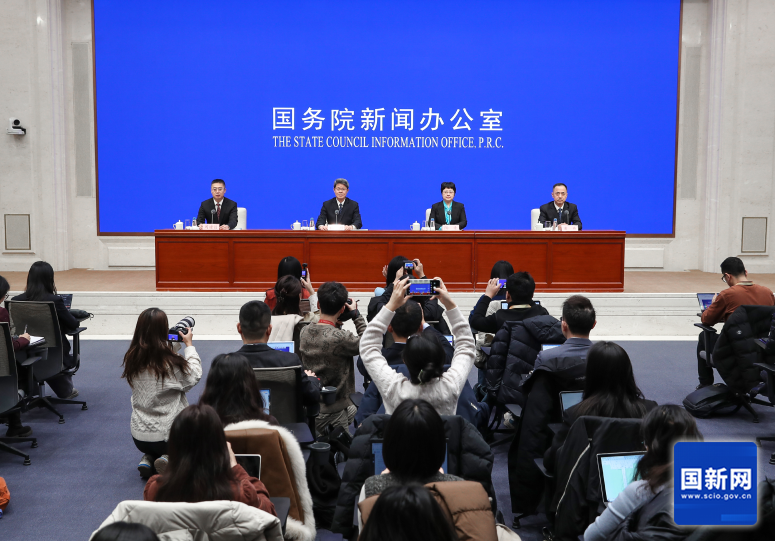
(图源:国新网)
 The key points are as follows:
China's 5G user base has exceeded 1.2 billion, and the second phase of 6G technology trials has recently been launched.
It was announced at the press conference that China has built 4.838 million 5G base stations, with 5G coverage reaching all towns and 95% of administrative villages nationwide. We have constructed the world’s largest and technologically leading information infrastructure. The number of 5G users has surpassed 1.2 billion. Currently, China accounts for 42% of the global share of declared 5G standard-essential patents. The first phase of 6G research and development has been completed, resulting in over 300 key technology reserves, and the second phase of 6G technology trials has recently been initiated.
With continuously increasing innovation content, the Ministry of Industry and Information Technology released a series of emerging industry development achievements.
The press conference introduced that a number of innovative achievements with high innovation content have emerged competitively. 'Good ideas' from laboratories have been transformed into 'good products' on production lines without interruption. Technologies such as perovskite materials, permanent magnet materials, and power batteries are at an internationally advanced level. New network, high-speed communication, advanced computing, emerging software, and blockchain technologies are accelerating iteration. Prototypes of atomic clocks and magnetometers based on new quantum technologies have been successfully developed. Superconducting quantum computers and photonic quantum computers have achieved quantum supremacy, possessing computational capabilities that can surpass any classical computer in certain specific problems. Brain-computer interface technology is rapidly expanding from medical applications to fields like education and industry.
By 2025, the scale of China's core artificial intelligence industry is expected to exceed 1.2 trillion yuan.
Zhang Yunming stated that 2025 is a year of vibrant vitality and numerous highlights for China's artificial intelligence industry. According to estimates by relevant institutions, the number of artificial intelligence companies in China exceeds 6,000 in 2025, with the core industry scale expected to exceed 1.2 trillion yuan. At present, artificial intelligence applications cover key industries such as steel, nonferrous metals, electricity, and telecommunications, and are gradually penetrating critical areas such as product development, quality inspection, and customer service.
Accelerate breakthroughs in key technologies such as training chips and heterogeneous computing power.
Zhang Yunming stated that next, we will focus on technological innovation and accelerate breakthroughs in key technologies such as training chips and heterogeneous computing power. We will also promote integrated applications, focusing on sectors like software programming, new material research and development, pharmaceutical research and development, and information and communication, to systematically drive advancements in large and small models and intelligent agents.
AI has penetrated more than 70% of the business scenarios in leading smart factories.
Xie Cun, Director of the Department of Information and Communication Development at the Ministry of Industry and Information Technology, stated that currently, artificial intelligence (AI) has permeated over 70% of the business scenarios in leading smart factories. It has precipitated more than 6,000 vertical domain models, driven the large-scale application of over 1,700 key intelligent manufacturing equipment and industrial software, and formed a group of industrial intelligences with perception, decision-making, and execution capabilities. This is pushing smart manufacturing from automation toward autonomy.
Support localities in building future industries according to local conditions and increase the investment intensity of government investment funds.
Zhang Yunming stated that regarding future industries, the Ministry of Industry and Information Technology (MIIT) will continue to carry out innovation task challenges, implement a series of forward-looking and strategically significant major science and technology projects, support localities in building future industries tailored to local conditions, and increase the investment intensity of government investment funds. This aims to create a favorable situation for the competitive development of future industries nationwide.
Technological progress often accompanies employment restructuring, and the integration role of artificial intelligence will be fully utilized.
Zhang Yunming stated that technological progress often brings about the restructuring of employment structures and the iteration of job positions. However, restructuring does not equate to disappearance, and iteration does not mean replacement. It is essential to view the issues faced in the development of artificial intelligence with a developmental perspective. Going forward, the MIIT will adhere to application-driven strategies, fully leverage the integrative role of artificial intelligence, and continuously improve workers' AI literacy while cultivating more versatile talents who understand both artificial intelligence and manufacturing. This will be done while promoting the reorganization of organizational models, work methods, and production approaches.
Zhang Yunming emphasized that from the Industrial Revolution to the Information Technology Revolution, every major technological transformation has sparked concerns about employment. However, these concerns have ultimately been addressed through industrial transformation, which has enhanced productivity, optimized employment structures, and created new jobs. In facing the development of artificial intelligence, it is crucial to uphold the concept of a shared destiny for humanity and adopt an open and win-win attitude to strengthen international exchanges and cooperation. The new challenges brought by artificial intelligence can certainly be effectively resolved.
A comprehensive standardization system construction guide for humanoid robots and embodied intelligence will be released.
Zhang Yunming stated that the next step for the MIIT will be to continuously promote technological innovation and iterative upgrades for humanoid robots. Using humanoid robots as a small entry point, it aims to drive the development of the broader computing intelligence industry. Continuous efforts will be made to enhance quality testing, network security, and data security inspections for humanoid robot products. Relevant research on technology ethics and management services will also be conducted to ensure high-level security safeguards for high-quality development. At the same time, the MIIT will accelerate the establishment of an ecosystem for humanoid robots, strengthen the support of the National Artificial Intelligence Industry Investment Fund for humanoid robots, build an open-source community for humanoid robots, and release a comprehensive standardization system construction guide for humanoid robots and embodied intelligence to promote global sharing of innovative achievements.
A '15th Five-Year Plan' for promoting the development of small and medium-sized enterprises will be formulated.
Zhang Yunming stated that the added value of small and medium-sized enterprises (SMEs) in the regulated industrial sector increased by 6.9% year-on-year in 2025. A total of 17,600 national specialized, refined, unique, and innovative 'little giant' enterprises have been cultivated, with R&D investment intensity reaching 7%. In 2026, the Ministry of Industry and Information Technology (MIIT) will improve the policy and legal framework to promote high-quality development of SMEs. First, it will continuously optimize the business environment, formulate the '15th Five-Year Plan' for promoting SME development, fully implement the regulations on ensuring payment to SMEs, firmly curb new arrears, and protect the legitimate rights and interests of SMEs. Second, it will strengthen efforts to cultivate more specialized and innovative enterprises, implementing a three-year action plan for tiered cultivation of high-quality enterprises. Third, it will provide comprehensive support services throughout all stages and elements, focusing on enterprise needs, building and utilizing the China SME Service Network effectively, and creating the first batch of national public service demonstration platforms for SMEs.
The full text of the MIIT press conference is as follows:
Deputy Director of the Press Bureau and Spokesperson of the State Council Information Office, Zhou Jianshe:
Ladies and gentlemen, good morning! Welcome to the press conference held by the State Council Information Office. Today, we are honored to invite Mr. Zhang Yunming, Vice Minister of the Ministry of Industry and Information Technology, to introduce the achievements of industrial and information technology development in 2025 and answer questions of concern. Also attending today's press conference are Ms. Tao Qing, Spokesperson and Director of the Operations Monitoring and Coordination Bureau of the Ministry of Industry and Information Technology, and Mr. Xie Cun, Spokesperson and Director of the Department of Information and Communication Development.
Now, let Mr. Zhang Yunming give his introduction.
Vice Minister of the Ministry of Industry and Information Technology, Zhang Yunming:
Ladies and gentlemen, friends from the press, good morning! First of all, I would like to thank everyone for their long-term care and support for the cause of industry and information technology.
In 2025, facing profound and complex changes in the domestic and international situation, the industrial and information technology system comprehensively implemented the spirit of the 20th National Congress of the Communist Party of China and its subsequent plenary sessions, firmly shouldering the key task of achieving new industrialization. The industrial economy pressed forward under pressure and developed towards innovation and optimization, achieving effective quality improvement and reasonable quantitative growth, successfully completing the main objectives and tasks for the year. Reviewing the development of industry and information technology in 2025, four characteristics emerged: stability, progress, innovation, and vitality.
First, the momentum of 'stability' was continuously consolidated. We adhered to focusing economic development on the real economy, issuing a new round of ten major key industries' stable growth work plans, supporting large industrial provinces to play a leading role, effectively driving steady growth in the industrial economy. In 2025, the added value of industrial enterprises above designated size grew by 5.9% year-on-year, the proportion of manufacturing added value to GDP remained stable, and the scale of manufacturing is expected to rank first globally for 16 consecutive years. Telecommunications business volume increased by 9.1% year-on-year. The contribution of the industrial and information technology sectors to economic growth exceeded 40%, effectively playing the role of a 'ballast stone'.
Second, the pace of 'progress' continued to accelerate. We steadfastly focused on high-quality development as the primary task, steadily advancing the intelligent, green, and integrated development of manufacturing. The added value of equipment manufacturing and high-tech manufacturing enterprises above designated size increased by 9.2% and 9.4% year-on-year respectively, with growth rates exceeding those of industrial enterprises above designated size by 3.3 and 3.5 percentage points, and accounting for a higher proportion of all industrial enterprises above designated size compared to 2024, increasing by 2.2 and 0.8 percentage points respectively. Digital and intelligent transformation of manufacturing progressed steadily, with over 35,000 basic-level, 8,200 advanced-level, and 500 excellent-level smart factories cumulatively built, and 15 leading smart factories cultivated. Industrial decarbonization, pollution reduction, greening, and growth were promoted synergistically, with over 8,000 national green factories cultivated, and energy and water consumption per unit of added value in industrial enterprises above designated size continuously decreasing.
Thirdly, the momentum of 'new' growth drivers continues to strengthen. We have focused on deeply integrating technological innovation with industrial innovation, advancing key core technology breakthrough projects, industrial foundation reconstruction projects, and major technical equipment breakthrough projects. Significant breakthroughs have been achieved in major equipment such as ultra-large diameter shield machines and heavy-duty gas turbines. Artificial intelligence has injected strong momentum into industrial economic growth, and the first phase of 6G technology trials has resulted in over 300 key technology reserves. Industries such as integrated circuits and electronic specialty materials have seen year-on-year growth in added value of 26.7% and 23.9%, respectively. Industrial robot production increased by 28% year-on-year, while new energy vehicle sales reached 16.49 million units, up 28.2% year-on-year. Investment in emerging fields has shown positive momentum, with investments in sectors like aviation, spacecraft, and equipment manufacturing achieving double-digit growth.
Fourthly, the effects of a 'dynamic' market continue to manifest. We have accelerated reforms in key areas, implemented special campaigns to reduce the burden on enterprises, expedited efforts to clear overdue payments to businesses, and promoted the implementation of policies benefiting enterprises, striving to create a vibrant environment for business development. Initial success has been achieved in comprehensively addressing excessive internal competition, and the competitive ecosystem in key industries such as new energy vehicles and photovoltaics has continued to improve. 5G and gigabit optical networks have been integrated into 91 out of 97 major categories of the national economy, while industrial internet has achieved full coverage across 41 major industrial categories, injecting more vitality into economic and social development. Enhanced cultivation of high-quality enterprises at different levels has led to the cumulative nurturing of over 140,000 specialized and innovative small and medium-sized enterprises, with 504,000 high-tech enterprises currently in effect. In 2025, the added value of specialized and innovative 'little giant' enterprises in the industrial sector above designated size increased by 9% year-on-year, and in the first 11 months, the total profit of high-tech enterprises in the industrial sector above designated size grew by 5.3% year-on-year.
Looking at one year to gauge five years, China's industrial economy has achieved significant progress during the 14th Five-Year Plan period, further demonstrating characteristics of resilience, potential, and vitality. We are confident in maintaining steady and positive trends in the industrial economy in 2026. In the coming year, the industrial and information technology systems will earnestly implement the decisions made at the Central Economic Work Conference, focusing on promoting high-quality development, adhering to the general principle of seeking progress while maintaining stability, better coordinating domestic economic work with international trade struggles, balancing development and security, vigorously advancing new industrialization, and accelerating the construction of a modern industrial system with advanced manufacturing as its backbone. Efforts will focus on stabilizing growth, strengthening innovation, promoting integration, optimizing governance, and preventing risks to ensure a good start for the 15th Five-Year Plan.
This concludes my brief introduction. Building on last year’s experience, we have prepared a review document outlining the industrial and information technology developments in 2025 and during the 14th Five-Year Plan period for your reference. Next, my colleagues and I are happy to answer questions from the journalists. Thank you all.
Zhou Jianshe:
Thank you, Vice Minister Zhang Yunming, for your introduction. Now, please raise your hands to ask questions. Before asking, please state the news organization you represent.
Cover News reporter:
How has the development situation of China's emerging and future industries been in recent years? The 15th Five-Year Plan proposal suggests cultivating and expanding emerging and future industries. How do you plan to promote its implementation? Thank you.
Zhang Yunming:
Thank you for your question; I will address it. Since the beginning of the 14th Five-Year Plan, the Ministry of Industry and Information Technology has resolutely implemented the decisions and deployments of the Party Central Committee and the State Council. It has coordinated efforts to optimize and upgrade traditional industries, expand emerging industries, and strategically lay out future industries, simultaneously advancing technological breakthroughs, results transformation, and industrialization. It has improved institutional mechanisms such as supply-demand matching, collaborative breakthroughs, resource sharing, and policy alignment, fostering new quality productivity tailored to local conditions, thereby providing robust impetus for China's economic and social development, reflected in three 'batches'.
First, a series of innovative achievements with high 'innovation content' have emerged. The 'great ideas' in laboratories are continuously being transformed into 'great products' on production lines. Technologies such as perovskite materials, permanent magnet materials, and power batteries are at an internationally advanced level. New network, high-speed communication, advanced computing, emerging software, and blockchain technologies are accelerating their iterations. Prototypes based on new quantum technologies, such as atomic clocks and magnetometers, have been successfully developed. Superconducting quantum computers and photonic quantum computers have achieved quantum supremacy. This means that these computers possess computational capabilities that can surpass any classical computer in solving specific problems. Brain-computer interface technology is rapidly expanding from medical applications to fields such as education and industry.
Second, a group of new products with broad application prospects are accelerating their entry into the market. Terminal products such as intelligent robots are maturing and being put into use. Biomanufacturing products are expanding their range of applications in industries like pharmaceuticals and healthcare, daily chemical cosmetics, and green energy. A number of new scenarios such as '5G+', 'Industrial Internet+', 'Robotics+', and 'Beidou+' are being cultivated, providing vast market space for the rapid industrialization of new products.
Third, some competitive advantage industries with strong international competitiveness have emerged. During the '14th Five-Year Plan' period, emerging industries such as new energy vehicles, photovoltaics, low-altitude equipment, ships, and marine engineering equipment have grown and expanded rapidly, making the business card of 'Made in China' even more prominent. In 2025, production and sales of new energy vehicles reached new highs, while the photovoltaic industry developed steadily, injecting green momentum into global development. The quantity and variety of civilian drones continued to increase. Shipbuilding achieved growth in both volume and quality, enhancing industrial competitiveness.
Looking ahead to the '15th Five-Year Plan,' in terms of emerging industries, we will deepen the implementation of actions to grow and strengthen emerging industries and create new drivers of growth, and demonstrate large-scale application of new manufacturing technologies, products, and scenarios. We will establish national bases for the development of emerging industries, and work on both supply and demand fronts to accelerate the cultivation of emerging pillar industries. Regarding future industries, we will implement the 'Guiding Opinions on Promoting Innovation and Development in Future Industries,' continue to carry out 'open challenge' innovation tasks, organize and implement a number of forward-looking and strategic major scientific and technological projects, support regions in building pilot zones for future industries according to local conditions, and increase investment by government-guided funds to foster a favorable situation of competitive development of future industries nationwide.
Reporter from China Media Group:
As a benchmark demonstration of intelligent manufacturing, the development of leading-level smart factories has drawn significant attention. What landmark achievements have they made in areas such as key technological breakthroughs and industrial chain collaboration? How will efforts be deepened to expand the exemplary and leading effects in the next step? Thank you.
Zhang Yunming:
Thank you for your question. My colleague Xie Cun will answer this question.
Xie Cun, Spokesperson of the Ministry of Industry and Information Technology and Director of the Department of Information and Communication Development:
Thank you for your question. Cultivating leading-level smart factories represents a strategic move for China to seize opportunities in industrial intelligence and build competitive advantages for future manufacturing. Since 2025, we have worked jointly with the National Development and Reform Commission, the Ministry of Finance, the State-owned Assets Supervision and Administration Commission, the State Administration for Market Regulation, and the National Data Administration to advance this effort, aiming to create a set of 'Chinese models' representing the highest levels of global intelligent manufacturing and paving the way for the overall upgrading of China's manufacturing sector. Currently, the first batch of 15 leading factories was showcased collectively at the 2025 World Intelligent Manufacturing Conference, and the related cultivation efforts have made three notable advances:
First, it has made a beneficial exploration in the manufacturing model. The leading factories have met the requirements of high efficiency, high precision, high flexibility, and high quality in production, setting transformation benchmarks for their respective industries. Some automobile factories have achieved flexible mixed-flow production of multiple models, some petrochemical plants have realized autonomous operation through digital twin technology, and some optical fiber cable factories have overcome extreme manufacturing processes for ultra-large preforms. These transformations have increased production efficiency by an average of 29% and reduced product defect rates by 47%.
Second, there have been innovative breakthroughs in manufacturing technology. Currently, artificial intelligence has penetrated more than 70% of the business scenarios in leading factories, accumulating over 6,000 vertical domain models and driving the large-scale application of more than 1,700 key intelligent manufacturing equipment and industrial software solutions. This has led to the creation of a group of industrial intelligent agents with perception, decision-making, and execution capabilities, promoting the evolution of intelligent manufacturing from 'automation' to 'autonomy'.
Third, in terms of industrial value, it has driven collaborative upgrades. Leading factories not only provide high-end products but also extend into high-value models such as large-scale customization, industry chain collaboration, and predictive maintenance, transforming from 'product manufacturers' into comprehensive providers of 'products + services + solutions.' These factories have transferred relevant capabilities across the entire industry, driving the collaborative upgrade of more than 1,300 upstream and downstream enterprises and pushing the overall industry chain toward higher-end levels.
In the next step, we will deepen the implementation of smart manufacturing projects and continue to cultivate smart factories in stages. We will further expand the scale and establish more benchmarks. We will support leading enterprises in exploring future manufacturing models and continuously foster a group of leading factories to guide the overall transformation of the industry. We will further refine standards and promote knowledge sharing by systematically summarizing best practices to form replicable technical guidelines, standards, and solutions for promotion across the entire industry. Additionally, we will further enhance openness and collaboration, contributing Chinese approaches by making leading factories the source of technology, standards, and rules, and accelerating their replication and promotion overseas to provide Chinese wisdom for the global digital and intelligent transformation of manufacturing.
Let us look forward to the continued efforts of leading factories in injecting new momentum and opening new horizons for 'Made in China'! That concludes my response. Thank you.
Jimu News reporter:
The Central Economic Work Conference listed 'adhering to domestic demand leadership and building a strong domestic market' as the top priority. Could you please tell us about the current development status of the consumer goods industry? In 2026, how can we further adapt to consumption upgrades, improve the supply capacity of high-quality consumer goods, and better meet consumer demands? Thank you.
Zhang Yunming:
Thank you for your question. My colleague Tao Qing will address this question.
Tao Qing, spokesperson for the Ministry of Industry and Information Technology and director of the Operation Monitoring Coordination Bureau:
Thank you for your question, I will address this. The consumer goods industry is a traditional advantageous sector and an important livelihood industry in our country. Currently, there are approximately 195,000 large-scale enterprises employing over 25 million people, accounting for 37% and 34.3% of the entire large-scale industrial sector, respectively. Throughout 2025, the added value of large-scale consumer goods industries increased by 3.7% year-on-year, representing 26.1% of all large-scale industries. In 2025, our department thoroughly implemented the 'Action Plan to Boost Consumption,' jointly issuing and implementing the 'Implementation Plan to Enhance Supply-Demand Compatibility in Consumer Goods and Further Promote Consumption' with multiple departments. We mainly focused on three aspects to continuously expand domestic demand, optimize supply, and better meet the growing needs of the people for a better life.
First, we fully optimized supply-demand coordination and continuously increased the supply of high-quality products. We organized promotional consumption activities such as 'Foodie Season,' 'Textile and Apparel Supply Optimization and Upgrade Promotion,' and 'Senior Shopping Season.' A total of 35 landmark bio-manufacturing products, 1,321 innovative textile products, 1,188 high-quality elderly care products, and 1,021 upgraded and innovative consumer goods were released. We improved the quality and safety traceability system for infant formula to meet diverse consumer demands with quality supply, ensuring that consumers can find what they want to buy and feel more secure about their purchases.
Second, we strengthened brand strategy leadership to activate the intrinsic motivation of domestic product consumption. We deeply implemented the consumer goods industry’s 'Increase Variety, Improve Quality, Create Brands' strategy, releasing the first batch of 93 corporate brands and 43 regional brands under the China Famous Consumer Products initiative. We organized the Famous Consumer Products Conference and improved the brand cultivation and promotion system. We focused on nurturing historical classic industries, creating 'national trend premium products' like Chinese tea, silk, and porcelain, exploring new consumption scenarios, business formats, and models, promoting domestic brands to gain wider recognition and acclaim, becoming the 'favorite choice' of the people.
Third, we consolidated the foundation of industrial upgrading and provided robust support for high-quality supply. We issued and implemented digital transformation plans for industries such as textiles, light industry, food, and pharmaceuticals. We strengthened the development of distinctive industrial clusters in the consumer goods sector, publishing the first list of 39 key traditional advantage food production areas and local specialty food industries, and a list of 25 key textile and apparel characteristic industrial agglomeration zones (county level) in central and western regions under the 'One County, One Policy' initiative, making the consumer market not only vibrant but also technologically advanced.
Moving forward, our department will resolutely implement the decisions and arrangements of the Party Central Committee and the State Council, closely aligning with supply-demand coordination guidance and keeping up with consumption upgrade trends. We will optimize product supply, continuously build the lineup of China's famous consumer products, improve the brand development ecosystem, steadily advance intelligent, green, and integrated development in the consumer goods industry, and reinforce the 'solid support' of consumption supply with more pragmatic measures to unleash consumption vitality, enhance consumption momentum, and promote more domestic brands to gain renown domestically and internationally, offering consumers richer choices and a more satisfying shopping experience. That concludes my response, thank you.
CNBC Reporter:
In the field of 'AI + Manufacturing,' which industries will be prioritized for support? How will innovation-driven development balance potential unemployment or foreign restrictions? Thank you.
Zhang Yunming:
Thank you for your question; I will now address it. In 2025, global artificial intelligence technology accelerated innovation and iteration, deepening its integration across various industries and fields. 2025 was also a year of vibrant activity and numerous highlights for China’s AI industry. On one hand, we promoted the development of the AI industry, while on the other hand, we facilitated the deep application of AI in manufacturing, achieving significant results reflected in four main aspects.
First, the foundation continued to strengthen. Domestic companies released several AI chip products, with intelligent computing power reaching 1,590 EFLOPS. High-quality industry datasets rapidly emerged, and domestic large-scale models led the global open-source ecosystem. According to estimates from relevant institutions, by 2025, the number of AI enterprises in our country exceeded 6,000, with the core industry scale expected to surpass 1.2 trillion yuan.
Second, the product range is expanding. AI-powered devices such as AI smartphones, AI computers, and AI glasses are rapidly entering households. In the first three quarters of 2025, the market shipment volume for smart glasses exceeded 1.78 million units, with nearly 80% being AI glasses, bringing more technological and futuristic elements to production and daily life.
Third, applications are continuously broadening. Currently, artificial intelligence has been deployed across key industries such as steel, non-ferrous metals, electricity, and telecommunications, gradually penetrating crucial areas like product development, quality inspection, and customer service. For example, an appliance manufacturer implemented its self-developed '5G+AI' industrial visual inspection system, which increased inspection accuracy to 99.98% and boosted per capita production efficiency by 275%.
Fourth, the ecosystem is accelerating toward prosperity. The National Artificial Intelligence Industry Investment Fund was launched, with a capital scale reaching 60 billion yuan. Under the Artificial Intelligence Standardization Special Action, over 40 key national and industry standards were developed and issued cumulatively by 2025. Several critical open-source projects, including intelligent agent protocols and operator libraries, have been successfully incubated.
Recently, our ministry, in collaboration with seven other departments, issued the 'Implementation Opinions on the Special Action Plan for Artificial Intelligence + Manufacturing,' accompanied by industry transformation guidelines and enterprise application manuals. Moving forward, we will use the implementation of this plan as a starting point to accelerate high-quality development in the artificial intelligence industry. We will focus on technological innovation, speeding up breakthroughs in key technologies such as training chips and heterogeneous computing power. We will emphasize integrated applications, targeting sectors like software programming, new material research, pharmaceutical R&D, and information communication to systematically advance progress in large and small models as well as intelligent agents. We will prioritize enterprise cultivation, encouraging the emergence of more service providers that empower through applications. We will strengthen ecosystem construction by expediting the formulation of urgently needed industry standards and improving the AI open-source mechanism. Lastly, we will address security governance, enhancing algorithmic safety protection, training data safeguards, and corporate ethical risk prevention capabilities.
Regarding the employment issue you mentioned, I would like to say that this is an inevitable challenge in the development of artificial intelligence. Technological advancements often lead to the restructuring of employment patterns and the iteration of job positions. However, restructuring does not equate to disappearance, nor does iteration mean replacement; we must view these evolving issues with a developmental perspective. This is also a problem we must solve. Every country faces similar challenges during the process of advancing artificial intelligence. We will adhere to application-driven strategies, fully leveraging the integration and empowerment of artificial intelligence. While promoting the reorganization of organizational models, work methods, and production paradigms, we will continuously enhance workers' AI literacy and cultivate more versatile talents proficient in both artificial intelligence and manufacturing. Furthermore, history has proven that this is a solvable issue. From the Industrial Revolution to the Information Technology Revolution, every major technological shift has sparked concerns about employment, but ultimately, industrial transformation has led to enhanced productivity, optimized employment structures, and the creation of new jobs. Finally, I want to emphasize that in the face of artificial intelligence development, we must uphold the concept of a shared destiny for humanity and adopt an open and win-win approach to strengthen international cooperation. The new challenges posed by artificial intelligence will surely be effectively addressed, and we should all remain confident. Thank you!
Shenzhen Satellite TV reporter:
We have noticed that in 2025, the pace of green and low-carbon transformation in the industrial sector has accelerated, and the green manufacturing system continues to improve. Could you please elaborate on the progress made in advancing green and low-carbon industrial development? How can we further contribute to high-quality green and low-carbon development in the future? Thank you.
Zhang Yunming:
Thank you for your question. This matter will be answered by my colleague Tao Qing.
Tao Qing:
Thank you for your question. I will address this issue. Advances in intelligent production technologies and green energy technologies have not only empowered industries to become greener but also catalyzed the industrialization of green technologies. Consistently, our department has earnestly implemented the decisions and arrangements of the Party Central Committee and the State Council, actively fostering new drivers for green development by pursuing innovation through green transformation, achieving positive results.
First, revitalizing new vitality in traditional industries. We have been advancing energy conservation and carbon reduction transformations, enabling traditional industries to expand green growth while reducing carbon emissions and pollution. For example, using hydrogen as a reducing agent in iron smelting can significantly reduce pollutants and carbon dioxide emissions at the source. Currently, million-ton-scale hydrogen metallurgy projects in Hebei, Guangdong, and other regions have successively gone into operation, reducing annual carbon emissions by over 50% compared to traditional methods, setting a new stage for the development of the steel industry.
Second, providing new energy-saving and environmental protection equipment. The scale of China's energy-saving and environmental protection equipment industry has continued to expand, with notable improvements in innovation capabilities. During the '14th Five-Year Plan' period, our department supported the promotion and application of more than a thousand energy-saving, carbon-reducing, water-conserving, and pollution-reducing technologies and equipment. We also launched initiatives to innovate major environmental technology equipment via open calls and strengthened breakthroughs in key areas and supply-demand matching, providing critical equipment support for the comprehensive green transformation of economic and social development.
Third, developing new business models in green energy. Proactively adapting to the new power system, we are enhancing the local consumption of renewable energy. Collaboratively advancing the construction and application of industrial green microgrids and digital energy-carbon management centers, we have released typical application scenarios and case studies to guide integrated applications such as wind-solar-storage-hydrogen systems. By 2025, the average utilization rate of renewable energy in national green computing facilities is expected to exceed 70%.
The Central Economic Work Conference identified 'adhering to the dual carbon goals and promoting comprehensive green transformation' as a key task for next year's economic work. Moving forward, we will firmly establish and implement the concept that 'clear waters and green mountains are invaluable assets,' focusing on three aspects to foster new momentum for green development:
In terms of technological advancement, we will address the needs of industrial development by focusing on challenges such as flexible hydrogen production and the intelligent operation of microgrids. We will develop key energy-saving and environmental protection equipment and integrated system solutions tailored to specific scenarios, establishing a mechanism for the deep integration of enterprises, research, education, and application in technological equipment R&D and promotion.
Regarding application-driven initiatives, guided by market demand, we will direct various resources toward green and low-carbon development, facilitating the transition of advanced and applicable technologies and equipment from 'demonstration applications' to 'large-scale adoption.' This will create a virtuous cycle of technological iteration, industrial upgrading, and model innovation.
In terms of standard leadership, we will formulate and revise a series of foundational and technical standards in areas such as industrial green microgrids, clean and low-carbon hydrogen, and energy-saving and environmental protection equipment. We will promote the transformation of scientific and technological achievements into standards, uphold minimum requirements, set benchmarks, and comprehensively strengthen the implementation and application of standards. Thank you.
Volkswagen News reporter from the People's Daily:
Small and medium-sized enterprises (SMEs) are an essential pillar of economic resilience. What is the status of SME development in China in 2025? What steps will be taken to further enhance the high-quality development of SMEs? Thank you.
Zhang Yunming:
Thank you for your question, which I will address. In 2025, the development of small and medium-sized enterprises (SMEs) maintained a steady and positive trend, summarized by two "steady" aspects. The first "steady" refers to the steady growth of key economic indicators. In 2025, the year-on-year growth of added value for industrial SMEs above designated size reached 6.9%, while the SME export index in December stood at 52.4%, marking 21 consecutive months in the expansionary zone. The second "steady" represents the steady improvement in development quality. A total of 17,600 specialized, refined, distinctive, and innovative "little giant" enterprises have been cultivated, along with over 140,000 specialized and innovative SMEs and more than 600,000 technology and innovation-driven SMEs. The R&D investment intensity of "little giant" enterprises reached 7%, with a total of 460,000 invention patents, averaging 26.6 patents per enterprise.
However, we also recognize that many SMEs continue to face difficulties and challenges in areas such as market orders, talent recruitment and development, cash flow management, and transformation and upgrading. It is necessary to further refine policy measures and enhance support efforts.
In 2026, our department will adhere to the "two unwavering principles," balancing service and regulation, as well as development and assistance. We will improve the policy and regulatory framework, the system for cultivating high-quality enterprises, and the public service system to promote high-quality development of SMEs.
First, we will continuously optimize the business environment for enterprises. We will formulate the "15th Five-Year Plan" for promoting SME development. Fully implement the Regulations on Ensuring Payment of Accounts to SMEs, intensify efforts to clear overdue payments to enterprises, resolutely curb new arrears, and protect the legitimate rights and interests of SMEs. Accelerate the revision of SME classification standards to further optimize classification indicators and methods, enhancing the precision and effectiveness of policy support.
Second, we will step up efforts to cultivate more specialized, refined, distinctive, and innovative enterprises. Accelerate the establishment of mechanisms to support the growth of specialized SMEs and implement a three-year action plan for tiered cultivation of high-quality enterprises. Explore the creation of specialized empowerment centers. Improve the tiered cultivation system for SME characteristic industrial clusters. Enhance the mechanism where large enterprises "issue challenges" and SMEs "undertake challenges" to promote collaboration and integration between large and small enterprises.
Third, we will provide comprehensive and full-cycle services. Focusing on enterprise needs, we will build and effectively utilize the China SME Service Network. Establish the first batch of national SME public service demonstration platforms (bases). Collaborate with relevant departments to launch the "Supporting Enterprises Together" initiative, strengthening high-quality and efficient public services in areas such as market expansion, digital empowerment, financing promotion, talent recruitment and development, management enhancement, and international cooperation to support high-quality development of SMEs. That concludes my response. Thank you.
Beijing Youth Daily reporter:
I would like to ask about information infrastructure construction. In recent years, China has adhered to the principle of moderately forward-looking construction of information infrastructure, providing strong support for the deep integration of the real economy and the digital economy. What is the current overall status of information infrastructure construction? Could you provide an introduction? Additionally, what are the key tasks for the next phase? Thank you.
Zhang Yunming:
Thank you for your question. My colleague Xie Cun will answer this question.
谢存:
Thank you for your question. I will answer this question. As you mentioned, moderate advancement has been one of our key approaches in building information infrastructure. Following this approach, we have built the world's largest and technologically leading information infrastructure. Below are a few sets of data for reference: In terms of mobile networks, 4.838 million 5G base stations have been built, with all towns and 95% of administrative villages now covered by 5G. The 5G Advanced (5G-A) network has been deployed in over 330 cities. Regarding fixed networks, the number of 10GPON ports in the gigabit optical network has reached 31.62 million. Two-thirds of cities nationwide meet the gigabit city standard, and pilot projects for 10-gigabit optical networks have been launched in some cities. In terms of computing power facilities, 420,000-card intelligent computing clusters have been constructed, with intelligent computing power exceeding 1,590 EFLOPS, ranking among the top globally, providing strong support for the rapid development of China's artificial intelligence industry.
Building well is important, but using well is equally crucial. In recent years, following the principle of 'building and application integration, with application driving construction,' we have been committed to promoting the application of information infrastructure at various levels. At the individual user level, the number of 5G users exceeds 1.2 billion, accounting for 65.9% of all mobile phone users. By December 2025, the average monthly data usage per user is expected to reach 23GB. The number of gigabit broadband users has reached 240 million, accounting for 34.5% of all broadband users. In vertical industries, there are more than 23,000 '5G + Industrial Internet' projects. New models and formats such as 'lights-out factories,' 'unmanned mines,' and 'smart ports' are gradually expanding, becoming key drivers of traditional industrial upgrades.
In the future, continuous iteration and upgrading will be necessary to maintain technological leadership. We follow the principle of 'one generation in commercial use, one generation in research and development' to steadily enhance information and communication technology capabilities. Currently, China accounts for 42% of global declarations of 5G standard-essential patents. The first phase of 6G research and development has been completed, resulting in over 300 key technology reserves, and the second phase of 6G technology trials has recently been initiated.
Going forward, our department will focus on the coordinated advancement of 'construction, application, and research' with an emphasis on three keywords: 'upgrade, iteration, and deepening,' to promote high-quality development in the information and communication industry. Upgrade refers to advancing network upgrades. We will implement a 'broadband upgrade' initiative, deploying 5G-A networks and 10-gigabit optical networks in urban areas and key scenarios, and pushing the transition from 'dual gigabit' to 'dual 10-gigabit.' We will also accelerate the development of 'intelligent connectivity of everything' in mobile IoT. Additionally, we will strengthen the construction of computing power network systems and further implement the metropolitan 'millisecond computing' initiative. Iteration means accelerating technological iteration. We will expedite 6G technology R&D, proactively lay out and foster an application ecosystem for 6G. We will also reinforce R&D efforts in next-generation optical communications and quantum information technologies. Deepening involves promoting deeper applications. We will accelerate the deep integration of 5G, industrial internet, gigabit optical networks, and computing power into industries such as manufacturing, agriculture, transportation, tourism, education, and healthcare, comprehensively supporting the digital and intelligent development of the economy and society. That concludes my response. Thank you.
Hong Kong Economic Journal Reporter:
Since the start of the '14th Five-Year Plan,' the pace of digital technology innovation in China has continuously accelerated, and the digital industry has rapidly developed. Could you please share the main characteristics? Thank you.
张云明:
Thank you for your question. I will answer this. The digital industry serves as a critical pillar for the deep integration of the real economy and the digital economy, as well as an essential platform for developing new productive forces. Since the launch of the '14th Five-Year Plan,' China’s digital industry has seen rapid growth with increasing quality and efficiency, achieving significant progress in three aspects: scale and volume, innovation capability, and enabling applications.
The scale and volume continue to expand, with large provinces playing an increasingly prominent role as the "stabilizers" for industrial development. According to preliminary estimates, by the end of 2025, China's digital industry is expected to generate approximately 38.3 trillion yuan in revenue and achieve a profit of 3.1 trillion yuan, representing cumulative growth rates of about 39.5% and 48.4%, respectively, compared to the end of the 13th Five-Year Plan period (2020). In 2025, Guangdong, Jiangsu, Beijing, Zhejiang, Shanghai, Shandong, Sichuan, Fujian, Anhui, and Hubei are projected to rank among the top 10 provinces and municipalities in terms of digital industry revenue scale, contributing over 90% to the national growth in digital industry revenue.
Innovation capabilities are being rapidly unleashed, with their role as an "accelerator" for fostering new growth drivers becoming more prominent. The software industry has witnessed continuous emergence of innovative achievements, while the ecosystem for basic software continues to improve. The number of devices equipped with the OpenHarmony operating system has approached 1.2 billion. The artificial intelligence industry is thriving, with a series of groundbreaking innovations constantly emerging and various terminal products becoming increasingly diverse. Digital products in new fields and on new tracks are driving a new wave of consumption upgrades, becoming a fresh growth point for economic development.
Empowerment applications are advancing in depth, and the role of real-digital integration as a "connector" is becoming more prominent. Industrial internet integration applications have achieved full coverage across major industrial categories, with a multi-layered and systematic industrial internet platform initially established. The number of industrial devices connected to key platforms nationwide exceeds 100 million units (sets). Intelligent technologies are deeply integrated into core production and manufacturing processes. Currently, 100 high-level 5G factories have reached globally leading standards, with an average increase of 25% in production capacity, a 21% improvement in product quality, and a 19% reduction in operational costs. In collaboration with the Ministry of Finance, support has been extended to 101 pilot cities for the digital transformation of small and medium-sized enterprises (SMEs), promoting the digital transformation of 45,000 SMEs through a "point-line-surface" approach.
Going forward, we will continue to accurately grasp the trends and patterns of digital industry development, accelerate technological innovation and empowerment applications, strengthen standard leadership and ecosystem construction, enhance policy coordination and factor support, and intensify efforts to promote high-quality development of the digital industry. That concludes my response. Thank you.
Reporter from The Paper:
We understand that the information and communications industry is closely related to everyone's daily life. Could you please share what measures the Ministry of Industry and Information Technology (MIIT) plans to take in 2025 to promote the service of the information and communications industry for people's livelihood? What are the next steps to make information and communications services more convenient, beneficial, and inclusive for the public? Thank you.
Zhang Yunming:
Thank you for your question. My colleague Xie Cun will address this matter.
Xie Cun:
Thank you for your question. Information and communications services are directly tied to the vital interests and experiential perceptions of the general public. The Ministry of Industry and Information Technology consistently adheres to a people-centered development philosophy, implementing pragmatic measures to improve people's livelihoods. In the first half of 2025, we guided the release of the 'Ten Practical Measures for Heartwarming Information and Communications Services.' Since the launch of this initiative, significant positive results have been achieved.
First, the handling and use of telecommunications services have become more convenient. 'Online processing' now covers virtually all types of telecommunications services, accounting for over 91% of total transactions. Video customer service has served more than 60 million users, allowing the public to 'travel less and worry less.' Basic telecom enterprises were organized to release standardized telemarketing measures, centrally disclose telecom pricing plans, upgrade data cap mechanisms, and introduce a seven-day on-site appointment service for broadband cancellation. Key scenarios such as automatic renewals are highlighted to users through SMS and phone notifications, making consumption more transparent and reliable.
Second, digital services tailored for the elderly have become more considerate. Basic telecom enterprises have fully implemented dedicated assistance counters in their physical stores, providing priority green channels and auxiliary tools for seniors. Efforts have been accelerated to promote services like 'home-based processing' and 'one-on-one tutoring' to assist the elderly. The 'direct access to human customer service' hotline specifically designed for seniors has served over 650 million people. Additionally, 3,092 websites and apps closely related to the lives of the elderly have completed age-friendly and accessibility transformations, continuously enhancing the convenience and accessibility of services.
Third, the use of recycled numbers has become safer. Before issuing new numbers, basic telecom enterprises have refreshed over 250 million recycled numbers and unlinked them from over 1 billion internet applications. An 'active refresh' service portal has been launched on official apps and mini-programs, enabling users to sever historical ties with 239 commonly used internet applications. This initiative has processed over 360 million unbinding requests for more than 5.8 million users.
Fourth, user rights and interests are better protected. Efforts have been made to encourage terminal manufacturers to add features that allow users to review and disable sensitive permissions such as microphone, camera, and location access, thereby enhancing personal information security. Transparency in algorithmic recommendations has been promoted, offering users easy options to opt out of personalized recommendation services. Initiatives like 'Do Not Disturb Services' have been promoted, innovatively providing intelligent call answering, caller verification alerts, and international call protection, contributing to safeguarding users' peace of mind.
Moving forward, we will continue to focus on addressing public concerns and expectations, further implementing the 'Ten Heartwarming Information and Communication Service Initiatives,' aiming to enhance the provision of digital services and ensure clear and worry-free consumption. We will strengthen the promotion of achievements in digital services for the elderly, offering higher-quality and more accessible digital products and services for seniors and people with disabilities. The coverage of the 'recycled number refresh' initiative will be expanded to include more internet applications closely tied to people's livelihoods. A long-term governance mechanism for personal information protection in apps will be improved to enhance public satisfaction, happiness, and security. That concludes my response. Thank you.
Upstream News Reporter:
Over the past year, the humanoid robotics industry has developed rapidly. What is the current status of China's humanoid robotics industry in terms of whole machine development, breakthroughs in core components, and the commercial deployment of application scenarios? What will be the key focus areas for future industrial cultivation? Thank you.
Zhang Yunming:
Thank you for your question; I will address it. From its stunning debut at the 2025 Spring Festival Gala to competing alongside athletes at sporting events, humanoid robots have demonstrated remarkable progress, capturing global attention. Driven by artificial intelligence, the industry has evolved at an unprecedented pace. By 2025, the number of domestic whole machine enterprises exceeded 140, releasing over 330 humanoid robot models. Industry experts widely agree that 2025 marks the first year of mass production for humanoid robots, with the industry poised for growth and promising vast potential.
Over the past year, following the principles of 'innovation-driven development, scenario-led advancement, and ecosystem collaboration,' significant progress has been made in both humanoid robot technology and product development. Today, China’s humanoid robots can 'stand steadily, walk confidently, and run swiftly,' accelerating the transition from 'performing on stage' and 'competing on the field' to practical uses 'in households' and 'on factory floors.' We have focused on strengthening 'core capabilities' by laying a solid technological foundation. Support was provided for Beijing and Shanghai to establish innovation centers for embodied intelligence and humanoid robots, developing open-source platforms like 'Qinglong,' 'Tiangong,' and the 'Kaiwu' operating system, driving breakthroughs in fundamental software and hardware. We have promoted 'rapid implementation' by scaling up high-value application scenarios, such as using humanoid robots in civilian services and workplace tasks. We fostered a 'collaborative ecosystem' by establishing the Ministry of Industry and Information Technology’s Technical Committee on Humanoid Robots and Embodied Intelligence Standards, engaging over 70 leading enterprises and research institutions. Pilot bases for national AI applications in embodied intelligence were supported, creating an integrated innovation hub for 'R&D-design-testing-manufacturing-application' in humanoid robots and embodied intelligence.
Next, we will continue to promote technological innovation and iterative upgrades in humanoid robots, using humanoid robots as a small entry point to drive the development of the broader embodied intelligence industry. We will focus on 'breaking through technology' by continuously organizing task-based initiatives such as 'call to challenge,' laying out national major science and technology projects, and improving the technical levels of large models, integrated joints, and computing power chips. We will consistently 'ensure security' by strengthening the inspection and testing of product quality, network, and data security of humanoid robots, conducting research and management services related to technological ethics, and ensuring high-quality development with high-level security guarantees. We will accelerate 'strengthening the ecosystem' by enhancing the support of the National Artificial Intelligence Industry Investment Fund for humanoid robots, building an open-source community for humanoid robots, issuing a comprehensive standardization system construction guide for humanoid robots and embodied intelligence, and promoting the global sharing of innovative achievements. That concludes my response. Thank you.
Zhou Jianshe:
The final question.
Reporter from Red Star News:
We have noticed that in recent years, China’s new materials industry has entered a period of accelerated development, with its industrial scale continuously expanding. Could you please share what efforts have been made to promote the innovative research and development and practical application of new materials? How can we further advance the development of the new materials industry? Thank you.
Zhang Yunming:
Thank you for your question. This question will be answered by my colleague Tao Qing.
Tao Qing:
Thank you for your question. The General Secretary emphasized that the new materials industry is a strategic and fundamental industry as well as a key area in high-tech competition. We must strive to catch up and forge ahead. The Ministry of Industry and Information Technology, together with relevant departments and local governments, has vigorously promoted the deep integration of scientific and technological innovation and industrial innovation in new materials. As a result, the development level and supply assurance capacity of new materials have significantly improved. We have focused on three main areas of work:
The first area is to strengthen key breakthroughs. We have organized and implemented national major science and technology projects and industrial foundation reconstruction projects, reinforced the leading role of enterprises in innovation, established upstream and downstream cooperation mechanisms around key downstream application fields, and carried out systematic collaborative innovation. Since the start of the '14th Five-Year Plan,' we have achieved breakthroughs in several critical materials. For example, high-performance carbon fiber composite materials were applied globally for the first time in the main load-bearing structures of commercially operated subway trains, reducing the weight of the entire train by 11% and cutting annual carbon dioxide emissions by approximately 130 tons per train, thereby promoting urban rail transit towards lightweight and green upgrades.
The second aspect is to strengthen the promotion and application. Focusing on the bottleneck faced by new materials in the early stage of entering the market, we have thoroughly implemented the insurance compensation policy for the first batch of new materials, expanded the number and duration of support for the first batch of new materials, alleviated users' concerns about procurement, and encouraged regions to improve the first-batch policies according to local conditions to accelerate the promotion of the first-batch materials. Up to now, we have promoted new material products worth over 55 billion yuan into the market, contributing to the successful launch of the Shenzhou-21 manned spacecraft and supporting the flight of the C919 large passenger aircraft and intelligent high-speed train units across the country.
The third aspect is to enhance capacity building. We have established a key platform system for new materials that covers five major areas including material research and development, pilot-scale maturation, material production, testing and validation, and material application. This accelerates the simultaneous testing, validation, and iterative upgrading of new materials and end-user products. To date, nearly 3,000 batches of application verification services for new materials and more than 1.5 million test evaluations have been provided, serving 230,000 enterprises. Over 500 new material standards have been issued, guiding the optimization and upgrading of advanced basic materials, key strategic materials, and cutting-edge new materials.
Going forward, our department will resolutely implement the decisions and arrangements of the CPC Central Committee and the State Council, fully leveraging the advantages of the new national system and the super-large-scale market. Based on meeting the current needs of key application fields, we aim to lead industrial development through material innovation. Our focus will be on advanced basic materials, key strategic materials, cutting-edge new materials, and 'Artificial Intelligence + Materials' as directions for development. We will promote collaborative innovation across the entire industrial chain of advanced materials, strengthen policy coordination, financial support, talent supply, and factor guarantees, and foster an excellent ecosystem to promote the research and application of new materials. This will comprehensively enhance the innovation capabilities and development efficiency of the new materials industry. That concludes my response. Thank you.
Zhou Jian She:
Alright, that concludes today’s press conference. Thank you to the three speakers, thank you to all the journalists, and see you next time!
Editor/Doris