
The natural gas sector is experiencing a surge!
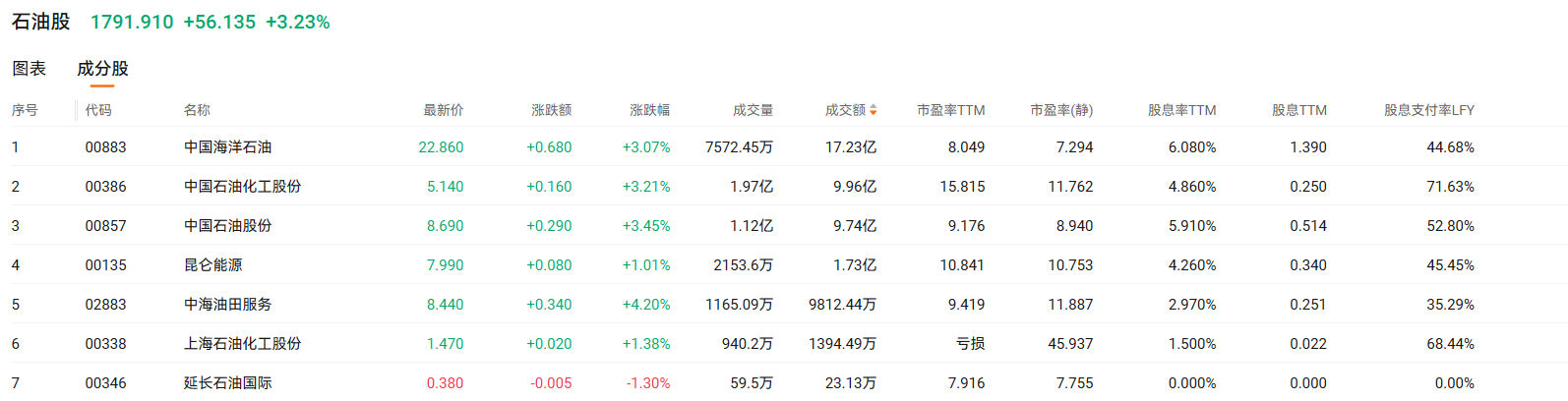
During the morning trading session on January 22, the 'Big Three Oil' companies listed in Hong Kong—CNOOC, Sinopec, and PetroChina—all experienced significant gains.
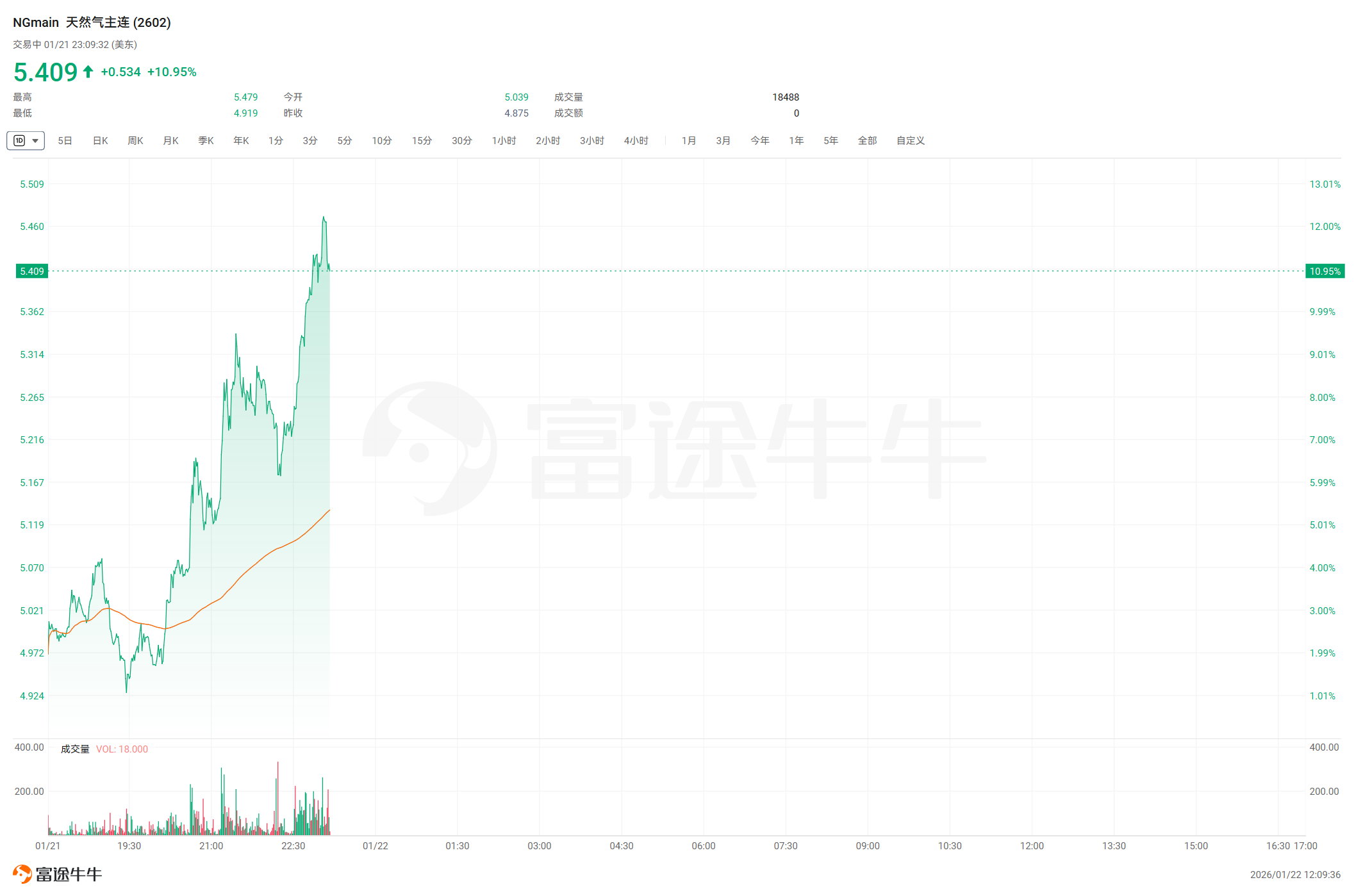
European natural gas prices hit 40 euros per megawatt-hour for the first time since June of last year, with benchmark futures soaring 11.5% on Wednesday, pushing this year's strong rally to over 40%. Following a more than 28% surge in the previous trading session, the front-month contract for U.S. natural gas futures rose another 30% last night. NYMEX natural gas futures climbed to $5, the first time since December of last year.
So, what exactly happened?
Energy stocks soar
 The strong rally in U.S. energy stocks over the past few months has pushed the sector to new all-time highs, as rising geopolitical uncertainty prompts investors to bet on higher oil prices. Last night, the U.S. energy sector surged nearly 3% at one point, with 49 stocks posting gains of more than 5%.
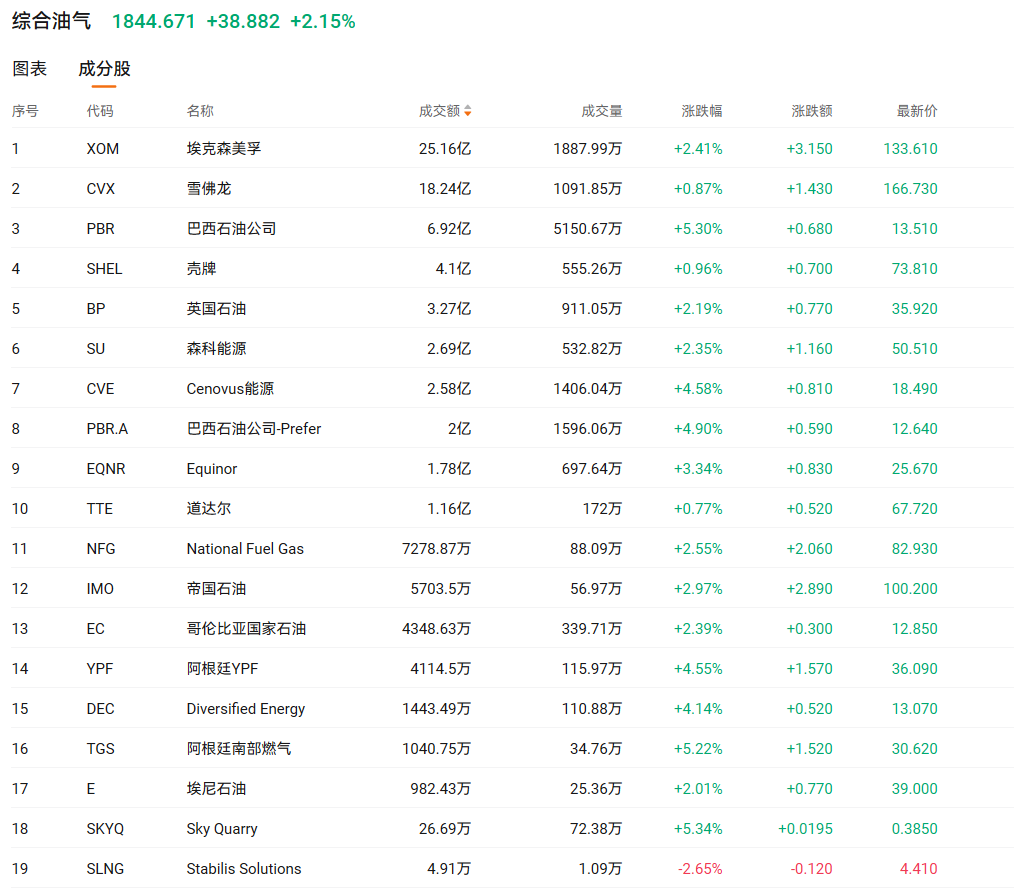
The S&P 500 Energy Index closed at 750.17 points, becoming the best-performing sector within the S&P 500 Index. Recently, natural gas futures have also experienced consecutive sharp increases, breaking through $5 and posting a gain of over 67% in the past week.
Guofu Futures Research Report noted that the expectation of colder-than-normal temperatures in Europe from mid-to-late January led to a significant rise in European natural gas prices last week. The widening price gap between Europe and the U.S. further opened arbitrage opportunities, while nearly 10 million tons of LNG export facilities are expected to come online in the U.S. during the first quarter. Rising European gas prices have strengthened expectations for U.S. export demand.
Moreover, following Russia’s substantial reduction of gas supplies to Europe, Europe has significantly increased its reliance on U.S. natural gas shipments. Additionally, the U.S. National Oceanic and Atmospheric Administration (NOAA) lowered its temperature forecast for the end of the month, indicating widespread cold waves across the eastern United States. With both domestic and external demand strengthening, U.S. gas prices are expected to remain volatile but biased toward strength in the short term.
Vincent Piazza, an analyst at Bloomberg Intelligence, stated: 'Geopolitical pressures involving Venezuela, Ukraine, and Greenland are maintaining a moderate risk premium for oil prices. Among these, $60 per barrel for WTI crude is a key threshold.'
At the same time, due to forecasts predicting an Arctic cold wave hitting two-thirds of North America from this week through next, shares of natural gas companies such as EQT Energy, Expand Energy, and Coterra Energy performed notably well this week. Vincent Piazza stated: 'Despite rising natural gas production, cold weather in the eastern half of the United States should boost sentiment in the domestic natural gas market, while freezing temperatures in Europe will support seaborne natural gas benchmark prices.'
How will energy prices evolve?
Over the past year, the AI boom overshadowed many traditional sectors, potentially causing investors to overlook certain investment opportunities. The rally in oil and gas stocks notably accelerated in early December last year. Trump's promise to revitalize Venezuela’s energy sector after forcibly arresting Venezuelan President Maduro by early 2026 drove up the share prices of major oil producers.
According to Investing.com, the recent strong performance of energy stocks marks a reversal in the sector's trend. In 2025, the index rose by only 5%, significantly lagging behind the S&P 500’s 16% gain due to its weak recovery following the tariff shock. In the week after Trump announced large-scale tariff increases on trading partners on April 5 last year, the sector plummeted by 20%. It was not until January 5 this year, after the U.S. intervened in Venezuela’s affairs, that the benchmark index of the energy sector returned to its level prior to the introduction of tariffs in early April last year.
As geopolitical risk premiums expand, Wall Street firms have become increasingly optimistic about the outlook for oil prices. Citigroup recently raised its short-term Brent crude price forecast to $70 per barrel. Nevertheless, the biggest cloud hanging over the industry remains the risk of an impending supply glut, which could weigh on crude prices.
The International Energy Agency (IEA) revised up its forecast for oil demand in 2026, providing support for oil prices. WTI crude oil prices surged by 2.1% on Wednesday, but gains were pared after Trump reiterated his desire to control Greenland while stating he did not intend to use force.
Betty Jiang, an analyst at Barclays, noted that despite solid cash returns from upstream oil companies during recent macroeconomic volatility, they still face risks. 'The backdrop of the oil market has become more complex due to rising and potentially unsustainable geopolitical risk premiums.'
 Looking to pick stocks or analyze them? Want to know the opportunities and risks in your portfolio? For all investment-related questions,just ask Futubull AI!

Editor/Liam