
The Japanese yen experienced significant volatility, initially falling then sharply rebounding, after Kazuo Ueda's press conference, reaching a high of 157.37. This triggered strong market speculation about potential 'exchange rate checks' or direct interventions by authorities.
Facing external doubts about official actions to support the yen, Finance Minister Satsuki Katayama avoided a direct response. Given the fiscal expansion pressures ahead of the general election, the market remains highly vigilant about the yen’s performance at key levels and official moves next week.
Japan's financial markets experienced a highly tense day on Friday, with the yen’s exchange rate against the dollar experiencing sharp fluctuations shortly after Kazuo Ueda's press conference. The currency first fell, then rebounded sharply, triggering widespread speculation in the market about possible currency checks or interventions by the authorities. This volatility capped off an already tense week with great suspense.
 Following the conclusion of Bank of Japan Governor Kazuo Ueda's press conference after the policy decision, the yen briefly depreciated to 159.23 before reversing rapidly within minutes, climbing as high as 157.37, with an increase of 0.7%. The total daily fluctuation exceeded 1.2%. This sudden reversal caught the market off guard, prompting traders to speculate about the underlying reasons.
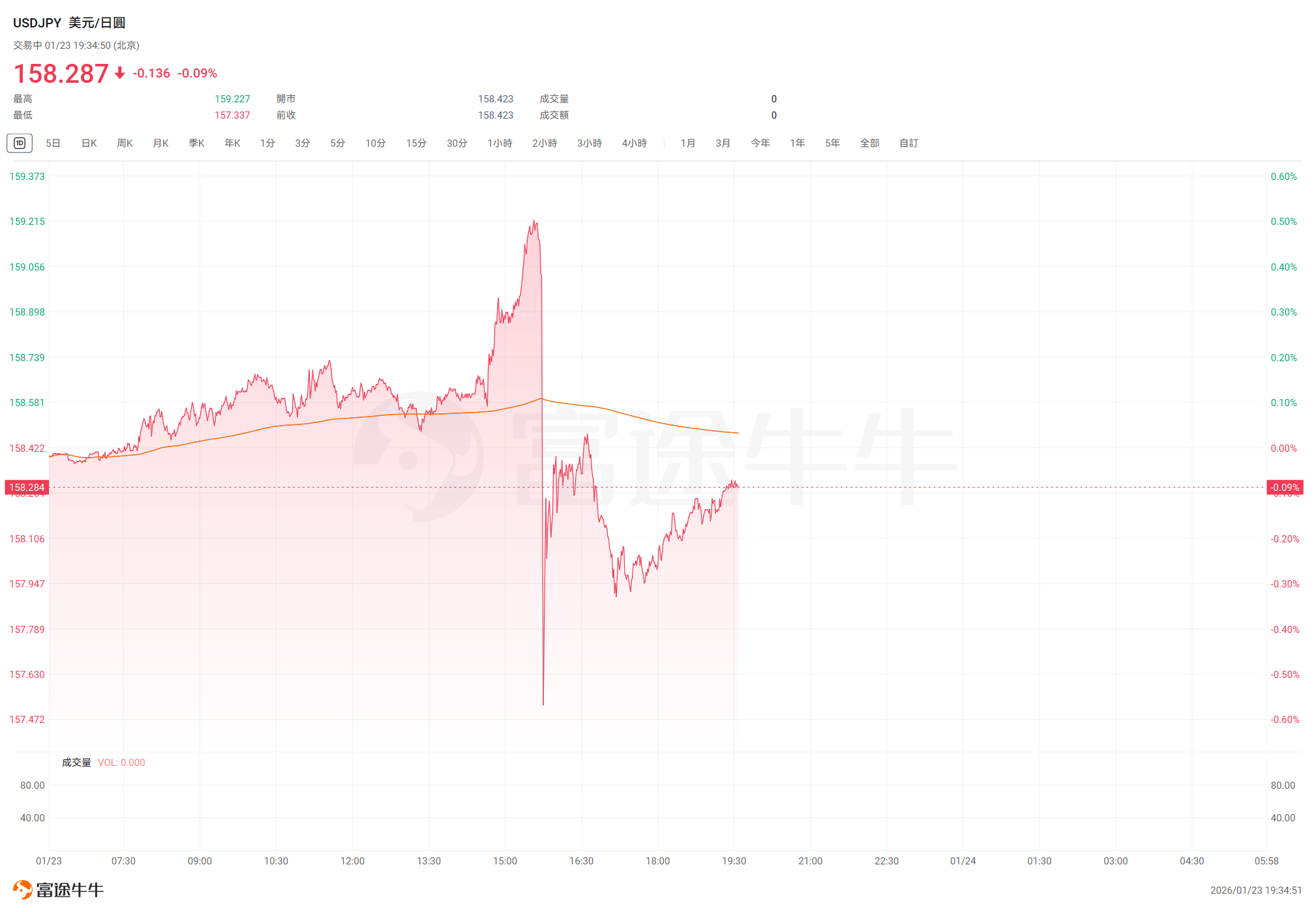
In interviews following the press conference, when Finance Minister Satsuki Katayama was asked whether Japan had intervened in the market, she declined to respond, stating only that 'we are watching with a constant sense of urgency,' leaving the market in confusion regarding the cause of the volatility. With the yen approaching the critical level of 160, investors remained highly vigilant—this is approximately the level at which Japanese authorities intervened four times in 2024.
The heightened tension in the market stems from the yen's continued approach to sensitive levels. Valentin Marinov, a strategist at Credit Agricole, stated:
"It is easy to conclude that we may be at an early stage of official intervention. Market reactions also show how tense things become when yen trading approaches 'the line in the sand'—levels where interventions occurred in the past."
Kazuo Ueda Delivers Mixed Signals
The Bank of Japan maintained its policy interest rate at 0.75% on Friday but raised its medium- and long-term inflation forecasts. According to previous reports by Wall Street News, Kazuo Ueda stated at the press conference that if economic conditions develop as expected, interest rates will continue to rise, and underlying inflation will continue to increase moderately. Financial conditions have remained accommodative since the December rate hike.
He specifically mentioned that price hikes implemented by companies in April—the start of Japan's new fiscal year—will be one of the factors considered by the policy committee when discussing potential interest rate hikes. This statement was interpreted by the market as slightly dovish, leading to a weakening of the yen.
Addressing the recent rapid rise in long-term interest rates, Kazuo Ueda stated that the Bank of Japan would flexibly conduct bond operations under special circumstances, potentially taking measures to encourage the formation of stable yields.
Fukuhiro Ezawa, Head of Tokyo Markets at Standard Chartered Bank, stated:
Kazuo Ueda's comments were initially interpreted as slightly dovish regarding interest rate hikes, prompting an immediate rise in the dollar against the yen. The pair later retreated, sparking speculation that the move may have reflected intervention or a rate check.
The 160 level: A 'line in the sand' for intervention
The Japanese government spent nearly 100 billion US dollars purchasing yen in 2024 to support its currency. Each of the four interventions occurred when the exchange rate was around 160 yen per dollar, setting a rough marker for potential future actions.
Marinov from Credit Agricole noted that the current market reaction highlights how investors are on edge as the yen approaches levels at which past interventions occurred.
Tominaga Takayuki, a Tokyo-based FX trader at Central Tanshi, stated, "Beyond the possibility of a rate check, the weakening of the yen following Kazuo Ueda’s press conference might have triggered pre-planned trades. While reversing the yen's downtrend is challenging, market caution has clearly increased. If the exchange rate moves closer to 160, expectations for intervention next week may intensify."
Rate checks have historically been viewed as warning signals from authorities indicating they consider exchange rate movements excessive. These typically occur when volatility rises and verbal intervention fails to contain the trend. During such checks, the Bank of Japan usually contacts traders to inquire about yen quotes against other currencies, a step preceding actual transactions.
Sohei Takeuchi, a senior fund manager at Sumitomo Mitsui DS Asset Management, pointed out that once the exchange rate breaks through 159, "Japanese authorities’ vigilance may have heightened," suggesting the possibility of a rate check. He added that if authorities proceed beyond checking rates to actual purchase interventions, the yen could strengthen further and remain elevated for a longer period.
This week sees continued market tension
Japan’s markets have been under strain this week. Prime Minister Sanae Takaichi pledged to suspend the 8% tax on food and non-alcoholic beverage purchases for two years if she and the ruling Liberal Democratic Party secure victory in the snap election scheduled for February 8.
Earlier this week,$Japan 40-Year Treasury Notes Yield (JP40Y.BD)$hit a record high, intensifying market concerns that relaxed government spending could further increase the country's debt burden—Japan’s debt level is the highest among developed economies. These concerns also weighed on the yen.
As of Satsuki Katayama's statement, the yen was trading near 157.97, recovering some of its losses. The market will continue to closely monitor the yen’s movements next week and whether authorities will take further action as it approaches the key level of 160.
Editor/Melody