
The CME Group has once again significantly raised margin requirements for precious metals futures: the margin rate for gold increased from 6% to 8%, and for silver from 11% to 15%. The new rules will take effect after the market close next Monday. This adjustment follows the recent reform of the 'floating margin' mechanism, underscoring the exchange's intention to accelerate deleveraging and risk control amid extreme volatility. Market participants are concerned about a repeat of historical scenarios such as the 1980 or 2011 episodes where 'exchange intervention led to market collapse.'
Following the largest single-day drop in gold and silver prices in decades, exchanges swiftly implemented risk control measures.
On Friday, CME Group announced that it would increase margin requirements for Comex gold, silver, and other precious metals futures contracts.
 CME stated in its announcement that this adjustment was based on a 'routine review' of market volatility, aimed at ensuring adequate collateral coverage, and would take effect officially after the market close on Monday, February 2.
Margins have been raised across the board, with increases significantly higher than previous levels.
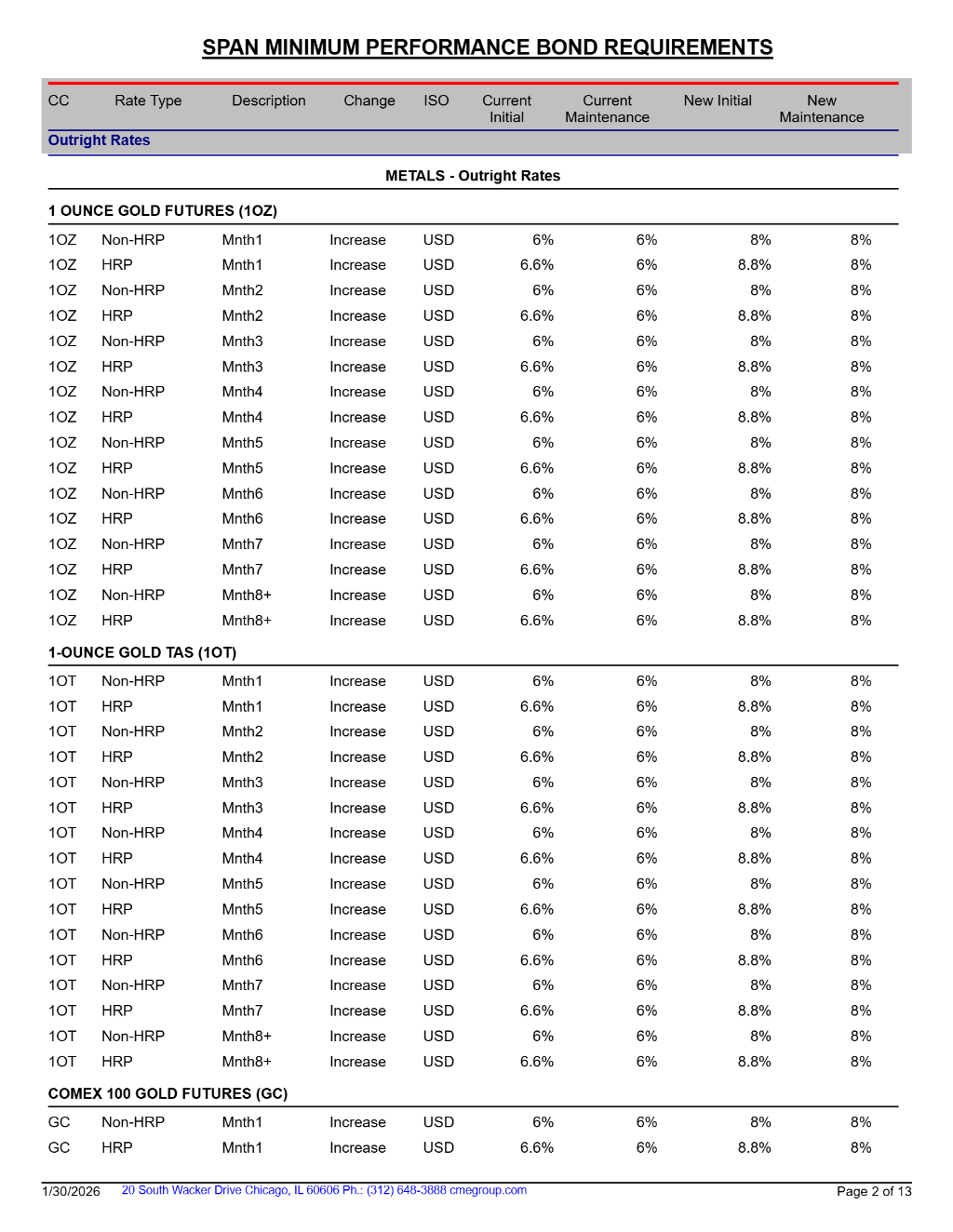
According to the latest arrangements disclosed by CME,:
Gold futures:
Non-high-risk accounts: Margin ratio increased from 6% of the current contract value to 8%.
High-risk accounts: Increased from 6.6% of the current contract value to 8.8%.
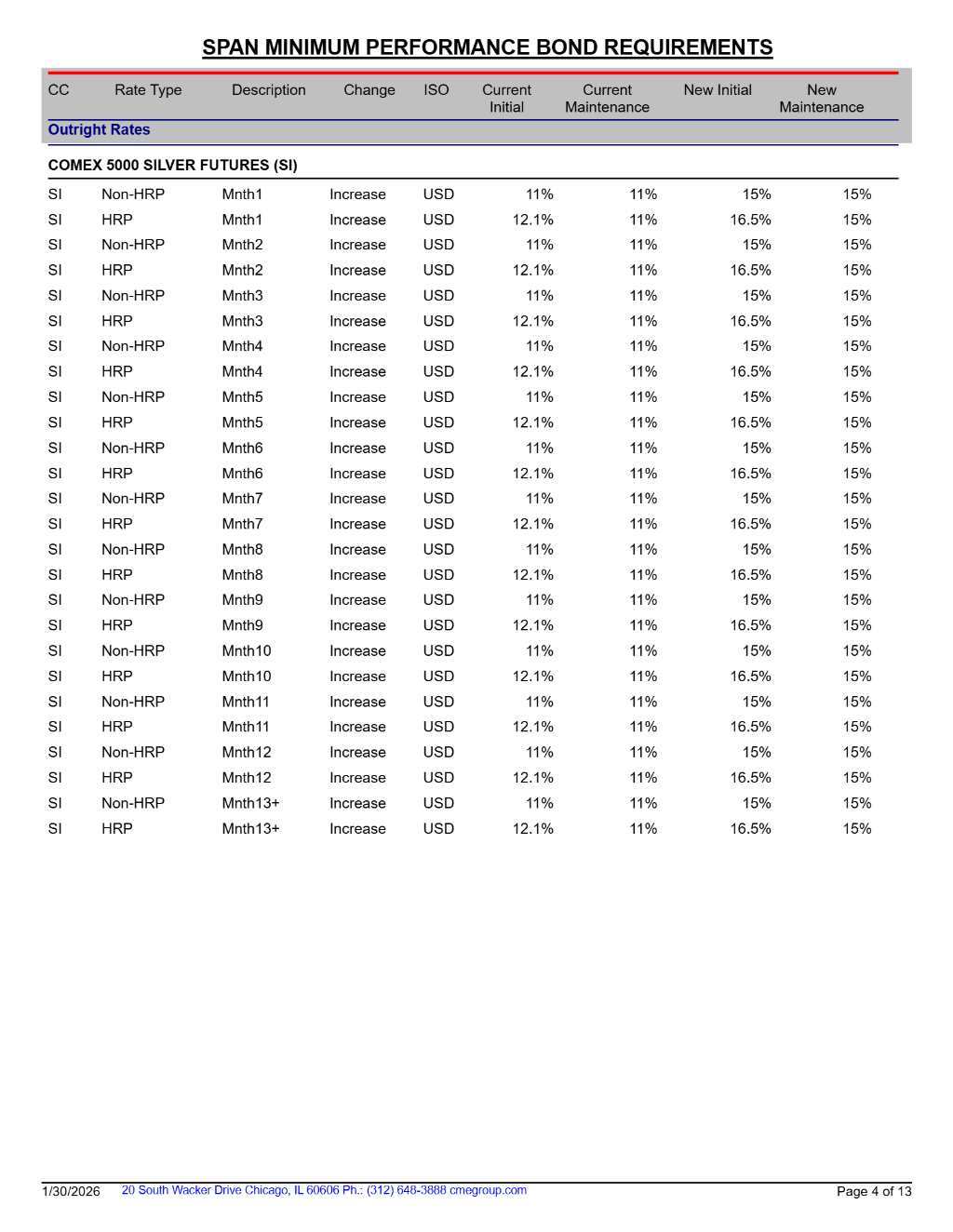
Silver futures:
Non-high-risk accounts: Increased from 11% to 15%.
High-risk accounts: increased from 12.1% to 16.5%
In addition, margin requirements for platinum and palladium futures have also been raised simultaneously.
This means that investors participating in precious metals futures trading will need to allocate more cash or equivalent assets to maintain the same position size.
This move forms a continuation of the earlier reform introducing 'floating margin' requirements.
It is worth noting that this increase is not an isolated event but rather part of CME Group's ongoing series of risk-control enhancements.
In mid-January, CME Group completed a significant mechanism adjustment, transitioning the calculation method for margins on gold, silver, platinum, and palladium contracts from fixed amounts to a dynamic percentage based on the notional value of the contracts.
At that time, the reference percentages for certain non-high-risk accounts were as follows:
Gold approximately 5%
Silver approximately 9%
Following the recent market plunge, the actual applied percentages have been swiftly elevated to a range of 8%-16.5%, significantly raising the level of capital requirements.
This mechanism change is highly impactful in the current environment of extreme market volatility.
Under the old mechanism, margin requirements were fixed dollar amounts; under the new mechanism, margins fluctuate with price and volatility. This means that during periods of significant market turbulence, the system will automatically demand higher collateral.
For traders, this not only implies increased instability in capital requirements but also means that leverage will be forcibly reduced during periods of high volatility.
Margin requirements will no longer serve merely as a static risk management tool but will act as an 'automatic deleveraging mechanism' that amplifies alongside price and volatility.
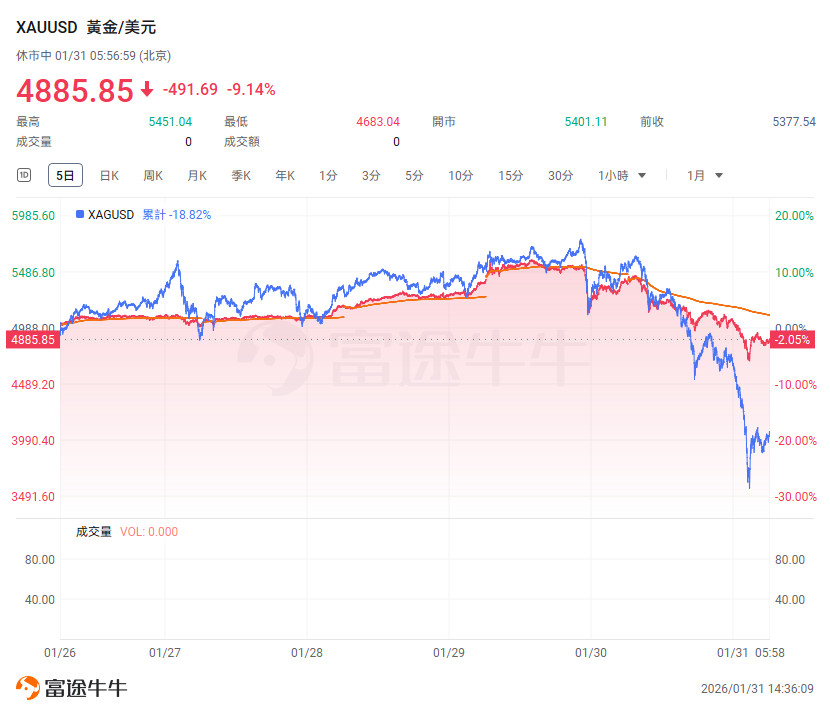
On Friday, spot silver plummeted 31% in a single day, while gold fell 11%. For long positions that have already suffered heavy losses, the upcoming higher margin requirements taking effect on Monday are akin to 'rubbing salt into the wound.'
The exchange has opted to 'control risks first.'
CME Group stated that this adjustment was made following a routine evaluation of market volatility.
Over the recent period, the precious metals market has experienced rare and intense volatility: prices for gold and silver surged rapidly before experiencing a historic plunge, with volatility rising significantly.
Against this backdrop, the direct effect of raising margin requirements is:
Increased cost of leverage.
Narrow the room for error in high-frequency, concentrated trading.
Reduce the probability of settlement risk spreading within the system.
It is customary for exchanges to increase margin requirements during periods of sharp price increases, declines, or extreme volatility. However, this action, taken after a rapid drop, further strengthens its role as a risk firewall.
The Ghost of History: Exchange Interventions Often Mark Turning Points in Market Trends
Seasoned traders on Wall Street are no strangers to this scenario.
Historical data shows that when exchanges begin to intensively restrict leverage by raising margin requirements, it often signals the end of a frenzied market phase or the start of a sharp correction.
The 2011 Silver Price Collapse: In 2011, as silver approached its historical high of $50 per ounce, the CME Group raised margin requirements five times within just nine days. This series of 'cooling' measures forced large-scale deleveraging in the futures market, causing silver prices to plummet nearly 30% within weeks, followed by a multi-year bear market.
The 1980 Hunt Brothers' Collapse: A more famous case was the 'Silver Thursday' of 1980. At that time, the CME issued targeted 'Silver Rule 7,' strictly limiting leverage and coordinating with the Federal Reserve’s interest rate hikes, which directly broke the funding chain of the Hunt brothers who were attempting to manipulate silver prices, causing the price of silver to collapse from $50 to $10.
Practical Impact on the Market: Increased Pressure on Small Players
From the perspective of market structure, increasing margin requirements does not directly determine price direction but significantly impacts the composition of participants and liquidity patterns.
Higher margin requirements imply:
Traders with weaker financial strength who rely on high leverage may be forced to reduce positions or exit the market.
Market liquidity may contract further in the short term.
Volatility could instead be amplified under extreme conditions.
CME Group also acknowledged that such adjustments might marginally squeeze out traders unable to quickly replenish margins.
This month has seen multiple interventions, with global exchanges tightening simultaneously.
Viewed over a longer timeline, CME Group's recent actions are not isolated.
Earlier this week, CME Group raised margin requirements for silver, platinum, and palladium futures due to rising prices.
In the domestic market, the Shanghai Futures Exchange has also increased the daily price limit range and margin ratios for precious metals contracts.
Against the backdrop of significantly heightened volatility in global precious metals, a consensus is emerging at the exchange level: prioritizing the containment of systemic risks over permitting further leverage expansion.
Editor/Rice