Source: CICC Insights
Authors: Liu Zhengning, Xiao Jiewen, et al.
Abstract
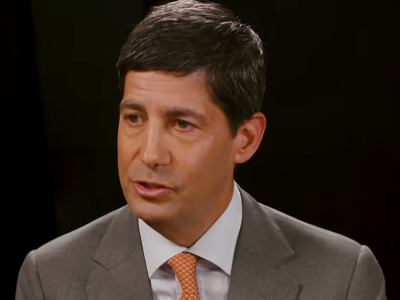
On January 30, 2026, Trump nominated Kevin Warsh as the next Federal Reserve Chairman. Warsh advocates for lowering interest rates through 'balance sheet reduction + rate cuts' and proposes 'institutional adjustments' to the Federal Reserve to restore the credibility of monetary policy.
 We believe Warsh’s 'hawkishness' is mainly reflected in the Federal Reserve's balance sheet, while he appears more 'dovish' regarding interest rate cuts. Trump nominated him not only because he favors lower interest rates but also because he supports restructuring the long-standing monetary policy framework dominated by establishment figures, aligning with Trump’s 'breaking old systems to build new ones' political narrative.
In the short term, Wash's nomination is expected to have limited impact on the rate-cutting path but may lead to a revision in expectations regarding dollar liquidity. The depreciation pressure on the US dollar could ease temporarily, and speculative assets driven by liquidity will be more vulnerable to shocks.
In the medium term, Warsh’s proposals face constraints from within the Federal Reserve, capital markets, and fiscal policy; whether they will succeed remains inconclusive.
However, the willingness to adjust policies should not be underestimated. Trump’s 'America First' policy mindset may gradually manifest in the Federal Reserve’s practices in the coming years. Investors should prepare in advance for this potential change.
1. What are Warsh’s core proposals?
Warsh’s most distinctive proposal is to reduce interest rates through 'balance sheet reduction + rate cuts.' He believes the current Federal Reserve policy framework cannot drive interest rates down. Since September 2024, despite the Fed cumulatively cutting rates by 175 basis points, long-term U.S. Treasury yields have risen instead of falling, indicating a significant decline in market confidence in the Fed. In response, Warsh advocates for 'reducing the balance sheet,' which would provide more room for rate cuts. This is because expanding the balance sheet has an 'equivalent rate-cutting' effect—every $1 trillion increase in the balance sheet equates to approximately a 50-basis-point rate cut.
Warsh takes a slightly 'hawkish' stance on inflation, adhering more closely to Milton Friedman’s monetarist philosophy, which emphasizes that inflation is fundamentally a problem of excessive money supply. He explicitly stated that 'inflation is a choice,' rooted in the Fed’s excessive money printing rather than external factors like tariffs or pandemic shocks. During his tenure as a Federal Reserve governor, he repeatedly opposed quantitative easing (QE), arguing that QE should only be used in emergencies, not as a permanent policy tool. If fiscal policymakers—namely, members of Congress—know that the central bank will subsidize government financing costs, they will become more reckless in budget allocations.
Warsh also advocates for 'institutional adjustments' (regime change) to the Federal Reserve to rebuild the credibility and institutional framework of monetary policy. He opposes an operational framework centered on models and forward guidance, urging the Fed to stop predicting interest rate paths and return to a results-oriented policy approach with significant discretionary flexibility. He once remarked, 'The American public does not need weekly progress reports; what they need is stable prices. The economy cannot be simplified into models or machines. In a rapidly changing environment, the Fed must have ample autonomy to adjust policies.'
Warsh also champions an 'America First' approach in finance, advocating for reducing the constraints imposed by Basel Accord rules on U.S. banks. He has called for a comprehensive review of the entire post-Dodd-Frank financial regulatory system, especially against the backdrop of the end of the 'cheap money' era, which may impact banks’ liquidity and solvency. He argues that the Federal Reserve and the Treasury should lead a fundamental reassessment.
2. Why did Trump choose Kevin Warsh, who leans more 'hawkish'?
Firstly, Warsh’s 'hawkishness' is mainly reflected in his management of the Federal Reserve's balance sheet, while he takes a relatively 'dovish' stance on interest rate cuts. As mentioned earlier, Warsh believes that the source of inflation lies in the excessive issuance of currency by the Fed, so as long as the overall monetary supply is managed well, inflation can be effectively controlled, thereby enabling credible interest rate cuts. With the midterm elections approaching, Trump needs voters to see tangible changes and benefits, and Warsh shares similar aspirations in this regard. He has stated that interest rate policy is essentially housing policy. The current U.S. real estate market is in a recession, and first-time homebuyers are finding it difficult to purchase homes largely because mortgage rates remain high. If sincere interest rate cuts can be implemented, shifting the entire yield curve downward, the economy could enter a recovery phase, which would benefit corporate profits and financial markets alike (for more details on Trump’s goals and demands during the midterm election year, refer to the report 'The Other Side of Elections: Administrative Intervention, Capital Concessions, and Policy Risks').
Secondly, while Trump wants lower interest rates, Warsh’s 'hawkish' stance carries greater credibility in the financial markets than a dovish approach, making him more effective at reducing rates. The Fed can only influence short-term interest rates, but what truly determines the cost of mortgages, car loans, and other economic activities is long-term interest rates. History has repeatedly shown that politically pressured dovish rate cuts quickly ignite inflation fears, increase term premiums, and lead to higher long-term rates instead of lower ones. On the contrary, a hawk like Warsh, who has a certain level of credibility, can convince markets that he will act decisively when inflation rises, thus anchoring inflation expectations. This may seem paradoxical for monetary policy, but in reality, it stabilizes inflation expectations through rebuilding credibility, which, in the long run, offers a shortcut to addressing inflation concerns and achieving lower rates.
Thirdly, Trump aims to dismantle old systems and establish new rules, and Warsh’s proposed policy adjustments seek to reconstruct the monetary framework that has been dominated by establishment forces over the long term, aligning with this political narrative. The current Fed policy framework was gradually built up over four decades of globalization and has been deeply influenced by establishment thinking and globalist ideology. However, it has proven incapable of resolving structural contradictions within the U.S. economy. After the 2008 subprime crisis, the Fed’s prolonged quantitative easing (QE) led to excess liquidity and inflated asset prices; after the pandemic, another round of aggressive QE triggered high inflation, further eroding the purchasing power of ordinary households. Treasury Secretary Bessent once criticized the Fed as a 'creator of wealth inequality.' Trump’s choice of Warsh represents not only the return of conservative thinking but also reflects an intention to make Wall Street yield benefits to 'Main Street.' Warsh’s extensive connections on Wall Street give him an advantage in coordinating various interests, while his natural ability to communicate with capital markets helps him achieve Trump’s policy objectives.
3. What impact will this have on the path of interest rate cuts?
In the short term, the impact on interest rate cuts is limited, but uncertainties may rise significantly after June. Currently, the Fed relies heavily on forward guidance and expectation management, which is unlikely to change significantly before Warsh takes office in June, meaning officials will continue operating under the existing framework. What needs attention is how Warsh will push for interest rate cuts after assuming office. In his framework, rate cuts should be based on anchored inflation expectations, proper management of the central bank’s balance sheet, and fiscal constraints. This indicates that he prioritizes the 'quality of rate cuts' rather than endless reductions. Therefore, we maintain our view that the Fed will cut rates twice this year, but the timing is more likely to occur in June or later.
Given Warsh’s opposition to decision-making based on models and forward guidance, he may downplay the role of economic forecasts and the dot plot, or even push for its abolition, making future rate-cut rhythms harder to predict in advance. Additionally, Warsh might promote establishing a new 'fiscal-monetary coordination mechanism,' similar to the principle of central bank independence established by the 1951 Federal Reserve-Treasury Accord. Warsh firmly believes that inflation primarily stems from excessive government spending and money supply expansion. To lower long-term interest rates, reliance solely on central bank operations is insufficient—it must be predicated on rebuilding fiscal discipline. True fiscal-monetary coordination does not mean unlimited monetization of fiscal deficits by the Fed but rather involves the Treasury controlling deficits while the Fed suppresses inflation expectations, jointly creating sustainable space for rate cuts. If this vision materializes, the long-term neutral interest rate could decline, and the yield curve might shift downward as a whole.
4. What impact will this have on dollar liquidity?
The prevailing narrative about excessive liquidity in markets may face revisions. Since Warsh explicitly opposes quantitative easing (QE), this implies that under normal circumstances, the likelihood of the Fed significantly expanding its balance sheet is reduced. Previously, when discussing financial regulation, Warsh noted that the era of liquidity-driven 'holidays' has ended, and the conclusion of the 'cheap money' era could impact banks’ liquidity and solvency. Thus, Warsh envisions a liquidity environment transitioning from extreme ease to marginal tightening.
For markets, this means assets driven purely by liquidity and speculative investments will be more vulnerable to shocks. On the day Warsh was nominated, assets such as gold, silver, and Bitcoin, which had seen sharp recent gains, experienced significant declines. Meanwhile, the U.S. dollar rebounded noticeably, while Treasuries reacted mildly. This signals that expectations for the Fed to rebuild credibility are rising, alleviating depreciation pressures on the dollar stemming from the 'sell America' narrative. Enhanced credibility also benefits bond market stability, and stable bond yields help prevent unnecessary panic in financial markets.
In the medium term, if Warsh's proposals are implemented, the global financial system may eventually face an environment with a scarcer but more stable US dollar. Over the past four decades of globalization, the US dollar, as a reserve currency, has played the role of a 'global public good.' At the same time, the United States has achieved a balance between rights and obligations by collecting 'seigniorage' and importing low-cost goods. With the advent of the deglobalization era, the US is accelerating the restructuring of its industrial chains and reducing reliance on foreign imports; consequently, its external obligations in the financial sector may also decrease accordingly. Under the new pattern of 'America First,' the dollar system will be required to serve more of America’s own goals. As a financial resource, the supply of dollar liquidity may no longer be as abundant and excessive as before.
5. Resistance and risks facing Warsh’s policy adjustments
No reform proceeds without obstacles, and Warsh is no exception. The constraints he faces come from three aspects: the Federal Reserve itself, the capital markets, and fiscal policy. First, resistance from within often appears earliest. The current framework of the Federal Reserve involves collective decision-making, and for Warsh to push forward with policy changes, he needs the support of other officials. However, many of these officials have establishment backgrounds and are closely linked to Wall Street. We anticipate that they may obstruct the progress of some issues, thereby slowing down the policy adjustment process.
Second, how will the capital markets perceive Warsh’s propositions? Could there be negative feedback due to an overly aggressive agenda? For instance, Warsh’s stance on balance sheet reduction might trigger market concerns about tightened liquidity. If communication is inadequate, it could easily lead to declines in asset prices. Against the backdrop of midterm elections, significant market adjustments would be unfavorable for Trump and the Republican Party, forcing them into a retreat (TACO). In the past year, there have been multiple instances where aggressive policies led to sharp market drops, ultimately resulting in Trump choosing to back down.
Third, Warsh’s policy adjustment plans require fiscal coordination. Should fiscal discipline be lacking, it could instead invite the return of 'bond vigilantes,' exacerbating financial risks. Warsh’s logic is to control fiscal deficits, reduce bond supply, while the Federal Reserve scales back on purchasing government bonds, guiding inflation expectations downward and long-term yields lower. Although Bessent had proposed before taking office to compress the fiscal deficit rate to 3%, the reality is that under entrenched fiscal spending inertia, expenditure cuts face various obstacles. We project that the US fiscal deficit rate may remain around 6% in the coming years, posing challenges to monetary-fiscal coordination and the reshaping of macroeconomic policy discipline.
In the face of these resistances and risks, we expect Warsh to adopt a more pragmatic approach in the short term, rather than being overly aggressive. However, in the medium term, he will focus on building a monetary system aligned with Trump’s 'America First' strategy, and the conservative undertone of his approach is unlikely to change easily. Therefore, we caution investors not to underestimate his willingness to adjust policies and to prepare in advance for potential shifts in US monetary policy thinking and their spillover effects.
Editor/Jayden