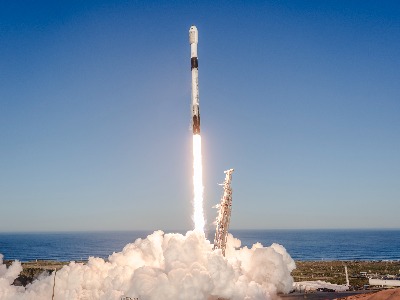
According to a report by Bloomberg citing sources familiar with the matter, Musk plans to merge SpaceX with xAI. The transaction was reportedly announced in a memorandum.
SpaceX announced on Monday that it has acquired xAI, an artificial intelligence company under Musk, forming the world's most valuable private enterprise by integrating rocket, satellite internet, AI technology, and social media platforms.
In a statement released on SpaceX's official website on February 2, Musk stated that this acquisition aims to create "the most ambitious vertically integrated innovation engine both on and off Earth."

 This marks Musk's latest move in reorganizing his business landscape after merging xAI with X last year, paving the way for his grand plan to build AI data centers in space. In the statement, Musk emphasized:
The electricity demand required for global AI cannot be met by ground-based data centers; in the long term, space-based AI is clearly the only viable path for expansion.
As previously noted by Wall Street Wisdom, SpaceX is planning an IPO that could raise up to $50 billion, with a valuation of approximately $1.5 trillion. Additionally, the company has discussed a potential merger with Tesla.
Strategic Framework for Space-Based Data Centers Takes Shape
In the statement, Musk elaborated on the technical roadmap for transferring AI computing power to space.
He pointed out that current AI development relies on large-scale ground-based data centers, which require significant amounts of electricity and cooling resources, creating a burden on communities and the environment in the short term.
SpaceX plans to launch one million satellites to form an orbital data center constellation, utilizing nearly constant solar energy in space without ongoing operational or maintenance costs.
Musk estimates that launching one million tons of satellites annually, with each ton generating 100 kilowatts of computing power, will add 100 gigawatts of AI computing capacity per year.
Musk predicts that within two to three years, space will become the lowest-cost method for generating AI computing power. This cost efficiency will enable companies to train AI models and process data at unprecedented speed and scale.
Starship emerges as the key carrier vehicle.
Musk emphasized that the realization of space-based data centers hinges on the carrying capacity of the Starship rocket.
He noted that although 2025 is expected to be the year with the highest number of orbital launches in history, the total payload delivered to orbit would only amount to approximately 3,000 tons, primarily consisting of Starlink satellites carried by Falcon rockets.
Starship will begin delivering the more powerful V3 Starlink satellites to orbit this year, with each launch increasing constellation capacity by more than 20 times compared to the current Falcon launches of V2 satellites. Starship will also deploy the next-generation satellites enabling direct-to-mobile connectivity, providing full cellular network coverage anywhere on Earth.
Musk stated that the number of satellites required for launching space-based data centers will push Starship to achieve higher performance levels. At a launch frequency of once per hour, with each launch carrying 200 tons of payload, Starship will transport millions of tons of cargo to orbit and beyond annually.
He also outlined a more ambitious long-term vision:
Starship's capabilities will support the establishment of a permanent base on the Moon for scientific research and manufacturing. Lunar factories could utilize lunar resources to manufacture satellites and deploy them into deeper space. Through electromagnetic catapults and lunar manufacturing, it may be possible to send 500 to 1,000 terawatts of AI satellites into deep space annually.
Acceleration of integration within Musk’s business empire.
This marks the third major corporate restructuring undertaken by Musk in recent years.
In March of last year, he merged xAI with X in a deal that valued the AI company at $80 billion and the social media company at $33 billion.
According to The New York Times, citing three people familiar with the matter and internal memos, the transaction created the world's most valuable private company, integrating rockets, xAI's Grok chatbot, and the social media platform X.
Musk frequently reallocates resources and employees across his companies, breaking conventional business norms by operating his enterprises as an integrated whole. Aside from Tesla, which is publicly traded, most of his companies are privately held and less transparent, including xAI, SpaceX, tunneling startup Boring Company, and brain-computer interface firm Neuralink.
Peter Diamandis, founder of the XPrize Foundation and an investor in SpaceX and xAI, stated:
Ultimately, there may emerge a single Musk company.
He noted that he has always believed in Musk’s vision of consolidating his various companies under one umbrella.
It was reported that SpaceX invested $2 billion in xAI last year, and Tesla also agreed last month to invest the same amount. This acquisition coincides with SpaceX’s preparations for an IPO this year, further reinforcing Musk’s strategy of consolidating his business empire.
Looking to pick stocks or analyze them? Want to know the opportunities and risks in your portfolio? For all investment-related questions,just ask Futubull AI!

Editor/Jayden