
According to Japanese media reports, Sanae Takachi, riding the wave of a major victory, pressured Kazuo Ueda during a meeting last week and expressed 'reservations' about further interest rate hikes.
This news weakened the yen and once again put the independence of the Bank of Japan's policy to the test.
According to a report by the Mainichi Shimbun on Tuesday, citing multiple anonymous sources, Japanese Prime Minister Sanae Takaichi expressed reservations about further interest rate hikes during her meeting with Bank of Japan Governor Kazuo Ueda last week.
 If true, Sanae Takachi's resistance to recent additional interest rate hikes could complicate the Bank of Japan's timeline, as coordination between the central bank and the newly empowered government is becoming more delicate. Following this report,$USD/JPY (USDJPY.FX)$the yen rose by 1% intraday, moving above 156.
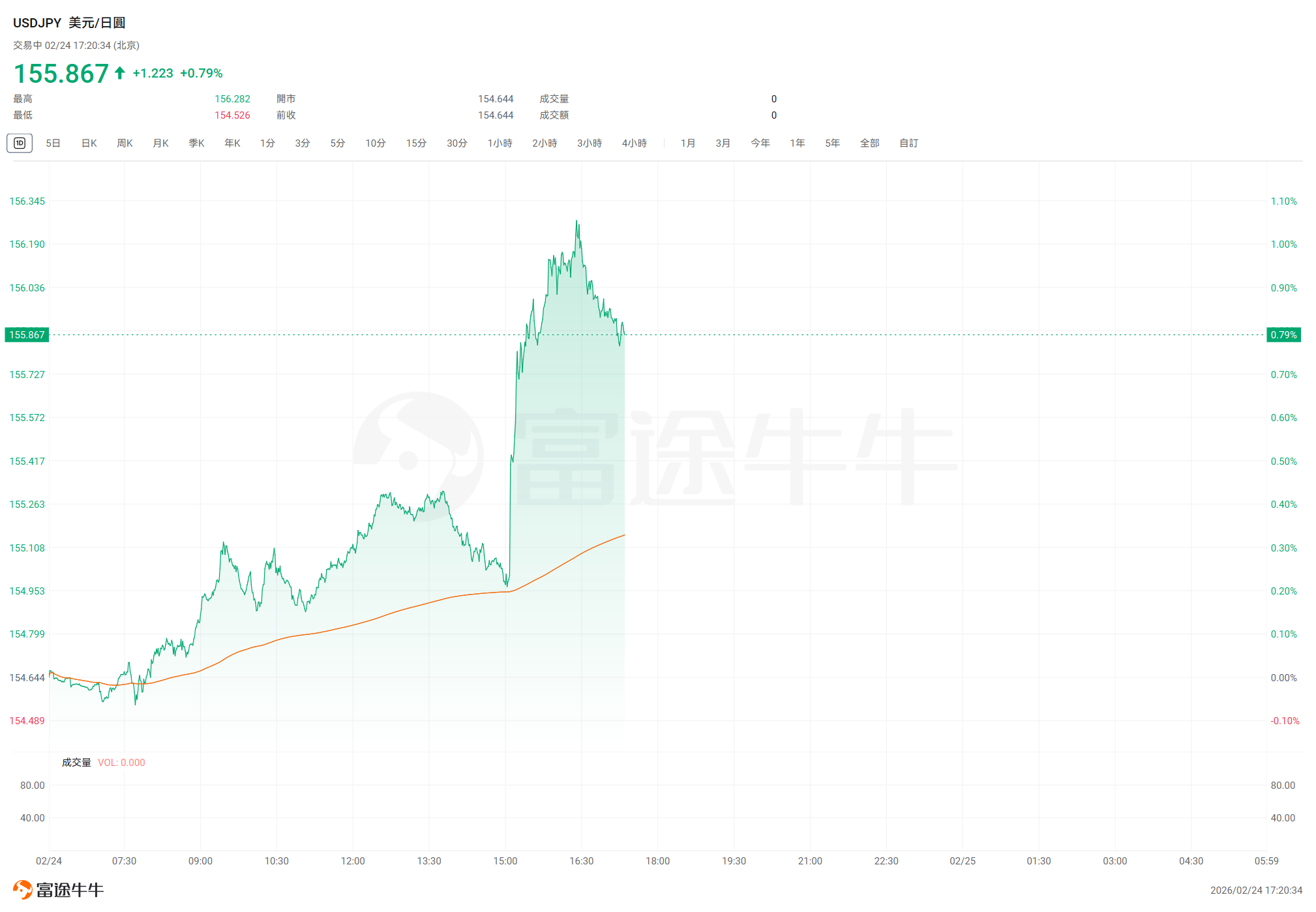
According to the Mainichi Shimbun, citing informed sources, Sanae Takaichi has adopted a 'stronger dovish stance' compared to the November meeting last year.
Sanae Takaichi herself was vague about the details of the meeting, only expressing her hope that the central bank would work closely with the government to achieve the 2% inflation target sustainably alongside wage growth.
Kazuo Ueda described last Monday’s meeting as an exchange of views on economic and financial developments and stated that the Prime Minister did not make any specific monetary policy requests. The meeting took place amid growing market speculation that rising living costs, partly driven by the weak yen, might prompt the Bank of Japan to raise interest rates as early as March or April.
Investors had expected Sanae Takaichi to shift toward more market-friendly policies, so in this context, the report from the Mainichi Shimbun came as a shock,” said Rinto Maruyama, a foreign exchange and interest rate strategist at SMBC Nikko Securities. “It suggests an increased likelihood of a scenario where she pressures the Bank of Japan to hold back on raising interest rates.
Earlier this month, following the overwhelming victory of Sanae Takaichi’s Liberal Democratic Party in the House of Representatives election, the yen recouped some of its losses as investors bet that her absolute majority would bring policy clarity and reduce the risk of the worst fiscal scenarios.
Sanae Takaichi is known for her pro-stimulus stance favoring economic growth over interest rate hikes, although to ease market tensions, she has moderated her position somewhat. She has stated that her comments on the yen have been misunderstood and emphasized her desire to build a strong economy resilient to currency fluctuations.
Bank of Japan Governor Kazuo Ueda stated that Sanae Takaichi did not make any specific requests during last week’s meeting, which focused on discussing the economy and exchanging general opinions.
It has been reported that the administration of Sanae Takaichi may propose successors for two members of the Bank of Japan’s committee as early as this week. These nominations will signal to economists and investors the extent to which she intends to influence central bank policies.
"If Sanae Takamichi calls for an interest rate cap of 0.75%, it would be more dovish than market expectations," said Yusuke Miyairi, a foreign exchange strategist at Nomura International. "That said, even if she maintains a dovish stance, the reality is that any attempt by the government to prevent the Bank of Japan from raising interest rates could trigger yen weakness and rising yields on Japanese government bonds, which might intensify pressure from the United States."
Earlier on Tuesday, the Nikkei newspaper, citing unnamed U.S. government officials, reported that U.S. Treasury Secretary Bessent initiated the Federal Reserve's currency check in January, rather than at Japan’s request.
Following the interest rate adjustment in December last year, most economists had originally expected the Bank of Japan’s next rate hike to occur in the summer. However, the continued weakness of the currency and its impact on inflation have prompted many to bring forward their rate hike forecasts to April.
Overnight swap trading indicates a roughly 59% probability of the Bank of Japan raising interest rates before the April meeting, with markets viewing a rate hike as inevitable by July.
Editor/Melody