
Bank of Japan Governor Kazuo Ueda stated that interest rate hikes will continue if economic expectations are met. He is closely monitoring the situation in the Middle East, where conflicts could have a "significant impact" on Japan and the global economy through rising energy costs and market volatility, while also paying attention to the impact of yen depreciation on prices.
He emphasized that the key to achieving the 2% inflation target lies in wage growth, with policy timing contingent upon the interplay between geopolitical risks and inflation dynamics.
Bank of Japan Governor Kazuo Ueda reiterated that the path for interest rate hikes remains unchanged while issuing warnings about economic disruptions caused by the situation in the Middle East and the weakening yen.
 Kazuo Ueda, speaking at a hearing in parliament on Wednesday, stated that if the economic and inflation outlook evolves as expected, the Bank of Japan will continue to raise interest rates. He also emphasized that the conflict in the Middle East could have a "significant impact" on Japan and the global economy through rising energy costs and market volatility, and the central bank will closely monitor related developments.
On the issue of exchange rates, Kazuo Ueda stated that he is "very carefully" analyzing the impact of exchange rate fluctuations on current and future price trends, pointing out that the recent exchange rate movements are more likely to affect corporate behavior.
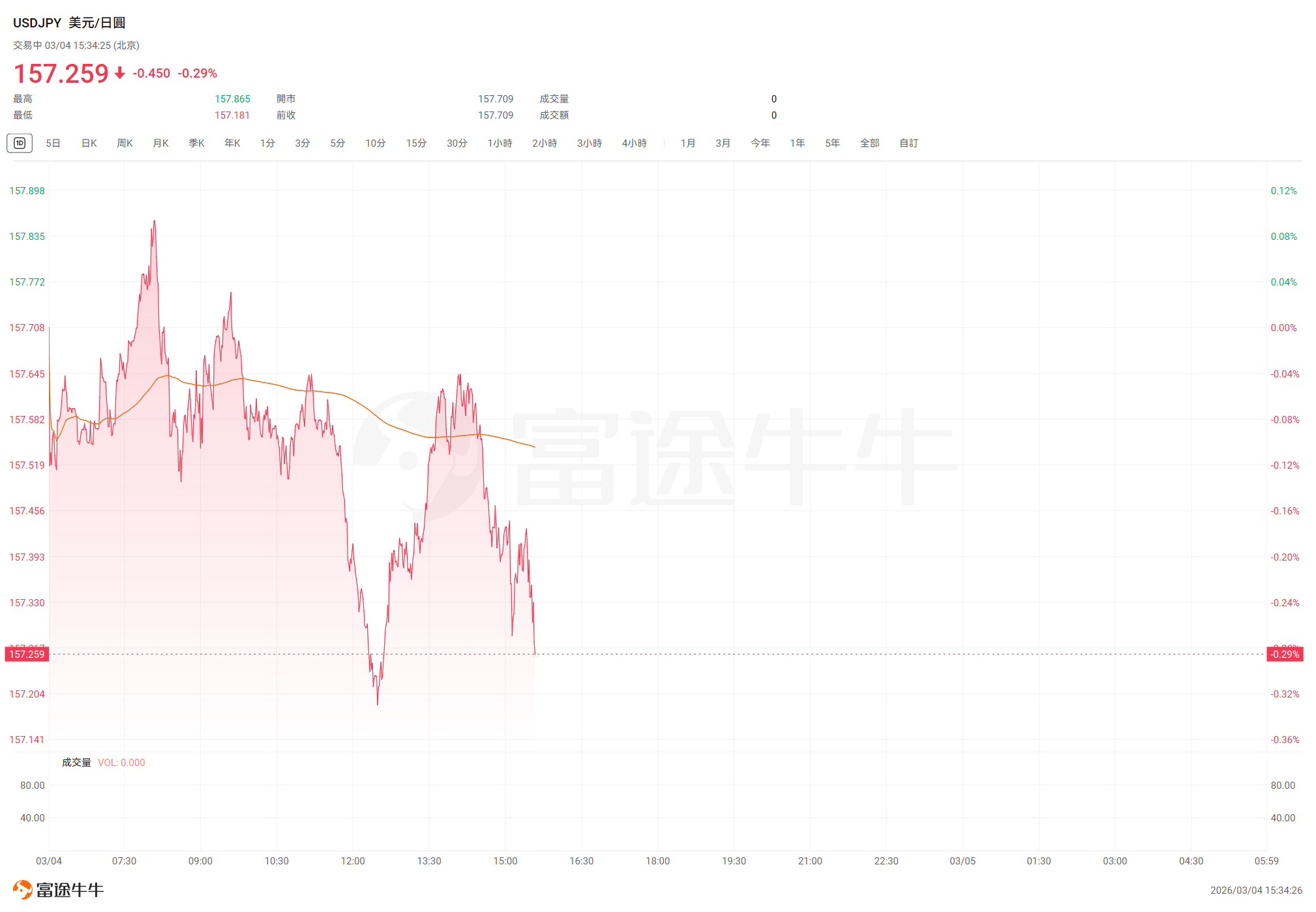
The above statements represent the latest policy signals released by the Bank of Japan amid recent pressure on the yen. As of the time of writing,$USD/JPY (USDJPY.FX)$the exchange rate remained near 157.4 yen.
Rising oil prices: A dual impact on inflation outlook
Kazuo Ueda provided a two-sided interpretation of the impact of rising oil prices. He noted that a sharp increase in oil prices would worsen Japan's terms of trade, weigh on the economy, and thereby exert downward pressure on core inflation. However, he also pointed out that if oil prices remain persistently high, they could inversely push up core inflation by raising medium- and long-term inflation expectations among households and businesses.
This dual assessment means that the trajectory of the situation in the Middle East will, to a considerable extent, influence the pace and direction of future policy decisions by the Bank of Japan. Kazuo Ueda stated that the central bank will continue to closely monitor spillover effects from the conflict in the Middle East.
Wage growth: A key variable for achieving the inflation target
Kazuo Ueda emphasized that significant wage increases are essential for Japan to achieve its 2% inflation target sustainably and stably. He acknowledged that the Bank of Japan has limited direct influence over real wage growth—real wage levels are primarily determined by medium- to long-term labor productivity—but stressed that monetary policy formulation will be guided by achieving the inflation target alongside wage growth.
In addition, Kazuo Ueda mentioned that he exchanged views with Japanese government official Sanae Takachi on the economic situation last month and emphasized the critical importance of the government maintaining credibility in its fiscal health. Close communication is maintained between the Bank of Japan and the government.
Based on Kazuo Ueda's recent statements at the Diet, the Bank of Japan has made its intention to raise interest rates clear; however, the pace of implementation still depends on whether the economic outlook unfolds as anticipated. Currently, three core variables are influencing the central bank’s policy decisions: geopolitical risks in the Middle East, depreciation pressures on the yen, and the interplay between wages and inflation. Until these uncertainties are clarified, the market remains highly divided in its predictions regarding the timing of the Bank of Japan's next policy move.
Editor/Melody