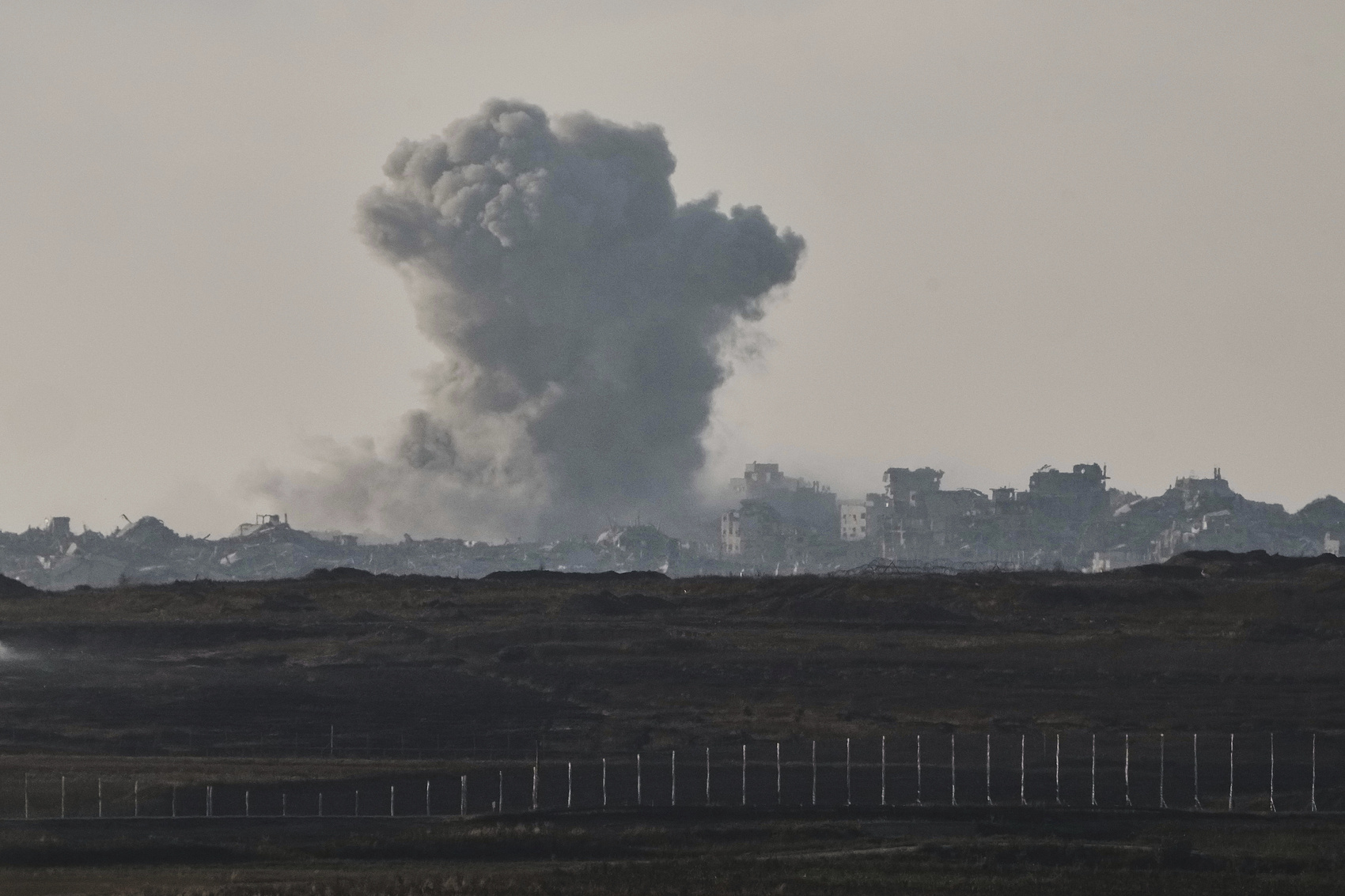
Since the conflict between the United States and Iran, the yields on U.S. Treasury bonds have continued to rise. Unlike non-energy shock events, the resurgence of war has led to a sharp spike in oil prices, which will significantly push up inflation. This prompts investors to demand higher bond yields and makes the Federal Reserve more cautious about interest rate cuts. At the same time, the current high fiscal deficit in the United States, coupled with an increasing share held by overseas creditors, has also exacerbated the vulnerability of U.S. Treasury bonds.
The safe-haven demand triggered by the Iran conflict did not push funds into U.S. Treasuries as it usually does. On the contrary, the inflationary shock brought by the war, compounded by the structural expansion of the U.S. fiscal deficit, is undermining the hedging efficiency of U.S. Treasuries as a global 'safe-haven asset.'
According to The Wall Street Journal, the U.S. stock market still closed slightly higher on Monday, continuing the market's habitual behavior of 'buying the dip' after unexpected negative news. However, the bond market performed poorly, with yields on both short- and long-term U.S. Treasury bonds continuing to rise since the market opened on Monday, indicating that U.S. Treasuries failed to provide their traditional cushion under stress scenarios.
 The volatility of risk assets first manifested prominently overseas. South Korea’s main stock index, which was the best-performing market globally last year with an accumulated rise of 92%, experienced its largest single-day drop overnight since 2008 amid concerns over the economic spillover effects of the war. U.S. stock index futures plunged sharply at one point but turned positive before the opening bell.
Factors driving the weakness in U.S. Treasuries include not only concerns over reflation due to rising oil prices but also the continued squeeze on U.S. fiscal space. Last month, the Congressional Budget Office raised its deficit forecast for the next decade by $1.4 trillion, prompting investors to reassess the boundaries of 'risk-free' pricing.
The logic of safe-haven is being challenged, and the role of government bonds as a 'shock absorber' is failing.
The core reason investors are willing to accept lower returns for holding U.S. Treasuries is their typical function as a 'shock absorber' during risk events. Under typical circumstances, if the stock market retreats by 10%, a rise of about 3% in bonds would keep losses within 5% for a classic 60/40 stock-bond portfolio.
However, this time, bonds did not rise as expected. Long-term U.S. Treasury ETFs fell by 1% on Monday and continued to decline on Tuesday, while the stock market subsequently began to more fully price in the scenario of a prolonged conflict. This combination of 'stocks stabilizing first, bonds falling first' challenges the hedging logic itself.
Rising oil prices fuel inflation, making it harder for central banks to cut interest rates.
Persistent increases in oil prices will drive up inflation, prompting investors to demand higher yields, thereby depressing bond prices. Even if the energy shock may weigh on growth and traditionally should lead to expectations of rate cuts, policymakers may respond with greater caution.
According to The Wall Street Journal, central banks may be reluctant to cut interest rates easily amid energy shocks due to fears of repeating the stagflation of the 1970s.
This contrasts with the typical response after non-energy shocks, when bonds historically rebounded noticeably following events such as the September 11 attacks, the collapse of Lehman Brothers, and Brexit; by contrast, during the 1990 Iraqi invasion of Kuwait that triggered a surge in oil prices and a recession, bond prices initially came under pressure.
High deficits exacerbate vulnerabilities in the bond market.
Oil prices may not be the only variable. The U.S. fiscal situation is already stretched: last month, the Congressional Budget Office raised its deficit forecast for the next decade by $1.4 trillion. The federal deficit as a percentage of economic output has reached levels rarely seen outside of recessions since World War II.
At the same time, the scale of U.S. debt held by the public is about to surpass the threshold set during World War II. During WWII, 'the public' largely referred to domestic savers within the United States; today, overseas creditors from the Middle East and Asia hold a significant share of U.S. Treasuries and may worry about the impact of conflicts on their own economies.
Under this structure, U.S. Treasuries need to prove their attractiveness to global capital, and sensitivity at the interest rate and exchange rate levels has also increased.
Historical Lessons: Rising Yields During Vietnam War, Replicating WWII-Style 'Rate Suppression' Proves Difficult.
Historical experience suggests that the combination of war and fiscal expansion does not always benefit government bonds. Even during the Vietnam War, when the U.S. was less reliant on foreign financing, bond yields continued to rise as Washington simultaneously pursued both the 'War on Poverty' and actual warfare.
The Wall Street Journal pointed out that the reason U.S. Treasury yields remained moderate during World War II was due to the collaboration between the Treasury Department and the Federal Reserve to suppress yields, at the cost of diluting returns for savers.
However, in today's era of free capital flows, if markets fear a return to something akin to 'fiscal dominance,' it could trigger investor unease and weigh on the dollar.
Editor/Stephen