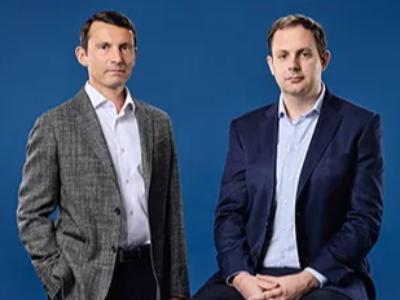
Source: Smart Investor
Over the past few months, we have added two new positions in China, one being Xiaohongshu and the other $MINIMAX-WP(00100.HK)$ 。”
Today, our exposure to China is around 12%. China still has many highly innovative and supportive companies, and their valuations are quite attractive.
 During a recent annual in-depth exchange with shareholders, Tom Slater and Lawrence Burns, two fund managers of Scottish Mortgage Investment Trust (SMT), addressed pressing market and portfolio questions with utmost transparency.
This trust, established in 1909, is known for its long-term bets on$Tesla(TSLA.US)$、$Amazon(AMZN.US)$、 $Tencent (00700.HK)$ mega-winners like Tesla, making it one of the most distinctive products in the global growth investment landscape.
In 2015, Tom Slater took over as fund manager, working alongside legendary fund manager James Anderson for six years in co-managing the product. Lawrence Burns assumed the role of deputy fund manager in 2021.
Both come from Baillie Gifford’s internal long-term growth investment system and continue to uphold the product's most distinctive style: seeking out the few companies that could truly reshape the future.
As of the end of January 2026, the total assets of Scottish Mortgage Investment Trust were approximately £15.22 billion, with 37.3% allocated to unlisted companies. The largest holding is SpaceX, accounting for 15.4% of total assets. In 2025, the share price returned 24.7%, while net asset value returned 22.3%, both outperforming the FTSE All-World Index’s 14.6% during the same period.
Shareholders asked very direct and specific questions, such as how they viewed the sharp decline in software stocks since the beginning of the year; how to participate in AI; why they recently purchased two Chinese companies; their view on the most controversial holdings in the China portfolio, such as Meituan; and the much-discussed SpaceX, as a high-weight unlisted asset in the portfolio, and how they understood its future growth trajectories.
The most compelling aspect was not necessarily how many standard answers the two fund managers provided, but rather the thoroughness and candor of their thought processes.
You can see that they are always constantly questioning where the real constraints lie, where value will shift, whether the old logic is becoming obsolete, and where new opportunities will emerge.
More remarkably, you can sense a very genuine tone in their work. They maintain an almost instinctive excitement about the ubiquitous new opportunities. At the same time, they carefully consider how to reduce internal correlation within their portfolio, how to enhance resilience, and how to avoid over-concentration in a single direction.
This coexistence of excitement and restraint is precisely what makes top-tier growth investing so fascinating.
As onlookers, it is quite thrilling to observe. After all, domestic institutional investors cannot discuss specific targets in this way. (A risk reminder: Do not simply copy others’ homework; the key supporting factors behind such investments are growth conviction, in-depth research, and ultra-long-term capital.)
Smart Investors has meticulously organized and shared the dialogue in its original form with everyone.
01, Regarding the Heavy Blow to Software Stocks
Host: Tom, the market has recently pulled out of software stocks. What impact has this rotation had on your portfolio? And how do you view the upcoming evolution?
Tom: I think we need to step back and look at the bigger picture first. The key question is not why software stocks are falling, but rather, what exactly happened in the past three months.
What is truly noteworthy is that AI's ability to write software has made significant progress in a very short period, and this has happened almost entirely in recent times.
This is actually very exciting because software is an essential underlying component of the modern economy. For many companies, the real bottleneck has always been software development capabilities—whether they can find enough engineers and talented individuals to build the software.
But now, the situation is changing. AI has started to write software, and its capabilities are continuously improving.
I believe that the output of software will increase significantly, creating many new opportunities.
At the same time, one thing must be carefully considered: we need to look at the entire system. If the most critical constraint in the value chain used to be software developers, and this constraint is no longer the core bottleneck, then value will inevitably be redistributed.
During this recent period, what the market truly wants to understand is where the new choke points will emerge. Which companies benefited from the old bottlenecks, and who will bear the brunt of the new constraints?
In my view, this is a more appropriate perspective for understanding our portfolio.
02. On the Layout of the AI Theme
Host: One viewer asked if they are concerned that large tech companies are investing so much money in AI production capacity, could it eventually turn into a bubble? How is the team managing this risk currently?
Lawrence: One key aspect of our approach is that we do not treat AI as a single bet. We do not focus on just one path or direction.
Within the AI theme, our investments span across the entire value chain. For example, at the hardware level, we hold positions in$NVIDIA(NVDA.US)$、$ASML Holding(ASML.US)$andTaiwan Semiconductor (TSM.US)。
In a sense, this is a relatively neutral allocation because, regardless of which model route prevails, they are highly likely to benefit.
Further down is the infrastructure layer. This includes Anthropic as well as Amazon Web Services.
Further down is the application layer. For some companies, AI is crucial to the investment logic, such as Aurora Innovation’s autonomous trucks; for others, AI is not a core factor determining whether the investment logic holds, but it acts as an additional option that enhances already solid reasoning.
Therefore, I believe the key lies in making diversified investments across the entire value chain, which allows us to respond more calmly to fluctuations.
On another level, Scottish Mortgage itself isn’t focused solely on AI as a growth theme. Our portfolio also covers many other growth areas, such as iconic luxury brands, digitalization in emerging markets, and energy transition, among others.
Thus, what is more important for us is to build a portfolio supported by multiple drivers, rather than betting everything on a single AI pathway and hoping it becomes the sole winner.
Moreover, our expectations have always been clear: the process of building AI infrastructure will not be a straight upward line; it will certainly experience ups and downs. Our portfolio is constructed with this premise in mind.
Host: In the next 12 to 24 months, do you see AI more as an opportunity or a risk?
Lawrence: I believe AI has the potential to become the biggest technological revolution of our lifetime. And a change of this magnitude inherently represents a tremendous opportunity for value creation.
However, at the same time, such a significant opportunity will inevitably come with various types of risks, and we must remain vigilant. I would roughly categorize these risks into three types.
The first type is the risk we just discussed. The large-scale rollout of AI infrastructure will not proceed smoothly, and there will certainly be difficult phases along the way, which you must have the ability to navigate through.
The second type is the kind of risk Tom just mentioned, namely the risk of being disrupted. As the market begins to question what AI will weaken or replace, new shocks will continue to emerge.
The third type pertains to our own exposure to AI. In other words, given such a significant opportunity, is our allocation to AI sufficient? And is the structure of our positioning across the entire AI stack appropriate?
Therefore, whenever I think about AI, I essentially focus on these three types of risks. However, the underlying premise remains unchanged: this is an extraordinarily massive opportunity.
Moreover, I believe the market has already provided a valuable reminder, which is clearly reflected in software stocks. Even if you haven't directly invested in AI, you might still be impacted by it.
There are actually very few safe havens that remain unaffected by AI.
Tom: Let me add another analogy. You can think of it as a music festival. In the past, when you attended a music festival, you had to pay for a ticket, and once inside, you paid again for drinks. Now, at a music festival, both the tickets and drinks are free, but you have to pay to use the restroom.
Under such a shift, you wouldn’t want to hold shares in companies that used to sell tickets. Instead, you’d prefer companies that control access to restroom facilities.
Section 03: On Anthropic’s Advantages
Host: You began building your position in Anthropic in 2025. Could you explain why you chose to invest in Anthropic rather than OpenAI? Additionally, do you also hold positions in OpenAI?
Tom: To date, we hold stakes in two major developers of large language models. One is Anthropic, based in the United States, and the other is MiniMax, based in China.
This actually goes back to the logic Lawrence mentioned earlier. Things are changing so rapidly now that we want to have a presence at all levels, whether it’s infrastructure, chip development, the application layer, or the 'intelligence' layer.
Over the past few months, we have observed that these systems are beginning to show more pronounced divergence in terms of strategic direction and capability performance.
Moreover, we don’t need to restrict ourselves to investing in just one company. One of our advantages is that we can hold stakes in multiple companies simultaneously.
What attracts us to Anthropic is their consistent caution when releasing these systems. They think deeply about safety issues and have carefully considered what boundaries and constraints should be placed on these systems.
I believe this is beneficial to their reputation and also makes it easier for them to penetrate the enterprise market, as corporate clients are naturally more cautious about these issues.
We view their approach to model releases as rational and showcasing some fairly differentiated capabilities, especially in software development.
Returning to the core theme discussed earlier, software development happens to be the area undergoing the deepest changes right now.
As for whether holding Anthropic would hinder our ability to invest in other companies, the answer is no.
Lawrence: I just want to add one point. What makes Anthropic attractive is its greater focus on the enterprise segment, whereas OpenAI and ChatGPT are primarily targeting the consumer side.
Why do I find enterprise-focused AI particularly appealing?
From the perspective of ordinary consumers, when I use these tools now, I still see them more as an advanced search engine. I use them for Q&A, spell-checking, organizing my thoughts, or generating images. They are certainly useful, but I don't use them to solve the most challenging problems in the world.
However, once we enter the enterprise scenario, the monetization potential becomes significantly stronger. Enterprises truly care about whether the model is the best. If you're not using the best model, you might fall behind your competitors.
I think that enterprises' willingness to pay for AI is clearer and more scalable compared to consumer markets.
Moreover, another crucial characteristic on the enterprise side is stickiness. Take myself as an example: today I can use ChatGPT, and tomorrow I can easily switch to Gemini without much hassle.
But if an enterprise has deeply integrated AI into its business processes, connected it with proprietary data, and the model continues to learn from this data, then the stickiness will be extremely high, and the cost of switching will also be very substantial.
The enterprise-focused path could very well be one of the most profitable routes in AI, with a particularly strong business model.
04. Regarding Winners in the SaaS Landscape Reevaluation
Host: In your opinion, who will be the winners and who will be the losers in this round of SaaS landscape reevaluation? Tom, perhaps you could give a few examples of companies.
Tom: For us, the most important premise is that we are long-only investors. This means we only hold companies and do not profit from a company's poor performance.
Moreover, even within the scope of 'investable companies,' only a small number of companies are truly significant.
Therefore, we are not conducting a selection process in another sense, nor are we ranking winners and losers one by one. What we truly aim to achieve is identifying a small number of genuinely outstanding enterprises.
Of course, based on this premise, you can continue to inquire further: In today's environment, what exactly are the most critical attributes for a software company?
I believe that the first thing to consider is the type of data you possess; how important these data are to your clients; how dependent they are on you when managing these data; and also the extent of your distribution capabilities.
If simply 'knowing how to code' no longer represents a core competitive advantage in the future, what other assets do you have that can sustain your competitiveness?
For example,$Shopify(SHOP.US)$It functions essentially like an operating system for retailers, regardless of whether these merchants sell online or operate physical stores offline.
Shopify manages an extensive dataset, understanding what is being sold, who is buying it, and when purchases occur. It also has insights into how retail businesses operate and how advertisements are deployed. This encompasses a vast amount of multidimensional information.
Moreover, Shopify’s revenue model does not solely rely on selling software to customers. A significant portion of its income actually comes from payment services.
So, imagine this: If AI becomes a major shopping entry point in the future and people begin completing purchases through AI interfaces, what then? Ultimately, consumers will still need to make payments, which would still go through Shopify’s checkout system.
For Shopify, such changes may not necessarily harm its operations because the fundamental mechanism through which it creates value would not be disrupted.
Therefore, I believe this is the key element you should focus on when evaluating software stocks.
Another point to keep in mind is that what truly happened during this sell-off was not that these software companies suddenly became incapable, but rather that the market began applying a larger discount to the certainty of their future cash flows.
Many software companies are still performing well at present; it’s just that the market is signaling: we are uncertain how long this state can last.
So, returning to the framework discussed earlier, you need to ask yourself: how stable is this company’s moat? How will AI reshape its business model?
I believe this is a better way to understand who will emerge as winners and losers.
05. On SpaceX and Musk
Host: Let’s move on to discuss SpaceX. What are your thoughts on the integration of SpaceX and xAI?
Tom: I believe the scale of the opportunity facing SpaceX continues to expand. To put it more directly, people may need to update their expectations of the company and reconsider what kind of enterprise it might grow into.
Of course, all of this starts with reducing the cost of accessing space. This is the fundamental premise upon which everything else rests, serving as the most foundational enabling factor.
But beyond that, I think the narrative has become even more exciting. SpaceX now has the potential to position itself as a near-monopolistic supplier in the global AI industry.
What makes this possible? What exactly is happening behind the scenes?
The biggest constraint on AI expansion is, in fact, electricity. Our use of AI is growing rapidly, but the planet’s power generation capacity has not expanded correspondingly.
The core idea behind this initiative is that if we move AI computing power into space, leveraging solar panels, continuous exposure to sunlight, and eliminating the need for battery storage, we could significantly increase the scale of available power.
If you look at SpaceX’s future launch plans, you will see that in the coming years, it has the capability to send large amounts of power and AI computing resources into space—something no one else can achieve.
If the real constraint lies in entering space at a sufficiently low cost, then what SpaceX controls is the most critical bottleneck.
The next question becomes: how do you monetize such a position? The real bet here is not about earning money through launch services but through providing AI capabilities.
To give you a sense of scale: SpaceX’s current goal is to deploy power-generating capacity equivalent to the entire U.S. grid into space every two years. Theoretically, the scale of AI that could run on such a system would be enormous, allowing it to continue expanding rapidly while others remain constrained by terrestrial power limitations.
Host: The Financial Times said this week that space-based data centers are economically unfeasible. What is your take on this view?
Tom: As of today, operating data centers on Earth is cheaper than doing so in space. So, the answer clearly points to Earth being the more cost-effective option.
But you must look at the trend lines.
If you look back over the past twenty to twenty-five years, our most successful investments all share a common characteristic: they capitalized on the exponential trend of technological advancement.
The key has never been about what things look like today, but rather imagining what they will look like four or five years down the line if these trends continue.
Now, if you look at terrestrial data centers, aside from chip costs — let's assume that the cost of chips in terrestrial and space environments is similar — there are substantial infrastructure costs surrounding the chips.
For instance, electricity costs, power generation expenses, land acquisition, investment in constructing the data center itself, as well as air conditioning and cooling systems. All these costs are rising and becoming increasingly expensive.
However, when it comes to launching satellites with AI computing power into space, the cost of this endeavor follows an exponentially declining curve. The largest portion of the cost involves putting weight into orbit, and the primary driver behind this cost reduction is SpaceX’s launch expenses.
Our assessment is that this cost will continue to drop significantly in the coming years, potentially by 80% to 90%.
Conversely, if these satellites begin to enter mass production, you will benefit from economies of scale in manufacturing and the associated cost reductions.
You can easily envision a scenario where the costs of terrestrial data centers continue to rise while the costs of space-based data centers keep falling. When these two lines cross, an incredibly massive opportunity will emerge, and the entity truly qualified to seize it may be SpaceX alone.
Host: Given the significant position SpaceX holds in your portfolio, does it limit your ability to make other private market investments? Will you maintain your current position at least until after the IPO?
Lawrence: Let me add one more point following Tom’s earlier discussion about AI and space-based data centers. I think the most fascinating aspect of SpaceX’s investment thesis is that space-based AI represents just a part of its long-term opportunities, not the entirety.
It still has opportunities in global broadband, as well as in orbital transportation, microgravity manufacturing, and its role in the U.S. missile defense system concept.
What is truly attractive is not just that it has bet on one huge opportunity, but that it simultaneously holds several very large long-term opportunities.
As for the portfolio weighting, because SpaceX has been so successful, it has naturally grown into a significant position within the fund. This is actually something we have always aimed to achieve—capturing a few super winners that truly emerge.
However, it has now grown into a position larger than what we would typically hold in a single stock. This also means that the proportion of unlisted assets in our portfolio has been pushed above 30%.
This does not mean we will be forced to sell assets, but for a period of time, it will limit our ability to make new investments.
However, if you follow the recent information released by SpaceX, they are now suggesting that an IPO might be pursued by mid-year or the end of the year. If this happens, the capacity of these unlisted assets could be quickly unlocked, and the entire constraint could change rapidly.
Host: In the next 12 months, do you think there will be any other IPOs that could significantly impact the fund's net asset value?
Lawrence: First, a premise must be added. The number of IPOs and the activity level of the IPO market ultimately depend on the capital markets themselves. If the capital markets are strong, I believe this is quite possible; if the capital markets are weak, the number of IPOs you see may be much lower.
However, looking at our portfolio situation, the main unlisted companies we hold generally have healthy cash flow, large scale, and sustainable business models. As long as conditions are appropriate and the market is willing to offer reasonable valuations, they all meet the conditions for an IPO.
We just discussed SpaceX. In addition, another major holding for us is ByteDance, the parent company of TikTok. This year, they have made significant progress in addressing issues related to TikTok's U.S. operations, which had long been considered a major obstacle to ByteDance’s overall IPO plans.
Looking further into the other companies in the portfolio, I believe many are in a state where they could go public if conditions align. Therefore, if the environment becomes favorable, the current proportion of unlisted assets may look very different just a few months from now.
Host: How do managers currently view the risks Elon Musk brings to Tesla and SpaceX?
Tom: This is an interesting question. After all, this is someone who has created tremendous value for shareholders over the past 10 to 15 years. Not just in a general sense of creating value, but specifically for the shareholders of Scottish Mortgage, he has indeed generated significant value.
So, when asked whether he represents a risk to these companies, I would say more accurately that he is himself a creator of value.
Of course, he has his own very distinctive and highly personal traits, but almost all great entrepreneurs share this characteristic.
He provides vision and momentum. For Scottish Mortgage shareholders, he has always been an extremely important figure.
Would I spend much time contemplating the so-called 'Musk risk'? No.
Lawrence: However, it is worth adding that over the past 18 months, we have significantly reduced our position in Tesla. Following the U.S. election, Tesla's valuation surged, which benefited us greatly.
It used to be one of our largest holdings and, as Tom mentioned, it generated substantial value for shareholders. But today, it is a much smaller position. Thus, the expression of risk exposure related to Musk within the portfolio has changed.
06. Regarding the two new Chinese positions
Host: Given that China is relatively cheaper in valuation compared to the United States and is actually at the global forefront in many areas, would you consider increasing your holdings in China?
Lawrence: I agree with and understand both of these assessments.
Let me first talk about what we have actually done recently. Over the past few months, we added two new positions in China.
The first is a privately held company called Xiaohongshu. It is a digital community platform, and it is difficult to find a completely comparable company in the West. You can think of it as a combination of search engines,$Reddit(RDDT.US)$, Instagram, and short video platforms. It currently has about 350 million users and is still growing rapidly, with a low level of monetization. Moreover, it is backed by$Alibaba(BABA.US)$and Tencent.
In China's internet ecosystem, this is usually a good position to be in.
Additionally, we also invested in MiniMax, which Tom just mentioned. We participated in its IPO. It is a Chinese AI model company, and its appeal lies in the fact that it can achieve approximately 90% of the performance of top U.S. models but at a much lower cost. This is very attractive for many consumer-facing application scenarios in the Global South.
Looking further back, early last year, we also purchased$宁德时代(03750.HK)$, the world’s leading battery manufacturer.
Therefore, we are indeed continuing to find opportunities in China. Our starting point has never been to set a regional allocation target first, but rather to identify whether there are truly interesting and differentiated companies here; at the same time, whether their valuations are more attractive compared to those in the U.S.
If the answer is yes, we will take action.
We do not have a specific target for increasing China's allocation. It is more about assessing the risk-reward profile at the individual stock level. As long as it is sufficiently attractive, we will gradually build up positions.
At the same time, however, we are always very aware of certain common risks associated with Chinese companies, whether at the geopolitical level or domestic regulatory level. Therefore, when looking at China, we also apply a top-down perspective of aggregate control, asking ourselves: What should the overall allocation roughly be?
Today, our exposure to China is approximately 12%. China still has many highly innovative and worthy enterprises, and their valuations remain quite attractive.
07. Considerations on Geopolitical Investment
Host: Against the backdrop of Trump’s attempt to reduce reliance on Taiwan Semiconductor, would maintaining a significant position in Taiwan Semiconductor pose any issues? You can also discuss your broader views on Taiwan Semiconductor.
Lawrence: I would interpret it this way. What successive U.S. administrations truly want to reduce is dependence on geographic location, rather than necessarily dependence on Taiwan Semiconductor itself.
The reality is that Taiwan Semiconductor produces about 90% of the world’s most advanced chips. Without Taiwan Semiconductor’s involvement, it would be extremely difficult to efficiently establish such advanced manufacturing capabilities.
Under the current plan, Taiwan Semiconductor is expected to build around six factories in Arizona.
The U.S. government has been highly proactive because it has already provided approximately $6 billion in subsidies and $5.5 billion in loan support.
For investors like us in Taiwan Semiconductor, this is actually positive news. It enhances Taiwan Semiconductor's resilience and reduces its exposure to a single region. The company is expanding its manufacturing footprint in the United States, Germany, and Japan, with strong policy support throughout the process.
There is one more important point. If you ask Taiwan Semiconductor’s clients, what would they say? They would say that today, while we do maintain some secondary supply sources with other foundries, we are willing to pay a premium for chips manufactured by Taiwan Semiconductor in the United States and are also willing to allocate more business to them.
Host: Considering geopolitical factors, especially what is happening in the Middle East now. Tom, I’d like to ask you: Against this backdrop, would you consider looking at defense stocks?
Tom: In recent years, we have indeed observed a clear push across NATO to increase defense spending.
Moreover, the world does appear to be more uncertain than before. Especially as the great power competition between China and the United States becomes increasingly evident, this trend will only become more pronounced.
However, I would exercise caution and not immediately interpret an outbreak of war in Iran as a signal to chase defense stocks.
I believe that the market’s reaction this time was quite in line with expectations. Following the outbreak of hostilities in Iran, the U.S. dollar rose, oil prices surged, and defense stocks also climbed. None of this is surprising.
But I don’t think we should chase such trends.
What truly interests me about the 'defense logic' is that the nature of warfare itself is undergoing significant changes. You’ve already seen this in Ukraine, and it continues to unfold in the Middle East now.
It is becoming increasingly evident that a growing category of critical assets on the battlefield are disposable and consumable hardware, with drones being the most typical example.
The real competitive edge no longer lies solely in the hardware itself but in the software layer—how you deploy and utilize these extremely inexpensive hardware components. You can even force your opponents to use far more expensive systems to shoot down these low-cost drones, costing them significantly more resources.
Essentially, what we are witnessing is similar to changes occurring in many other areas of the economy: value is shifting toward the software layer, which has become even more crucial than the hardware itself.
Therefore, I believe this trend is highly noteworthy as it will indeed create new opportunities and remains a direction we will continue to monitor closely.
To date, we have not directly taken exposure to defense-related companies. However, when connecting this topic with previous discussions, it is clear that satellite-based communication capabilities have proven to be highly important in modern warfare.
Within SpaceX, Starshield is evidently a highly significant technology within the current paradigm.
08, Regarding Meituan and Ant Financial
Host: Why do you still hold onto these stocks? Meituan-W (03690.HK) ?
Lawrence: Meituan is essentially the infrastructure for daily local living services.
It provides an entire suite of services, including food delivery, various long-tail local services such as transportation, booking hair salons or beauty parlors, and even instant retail and grocery shopping.
These operations are mainly in China, although it has also slightly expanded into some Middle Eastern markets and a small part of Brazil.
It now covers 2,800 cities in China, with peak daily order volumes reaching approximately 50 million. Therefore, this is already an extremely large company, and the opportunity space ahead of it continues to expand.
We have held it since it was a private company. In 2024, when market sentiment clearly improved, we also reduced our holdings, cashing out about 100 million pounds.
The reason people are asking this question today, I believe, is that Meituan's competitive environment has changed. As it extends its opportunities into instant retail, some participants, especially JD.com and Alibaba, have begun to feel threatened.
Their response has been to invest heavily in an attempt to capture market share within Meituan’s territory, particularly in instant retail. This is primarily achieved through significant subsidies, which are highly unprofitable. Meituan has responded, and its profitability has come under considerable pressure as a result.
So the question becomes, why continue to hold it in such an environment?
My answer is that this situation is not unfamiliar to Meituan’s management. It originally emerged from such extreme competition. There were about 3,000 companies competing with it using similar models, and it survived that environment.
It is the best operator in this industry, possessing scale advantages, network effects, and holding $15 billion in net cash on its balance sheet. Thus, it cannot be driven out by financial means.
At the same time, its management is very determined to defend key market share.
On the other hand, I don’t think Alibaba will be willing to continue burning billions of dollars in this market indefinitely. Moreover, the government is increasingly dissatisfied with this form of competition, as they view it as inefficient and non-constructive on many levels.
This war of attrition will eventually come to an end. In our view, once it does, the market will reassess this stock with a completely different perspective. At its current valuation, there could be significant upside potential.
So, this is indeed a challenging period, but looking ahead, there appears to be a fairly clear path toward normalization.
Host: Next, let's discuss another company from our China holdings portfolio—Ant Group.
Tom: Ant Group is a private company we have held for many years.
Its initial foundation was as a payment platform supporting Alibaba’s ecosystem. Over time, its opportunities expanded into areas such as money market fund facilitation and broader financial services accessibility.
A few years ago, it was preparing to go public, but then encountered regulatory issues. Regulators were concerned that it might pose some systemic risks to China’s economic system.
As a result, it had to remain private and reshape its business model. Naturally, during this process, its growth slowed significantly as it needed to realign itself with the requirements set by Chinese regulators.
This has been a very difficult adjustment process.
On the positive side, it has now largely moved past this phase. It has obtained relatively clear operating licenses from Chinese regulators, and its business has started growing again.
We believe there are still genuine opportunities here. Of course, it will not reach the scale we initially envisioned when we first invested, but we still consider it a crucial layer in China’s financial infrastructure, holding many highly valuable and hard-to-replace assets.
It is still believed that it has the potential to continue creating value for us in the future.
Regarding MercadoLibre, which has a large position
Host: With a large position $MercadoLibre(MELI.US)$ , is it currently facing significant competitive pressure from Shopee and Amazon?
Lawrence: If we look at the Brazilian market, one of MercadoLibre’s core operating markets, the level of competition is indeed increasing.
However, part of this increase is also due to MercadoLibre's own proactive measures. In May and June last year, it lowered the threshold for free shipping. This move was aimed at further expanding its market share while growing the overall market.
And as a result, its growth in Brazil did accelerate.
Of course, the trade-off is that profitability will be impacted. Since it now offers free shipping on more products that previously did not qualify for this policy, it will take time for economies of scale to offset these additional costs.
So what you are seeing now is an acceleration in growth, which is positive and indicates that it is capturing more market share; however, profit margins are under pressure.
This is not the first time this has happened to the company. It has lowered the free shipping threshold multiple times in the past. Almost every time, the pattern has been the same: growth accelerates initially, profits decline in the short term, but as scale expands, profitability eventually recovers.
Meanwhile, MercadoLibre has several other growth drivers that are also effectively propelling its business forward.
For example, the expansion of financial services. It is already one of the fastest-growing credit card issuers in Brazil. Additionally, its advertising business is growing at a rate of approximately 60% to 70%, with high profit margins, helping it offset some cost pressures.
Fundamentally, this does not indicate that the company is on the defensive. Rather, as the leader in the Latin American market, it is proactively setting higher goals, aiming to achieve even faster growth on top of its existing leadership position.
To provide additional context, based on its most recent earnings report, its revenue growth, measured in U.S. dollars, is approximately 45%. This demonstrates that the reinvestment of these funds into the business is indeed driving very robust growth.
10. Discussion on Autonomous Driving Strategies
Host: Autonomous driving appears to be on the verge of significant progress. Could you share insights about the related companies in your portfolio and whether there are areas where you might consider increasing your holdings?
Tom: We hold a position in $Aurora Innovation(AUR.US)$, a company specializing in autonomous trucking. It has already commenced commercial operations and is expanding rapidly. Currently, its primary focus is on Texas, but the routes it covers are gradually expanding.
This represents an incredibly exciting opportunity because there is already a shortage of 18-wheel truck drivers in the United States, making its value proposition highly compelling.
We also hold a position in Nuro, a company specializing in autonomous passenger vehicles. It is currently a revenue-less entity, leaning more towards a technical opportunity, but if it can achieve scale in the future, its potential could be significant.
As Lawrence mentioned earlier, we still hold Tesla.
I would actually like to connect this with the previous question regarding 'Musk risk.' To some extent, I feel that our exposure to Tesla and Musk might still be insufficient.
If their advancements in autonomous driving capabilities continue along the current trajectory, the upside potential may remain substantial. Moreover, its system is already on the roads in Austin, Texas, and has begun commercial operations.
Therefore, in terms of the trend towards autonomous driving, we actually have several different types of exposure.
I believe that once this technology crosses the safety threshold and people gain increasing confidence in the relevant data, its deployment will accelerate rapidly. Ultimately, it will be applied very broadly.
11. Regarding Joby Aviation's pullback
Host: Many people have recently asked, $Joby Aviation(JOBY.US)$ . The company recently raised capital and coincided with an overall market retreat from high-risk assets, leading to a noticeable pullback in its stock price. Are you concerned?
Tom: This company focuses on electric vertical takeoff and landing (eVTOL) aircraft, which are electric planes capable of vertical takeoff and landing. We believe there is a very significant opportunity here.
Even if you simply consider it within the framework of the helicopter market, and even if it ultimately only covers today's helicopter market, we believe this could still represent a very significant opportunity for Joby Aviation.
However, in reality, we believe it will significantly expand the entire market.
This is because helicopters are extremely noisy and have single-point failure issues. In contrast, this type of electric aircraft addresses the noise problem, which has long been a major obstacle to its broader adoption in urban environments, while also eliminating the risk of single-point failures.
Therefore, based on these characteristics, such aircraft are theoretically much safer.
The key factor that will determine whether it can achieve large-scale success lies in obtaining approval from the Federal Aviation Administration (FAA). Our expectation is that commercial operations will commence this year, and progress is currently moving in that direction.
Another noteworthy development in this narrative is its dual-use potential for both military and civilian applications.
Consider this: who wouldn’t want access to a quiet, fast transport solution for troops that adversaries lack the equivalent capability to counter? Under the current U.S. administration, this aspect of the story could create substantial additional upside.
Regarding financing, I believe it is reasonable to raise capital to seize such an opportunity. Given the strong demand signals they have observed, they will certainly aim to expand production capacity more rapidly than originally planned.
Does stock price volatility concern me? No. This is typical for companies at such an early stage of commercial development, which inherently involves significant uncertainty.
Regrettably, this is part of the reality that investors in such assets must accept.
12. On the resilience of the portfolio
Host: Compared to the downturn in 2022, are your portfolios now better prepared?
Lawrence: I think it can be viewed from two aspects.
The first point is that many companies within the portfolio have been striving to enhance the resilience of their own businesses after experiencing 2022. That round of rising capital costs made many companies realize that they had been operating much less efficiently than they had assumed.
In the past, when problems arose, the immediate reaction might have been to keep adding more people or resources. However, they have since shifted towards a smarter and more efficient approach to problem-solving.
As a result, you will notice that many companies in the portfolio are moving towards higher profitability, which also means that they have become more adaptable to the financial market environment. They no longer rely as heavily on external financing and can still continue to grow.
We have indeed observed that many founders and management teams have completed this transformation within the portfolio. That is the first point.
The second point is that the types of opportunities we see today are more diverse than they have been in a long time.
Investing in megatrends has always been at the core of Scottish Mortgage’s methodology, but now there isn’t just one megatrend; there are several occurring simultaneously.
We have already mentioned quite a few today. AI is a major theme, space economy is another, and energy transition is also significant. Combined with our global presence across different regions such as Latin America, China, and the United States, I believe these factors collectively contribute to the resilience of today’s portfolio.
Host: In the near future, what do you think is the biggest threat facing this portfolio? And how are you managing and mitigating such threats?
Tom: I actually don’t agree with the notion of a 'single biggest threat.'
If we go back to the financial market environment that Lawrence mentioned earlier, assuming the financial environment changes, the cost of capital rises significantly, and the market shifts noticeably away from growth assets, then of course it would impact us. Because we are explicitly growth-oriented managers.
We look for companies with enormous potential, where the peak of their profitability is still far in the future. So if the environment shifts in that direction, we will certainly be affected.
On another level, we are essentially betting on some very large changes. If these changes don’t materialize or turn out to be very different from what we anticipated, that would also be a risk for us.
Take space exploration, for example. SpaceX is our largest holding. If something goes wrong with it on specific issues, such as Starship not progressing smoothly, or if regulatory or policy environments shift unfavorably, that would naturally pose a risk at the portfolio level.
The challenge lies in the fact that when you approach the question from the perspective of 'what risks exist,' the hardest ones to anticipate are often those you didn’t account for in advance.
So how do we respond? The solution ultimately comes back to the diversity of the portfolio itself. Whether it’s geographic diversification, diversification across growth themes, or exposure to different types of risks, you must try to avoid a situation where the assets you hold are highly correlated with each other.
If you connect this issue with the period from 2022 to 2023, one surprising aspect at the time was that the correlation between some of the companies we held was much higher than we had imagined.
13. The Starting Point of Investment
Moderator: Within a particular theme, do you tend to bet on just one winner, or do you diversify among competitors?
Tom: My perspective is that we are primarily investing in companies, not themes.
What we call a theme actually emerges retrospectively. Looking back, you realize what captured your interest and where the capital has concentrated.
For example, in recent years, it has become very clear that the digitization of business is a significant long-term trend with much progress still to be made. This trend will manifest across different regions of the world and at various levels of the market.
As a result, we see many companies with potential in this area, and we have invested in some of them. Gradually, this forms a theme. It represents opportunity but also becomes a shared risk factor.
To continue with this example, we have indeed observed more than one winner emerging from this field. These outcomes are not necessarily mutually exclusive.
We do not avoid investing in two companies simply because they compete with each other. As long as they operate within a sufficiently large and expanding market, it is entirely possible for more than one company to succeed.
To put it another way, which might be easier to understand, the types of companies we prefer are typically not those that already hold an absolute dominant position in their industry and can continuously extract rents from customers based on that position.
More often, we invest in providers of products and services that create substantial value for their customers, from which these companies then capture a portion of that value.
If you look at it from this perspective, you will understand why we can simultaneously invest in companies that appear to be competing with each other on the surface.
As long as they are both creating value for customers and each can capture a portion of it, then this market represents a growing pie rather than two companies competing for limited rents from the same group of clients.
Host: What about the UK? How do you view the opportunities in the UK?
Lawrence: Wise and Revolut are indeed the two largest UK-based companies in our portfolio. I think what this reflects is that the UK has a comparative advantage in one area—financial services.
You’ve already seen some companies using technology to redefine financial services, and to some extent, the UK has indeed become a hub for this transformation.
But if you step back and look at it, we’re not actually betting on any single country’s economy. What we’re really looking for are the best business models in the world, which companies are driving change, or benefiting from it.
By coincidence, in the UK, we believe Wise and Revolut are two strong examples.
But ultimately, even if they weren’t based in the UK and instead emerged elsewhere in Europe or another part of the world, we would still invest in them. We’re betting on the company, not the country.
In any country, in any ecosystem, we strive to build our network and find people who truly understand the local environment to help us comprehend that context and how opportunities arise within it.
This applies to the UK, China, and Latin America alike.
We don’t start by setting allocation targets at the national level. If a country doesn’t produce companies with interesting and excellent business models, we can remain entirely unexposed to that country.
14. On the Exciting Aspects of Investment
Moderator: In your opinion, what will be the biggest opportunity driving the performance of Scottish Mortgage Investment Trust in the future? What excites you the most?
Tom: I would like to answer this question from a slightly different perspective because what truly excites me is not one particular opportunity but rather the fact that so many different opportunities exist simultaneously at this moment.
When I assess whether this portfolio is healthy enough, one key aspect I focus on is whether there is real competition among capital.
In other words, the reason we continue to hold Taiwan Semiconductor today is not because it is our largest listed position and we treat it as a long-term shareholder without making any changes.
That’s not the case. On the contrary, we compare and test it every day against emerging ideas.
For instance, MiniMax has gone public, and it may have an exceptional opportunity in building the 'intelligence layer' of future systems. Would I consider reallocating funds from elsewhere to invest in such new opportunities? We make these types of judgments daily.
If you insist on asking for a specific name, it may not necessarily represent our most important investment—it’s just something new and currently holds a small position.
Recently, we invested in a company called Loyal. It has developed a drug that can extend the healthy lifespan of pet dogs by approximately one year.
I find this concept incredibly moving. It could bring an additional year of joy to countless people who cherish their time with their pets. From this perspective, I believe the entire field of 'longevity' is highly exciting.
Including many of the tools we discussed today, whether they are first applied to animals in the future or eventually extended to humans, as long as they can truly promote life extension, enabling people to live longer and healthier lives, I believe this is an extremely exciting field.
Lawrence: I would also say that what is most exciting is the fact that this entire batch of opportunities is presented simultaneously. But if I had to choose one direction, I think AI stands out as particularly profound.
Because it is a general-purpose technology, its impact is naturally very broad, and it continues to grow stronger. If you simply try out each new model that is released, you will clearly feel this.
This is especially attractive to growth investors because it is a force driving economic transformation. It may give rise to entirely new companies and force you to rethink what the future economy will look like and how industry structures will evolve.
For growth investors, this is almost an ideal environment because what lies before you is such a large-scale change, and you can invest around it.
If we go a step further and focus on specific companies, there are actually many examples to cite. However, since we have already mentioned some earlier, I would still highlight Anthropic.
Engaging with a cutting-edge, top-tier model company that remains unlisted through Scottish Mortgage is, in my view, highly appealing.
Looking at the recent sharp pullback in software stocks, one direct catalyst was the latest Agent product launched by Anthropic. This alone demonstrates the disruptive power it holds. And if you then consider value creation, the significance of Anthropic becomes even more pronounced.
Moreover, it is a product that will continue to evolve and grow stronger. We currently have no idea where the limits of its influence will ultimately lie.
Whether viewed from an intellectual standpoint or in terms of the risk-return profile faced by Scottish Mortgage shareholders, I find this matter incredibly exciting.
 Understand institutional holdings and stay updated with the latest investment trends. Market > U.S. Stocks > Institutional Tracking, explore more content!

Editor/Rice