
According to reports, automotive giant Stellantis is reportedly in talks with Xiaomi, XPeng, and other companies, seeking investment from Chinese automakers in its European operations. The cooperation proposals include acquiring stakes in brands such as Maserati and opening up production capacity in Europe. The company aims to introduce Chinese capital and technology to alleviate pressures on its European business while shifting the focus of investment to the U.S. market.
The embattled automotive giant $Stellantis NV (STLA.US)$ is reportedly in talks with Chinese automakers to seek their investment in its European operations, aiming to secure financial, technological, and production capacity support in the European market while focusing its own investment on the American market.
On March 12, Bloomberg reported that Stellantis executives had held discussions with $XIAOMI-W (01810.HK)$ and $XPeng (XPEV.US)$ to explore various options for restructuring its European business. These include the possibility of a Chinese automaker acquiring stakes in Maserati or other brands under the group, as well as granting Chinese partners access to manufacturing capacity in Europe.
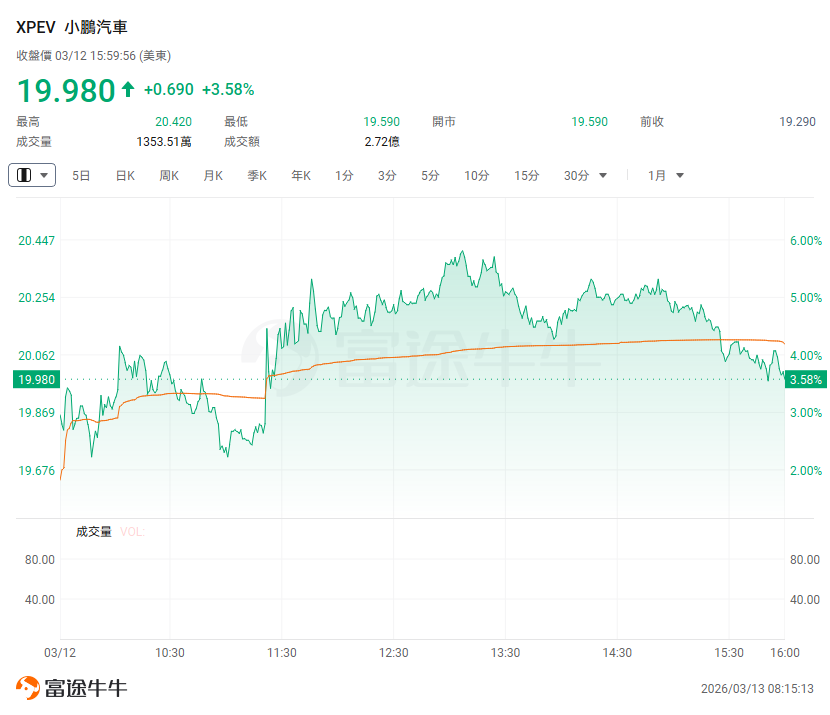
 The report noted that insiders indicated no definitive agreements have been reached at this stage. Following the announcement, XPeng Motors' ADR on the US stock market rose by 5.5% at one point, Xiaomi's share price increased by 2%, and Stellantis shares also narrowed their losses.
Analysts pointed out that these negotiations reflect the starkly contrasting trajectories of Stellantis’ operations in Europe and the Americas. They also signify that the automotive giant, formed through the 2021 merger of Fiat Chrysler and PSA Group, is undergoing a profound strategic restructuring.
Stellantis seeks capital infusion from China amid pressure on its European operations.
Stellantis’ European operations have long faced multiple pressures including overcapacity, intense competition, and high costs associated with the transition to electrification.
Brands under its umbrella, such as Fiat, Opel, and Peugeot, are caught between fierce competition in the European market. They face challenges not only from traditional rivals like Volkswagen and Renault but also from the continuous erosion by Chinese brands such as BYD—currently, one out of every ten cars sold in Europe comes from a Chinese brand.
According to the latest Bloomberg report, citing insiders, Stellantis management believes higher investment returns will come from the US market and is cautious about making large-scale investments in Europe.
At the same time, bringing in Chinese automakers to invest in its European operations could provide Stellantis with advanced electric vehicle technologies and software capabilities, while Chinese automakers could gain better access to the European market.
In addition to engaging with Xiaomi and XPeng Motors, Stellantis is also advancing cooperation with Chinese automakers on multiple fronts.
According to a previous report by Bloomberg, Stellantis is considering deepening its cooperation with its existing Chinese partner, Zhejiang Leapmotor Technology. The two parties are exploring potential synergies in electrification and software technology for affordable electric vehicles targeting the European market.
In the U.S. market, Stellantis is advancing a new vehicle investment plan worth approximately $13 billion, with brands such as Jeep and Ram pickup trucks already seeing initial benefits and demand starting to rebound.
Some insiders have indicated that this restructuring may ultimately lead to further separation of Stellantis' two major business units in Europe and the Americas; however, a full spin-off is not currently a focal point of discussion.
In response, Stellantis issued a strongly worded statement, asserting, "We categorically deny any claims that the company is considering a spin-off plan. Any contrary assertions are entirely fabricated."
Huge impairments weigh heavily, making strategic transformation imperative.
The report noted that the backdrop to these negotiations is Stellantis’ recent announcement of record impairments and write-downs totaling €22.2 billion (approximately $25.7 billion), most of which are related to the company’s decision to scale back its electric vehicle strategy.
This strategic reversal—including the cancellation of battery joint ventures and multiple future models—wiped out about a quarter of the company’s market value in a single day.
Antonio Filosa, the current CEO who took over last year, has been committed to stabilizing company operations. Filosa is expected to disclose more details about the company’s future plans at the Investor Day event to be held in the United States on May 21.
Editor/Rice