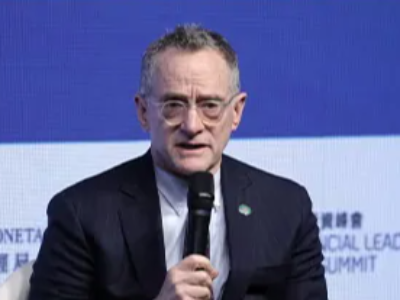
Source: Smart Investor
This conversation was recorded some time ago (approximately two weeks). The content is excellent, but there has been hesitation about whether to release it.
Many of Howard Marks' core investment ideas have been discussed repeatedly, but each time, under different circumstances, new resonant points emerge.
 This episode, hosted on the Brookfield podcast platform, resembles an internal exchange within their system.
In 2019, Brookfield completed the acquisition of approximately 61.2% of Oaktree Capital's business, after which Oaktree has operated as one of the most critical components of its credit investment portfolio.
In October 2025, Brookfield announced its plan to acquire the remaining stake in Oaktree, increasing its ownership to 100%. The transaction is expected to be completed this quarter and is currently in the final stages of regulatory approval and customary closing conditions.
Thus, describing it as an internal dialogue is fitting. The host is Alper Daglioglu, head of Brookfield’s investment solutions, and the discussion revolves around investor psychology, risk positioning, and balancing offense with defense.
Howard Marks once again began with the familiar adage: it is difficult to predict where we are headed, but at least we should know where we stand.
In his view, in the short to medium term, what often influences the market most is not a specific data point but rather the oscillation between optimism and pessimism.
The key is that he measures 'risk positioning' and 'asset selection' within the same framework—on one hand, risk positioning determines how cautious one should be, while on the other, asset selection determines whether one might encounter unforeseen risks.
This episode offers a perspective particularly suited for investment managers who oversee their own portfolios.
Particularly from Brookfield's perspective, as large-scale global clients are increasingly inclined to reduce the number of managers they collaborate with while pursuing deeper and more strategic partnerships, it becomes crucial for proactive investment managers to maintain their competitive advantages.
Despite consistently monitoring the challenges AI poses to investment, Howard Marks has always emphasized, "Outstanding investment always stems from exceptional judgment. In my view, the essence of investment lies in judgment, which is a human capability, not a mechanized process."
After organizing for a long time, Smart Investors has shared this with everyone. Hopefully, many will resonate deeply.
01. The most critical factor in making investment decisions today
Alper, you often say: We will never know where we are going, but we should definitely know where we are right now. Before delving into specific topics such as market cycles, investments, and portfolios, I would like to start by discussing this statement.
Howard, everyone in the investment community talks about 'where we are headed,' and everyone wants to know what the future holds. I want to know too. But the problem is, it’s impossible.
Taking actions based on predictions about what might happen in the next year or two often turns out to be wrong.
However, we should know where we stand right now. I have always believed that our current position has a significant relationship with what will happen next.
So where do we stand today? If your focus is on managing portfolios from a short- to medium-term perspective, these discussions matter significantly. Of course, if you say, 'I only look at a twenty-year horizon,' then you can completely ignore them.
But if you care about the short to medium term — short-term being roughly one to two years, and medium-term, say, three to five years — then I believe it’s essential to recognize that optimism is currently dominating the markets.
I think the biggest change in the markets from week to week, month to month, and even year to year is the relative strength of optimism versus pessimism.
When optimism runs high, prices are often relatively high compared to intrinsic value; future returns are more likely to be moderate, with relatively higher uncertainty and risk. This implies that our actions should be more cautious.
Conversely, when pessimism dominates, prices are often very low relative to intrinsic value, meaning we should become highly aggressive.
For me, the most critical dimension of short- to medium-term capital management is this: Are we currently in a phase of optimism or pessimism? Should we take an offensive or defensive stance?
After a very difficult 2022, optimism regained the upper hand in the fourth quarter. As a result, the market has been on an upward trajectory for roughly the past three years.
Take the S&P 500 as an example. The returns for the years 2023, 2024, and 2025 rank, I believe, as the seventh-best 'three-year period' in the past century. Ranking seventh in a hundred years already clarifies the current situation and hints at what may come next.
Therefore, investors should remember: Today's market is dominated by optimism; the world remains as unpredictable as ever, if not more so; and some of the rapid growth seen in the second half of the last century—stemming from post-WWII recovery, technological and managerial advancements, globalization, etc.—may see weaker drivers in the future.
Considering widespread optimism, unpredictability, and potentially moderate growth, I would say you need to invest more cautiously.
Perhaps now is not the time for reckless aggression but rather a moment to upgrade your defensive strategy.
Alper One of the most important tasks for investors is to understand the significance of investment selection as well as the importance of risk positioning. You articulated risk positioning very well just now, but investment selection is equally crucial.
Can you integrate these two aspects into a more comprehensive framework? How do you personally think about them within the same system?
Howard notes that there are two fundamental trade-offs in investing. One is the balance between offense and defense; the other is the trade-off between 'maximizing returns' and 'enhancing predictability.'
Typically, the more you focus on maximizing returns, the more predictability you must sacrifice; the more you prioritize reliable outcomes, the less likely you are to achieve maximum returns.
This is the unavoidable trade-off in investing.
Another important point to emphasize is that just because we do not know what the future holds does not mean we should refrain from taking action.
However, I believe we should place greater emphasis on opportunities with more predictable returns while moderating our pursuit of maximizing returns.
At its core, investment choices revolve around making this trade-off.
Everyone desires 'high returns that are also stable and predictable.' But such opportunities are rare, and typically, you must decide which aspect you value more.
Value investors – I believe Brookfield and Oaktree are fundamentally value investors – place greater emphasis on opportunities where 'clarity and certainty are higher': they focus on a few areas, rely on specialization, and avoid placing bets on speculative technologies, intellectual property, or similar elements as much as possible.
I think these are the most critical factors when making investment decisions today.
One of the safest beliefs is the conviction that risk is omnipresent.
Alper returned to the 'balance between offense and defense.' You wrote 'Nobody Knows' during a critical moment of the global financial crisis. I remember it was around September 19, 2008, when it felt like everything was unknowable. Personally, I was sitting at my desk that day, truly believing that the entire global financial system was about to collapse, with one piece falling after another like dominoes.
You also often say that good investments usually make people uncomfortable. Truly attractive valuations typically emerge in environments filled with extreme fear, extreme uncertainty, and forced selling. Therefore, 'comfortable' and 'good investment' rarely coexist. Could you discuss this dynamic?
Howard: Of course. Your question actually leads perfectly into what I call a classic example of 'second-level thinking.'
A few days after Lehman Brothers went bankrupt on September 19, 2008, those were among the most uncertain days of my nearly 80 years of life. The only comparable period was the lowest point of panic during the pandemic in March 2020 — when the world was similarly full of uncertainty.
So the issue is not whether the future can be foreseen. We have always believed that the future can never be perfectly predicted; it's just harder to foresee at certain times than others.
When people fall into despair, complete fear, or even believe that the financial system might collapse, their extreme negative emotions often push prices below intrinsic value.
What we really need to focus on is the relationship between price and intrinsic value. This point is crucial and quite intuitive.
When people like something, feel good, optimistic, happy, and imagine a positive future, prices tend to be high. High prices mean low future returns and high risk.
Conversely, when people feel the worst about the environment, it is often the moment when prices are lowest relative to intrinsic value. In other words, at such times, future returns are higher, and risks are lower.
I often summarize it with one sentence: One of the most dangerous things in the world is to believe there is no risk.
One of the safest beliefs in the world is the conviction that risks are omnipresent. Because once everyone believes that risks are everywhere, prices will be driven down significantly, and paradoxically, the actual risk may become quite small.
Now let’s talk about this sense of 'discomfort.' If you decided to invest on September 19, 2008, like we did, and you didn’t feel even slightly uncomfortable, then something must be wrong with you.
It is only human to feel uneasy when staring into an abyss. But we still had to act, and in fact, taking action on that day was far more critical than waiting for a day when we felt exceptionally confident.
We must learn to muster the courage to complete the tasks at hand.
What made this slightly easier was a sense of certainty—on September 19, we might have been the only buyers in the entire world while everyone else wanted to sell.
Isn’t this the perfect opportunity for a buyer? If an investment feels easy, comfortable, and universally endorsed, what signals should you read from it? What does it imply about the price?
When fear reaches its peak, prices relative to intrinsic value often hit their lowest point, which is almost equivalent to a buy signal.
When people are euphoric and carefree, prices relative to intrinsic value often reach their highest point, and at that moment, extreme caution is required.
If you, like everyone else, are driven by the same emotions—or psychological and investor sentiment—you will fluctuate with them: you’ll buy at the top of the bubble just as they do.
This is how bubbles reach their peak; similarly, you’ll sell at the bottom of the crash, which is precisely how market bottoms form.
The result is that you will not outperform the average investor.
But our goal is to outperform the average investor. To achieve this, we must deviate from the average investor, ideally by being a 'contrarian'.
Buffett’s words are always classic. He said: The less prudent others are in handling their affairs, the more cautious we must be in handling ours.
So think about it, saying 'This is a bargain, and everyone loves it' is almost contradictory. Something loved by everyone is unlikely to appear in the discount section.
Therefore, when considering investments, you must remain vigilant about the psychological state of investors being at a high.
One of the hottest topics today is AI. Most people believe AI will change the world. I am also certain that AI will change the world.
The issue does not lie there. The question is: How will it change? When? To what extent? And who will benefit?
Ultimately, this comes back to investment selection.
Especially regarding AI, it is important to emphasize that so-called 'AI-related assets' are not a homogeneous category. Their business models differ, as do the paths for profit realization and risk exposure, meaning their performance will not be synchronized.
03. Do what aligns with your nature.
Alper, you mentioned 'investment options,' especially the topic of AI. Indeed, not all investments are the same, and their paths differ as well.
Another point you often emphasize is that one of the most important things is to find asset managers or participants who truly have expertise in a particular asset class, have gone through similar cycles, and have been tested. They can participate in upside potential while also applying first-principles thinking to risk management, understanding the downside.
I believe this is the dividing line between 'good investments' and 'not-so-good investments.'
Howard, some people are naturally aggressive, while others are more defensive by nature. I am inherently very defensive, so unless I am certain that the odds are overwhelmingly in my favor, it is difficult for me to switch into an offensive mode.
Each of us must, as they say in rugby, 'play our own game.' We need to do what aligns with our nature.
The timid chicken should not be sent to perform stunts, and the adventurous stunt performer should not be tasked with managing funds in a cautious, 'shepherding' manner.
Of course, clients may choose to hire individuals with different styles simultaneously. If he can find an exceptionally strong offensive manager and an equally outstanding defensive manager, combining them might allow offense and defense to offset and diversify each other.
More importantly, he might achieve two instances of 'excellence,' which would make for a great allocation strategy.
As you said, not all investments are the same. You must clearly understand what you aim to achieve, not just 'I want to participate in AI,' but think carefully about how you wish to balance offense and defense in your participation.
For me, this question is almost the foundational issue underlying everything you do in investing. One could even say that everything starts from this question, beginning with asset selection.
04. The Three Major Obstacles to Long-Term Investment
Alper Another main theme you repeatedly emphasize in your memos and investment philosophy is the power of 'true long-term investing.' From your experience, what is the biggest obstacle that prevents us from truly engaging in long-term investment?
Howard How much time do you have? This is a very big question and possibly one of my favorite questions to answer.
Most elements of human nature seem designed to stop us from becoming good investors.
When everything is going well, the economy is performing well, companies are reporting record profits, and stock prices keep rising, people get more and more excited. They want to buy more, chasing the market all the way to a peak, eventually thinking, 'I want to buy everything.'
When conditions worsen, the news turns bleak, and prices continue to fall, people become discouraged. They want to sell. When it nears what may later be seen as the bottom, they feel like selling everything.
But this is exactly the opposite of what you should do. You should buy low and sell high, not buy high and sell low. But this goes against human nature.
If you find yourself feeling increasingly discouraged and wanting to sell more as prices drop—doesn't this feel like the reverse of how we handle other things in life? In daily life, we buy more when things are on sale; but in the markets, we tend to sell more when things are 'discounted.'
This only shows that investor sentiment is inherently prone to error.
Additionally, we have a 'non-linear utility function.' Most people feel weak joy from 'earning one dollar,' but strong pain from 'losing one dollar.'
However, to achieve a good return on investment, one must bear a certain degree of loss risk. Accepting the risk of losses is an integral part of pursuing returns.
Therefore, although our investment philosophy emphasizes risk control, we do not mean 'avoiding risk.' What we refer to is 'taking risks intelligently.' However, human psychology is so distorted that it is difficult to view risk objectively. Yet, you must take some risks in order to make money. This presents another obstacle.
Thus, the first category of obstacles stems from investor psychology and human nature.
The second type of obstacle is what is known as 'institutional constraints.'
If you are an employee, or an agent as we call it, and your job is to manage money for others, what does your incentive structure look like? If you make a good decision, you may receive a pat on the back, a handshake, or perhaps a raise; if you make a bad decision, you might get fired.
As a result, your incentives will lean more toward 'avoiding losses' rather than 'achieving gains,' and this inclination can become strong enough to have a negative impact.
Therefore, you need to overcome these institutional constraints. David Swensen, the head of Yale University's endowment fund, achieved tremendous success between 1985 and 2020. He made a very classic statement: Investment management requires institutions to exhibit 'non-institutionalized' behavior, which creates a paradox that is not easy to resolve.
How do you encourage employees or agents within institutions to act contrarian? How do you enable them to rationally assume risks for profit? How do you get them to increase their purchases when prices fall instead of adding to their positions only when prices rise?
The third factor, beyond investor psychology and institutional constraints, is volatility.
When prices fluctuate, even the true owners of the capital may feel uncomfortable.
Thus, over the past fifty years, a notion has gradually taken root across the investment industry. Since my time at the University of Chicago, this concept has become increasingly entrenched, and it indeed originated there: treating 'volatility' as 'risk,' and believing that volatility should be avoided.
However, I believe that seeing prices fluctuate is simply part of life. It is not inherently bad, nor should it be regarded as something to avoid merely because it ‘fluctuates.’
If you have sufficient liquidity and are not forced to withdraw funds, and your clients do not suddenly issue a 'must sell' directive, then volatility itself should not be shunned.
I even think that the investment industry’s concern over 'short-term volatility' has been exaggerated to an excessive degree, which may be one of the most erroneous aspects of the industry.
Buffett once made an interesting remark: he would rather have a 'bumpy 15% return' than a 'smooth 12%.'
I often tell people that if you prefer a smooth 12% over a bumpy 15%, you need to ask yourself what you’re really thinking.
Alper This reminds me of a memo you wrote at the end of 2022, titled 'What Really Matters?' In it, you gave an example: as children, we were always taught, 'Don’t just sit there, do something.' But in investing, it might actually be the opposite.
Howard Yes. I wrote that memo in October 2022 because I attended a conference where everyone was asking, 'In which month will the Federal Reserve stop raising interest rates?'
I immediately responded, why does that matter? It’s not important. What truly matters is whether the companies we invest in will appreciate over time, and whether the companies we lend to will repay us on schedule.
Whether the Federal Reserve stops raising rates in a particular month or whether a security price rose or fell by 1% yesterday—none of that matters. Yet, these are precisely the things that attract the most attention despite their lack of importance.
To a large extent, this is because what truly matters can only be seen over the long term. Once you make an investment decision, you have to wait a long time to know whether you were right or not.
You have to sit there and restrain yourself from doing anything.
Alper We always say that achieving average results is actually very easy, but consistently outperforming the average is extremely difficult. You discussed this in 'Dare to Be Great' and 'Dare to Be Great II': to become a great investor, one must dare to be different; one must dare to be wrong and also dare to appear wrong. This point is crucial when we discuss what hinders good performance.
Howard That's correct. David Swensen used a phrase I really like: he said, 'Exceptional investment returns often begin with actions that feel uncomfortable and unconventional.'
You must dare to be different. The logic is simple: if you invest exactly like everyone else, it’s impossible to outperform.
05. Outstanding investment always stems from exceptional judgment.
Alper You’ve been in the industry for 57 years, during which the landscape of asset management has undergone tremendous changes. It feels like the pace of change has accelerated over the past 5 to 10 years. Taking a step back, it seems the boundaries between public markets, private markets, alternative investments, and traditional investments are converging in the same direction, as if standing on the threshold of a major transformation.
How do you view the overall landscape of asset management? And where do you think 'the puck is going to go'?
Howard This is a complex question.
But I believe the most important thing is that what truly matters never changes.
Understanding investor psychology, understanding institutional (liability-side) constraints, understanding the industry's overemphasis on volatility... these will never change. The importance of risk control, the importance of maintaining consistency, and the importance of not relying on forecasts will never change.
Investors are always looking for a one-size-fits-all solution, hoping to find a way to achieve high returns without taking risks. But that will never exist.
Outstanding investment always stems from outstanding judgment. In my view, the essence of investing ultimately lies in judgment, which is a human skill, not a machine’s assembly line. I hope it stays that way.
Of course, there is indeed a lot of discussion at present, mainly focused on one direction: encouraging non-institutional investors to allocate more to private assets.
Private assets are not traded on exchanges and lack liquidity. You cannot change your mind today and exit tomorrow. Sometimes you may not be able to exit at all until the manager completes the entire process and returns the money to you.
Moreover, private assets do not have active trading, so after you buy them, there is no market quote to tell you whether others consider it a fair price.
Thus, investing in private assets inherently carries more uncertainty.
However, private assets also offer significant advantages. You can acquire things that others cannot.
You can invest in assets that do not require daily market valuation, thus avoiding the kind of daily fluctuations that cause anxiety over volatility.
These assets are not listed and priced daily on exchanges like stocks. They may be opportunities your manager can find that others cannot, or they may reflect deeper insights your manager has that others lack.
Therefore, private equity investment has both advantages and disadvantages. You must approach it calmly and clearly, and only engage in what is suitable for you.
You can only proceed under the premise of truly understanding what you are doing. You must also ensure that your manager understands their role and their approach reflects your perspective and needs.
The easiest statement to make in investing is: nothing is suitable for everyone.
When combined with the fact that 'there is no one-size-fits-all solution,' it means that what you said earlier is correct: every investment must be carefully selected.
Asset selection must be approached with caution.
Trend of large clients selecting managers
Alper, both you and I, along with many others in the industry, spend significant time engaging with the most sophisticated and largest clients globally. Our observation is that there is a broader trend in the market where investors, asset owners, and allocators are inclined to reduce the number of managers they collaborate with—fewer manager relationships, fewer private equity GP relationships—but each relationship becomes deeper and more strategic.
They are not just thinking about the next fund or the coming year but are considering the next 3, 5, or 10 years. They may aim to address issues like asset-liability matching, liquidity management, or other objectives. They want to establish a relationship where the asset manager or GP acts as an extension of their larger organization and team.
I would love to hear your thoughts on this.
Howard: The ideal scenario, of course, is to find a manager—or a group of managers—who understands and can reflect your perspective, possesses the ability to deliver returns tailored to your needs and satisfaction, and genuinely has the skills to achieve that goal.
As you said, in recent years, many people have tended to accomplish more with fewer managers, making life simpler and allowing them to focus their energy on a select few managers who can truly meet their needs.
However, there is no magic number that represents the ideal quantity. Just as with asset selection, manager selection follows the same principle.
We will concentrate our allocation to leverage what we believe are our strengths; we will also diversify our allocation to hedge against what we do not know.
Ultimately, you must find a balance between the two.
Almost no one relies on just one manager. But we also know that if you use 1,000 managers, you are bound to achieve average returns.
So, what is the right number? To a large extent, it depends on whether you have the ability to identify 'the right people.'
If you are uncertain about your ability to choose correctly, you may need to diversify more broadly; if you can choose correctly and identify a small number of managers who truly impress you, you may prefer to concentrate your allocation.
The logic behind institutional behavior often drives the diversification of managers. Nevertheless, this remains a question without a definitive answer—there is no one-size-fits-all solution.
In the end, it all comes down to judgment and insight.
 Futubull【机会页】Celebrity portfolio tracking opportunities have been launched! Multiple celebrity portfolios are available for selection, allowing you to follow the strategies of major players with one click, accurately locking in high-quality investment targets, and investing with greater confidence!
Editor/Rice