
①The latest analysis from Cognizant shows that the impact of artificial intelligence on the labor market is more severe than expected; ②The organization predicted in 2023 that 90% of jobs would be affected by 2032, but it has now found that 93% of jobs are already impacted; ③The report estimates that approximately $4.5 trillion worth of human labor will shift to machines in the labor market.
Cailian Press reported on March 20 (edited by Ma Lan) that the impact of artificial intelligence on human jobs has once again become a market focus, partly due to significant layoffs by some large technology companies driven by artificial intelligence, such as Meta.
According to the latest analysis by consulting firm Cognizant, the impact of artificial intelligence on the labor market will be more severe than previously anticipated.
 In 2023, based on an analysis of 18,000 tasks and nearly 1,000 job positions from the U.S. Department of Labor’s occupational data, the company predicted that 90% of jobs would be affected by 2032, but the current proportion of affected jobs has already reached 93%.
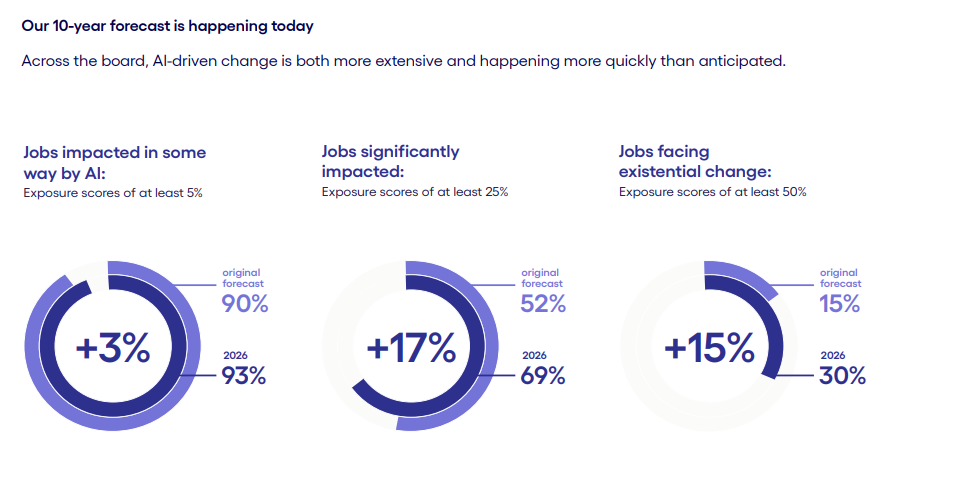
Among these, the proportion of significantly impacted jobs increased from 52% to 69%, while the proportion of jobs facing existential threats doubled from 15% to 30%. The report estimates that the disruptive changes brought by artificial intelligence could shift approximately $4.5 trillion worth of labor from humans to machines.
Cognizant also warned that people have underestimated the impact of artificial intelligence, as events originally expected to occur by 2032 are already happening now. Artificial intelligence has already affected 93% of jobs in some way, six years earlier than anticipated.
A Buffer Period Still Exists
The Cognizant report pointed out that the potential scope of artificial intelligence's disruptive impact has extended far beyond specialized fields, with the technology beginning to permeate areas of manual labor once considered safe. For example, in the construction industry, artificial intelligence can now assist in interpreting blueprints; in the transportation sector, it can inspect goods or conduct safety checks.
In the healthcare sector, artificial intelligence has already demonstrated signs of disruptive change, with its applications expanding from assisting with small tasks to automating complex ones. Research has shown that this technology improves diagnostic accuracy and patient care levels.
However, although the impact has emerged, it will still take a considerable amount of time for artificial intelligence to fully replace human labor. Cognizant believes that only 10% of tasks can currently be fully automated, with the average level of artificial intelligence adoption across industries standing at 39%.
Matt Sigelman, president of the think tank Burning Glass Institute, also stated that during the development of technology, the impact of some disruptive changes takes longer to materialize than people anticipate. The timeline for change will be extended, and the nature of its effects may be more subtle.
However, he similarly noted that while the timeline may not align with Cognizant's projections, the impact will undoubtedly be significant. Artificial intelligence will create demand for entirely different skill sets, potentially disrupting even the most senior professionals and necessitating extensive retraining and upskilling.