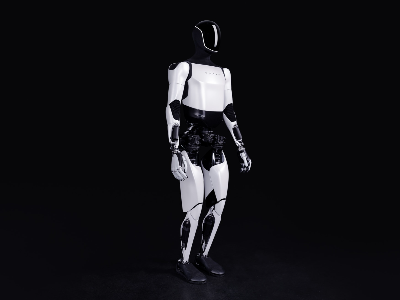
Tesla officially released the latest video of Optimus, showcasing for the first time the core hardware designs such as the robot's reduction gearbox and dexterous hands, as well as the R&D environment. This demonstrates the specific progress of the engineering efforts, with over a hundred specialized positions opened simultaneously. Musk announced that mass production of Optimus 3 will commence this summer, targeting an annual production of one million units by 2027, with an ultimate goal of achieving $10 trillion in revenue.
Tesla is transitioning the Optimus humanoid robot from the demonstration phase to full-scale factory production.
On March 25, Tesla released the latest video of Optimus through official channels, showcasing for the first time the core hardware designs and R&D environment of the robot’s reduction gearbox and dexterous hands, highlighting the specific progress of the engineering efforts.
 Elon Musk subsequently stated that Optimus 3 is expected to commence production this summer, with plans for mass production by 2027, targeting an initial annual production capacity of one million units.
Meanwhile, on March 25, Tesla issued a specialized recruitment announcement, opening over 100 positions related to Optimus at its U.S. facilities, covering three major areas: artificial intelligence, engineering, and manufacturing. The scale of recruitment reached a new high. These actions indicate that Optimus has evolved from a peripheral project into a core strategic pillar for the company and will directly impact Tesla's valuation trajectory.
Musk outlined a broader vision—Optimus could eventually surpass Tesla's automotive business, generating up to $10 trillion in revenue. This goal has drawn significant market attention, but investors are currently more focused on whether the mass production schedule can be met on time.
Mass Recruitment Accelerates Production Deployment
Tesla's current Optimus-focused recruitment drive includes over 80 to 100 positions, with AI algorithm and production engineering roles accounting for more than 50%. Core roles include robot software engineers, mechanical integration engineers, manufacturing engineers, and AI engineers specializing in world modeling and video generation.
Notably, some positions require candidates to build scalable data pipelines for the Optimus production line and develop automation tools for mass production—the recruitment language has shifted from prototyping to factory-scale mass production logic. The official announcement also explicitly emphasizes the need for "large-scale production capabilities," aligning closely with Musk's strategic directive to "achieve high output as quickly as possible."
Production Timeline and Factory Modifications
Tesla’s infrastructure adjustments for Optimus mass production were confirmed during the Q4 2025 earnings call on January 28. Musk announced that the company would cease production of the Model S and Model X and repurpose the relevant production lines at the Fremont, California plant for Optimus manufacturing—a clear signal that Tesla is reallocating its two oldest automotive production lines to the humanoid robot project.
Meanwhile, Tesla has already broken ground on a dedicated Optimus production facility at its Texas Gigafactory by the end of 2025, with long-term planned annual capacity reaching 10 million units.
However, technical bottlenecks have not been fully resolved. Although Tesla claims breakthroughs in core technological challenges, issues related to hand reliability and thermal management still require further validation during actual mass production. Following the typical S-curve of manufacturing growth, Optimus 3 is expected to enter small-scale production this summer, with initial capacity being limited, while scaled-up production expansion will commence in 2027.
The debate surrounding the Optimus vision continues to intensify.
Musk's business logic is based on labor economics: if Optimus can perform repetitive physical tasks on a large scale and at low cost, the potential market size would be extremely significant. Early target industries are concentrated in manufacturing assembly, material handling, quality inspection, and warehouse logistics, with long-term plans extending to household, medical, and broader logistics scenarios. Musk’s ultimate goal is to achieve smartphone-level ubiquity for Optimus.
At the valuation level, debates around how much of the Optimus vision has already been priced in by the market are intensifying. As of March 25, Tesla's stock price was approximately $386, while the GF Value estimated TSLA's valuation at $253.41, labeling it as "significantly overvalued." This indicates that the mass production progress and commercialization capabilities of Optimus have become key variables influencing Tesla's valuation trajectory.
Editor/Jayden