
Signs of easing in the blockade of the Strait of Hormuz have emerged. Tracking data from Morgan Stanley shows that outbound traffic rose to three vessels on March 26; data from maritime intelligence platform Windward indicates that five vessels with AIS signals passed through the strait on the same day, with two exiting the Persian Gulf and three entering.
Positive developments in tanker traffic through the Strait of Hormuz are emerging. As Iran reportedly allows some tankers to pass through, multiple governments have initiated emergency response plans, and global energy markets are entering a new observation window for pricing risks associated with supply disruptions.
Trump stated that Iran has allowed ten oil tankers to pass through the Strait of Hormuz, a move believed to be linked to ongoing negotiations between the two sides.
 In its daily tracking report on the Strait of Hormuz released on March 26, Morgan Stanley reported that at least twelve vessels had passed through the strait over the past four days. On March 26, three oil tankers completed outbound passage, and the estimated number of vessels passing through the previous day was revised upward from zero to two, indicating a gradual recovery in traffic through the strait.
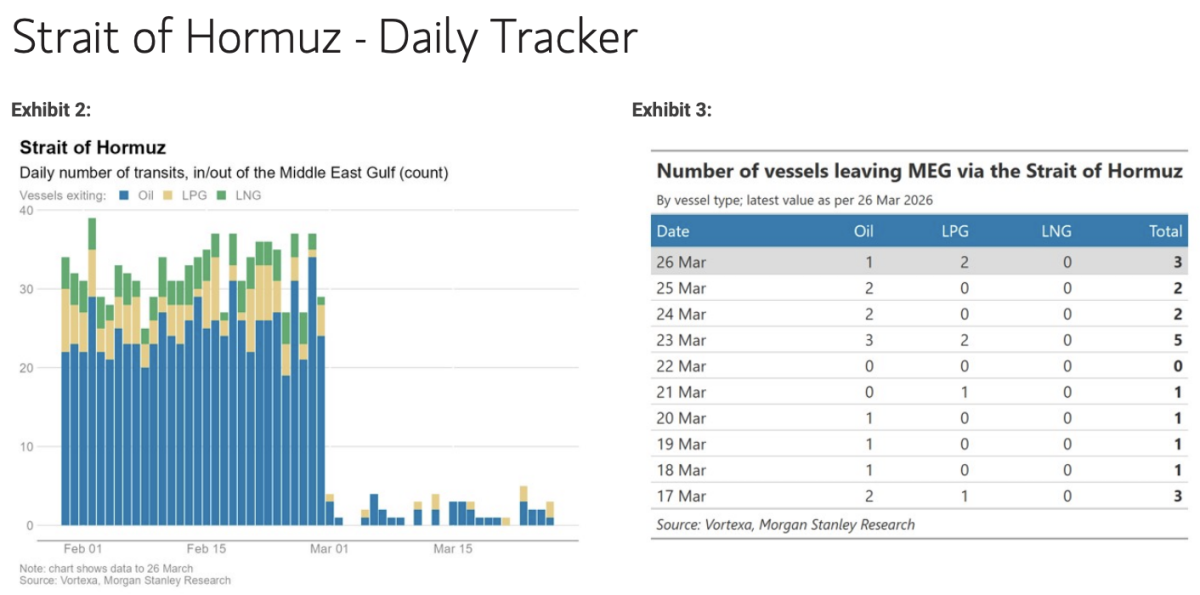
Data from maritime intelligence platform Windward shows that on March 26, five vessels with AIS signals passed through the strait, with two exiting the Persian Gulf and three entering, marking an increase from the previous day.
Recovery in traffic levels amid low volumes, with negotiation context becoming a key variable.
According to tracking data from Morgan Stanley, oil tankers that exited the Strait of Hormuz on March 26 included the liquefied petroleum gas (LPG) carrier NIBA, as well as MARATHI and SALUTE, totaling three vessels.
Meanwhile, analysts revised the estimated traffic volume for March 25 from zero to two vessels, indicating a slight easing of the blockade in the strait.
Trump’s statement about Iran allowing ten oil tankers to pass provided the market with a significant political signal. This statement implies progress in negotiations between the two parties, though no independent sources have confirmed details of the related agreement so far.
Multiple countries have initiated emergency measures for energy security.
Facing ongoing supply uncertainties, several energy-importing countries have implemented specific response measures.
Poland has announced temporary measures, including tax relief on fuel and potential windfall profit taxes on suppliers and traders.
Japan is discussing the possibility of using foreign exchange reserves to intervene in the oil futures market to cushion the impact of supply shocks on domestic energy prices.
According to India’s Ministry of Petroleum, the country has procured crude oil reserves sufficient for 60 days of use from other regions, as well as a one-month supply of LPG, ensuring relatively ample supply coverage.
Upstream loading indicators provide forward-looking reference.
Tracking data from Morgan Stanley shows that loading activities at key export ports located behind the Strait of Hormuz are still ongoing. The daily average crude oil loading volume at Yanbu Port in Saudi Arabia is approximately 3 million barrels per day, while the daily average loading volume at Fujairah Port in the UAE is about 2.5 million barrels per day.
The report indicates that upstream loading volumes serve as a leading indicator for arrival volumes. During periods when strait passage is obstructed, the gap between loading data and actual arrival data continues to widen; however, as the passage situation improves, this gap is expected to gradually narrow, providing quantifiable reference for assessing the pace of actual supply recovery.
Despite an increase in traffic volume, price signals in the energy products market still reflect structural tightness. The TTF natural gas front-end contract price and its forward curve shape have shown significant shifts during the reporting period, indicating that the market continues to maintain a risk premium for potential sustained supply disruptions.
The refining margin for diesel and jet fuel in Northwest Europe relative to crude oil remains high, demonstrating that the refined oil market's dependency risks on Middle Eastern supply routes have yet to be fully absorbed.
Editor/Melody