
Taozhu, Golden Finance
According to a report by The New York Times on March 29 local time, two U.S. military officials revealed that hundreds of U.S. special operations forces have arrived in the Middle East, including Army Rangers and Navy SEALs members, aiming to provide "more options" for potential U.S. military actions against Iran. The report stated that these special operation forces have not yet been assigned specific missions, but as professional ground combat units, they may participate in operations related to the Strait of Hormuz, Kharg Island, or Iran's nuclear facilities.
What will be the future of Iran? How will the market move forward?
I. Recent Progress in Middle East Conflicts
1. 'Island Seizure' and Troop Reinforcements
 On March 29 local time, Trump stated that he hoped to “seize Iran’s oil resources” and might even occupy Kharg Island, an important export hub.
“To be honest, my favorite thing to do is take oil from Iran, but some foolish people in the U.S. say: ‘Why would you do this?’ But they are foolish people.”
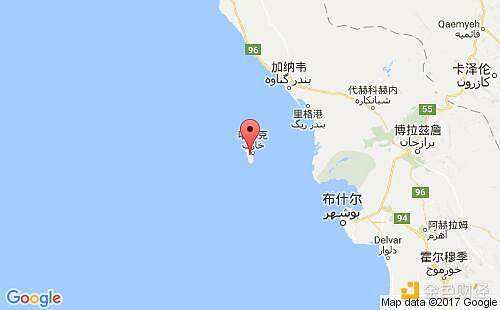
Kharg Island was relatively unknown, but it gained prominence in this conflict due to Trump's threats.
Kharg Island covers an area of only 20 square kilometers, administered by the neighboring Bushehr Province, with a seaport and airport located on the island.
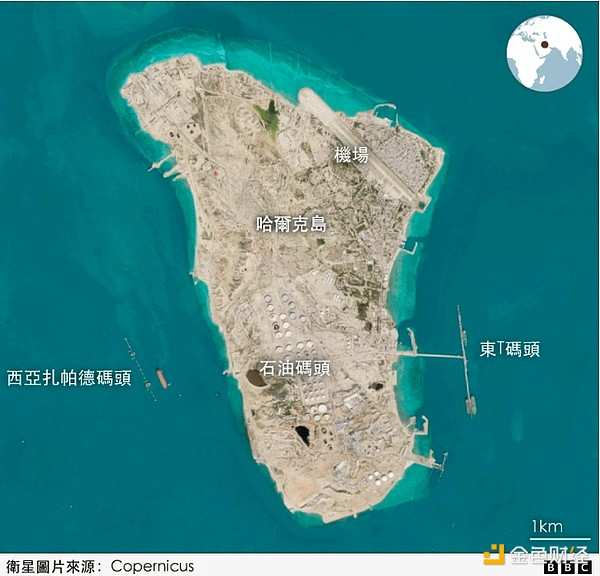
In 2015, the terminal facilities on the island were operated by the National Iranian Oil Company. On March 13, the U.S. announced that, as part of the 2026 Iran war, it had bombed military installations on Kharg Island but did not attack the island’s oil infrastructure.
The U.S. strike on this small yet strategically significant island in the northern gulf is tantamount to a direct hit on the jugular vein of Iran's economy. Ninety percent of Iran’s crude oil exports are routed through terminals on this island, with oil transported via pipelines to this location. Ultra-large crude carriers—capable of carrying up to 85 million gallons of crude oil—are able to dock directly at the island's long jetties for loading operations. The waters surrounding the island are deep enough for tankers to berth and operate efficiently, unlike the shallower coastal areas along mainland Iran.
As the terminal for Iran's oil exports, Kharg Island constitutes one of the Islamic Revolutionary Guard Corps’ crucial sources of revenue.
Corresponding to the aforementioned “island seizure” plan, Trump is escalating troop deployments around Iran and has not ruled out the possibility of conducting amphibious landing operations.
Trump has been intensifying U.S. military presence in the region, with the Pentagon ordering the deployment of 10,000 well-trained troops tasked with seizing and controlling territory. Approximately 3,500 soldiers arrived in the area last Friday, including around 2,200 Marines. Another contingent of 2,200 Marines is en route, while thousands of soldiers from the 82nd Airborne Division have also been dispatched to the region.
Mohammad Bagher Ghalibaf stated that Iran would unleash overwhelming firepower against any U.S. forces attempting to enter Iranian territory. 'The enemy is publicly signaling readiness for negotiations but covertly planning ground attacks.'
2. 'The 15-Point Ceasefire Demand'
Trump’s proposed 15-point peace plan has not been officially published, but leaked versions reveal that the document essentially compiles all demands made by the U.S. and Israel against Iran over the years.
This document reads more like terms of surrender than a basis for negotiation.
Key points include U.S. demands that Iran pledge never to develop nuclear weapons, cease uranium enrichment activities within its borders, abandon support for 'proxy' groups, open the Strait of Hormuz and ensure it remains a 'free maritime zone,' and limit the number and range of ballistic missiles. In response, the U.S. would lift all sanctions on Iran and assist in developing civilian nuclear energy projects.
On March 30, Trump told reporters aboard Air Force One that Iran had 'met' most of the 15 ceasefire demands previously presented to Tehran by the U.S., although it remains unclear whether substantive negotiations are truly underway. He stated, 'They’ve met most of our key points. Why wouldn’t they? We’ll add a few more demands.'
Publicly, Iran has explicitly rejected a list of 15 ceasefire conditions and counter-proposed its own five preconditions—including full control over the Strait of Hormuz.
Over the weekend, officials from Pakistan, Saudi Arabia, and Turkey held meetings in an attempt to find a resolution to the conflict. However, there are currently no signs that the talks have made substantial progress. After meeting with his counterparts, the Pakistani foreign minister stated, 'Both Iran and the United States have expressed trust in Pakistan and are willing to let Pakistan host subsequent negotiations.' Nevertheless, neither side has indicated readiness for direct dialogue.
Iranian Foreign Ministry spokesperson Baghaei stated that the relevant proposals submitted to Iran by the United States through mediators were extremely radical and unreasonable. Baghaei told the media on the same day that these proposals touched on Iran's fundamental rights and did not reflect goodwill or a serious diplomatic attitude. He also emphasized that Iran must rely on its own capabilities to ensure security and will use all means to prevent further attacks.
3. Clearance of the Strait of Hormuz
Trump stated on the 29th that Iran allowed 10 oil tankers flying the Pakistani flag to pass through the Strait of Hormuz last week, a number that has now increased to 20. Speaking to the Financial Times, he said, "These tankers have set sail and are moving straight through the center of the strait." Ali Larijani, Speaker of Iran's Islamic Consultative Assembly, approved the relevant decision.
When asked about Iran’s plan to impose tolls in the Strait of Hormuz, Trump responded that he needed to verify whether this was true but asserted that the United States could terminate such actions very quickly. 'We can accomplish this task within two minutes. We can act so swiftly that it will leave you dizzy.'
Iran has effectively established a 'toll station' and begun collecting fees. Citing shipping data analysis firm Lloyd’s List Intelligence, foreign media reported that since the 13th of this month, several global shipping companies have submitted documents containing detailed information such as cargo, shipowners, destinations, and crew lists to Iran’s Islamic Revolutionary Guard Corps (IRGC) and obtained passage permits for the strait. Lloyd’s List Intelligence noted that at least two vessels had paid the toll in Renminbi.
Iran has begun institutionalizing the 'toll system.' The Iranian parliament is currently drafting relevant legislation, which includes a proposal to impose a toll of approximately $2 million per vessel. According to a report by Iran’s semi-official Tasnim News Agency on the 27th, if implemented, the annual revenue from tolls could exceed $1 trillion. Before the war, around 120 ships passed through the strait daily.
II. Will the situation in Iran escalate?
1. Trump Aims to Seize Iran’s Stockpile of Enriched Uranium
The Wall Street Journal reported that Trump is considering a plan that may involve U.S. forces entering Iran to seize its stockpile of enriched uranium. If implemented, this plan would mark a significant escalation of the situation.
Prior to the series of airstrikes launched by the US and Israel against Iran in June of last year, it was assessed that Iran possessed over 400 kilograms of highly enriched uranium at a concentration of 60%, as well as nearly 200 kilograms of fissile material at a concentration of 20%, which could be rapidly enriched to 90% weapons-grade uranium.
Former US military officers and experts have pointed out that if the US military were to seize Iran's highly enriched uranium by force, it would be an extremely complex and high-risk mission, potentially inviting retaliation from Iran.
2. Trump will be drawn into a war of attrition
According to BBC reports, if no agreement is reached between the US and Iran, Trump actually has few options left: he can declare victory, claiming that the US has destroyed Iran's military capabilities and that the mission is complete, while asserting that reopening the Strait of Hormuz is not his responsibility — a move that could trigger severe turbulence in global financial markets and shock his already discontented European, Asian, and Gulf allies. An injured and angry Iranian regime would still have significant room to further pressure the global economy.
Moreover, the US troop buildup near Iran suggests that amphibious landing operations are under consideration. This might play directly into Iran’s hands, as Iran seeks to drag the US into a prolonged war of attrition.
3. Iran’s proxy wars
Since the 1980s, Iran's leaders have sought to cultivate armed partners within Arab nations. Through Hezbollah in Lebanon, militias in Iraq and Syria, Palestinian armed groups in Gaza, and the Houthis in Yemen, Iran has constructed a destabilizing network that allows it to project its influence while avoiding direct armed conflict with Israel and the United States.
1) Hezbollah in Lebanon
On March 29, Hezbollah forces penetrated deep into northern Israel and are currently engaged in combat in Israeli-occupied areas of Galilee. Israeli media reported intense clashes near Kiryat Shmona and Metula, with multiple Israeli Defense Forces (IDF) outposts being overrun. The IDF Home Front Command ordered an immediate large-scale evacuation, causing complete gridlock on southern roads. This marks Hezbollah’s deepest incursion into Israeli-occupied territory in its history.
Hezbollah is a military-political organization dominated by Lebanese Shia Muslims, functioning both as a legitimate political party and as one of the strongest non-state armed groups in the Middle East. It was formed in 1982 following Israel’s invasion of southern Lebanon, integrating Lebanese Shia militias under the direct support of Iran and Syria, and made its public debut in 1985.
2) Iraqi Shia Militias
On March 29, the 'Blood Guardians Brigade,' an Iraqi Shia militia, launched hundreds of attacks on U.S. targets in Iraq and surrounding areas using drones and rockets.
The Iraqi Shia militias are a quasi-military coalition predominantly composed of Shia groups within Iraq. In 2018, they were incorporated into the government's security forces but retained their factional independence and pro-Iranian characteristics. The Iraqi Shia militias have long been supported by Iran's Islamic Revolutionary Guard Corps' Quds Force and operate across regions such as Iraq and Syria.
3) Yemen's Houthi Movement
On the evening of the 28th, spokesman for the Houthi movement Yahya Saree announced that the group had launched a second wave of attacks on key targets in southern Israel using cruise missiles and drones. The Houthis stated that their military operations “will continue in the coming days” until both the United States and Israel “cease their aggression.”
The Houthi movement is an armed organization that rose to prominence during Yemen’s years-long civil war, becoming the country's most powerful political force. Due to its proximity to strategically important shipping lanes at the entrance to the Red Sea, it has the ability to disrupt international trade. The organization comprises approximately 20,000 armed members and represents the Zaidi branch of Shiite Islam. The Houthi movement initially garnered widespread support among Yemen's Shiite population in the early 2000s. The United States accuses Iran of arming, funding, and training the Houthi movement; however, the Houthis deny being Iran’s proxies, though they acknowledge shared political interests.
Through the establishment of a proxy network spanning Lebanon, Iraq, Yemen, and other regions, Iran has developed a low-cost, deniable, and highly flexible asymmetric warfare system. This system not only resists destruction by conventional military means but also allows for sustained pressure on adversaries during conflicts and serves as a significant bargaining chip in negotiations. As forces like the Houthis and Hezbollah increasingly engage in ongoing conflicts, the war is evolving from an “interstate conflict” toward a “transregional proxy war,” amplifying its impact on the global energy and shipping systems.
According to an analysis by The Guardian, the significance of the Houthi movement joining Iran’s war efforts depends on whether it intends to launch several missile and drone strikes against Israel from a distance or leverage its strategic location near the narrow Bab-el-Mandeb Strait to effectively blockade shipping in the Red Sea, similar to how Iran has essentially blockaded the Strait of Hormuz. If both channels are simultaneously affected, it would cause a “severe disruption to global trade and oil supplies.”
4. How much longer will the war last?
Trump emphasized that indirect talks between the United States and Iran, mediated by Pakistan's 'envoy,' are proceeding smoothly. Trump has set April 6 as the deadline for Iran to accept a ceasefire agreement, warning that otherwise the U.S. will strike Iran’s energy sector.
According to a report by CBS, the White House has privately informed allies that reaching a diplomatic agreement between the United States and Iran will take time. The U.S. estimates that the intense phase of the war will continue for another two to four weeks.
Iran also expressed skepticism about a shared timeline proposed by the U.S. and Israel for ending the conflict. The Israel Defense Forces previously indicated that the fighting is expected to last until Passover (the first week of April).
3. Subsequent Market Trends
1. Expectations of Interest Rate Hikes
"Describing the recent shift in market expectations regarding central bank monetary policy as a '180-degree turn' seems insufficient." Just weeks ago, markets were anticipating multiple interest rate cuts by the Federal Reserve in 2026, but there is now a clear move toward pricing in potential rate hikes this year.
The latest data from the CME FedWatch Tool shows that the probability of the federal funds rate being higher than the current range of 3.50%-3.75% by the end of this year is close to 30%, while the likelihood of a rate decrease has dropped to 2.9%.
This shift in expectations has been primarily driven by inflation concerns stemming from the energy market. Since the escalation of tensions in the Middle East at the end of February, Brent crude oil prices have surged from around $70 per barrel to approximately $111 currently. Meanwhile, long-term U.S. Treasury yields have also risen sharply, with the 10-year yield increasing from less than 4% a few weeks ago to about 4.40%.
The newsletter 'Crypto is Macro Now' pointed out: "Unfortunately, food and energy prices are likely to keep rising and remain high for some time, at least until shipping disruptions in the Middle East are resolved. Even if a peace agreement is reached tomorrow (which is unlikely), it would still take months to ease the situation."
2. 'The Fourth Oil Crisis'
On March 30, Zhang Chi, former chief strategist at Guojin Securities, published an article stating: Many investors feel that this 'U.S.-Iran conflict' is similar to the 'Russia-Ukraine conflict,' but in reality, the comparability is low, especially in terms of the global energy landscape and economic impact. The 'Russia-Ukraine conflict' at most represents geopolitical tensions among energy-producing countries, corresponding to localized supply reductions. Moreover, even without access to the U.S.-led SWIFT system, Russia continued selling oil, so the impact was limited and temporary. However, the core issue of the 'U.S.-Iran conflict' lies in the Strait of Hormuz. The disruption to energy supplies does not only involve Iran but extends to all Gulf nations, which account for nearly 50% of global energy reserves and over one-third of energy production. I reiterate: The evolution of the 'U.S.-Iran conflict' is not merely about 'exchanges of national interests' but also 'religious disputes.' Therefore, there is a risk of prolonged, drawn-out, and escalating warfare. The 'Strait of Hormuz' is the 'trump card' held by Iran, and it will not be relinquished easily—losing control of the Strait of Hormuz would mean losing the war for Iran! This is the basis of my argument that under this 'prolonged conflict,' we will gradually witness the emergence of the 'Fourth Oil Crisis.'
Zhang Chi stated that the definition of the aforementioned fourth round of the oil crisis—'a protracted conflict between the U.S. and Iran' and 'a long-term blockade of the Strait of Hormuz' leading to persistently high oil prices—is a critical assumption that will directly determine the extent of the impact on future global inflation, economic conditions, and asset prices. Comparing the two 'oil crises' of 1973 and 1978, changes in the energy supply structure resulted in extended periods of elevated oil prices, lasting as long as two to three years. In contrast, the cycles of rising energy prices during the '1990 Gulf War' and the '2003 Iraq War' did not exceed six months. Clearly, whether this 'U.S.-Iran conflict' will bring about a 'qualitative change' in global inflation, economic conditions, and asset prices will depend on whether the period of high oil prices is sufficiently prolonged. My assessment is that such a risk exists.
3. Plunge in financial markets
On March 30, the market decline triggered by the Iran war evolved into a full-scale collapse on Wall Street. Efforts by all parties to mediate a ceasefire and restore Middle Eastern oil supplies ultimately only led to further escalation, exacerbating market panic. The Nasdaq 100 Index plummeted 1.9% in a single day on Friday, entering a correction phase; the S&P 500 Index recorded its fifth consecutive weekly decline, marking the longest losing streak since 2022; bond prices fell, pushing the benchmark 30-year U.S. Treasury yield close to 5%.
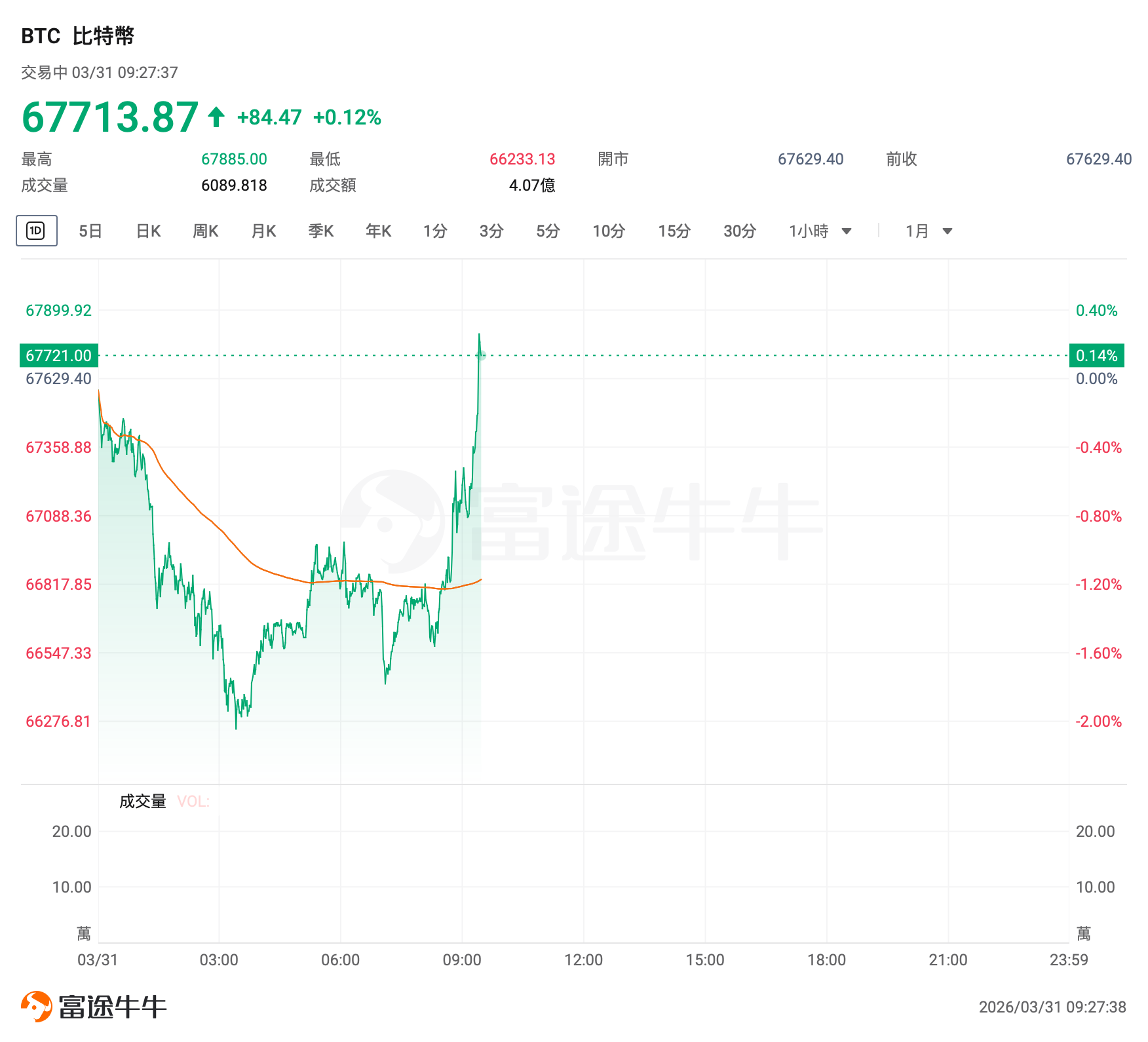
$Bitcoin (BTC.CC)$ Bitcoin hit a recent low of $65,600 on March 28, but has since rebounded slightly to $67,713 at the time of writing.
On March 30, Robert Kiyosaki, author of 'Rich Dad Poor Dad,' posted on social media that the continuous expansion of national debt and currency issuance would drive inflation higher, placing sustained depreciation pressure on dollar savings. He also noted that geopolitical conflicts could persist over the long term, providing upward support for oil prices and further intensifying the inflationary environment. Against the backdrop of global debt, currency, and inflation, personal financial literacy and asset allocation are particularly crucial. $XAU/USD (XAUUSD.CFD)$ 、 $XAG/USD (XAGUSD.FX)$ , oil, food, and $Bitcoin (BTC.CC)$ and $Ethereum (ETH.CC)$ other assets hold relatively optimistic prospects.
Editor/Doris