
① Nasdaq announced the implementation of adjustments to the Nasdaq 100 Index compilation rules starting from May 1; ② Among these, the new "fast entry" rule is widely regarded as paving the way for the listings of super AI unicorns such as SpaceX, OpenAI, and Anthropic.
Cailian Press, March 30 (Editor: Shi Zhengzhi) Nasdaq issued an announcement on Monday stating that the Nasdaq Global Index has approved revisions to the Nasdaq 100 Index compilation rules, including "fast entry," which will take effect on May 1 this year.

(Source: Nasdaq official website)
 The Nasdaq 100 Index consists of 100 non-financial companies listed on Nasdaq. The index is tracked by hundreds of investment products globally, involving over $600 billion in assets under management. This also means that global index fund investors may indirectly hold these highly sought-after assets shortly after the listing of major tech companies like SpaceX and OpenAI.
As the most significant adjustment in this update, the "fast entry" rule refers to the exchange initiating an evaluation on the seventh trading day after a new stock's listing. If the company’s market capitalization ranks among the top 40 of the Nasdaq 100 Index and meets all qualification criteria, the new stock will be rapidly included in the Nasdaq 100 Index on the 15th trading day after listing.
Considering that the current threshold for entering the top 40 of the global listed companies ranking is approximately $300 billion, SpaceX, valued at over $1 trillion, OpenAI at $700-800 billion, and Anthropic at $380 billion are evidently among the targets Nasdaq Exchange aims to attract through the new regulations.
There have also been reports suggesting that due to the proposed "fast entry" rule, SpaceX is leaning towards listing on Nasdaq.
Under the current rules, newly listed companies must have traded for at least three calendar months (excluding the IPO month) to be included in the Nasdaq 100 Index, and the index is adjusted only once annually in December.
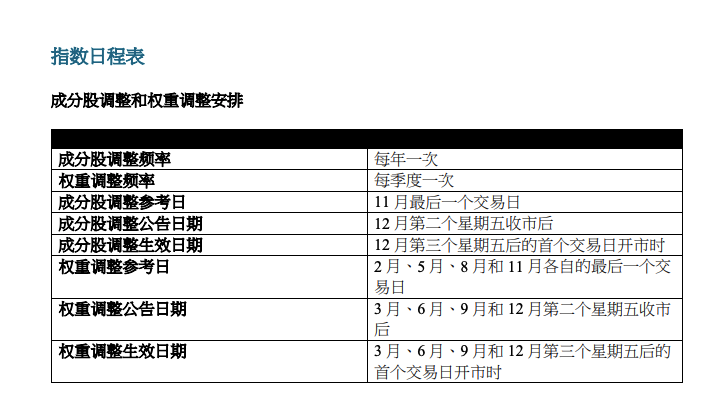
(Source: Nasdaq)
Regarding the reasons for the adjustments, Cameron Lilja, Head of Nasdaq Global Index Solutions, stated to the media: "It is not necessarily representative to keep a large company that could hold significant weight in the index excluded for a long time. We are witnessing changes in companies’ equity structures and corporate structures. More companies are choosing to remain private for extended periods before going public, thus growing into truly mega-cap companies prior to entering the public market."
In addition to the 'fast-track inclusion' rule, Nasdaq also introduced a new method for calculating company market capitalization in its rule adjustments, incorporating both listed shares and unlisted shares of different equity classes into the market capitalization calculations. The exchange has also abolished the rule requiring at least 10% of shares to be floating; however, companies with lower free float ratios will receive reduced weightings in the index. If a company's weighting in the index remains below 10 basis points (0.1%) for two consecutive months, it will be removed and replaced by the next eligible company with a larger market capitalization.
From the perspective of the exchange, this rule adjustment is also beneficial for attracting more companies to go public. In a white paper released last year, Nasdaq revealed that the number of publicly listed companies on U.S. exchanges has decreased by one-third since 2000.
Editor/Jayden