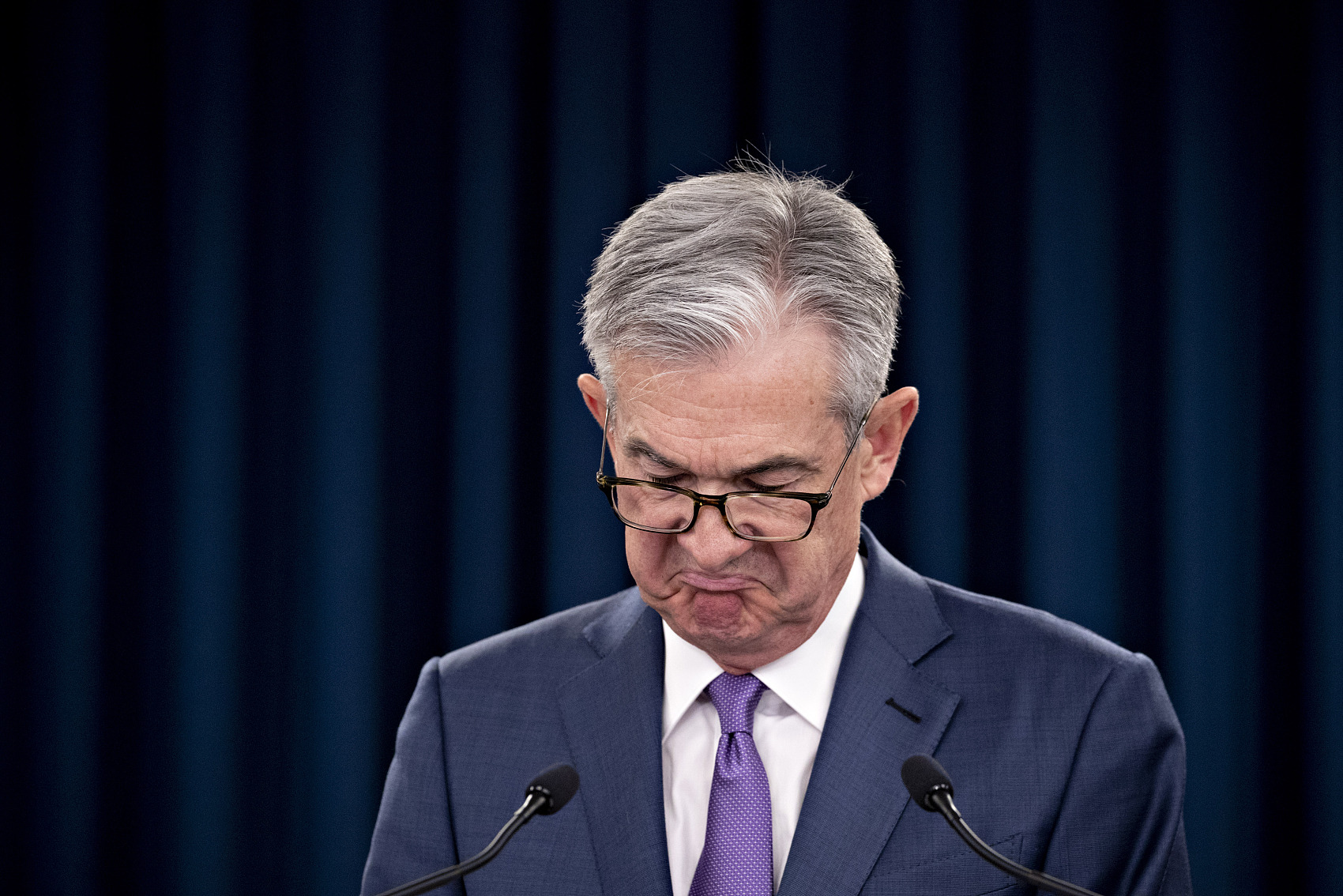
Powell stated that it is not yet time to determine the economic impact of the conflict in Iran; energy price shocks tend to be temporary, and the transmission of monetary policy is too slow to counteract supply-side price pressures in real-time. The typical approach is to disregard such shocks, but a crucial prerequisite is the close monitoring of inflation expectations. Tariffs have a one-off effect on inflation. Powell reiterated his commitment to bringing inflation back to 2%. He strongly supported QE, stating that extensive research shows purchasing long-term assets can lower interest rates. The Federal Reserve is closely monitoring private credit, with no systemic risks identified at present. Large language models can and will replace a significant amount of automatable work. While the current employment environment for young people is challenging, the outlook remains optimistic. To his successor Warsh, he emphasized: monetary policy tools must avoid being used for other purposes. 'The new Fed wire': Powell said the Fed could ignore oil price shocks, but warned that patience has its limits.
On Monday, March 30, during an open economics class at Harvard University, Federal Reserve Chair Powell signaled a preference for maintaining the current policy stance while addressing issues such as inflation expectations, private credit, the impact of artificial intelligence (AI) on employment, and the independence of the Federal Reserve. He noted the dilemma facing the U.S. economy: slowing growth alongside persistently high inflation, with interest rate policy in a wait-and-see phase, while also defending quantitative easing (QE).
Powell stated that the Fed's current monetary policy is 'well-positioned.' It is too early to assess the economic impact of the conflict in Iran, and there is no immediate need to determine its effects; the Fed can wait for impacts to gradually unfold without adjusting interest rates immediately. However, he warned that if persistent supply shocks cause public inflation expectations to shift, the Fed would have no choice but to act.
 After Powell's remarks concluded, the three major U.S. stock indexes maintained their rebound, while U.S. Treasury prices continued to rise, with the yields on two-year and ten-year Treasuries falling by approximately 10 basis points during the session. Commentators believed that Powell’s speech alleviated market concerns that the Fed might raise interest rates to counteract the impact of rising oil prices.
Nick Timiraos, a reporter often referred to as the 'new Fed wire,' titled his report on Powell's speech 'Powell Says Fed Can Ignore Oil Price Shock, But Warns Patience Has Limits.' At the outset of his report, he highlighted that Powell indicated energy supply disruptions are often temporary, though he also cautioned that given inflation has remained elevated for several years, the Fed cannot take this for granted.
In Timiraos’ view, the core message of Powell’s speech could be summarized in three points: ignoring energy shocks in the short term, maintaining a wait-and-see approach on interest rate policy, but with declining tolerance for失控的通胀预期. From his interpretation, this seemingly casual classroom Q&A was, in essence, a classic example of 'forward guidance': against the backdrop of叠加的地缘冲突、油价冲击与通胀粘性, the Fed is paving the way for both 'prolonged inaction' and 'potential tightening when necessary.'
This speech occurred at a pivotal moment as the handover of the Fed chairmanship approaches. Powell’s term will expire on May 15, with his successor nominee, Kevin Warsh, yet to be confirmed by the Senate. Additionally, an investigation into Powell by the Trump administration remains unresolved.
Monetary Policy: Wait-and-See, But Patience Is Limited
Powell provided his clearest statement to date regarding the current stance on monetary policy. He explained that energy price shocks are typically short-lived, and the transmission mechanism of monetary policy is too slow to counteract supply-side price pressures in real time. He said:
"By the time the effects of tightening policy become apparent, the oil price shock may have already dissipated."
"The usual approach is to 'ignore' any type of supply shock, but one critical underlying premise is that inflation expectations must be closely monitored."
According to Timiraos, the key point of Powell's speech this time is that the Federal Reserve tends to adopt a wait-and-see approach to oil price shocks. However, given that US inflation has remained above the Fed's target of 2% for five years, this patience has a clear limit.
Powell retorted: "You can experience a series of supply shocks, which would lead businesses, price setters, and households to expect persistently higher inflation over the long term – why wouldn't they think that way?"
In his speech, he clearly stated that the Federal Reserve is not yet facing a policy decision but rather lacks sufficient information at this stage.
"We may eventually face the issue of having to act, but we are not quite there yet because we still do not know how the economic impact will play out."
At its policy meeting nearly two weeks ago, the Federal Reserve decided to keep the federal funds rate unchanged in the range of 3.5% to 3.75%. Among the 12 FOMC voting members, including Powell, only Stephen Miran, a Fed governor nominated by Trump last year, dissented. As in the January meeting, Miran again supported a 25-basis-point rate cut.
Inflation expectations remain stable, but vigilance against long-term expectation drift is needed.
Powell indicated that inflation expectations exceeding the 2% target currently appear to be "well anchored beyond the short term," but the Fed is closely monitoring them. He reiterated that the FOMC is committed to bringing inflation back down to 2% on a sustained basis.
Powell acknowledged that inflation will remain above the target level for some time – the current inflation rate is around 3%, with tariffs contributing about half to one percentage point. He also noted that the impact of tariffs on inflation is a one-time shock, and there is no evidence that the Fed's previous bond purchases themselves caused inflation.
Powell explicitly supported the QE policy in his speech, saying, "There is a vast amount of research on this topic, and overall it suggests that purchasing long-term assets does indeed lower interest rates and provide some support to economic activity." He also mentioned that the US Treasury has not yet requested the Fed to halt QE.
Pay close attention to private credit; no systemic risk identified yet.
Regarding the recent turmoil in the private credit market—where some investors are demanding early redemptions and some funds are restricting withdrawals—Powell stated that the Federal Reserve is “monitoring this market very closely,” but currently views it as a correction rather than a broader systemic event. He said:
“I am reluctant to say anything that might suggest we are taking this risk lightly, but we are looking for connections to the banking system and factors that could lead to contagion, and so far, we do not see them. What we are observing is a correction underway, which does not appear to have the characteristics of evolving into a broader systemic event.”
Powell stated that his greatest financial stability concern is not private credit but cybersecurity. He warned that a successful cyberattack on major financial institutions would represent a crisis the financial system has never experienced and is the only risk he cannot adequately model in advance.
Employment and AI: Structural Transformation is Inevitable
Powell candidly told Harvard students that the impact of AI on the job market will be profound and irreversible. He noted that large U.S. corporations are already planning to cut a significant number of back-office and mid-level management positions through automation, driven by competitive pressures that make this trend unavoidable.
“Large language models can replace a vast amount of automatable work—they can, and they will.”
However, Powell also offered an optimistic message to the students present, stating that workers who can effectively utilize AI will largely be shielded from the impact. He himself is using AI tools to accelerate problem-solving. He compared the current moment to the invention of the loom: while painful for the weavers who were replaced, it ultimately boosted productivity and improved living standards.
Powell also acknowledged that the current labor market is challenging for young people but expressed optimism about the future. He stated that the U.S. economy remains dynamic and should provide sufficient opportunities for young individuals.
Successors and the Independence of the Federal Reserve
On the issue of succession, Powell was notably cautious. When asked about how he viewed Warsh's potential interest rate cuts if he were to take office under the current environment, Powell explicitly stated that he would not comment on the matter.
However, Powell subsequently offered implicit advice on the next Federal Reserve Chair, stating:
"It is extremely, extremely important to stick to the mission, the actual mandate we are given. There is always a temptation to expand into other areas. Our tools are powerful, and they should be used to achieve maximum employment, price stability, and financial stability. At any time, there will be pressure from the administration to use these tools for other purposes... We must avoid falling into that situation."
Powell stated that there is broad consensus among the public and Congress regarding the Federal Reserve's independence, and he highly praised the Fed's staff and their ability to adhere to its core mission.
Context of the Speech: End of Term Nears, Investigation Remains Unresolved
This Harvard speech occurred at a particularly challenging moment when both Powell personally and the Federal Reserve were under significant pressure.
The Department of Justice launched a criminal investigation into Powell in January this year, concerning his testimony to the Senate Banking Committee last June about cost overruns in the renovation of the Federal Reserve headquarters. Powell refuted the claims, stating that the investigation was not related to construction costs but rather a tactic by the Trump administration to pressure him into cutting interest rates.
Earlier this month, a prosecutor admitted in court that no evidence of misconduct had been found, and the federal judge promptly dismissed the subpoena. Prosecutor Jeanine Pirro, who brought charges against Powell, later held a press conference, calling the ruling "legally baseless" and stated that the Department of Justice would appeal to ensure the investigation continued.
Powell's term will officially expire on May 15. Earlier this month, he indicated that if his successor has not been confirmed by the Senate by then, he will remain in office as an "acting chair." He also stated that he would not vacate his board seat, which extends until January 2028, until the Department of Justice investigation is fully resolved.
One of the key senators determining the nomination of Warsh, Republican Senator Thom Tillis of the Senate Banking Committee, has stated that he will block the confirmation of Warsh’s nomination until the legal proceedings against Powell are resolved, making it increasingly unlikely that a smooth transition for the Fed Chair will occur before May.
Editor/Liam