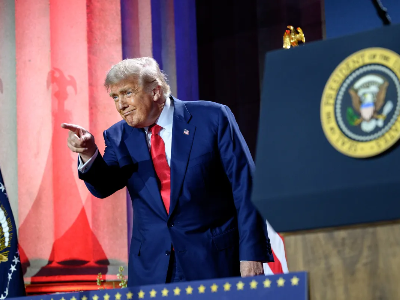
Trump informed his aides that he is willing to end military action against Iran even if the Strait of Hormuz remains largely closed, citing that forcibly reopening the strait would exceed the originally planned 4-to-6-week timeframe for operations. Following the news, U.S. stock futures turned positive, while WTI crude oil pared gains to less than 1%. Despite Trump's preference for concluding the war as soon as possible, U.S. military deployments are still proceeding. Trump is also considering a large-scale deployment of ground forces to the Middle East.
Trump is considering withdrawing troops without resolving the blockade of the Strait of Hormuz.
According to information obtained by CCTV reporters on March 30 local time, U.S. President Trump has expressed to his aides his willingness to end military operations against Iran even if the Strait of Hormuz remains largely closed, according to U.S. officials.
 It is reported that U.S. government officials assessed that forcibly reopening the waterway would extend military operations beyond the originally planned timeframe of four to six weeks. Based on this, Trump decided to gradually conclude the current military operation after achieving key objectives such as weakening Iran's naval and missile capabilities.
Meanwhile, he will shift to pushing Iran to restore shipping through diplomatic pressure. If diplomatic efforts fail, Washington will encourage European and Gulf allies to lead actions to reopen the strait.
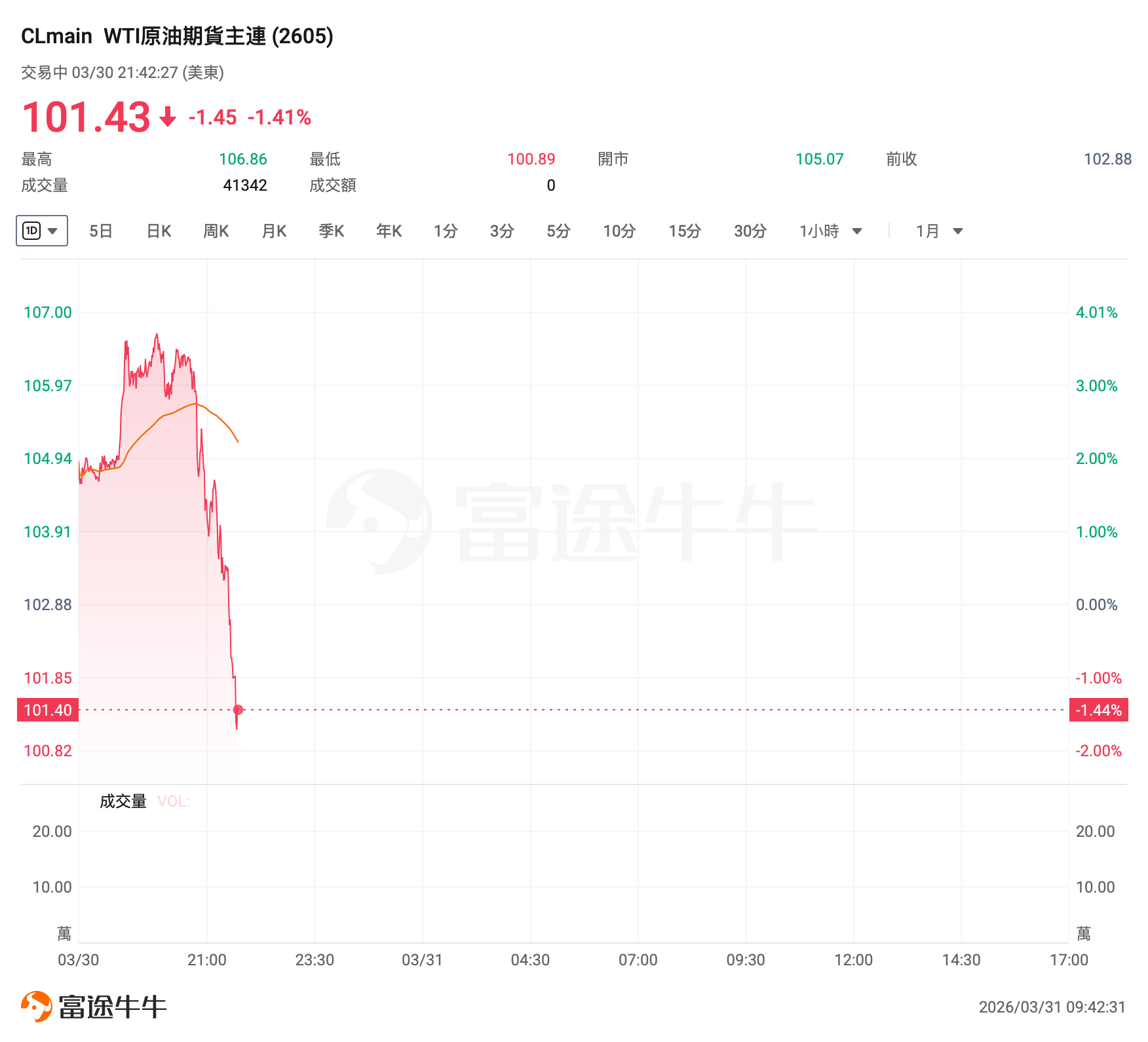
Following the disclosure of this news, U.S. stock futures turned positive, with the three major U.S. stock index futures rising nearly 1%. International oil prices briefly retreated, $Crude Oil Futures (MAY6) (CLmain.US)$ dropping more than 1%.

Contradictory Stances from Trump
Latest reports from U.S. media revealed that over the past month, Trump has repeatedly sent conflicting signals regarding the strait issue.
He once threatened to bomb Iran's civilian energy infrastructure if the strait was not reopened within a set timeframe. However, on other occasions, he downplayed the strait's importance to the United States, calling its blockade "a problem for other countries to solve."
On Monday, Trump stated on social media that Iran’s leadership had become "more rational," but then threatened to strike Iran’s power plants, oil fields, and the Kharg Island oil export hub if the Strait of Hormuz was not immediately "open for business."
White House Press Secretary Karoline Leavitt told reporters on Monday that the United States is "committed to" restoring normal operations in the Strait, but it has not been included among the core military objectives of targeting Iran's naval, missile, defense industrial, and nuclear capabilities.
Military Deployment Proceeds Alongside Diplomacy
Despite Trump's preference for ending the conflict as soon as possible, U.S. military deployments are still advancing. According to media reports, last weekend, the USS Tripoli and the 31st Marine Expeditionary Unit entered the region; Trump also ordered the deployment of part of the 82nd Airborne Division and is considering sending approximately 10,000 additional ground troops to the Middle East.
At the same time, Trump referred to this war as "a short operation" and "a pleasant stay," but reports suggest he is also weighing a complex and high-risk action—seizing Iran’s uranium reserves.
Rich Goldberg, a former official on Trump’s National Security Council and now affiliated with the Washington-based think tank Foundation for Defense of Democracies, argued that targeting Iran’s military capabilities and reopening the Strait are not contradictory but rather sequential. "Once those strategic objectives are achieved, the focus will naturally shift to the Strait of Hormuz, as by then you will have significantly degraded its external threats and can reallocate military resources to that mission."
Divergence Among Allies and Officials
U.S. Secretary of State Rubio said in an interview with Al Jazeera on Monday that the current military operation would conclude within weeks.
"At that point, we will face the issue of the Strait of Hormuz, which will be up to Iran to decide," Rubio said. "Or it will involve a multi-national coalition from around the world and the region, with U.S. participation, ensuring the Strait is somehow opened."
Treasury Secretary Bessent, during an interview with Fox News, indicated that U.S.-led or multi-national escort operations are among the options, though his wording did not suggest urgency in immediately reopening the Strait. "The market supply is sufficient, and more ships are passing through daily as countries negotiate separate agreements with Iran," Bessent stated. "But over time, the U.S. will regain control of the Strait, whether through U.S. escorts or multi-national escorts, ensuring freedom of navigation."
However, Suzanne Maloney, an Iran expert at the Brookings Institution, strongly criticized this approach. She characterized ending military operations before reopening the Strait as "incredibly irresponsible" and warned: "Energy markets are inherently global, and the U.S. cannot isolate itself from the economic losses already incurred, which will worsen exponentially if the Strait remains blocked."
The Economic Cost of a Strait Blockade
The Strait of Hormuz is a critical chokepoint for global energy trade. According to the U.S. Energy Information Administration, approximately 20% of the world's oil supply is transported through this strait; in 2024, 84% of the crude oil and 83% of the liquefied natural gas transported via this route flowed to the Asian market.
Following Iran's deployment of naval mines and threats to attack oil tankers, the number of passing vessels has drastically decreased. Industrial raw materials reliant on strait transportation, such as fertilizers and helium, have consequently experienced shortages, impacting global food production and semiconductor manufacturing.
This month, nearly 40 countries, including the United Kingdom, France, and Canada, issued a joint statement expressing that they are "prepared to contribute to ensuring safe passage through the strait."
 AI Portfolio Strategist Now Live!One-click insights into your portfolio, fully grasp opportunities and risks.

Editor/Doris