
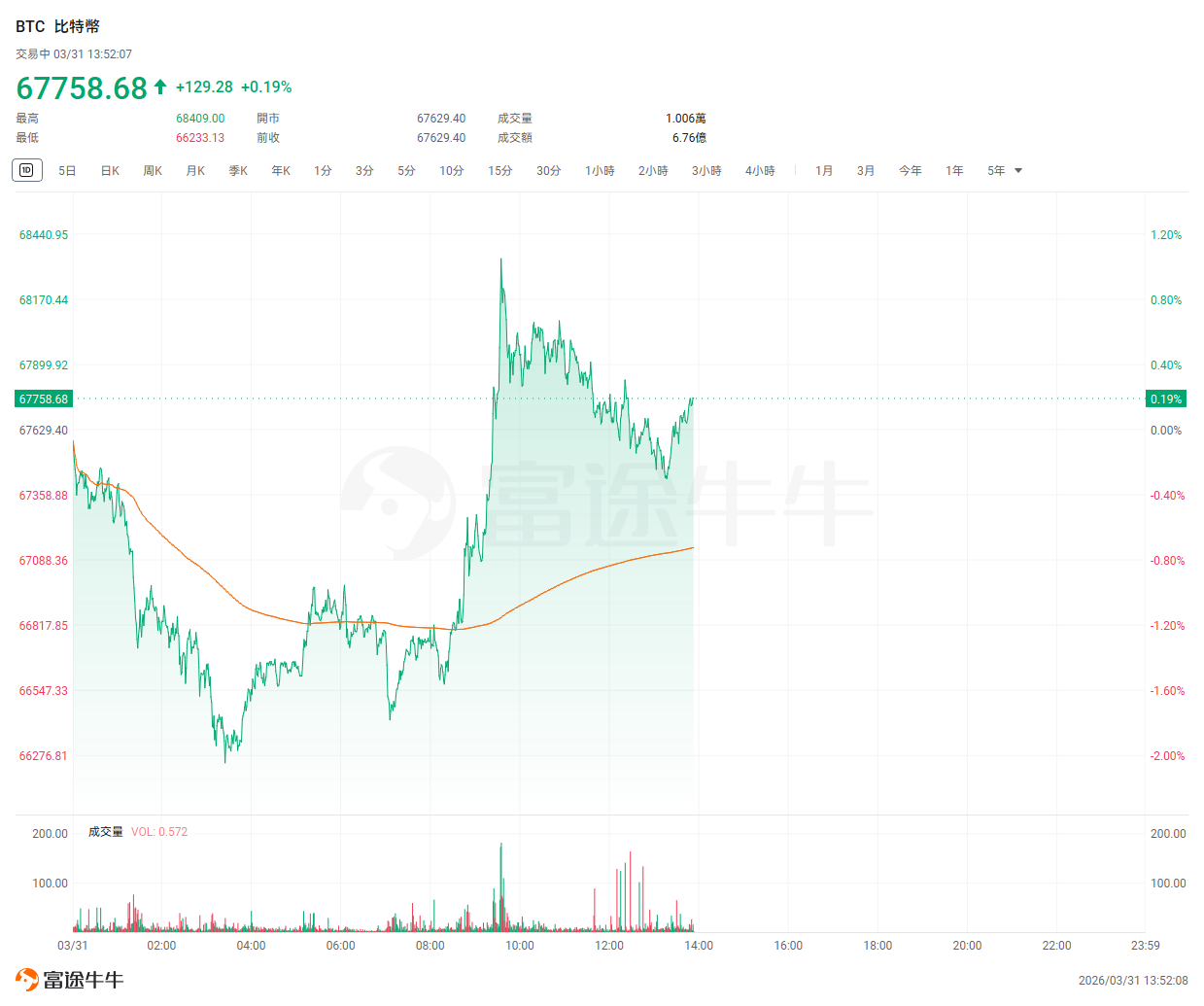
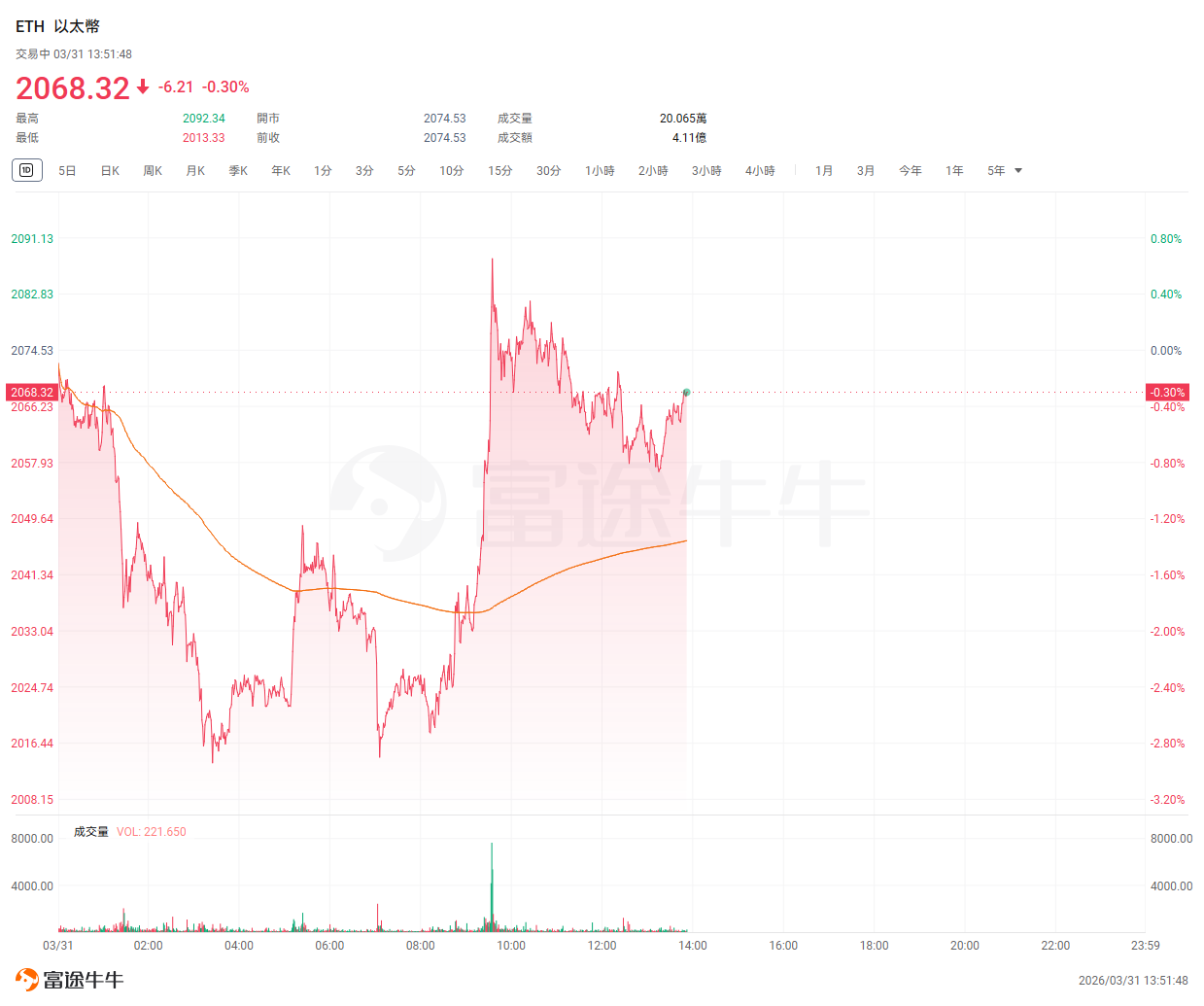
News on March 31st reported that the cryptocurrency market experienced fluctuations. As of the time of writing, $Bitcoin (BTC.CC)$ increased by 0.19%, trading at $67,758.68; $Ethereum (ETH.CC)$ dropped by 0.30%, trading at $2,068.32.
Key Focus
U.S. Senator Proposes the 'American Mining Act' to Incorporate Strategic Bitcoin Reserve into Law
According to a report by The Block, U.S. Republican Senators Cynthia Lummis and Bill Cassidy introduced the 'American Mining Act', which aims to expand the role of cryptocurrency mining in the U.S. economy and incorporate President Trump's executive order on establishing a strategic Bitcoin reserve into law. The bill would direct the Department of Commerce to establish a voluntary certification program for mining pools and facilities, and require certified facilities to phase out mining equipment manufactured by companies associated with foreign adversaries.
 Lummis stated that the bill aims to bring the mining industry back to the U.S. through forward-looking measures, ensuring the nation’s financial future. Previously, during his campaign, Trump pledged to make the U.S. the 'global capital of cryptocurrencies' and signed an executive order in March this year to establish a strategic Bitcoin reserve funded by judicially seized Bitcoins.
Nakamoto Discloses Sale of 284 BTC in March to Establish Dollar Operational Reserve
According to a report by Business Wire, Bitcoin treasury company $Nakamoto (NAKA.US)$ released its Q4 and full-year 2025 financial report, disclosing the sale of approximately 284 BTC in March 2026, cashing out around $20 million (average selling price approximately $70,422) to establish a dedicated dollar operational reserve for covering short-term liquidity needs such as strategic integration activities and Kraken loan interest payments. The financial report shows that the company’s weighted average cost of Bitcoin holdings is $118,171 per coin, while the market price of Bitcoin as of December 31, 2025 was only $87,519, resulting in a loss of $166.2 million for the year due to changes in the fair value of digital assets. As of year-end, the company held a total of 5,342 Bitcoins.
Russia Approves Cryptocurrency Regulatory Bill: Annual Purchase Limit of 300,000 Rubles for Non-Qualified Investors on a Single Platform
According to Bits.media, the Russian government has approved a package of cryptocurrency regulatory bills, including an annual purchase limit of 300,000 rubles (approximately $3,300) for non-qualified investors buying cryptocurrencies through a single broker. They can only purchase highly liquid digital assets listed by the central bank and must pass a test. Qualified investors are still required to take the test but have no amount restrictions. Trading through regulated intermediaries is allowed, but unmediated transactions are prohibited.
Russian citizens may purchase cryptocurrencies abroad, but payments must be made through offshore accounts, and such transactions must be reported to tax authorities. Administrative penalties primarily target non-compliant exchange operators rather than individual investors. Relevant bills will be submitted to the State Duma for review in the coming days.
Cardano Founder Launches Privacy Chain Midnight, Featuring ZK Technology and Dual-Token Model
According to The Block, Cardano founder Charles Hoskinson announced the launch of the privacy-focused blockchain Midnight, which generated its genesis block on Monday. Midnight utilizes zero-knowledge proof technology (ZK), enabling users to selectively disclose or conceal data while supporting compliance requirements. Its hybrid ledger allows mixing public and private data within a single transaction, supporting shielded assets that hide balances and counterparty information.
Midnight adopts a dual-token model: the governance token NIGHT serves as a store of value within the ecosystem, with holders earning renewable Gas tokens called DUST. DUST is generated proportionally based on holdings and can be transferred to others for transaction fee payments. The network opened a year-long NIGHT airdrop last December to 37 million eligible wallets.
Geopolitical turmoil creates a 'gold discount'! Bernstein calls for buying the dip in crypto stocks, awaiting a major recovery in 2026 after Q1 headwinds subside.
Investment bank Bernstein stated that cryptocurrency-related stocks might be nearing their bottom. Bernstein analyst Gautam Chugani and his team wrote in a report, 'The combination of geopolitical factors and temporary cryptocurrency weakness is providing a ‘huge discount’ for cryptocurrency stocks.'
Trading platforms$Coinbase (COIN.US)$and$Robinhood (HOOD.US)$and fintech companies$Figure Technology Solutions (FIGR.US)$The stock price has fallen approximately 60% from its all-time high. After surging past $120,000 last summer and autumn, Bitcoin is currently trading below $68,000.
Bernstein maintained its 'Outperform' rating for these three cryptocurrency stocks. However, due to expectations of weak first-quarter earnings to be released later this spring, the firm lowered their price targets. Chugani wrote, 'We believe we will see cryptocurrency stocks bottom out amid the release of weak first-quarter earnings reports.'
Peter Brandt: Unoptimistic about Bitcoin reaching a new high within the year, expects a retest of $60,000 in September or October
On March 31, according to Cointelegraph, renowned trader and chart analyst Peter Brandt, who successfully predicted the 2018 Bitcoin crash, and prediction market users expressed pessimistic views about Bitcoin's prospects for reaching new highs in 2026. Peter Brandt stated, 'I don’t think Bitcoin will reach new highs in 2026; it may not happen until the second quarter of 2027.' He also added, 'All of this is speculation.'
The probability of Bitcoin returning to $120,000 by 2026 on Polymarket is only 15%. Regarding the yearly low, Peter Brandt stated that the $60,000 level reached on February 6 may not be the lowest point of the year. He anticipates that this level might be retested, or even slightly lower, in September or October this year, marking the low point of the bear market cycle, from which a new bull market will begin. He also reiterated his long-term thesis on Bitcoin: 'Bitcoin's narrative is as a store of wealth, and whether practical utility can be built on Bitcoin may influence its price.' He further noted that he remains neutral or bearish on all other cryptocurrencies.
Jack Dorsey’s Square has automatically enabled Bitcoin payment functionality for millions of American merchants.
According to CoinDesk, Jack Dorsey’s Square has begun automatically enabling Bitcoin payment functionality for millions of U.S. merchants. Transactions are instantly converted to U.S. dollars at checkout, allowing merchants to accept Bitcoin without additional setup and without bearing the risks of price volatility or custody.
This feature includes near-instant settlement and waives processing fees until 2026. Square stated that this marks an important step in integrating Bitcoin into everyday commerce, as merchants continue to receive U.S. dollars by default, requiring no changes to accounting practices or holding of crypto assets. It is reported that 78% of Square’s users are from the United States, while 22% are from international markets. Previously, PayPal introduced its U.S. dollar stablecoin PYUSD to tens of thousands of users across 70 global markets, further driving the adoption of digital payments.
Strategy paused its regular weekly Bitcoin purchases last week.
According to an 8-K filing submitted to the U.S. Securities and Exchange Commission on Monday, $Strategy (MSTR.US)$ Strategy suspended its regular weekly Bitcoin purchases during the period from March 23 to 29. According to the company’s purchase page, this marks the first time Strategy has paused its weekly acquisitions in over a year.
The filing shows that Strategy currently holds 762,099 Bitcoins, valued at approximately $51.6 billion. The average purchase price per Bitcoin, including fees and expenses, is $75,694, with a total cost of approximately $57.7 billion. These holdings account for more than 3.6% of Bitcoin’s total supply of 21 million coins, implying unrealized losses of about $6.1 billion associated with this position.
Bitmine Immersion Technologies has once again staked over 167,500 ETH, worth approximately $342 million.
According to Onchain Lens monitoring, within the past seven hours, $Bitmine Immersion Technologies (BMNR.US)$ They have pledged 167,578 ETH, valued at $342.4 million. Their total ETH currently held in pledge amounts to 3,310,221 ETH ($6.7 billion).
The U.S. Department of Labor proposed allowing401(k) retirement plans to include assets such as cryptocurrencies under a newly proposed rule.
According to CoinDesk, the U.S. Department of Labor has proposed a new rule that would allow 401(k) retirement plans to include alternative assets such as cryptocurrencies, private equity, and real estate, in response to an executive order signed by President Trump in August of last year. If this rule is passed, it will alter the traditional retirement plan structure that is primarily composed of stocks and bonds, enabling plan providers to add non-publicly traded products such as digital assets. The Secretary of Labor stated that the rule aims to make retirement plans better reflect the current investment environment.
Supporters argue that this move could enhance portfolio diversification, but Senator Elizabeth Warren warned that it may expose workers to higher risks, fees, and potential losses. With trillions of dollars in retirement savings held in U.S. 401(k) plans, even a small allocation to digital assets could bring significant capital inflows to the cryptocurrency market.
The U.S. CFTC stated it will 'respect the opinions of sports leagues,' following a call from the NFL for enhanced regulation of prediction markets.
According to The Block, Chairman Michael Selig of the U.S. CommodityFutures TradingFutures Trading Commission stated that when evaluating which prediction market contracts are susceptible to manipulation, the agency will 'largely respect the opinions of sports leagues.' Previously, the National Football League (NFL) sent letters to prediction market platforms such as Kalshi and Polymarket, requesting them to cease offering contracts tied to individual game outcomes, drafts, injuries, or other events that could be manipulated or predetermined, arguing that such contracts may incentivize manipulative behavior. On the legislative front, bipartisan lawmakers have introduced bills to ban federally regulated prediction markets from listing sports-related contracts, while several states have also challenged the legality of these platforms through legal means. Meanwhile, Major League Baseball has opted for collaboration, entering into a partnership with Polymarket and signing an information-sharing agreement.
The final text of the U.S. stablecoin yield provisions may be released this week, with Anchorage and Chainlink supporting a new PAC.
According to Crypto in America, U.S. Senators are expected to release the final compromise text on stablecoin yields and rewards mechanisms this week as part of the discussions surrounding the Clarity Act. Meanwhile, Anchorage Digital and Chainlink have joined a new bipartisan hybrid PAC initiated by members of the Chamber of Digital Commerce to promote a pro-cryptocurrency regulatory agenda.
El Salvador's Bitcoin strategic reserve surpasses 7,600 coins
According to a report by CoinDesk, El Salvador announced that its Bitcoin strategic reserve has exceeded 7,600 coins, with the current holdings at 7,605.37 BTC, valued at approximately $512 million at current prices.
Editor/Joe