
The Iran conflict has triggered a spike in energy prices, prompting global central banks to sell U.S. Treasuries at the fastest pace in over a decade to stabilize their domestic economies and exchange rates.
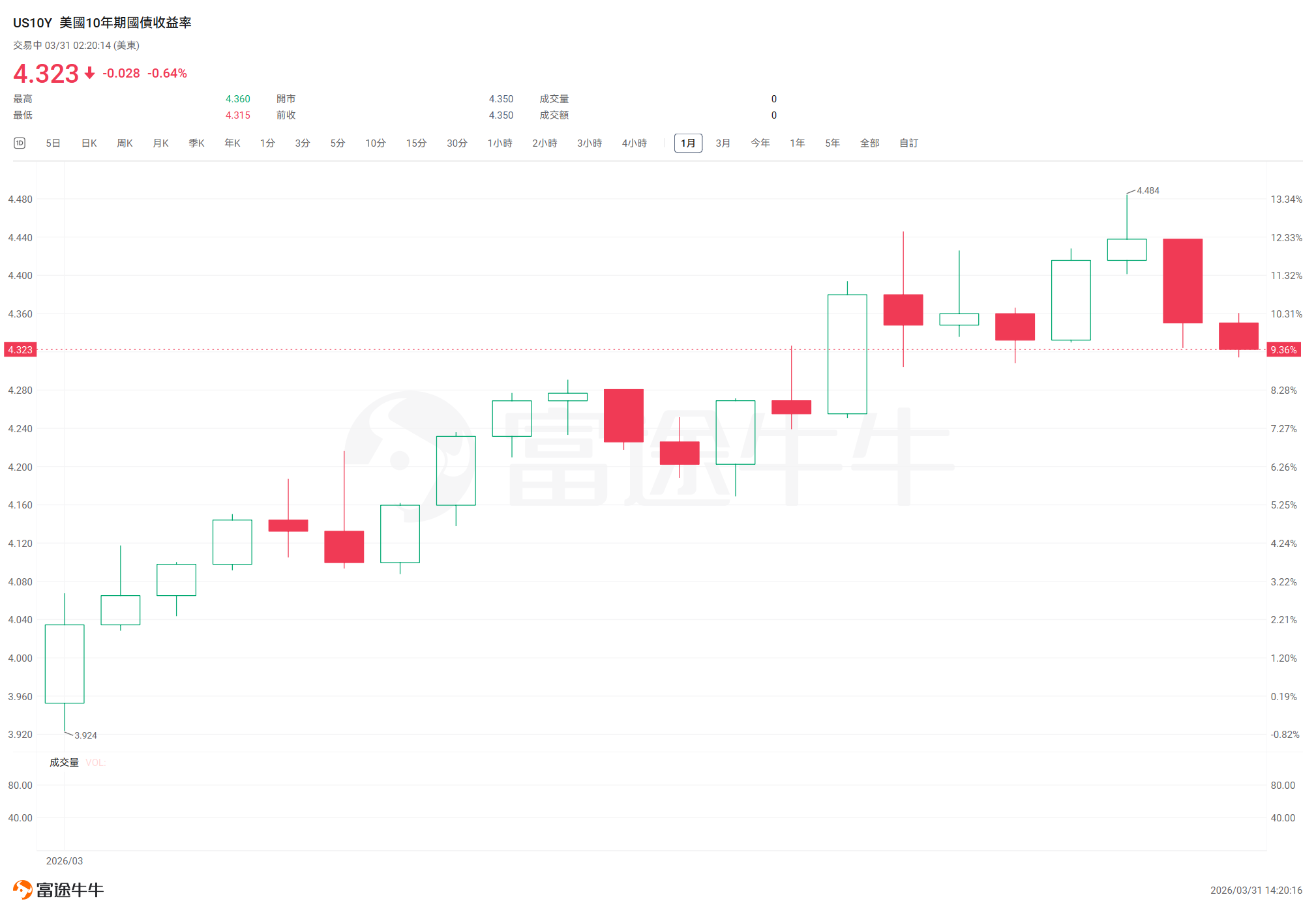
Data from the Federal Reserve shows that the scale of U.S. Treasury custody held by foreign official institutions at the New York Fed has plummeted by $82 billion to $2.7 trillion since February 25, hitting the lowest level since 2012. Meanwhile,$U.S. 10-Year Treasury Notes Yield (US10Y.BD)$and$U.S. 2-Year Treasury Notes Yield (US2Y.BD)$The increases this month mark the largest since 2024, with borrowing costs rising across the board.
Meghan Swiber, U.S. interest rate strategist at Bank of America, stated, "The foreign official sector is selling U.S. Treasuries." The combination of shrinking foreign exchange reserves and bond sales has added further pressure to an already strained U.S. Treasury market, intensifying investor concerns that Middle East tensions could drive inflation higher.
 This wave of sales also reflects a deeper trend: global reserve managers have been diversifying away from dollar assets for years, and the status of U.S. Treasuries as the world's primary reserve asset is being increasingly eroded.
Oil-importing countries are bearing the brunt, with Turkey leading the largest sell-off.
Following Iran's blockade of the Strait of Hormuz, global oil prices surged sharply, with oil-importing nations facing the most direct impact. Shrinking foreign exchange reserves, compounded by the need to intervene in currency markets, have driven several central banks to accelerate the liquidation of U.S. Treasuries.
Brad Setser, senior fellow at the Council on Foreign Relations, noted that oil importers such as Turkey, India, and Thailand are likely among the main participants in this round of sell-offs, as these countries must pay higher oil prices in dollars. Official data shows that the Central Bank of Turkey has sold $22 billion worth of foreign government bonds from its foreign exchange reserves since February 27 — the day before Iran was attacked — with Setser suggesting a significant portion of these were U.S. Treasuries.
Independent data from the central banks of Thailand and India similarly show that both countries' foreign exchange reserves declined after the outbreak of hostilities, though it remains unclear whether the reduction involved holdings of U.S. Treasuries or dollar deposits.
Setser stated, "Many countries do not want their currencies to depreciate further because this would push up oil prices denominated in local currencies, either necessitating greater fiscal subsidies or inflicting more pain on residents. Therefore, countries generally decide to intervene in currency markets to limit depreciation of their currencies and the rise in local-currency oil prices."
The U.S. Treasury market remains under pressure, with yields posting their largest single-month increase in over a year.
Currently, the U.S. Treasury market is already under multiple pressures, and the concentrated sell-off by foreign official institutions has made the situation even more complex.
The intensity of selling reflected in the Federal Reserve's data is particularly noteworthy. Swiber pointed out that since the last time the Federal Reserve recorded a sell-off of similar magnitude in 2012, the size of the U.S. Treasury market has roughly tripled, making the current scale of sell-off proportionally more prominent.$U.S. 10-Year Treasury Notes Yield (US10Y.BD)$and$U.S. 2-Year Treasury Notes Yield (US2Y.BD)$The increases this month mark the largest since 2024, with borrowing costs for governments, corporations, and households rising comprehensively.
Some investors believe that the strengthening of the U.S. dollar itself would prompt central banks around the world to rebalance their portfolios and sell U.S. Treasuries to defend their own currencies, thus there are certain passive factors contributing to the decline in holdings. However, other views suggest that the current data reflects more the need for countries to actively utilize reserve funds during periods of market volatility.
Stephen Jones, Chief Investment Officer at Aegon Asset Management, described this behavior as countries "raising war chest funds." He stated, "They are tapping into emergency reserves."
Accelerated trend of diversification, long-term pressure on U.S. Treasury reserve status
This round of sell-off is not an isolated event but rather a microcosm of a longer-term structural shift.
In recent years, the holdings of U.S. Treasuries custodied by foreign official institutions at the New York Federal Reserve have continued to decline. Global reserve managers are systematically reducing their exposure to dollar assets. As the proportion of official holdings declines, the importance of foreign private investors in the U.S. Treasury market has been increasing, becoming a key force supporting market liquidity.
Swiber stated that the recent sell-off "confirms a broader narrative – foreign reserve managers and official accounts are diversifying away from U.S. Treasuries."
Notably, analysts also cautioned that some U.S. Treasury holdings might have been transferred to custodians outside the New York Federal Reserve instead of being sold directly in the market, which implies that the actual scale of the sell-off could be lower than what the Fed data suggests. Nevertheless, the scale and trends reflected in the data continue to draw significant market attention.
Additionally, Swiber pointed out that oil-exporting countries in the Middle East may also sell U.S. Treasuries to offset fluctuations in oil and gas revenues. However, given their relatively small share among overall U.S. Treasury holders, their overall impact on the market remains relatively limited.
Editor/Melody