
Introduction:
The book 'Stocks for the Long Run' is a foundational work in the field of securities investment and has been listed as one of the ten greatest investment masterpieces of all time.
The author of this book is Jeremy J. Siegel, a professor of finance at the Wharton School of the University of Pennsylvania. In the book, he empirically demonstrates the effectiveness of a long-term stock holding strategy, pointing out that over the past few centuries, equities have consistently outperformed other investment vehicles, including bonds, gold, and more. The book provides investors with the knowledge, insights, data, and tools needed to build a robust and long-term profitable portfolio.
 The stock market is the costliest place for self-exploration. Siegel uses empirical methods to illustrate the fundamental operating principles of the stock market, which can greatly reduce the cost of self-exploration for investors.
Behavioral psychology, which has the greatest impact on investment performance, is also a key focus of 'Stocks for the Long Run.' Through dialogues, Siegel reveals the influence of human behavioral psychology on investing and offers his own recommendations. The key points are summarized below:
1. Herd behavior and trends influence stock prices.
The level of stock prices is not solely determined by economic value but is also influenced by psychological factors. People's psychology affects the market. Robert Shiller, an economist at Yale University and a pioneer in popularizing behavioral finance, emphasized that asset pricing is significantly influenced by herd behavior and social dynamics. The fluctuations in stock prices are so large that they cannot be explained by variations in economic factors such as dividends or earnings. In fact, most fluctuations in stock prices can be explained by herd behavior and chasing trends.
When everyone is enthusiastically discussing the stock market, you should be particularly cautious. Everyone needs to be mindful of how the crowd influences your decisions, even if your original decision was better.
Psychologists have long known how difficult it is to maintain independence within a group. Social psychologist Solomon Asch demonstrated this point. He conducted a famous experiment where participants were shown four lines and asked to identify two lines of the same length.
The correct answer was obvious, but when confederates sent by Dr. Asch voiced opposition and provided incorrect answers, participants often switched to giving the wrong answer as well.
Subsequent experiments confirmed that it was not social pressure that caused participants to act against their best judgment, but rather the belief that a large group of people could not be wrong.
Social pressure can influence stock prices. During the Internet bubble, conversations in offices, eye-catching headlines, and analysts' forecasts fueled a frenzy to invest in these stocks. Psychologists refer to this tendency to conform as the 'herd effect,' where individuals adjust their thinking to align with prevailing sentiment.
The most famous cases of mass hysteria are well-known, including the South Sea Bubble in Britain, the Mississippi Bubble in France, and the tulip mania in the Netherlands a century ago. Similar stories have repeated over and over again. Investors following the crowd is an enduring fact in financial history.
Perhaps sometimes the 'crowd' is right, but more often than not, following the herd can lead you astray.
Investment decisions are not like choosing a restaurant. When a company is favored by an investment institution, other investors often want to jump on the bandwagon.
People may feel that 'someone knows something,' and they shouldn’t miss out on the opportunity. While this might occasionally be correct, it is wrong most of the time.
Remember this: groups lack wisdom. When everyone thinks the same way, everyone could be wrong. While humans mock lemmings, they often forget that they themselves are part of a mindless crowd.
2. Frequent trading accelerates wealth erosion.
People often believe that their clever and diligent trading can give them an edge, but in reality, it likely does not.
Frequent trading only brings additional anxiety and reduces your investment returns. In 2000, several economists published an article titled 'Trading Can Erode Your Wealth.' The economists analyzed the trading records of tens of thousands of investors and found that the most frequent traders had returns 7.1% lower than those who traded infrequently.
3. Causes of overconfidence
Becoming a successful investor is extremely challenging. Even intelligent individuals who devote all their energy to stock trading often struggle to achieve high returns. The core issue lies in the fact that most people are overconfident.
Whether students, investors, drivers, or others, people generally believe their skills are above average. However, this is statistically and practically impossible.
There are several reasons for overconfidence. The first is called 'self-attribution bias,' where people attribute positive outcomes to their own abilities, even when success is not actually due to their actions.
Initial success, in particular, can fuel overconfidence among investors. The recognition you receive from friends and your profits from stocks may lead you to mistakenly believe that your success stems from exceptional investment skills, but more often than not, it is simply luck.
Another cause of overconfidence is that when people observe two similar events, they tend to identify excessive similarities. This phenomenon is known as 'representativeness bias.' It arises from the human learning process. When we encounter something familiar, we rely on representativeness heuristics to learn, but the similarities we perceive are often misleading, leading us to incorrect conclusions.
For instance, after certain events occur, institutions often present historical data, claiming that whenever such events happened in the past, markets moved in a specific direction, suggesting the same will happen again. However, such conclusions are rarely accurate.
Given this reality, why are economists’ summaries and forecasts still widely popular? Because people detest uncertainty. If market fluctuations lack identifiable causes, people feel deeply uneasy. Deep down, everyone wants to understand why things happen. This creates a role for journalists and experts. Even though their explanations are often incorrect, people are comforted because their minds find 'rationalized' solace.
Experts are more prone to overconfidence.
Evidence suggests that experts are more susceptible to overconfidence than ordinary individuals. Experts are trained to analyze issues in a specific way, offering advice based on supportive evidence they uncover while ignoring contradictory evidence.
During the dot-com stock frenzy in 2000, despite growing criticism of analysts’ flawed assessments of the technology sector, they still failed to appropriately adjust their profit forecasts for tech companies.
They were blinded by the optimistic information provided by companies and overlooked the pessimistic signals. Trees do not grow to the sky, a basic truth they seemed to have forgotten.
Many people firmly believed that technology stocks represented the future, but it was only after these stocks plummeted by 80% or 90% that analysts downgraded their ratings!
Psychology explains this phenomenon as 'cognitive dissonance,' which occurs when we encounter information conflicting with our beliefs or realize our abilities and behaviors are not as exceptional as we imagined. Instinctively, we try to avoid or reduce this discomfort, making it difficult to recognize our overconfidence.
5. Correcting Mistakes is Priceless
Whether due to ignorance of the reasons or侥幸心理despite knowing the errors, people still hesitate to sell at a loss, primarily because of pride getting in the way.
Every investment carries both emotional and financial expectations, making it difficult to evaluate objectively. Initially, you sold your stock for a small profit, feeling great, but then bought another stock that resulted in losses. Despite the poor prospects of these stocks, instead of selling them, you continued holding and even increased your position, hoping for a rebound. In reality, adding to positions in companies with bleak outlooks only increases risk.
Admitting a wrong investment decision is hard, and confessing it to others is even harder. However, to become a successful investor, one must courageously acknowledge mistakes—there is no other choice.
When building an investment portfolio, a 'long-term perspective' must be adopted since past events cannot be changed. If a company’s prospects are unfavorable, it is best to sell the stocks in hand, whether they are at a gain or loss, to avoid further losses.
6. The Psychological Anchor of Value Lies in Intrinsic Worth, Not Purchase Price
Buying at a low price is always the hardest rule. What defines cheap? Is it relative to past prices or future potential? You might think $40 is cheap compared to the previous price of $80, but you never considered that $40 could still be too expensive.
When you purchase a stock, you establish a mental account with the reference point being the stock price at the time of purchase. This is known as the 'anchoring effect,' which implies that when people face complex decisions, they tend to use an 'anchor' or specific number to assist in making judgments.
Determining a reasonable stock price is too complicated, so it is natural for people to consider the recent stock prices they have observed as the 'anchor' and use this to judge whether the current price is cheap; however, this is incorrect.
The correct approach to assess whether a price is cheap is to analyze the gap between the company's intrinsic value (including book value and future prospects) and its price.
7. Remove the weeds and water the flowers, not the other way around.
A bird in the hand is worth two in the bush. Driven by the desire for quick profits, investors sell stocks with unrealized gains 50% more frequently than those with unrealized losses. This means that the probability of selling a rising stock is 50% higher than that of selling a declining stock.
In the account of a successful investor, although only one-third of trades are profitable, the overall account shows substantial profits. Once things do not go as expected, he quickly sells stocks with unrealized losses while continuing to hold those with unrealized gains. There is an old saying on Wall Street that summarizes successful investing: 'Sell your losers and hold onto your winners.'
8. Methods to change short-term trading behavior.
Short-term frequent trading is unreliable. So how can one become a successful long-term investor?
Siegel suggests that investors should first establish a set of rules and incentive mechanisms to ensure their investments stay on the right track, a concept also referred to as 'pre-commitment.' Set up asset allocation rules in advance and then adhere to them strictly. If you possess strong investment skills, you can manage it yourself, or you can seek help from an investment advisor. Once the rules are established, avoid questioning them.
When we observe daily market fluctuations, remember that changes in the fundamental factors driving profitability do not occur as rapidly as we might think. Strictly following the right investment strategy marks the beginning of success.
If you indeed have a strong preference for and cannot resist the impulse to engage in short-term trading, it is recommended to open a separate small trading account (completely isolated from other portfolios) and set clear selling points to minimize losses. Do not allow your losses to escalate, do not justify that the stock will eventually rebound, and do not disclose your short-term trading activities to your friends. The fear of losing face will make you more reluctant to accept losses and admit mistakes.
Be mentally prepared for the possibility that all funds in this account may be lost, as this is highly likely. Moreover, under no circumstances should you increase the maximum investment amount previously set for this account.
9. Reducing the frequency of checking your account can lower the probability of losses.
People inherently dislike losses and feel pain when they see declines. To escape this discomfort, they often make emotionally driven wrong decisions, turning temporary paper losses caused by normal short-term fluctuations into actual losses.
If you believe that stock prices trend upward in the long term, then extending the interval between checking your investment account and reducing the frequency of reviews will lower the likelihood of seeing losses, thereby decreasing the frequency of making emotionally driven erroneous decisions.
Economists Shlomo Benartzi and Richard Thaler conducted research on whether the time interval between checking accounts influences investors' choices between stocks and bonds. The results showed that the test group frequently reviewing returns allocated a significantly smaller proportion to stocks compared to the group that checked less frequently. This is because short-term volatility discourages people from choosing stocks, even though they are a better option in the long run.
The behavior of making decisions based on short-term market fluctuations is referred to as 'myopic loss aversion.' In reality, over a longer horizon, the probability of stocks incurring losses is much lower.
Investors susceptible to loss aversion are advised to extend their holding period by reducing the frequency of checking their accounts.
Of course, if you possess sufficient discipline, you can check your account frequently, but ensure you do not alter your investment strategy. Remember to establish clear rules and incentive mechanisms. Maintain consistent portfolio allocation over the long term and avoid making changes unless there is compelling evidence that the price of a certain industry is significantly overvalued relative to its fundamentals, as was the case with technology stocks during the internet bubble.
10. Contrarian investing: Leverage Mr. Market's extreme pessimism to generate profits.
Contrarian investment strategies are often based on psychologically driven indicators. When bullish sentiment is generally high in the market, contrarian investors tend to retreat; when pessimism spreads and the market is filled with despair, they firmly believe it is a new buying opportunity. How to assess the level of market sentiment? The VIX Index (Volatility Index introduced by the Chicago Board Options Exchange) serves as an excellent tool, observing market volatility through the calculation of option prices. When investor sentiment is extremely low, the index tends to rise.
Moreover, the premium on put options can reflect the level of anxiety in the market, making it a nearly perfect indicator of investor sentiment.
For individual stocks, commonly used valuation metrics can also serve as reliable tools.
11. Selecting individual stocks using a contrarian investment strategy
Contrarian investors believe that shifts between optimism and pessimism not only affect the overall market but also influence individual stocks. Therefore, buying out-of-favor stocks may be a good strategy.
Werner De Bondt and Richard Thaler conducted research to determine whether investors become overly optimistic or overly pessimistic about future returns. They created two investment portfolios: one composed of stocks that had been profitable over the past five years and another composed of stocks that had incurred losses over the same period. They then observed the performance of these two portfolios. The results showed that the portfolio made up of profitable stocks underperformed the market by 10%, while the portfolio of loss-making stocks outperformed the market by 30%.
As Graham once said, what is now decaying may shine again in the future; what is now favored may decline in the future.
Of course, the premise of this treasure-hunting-in-the-trash strategy is thorough fundamental analysis and long-term research tracking.
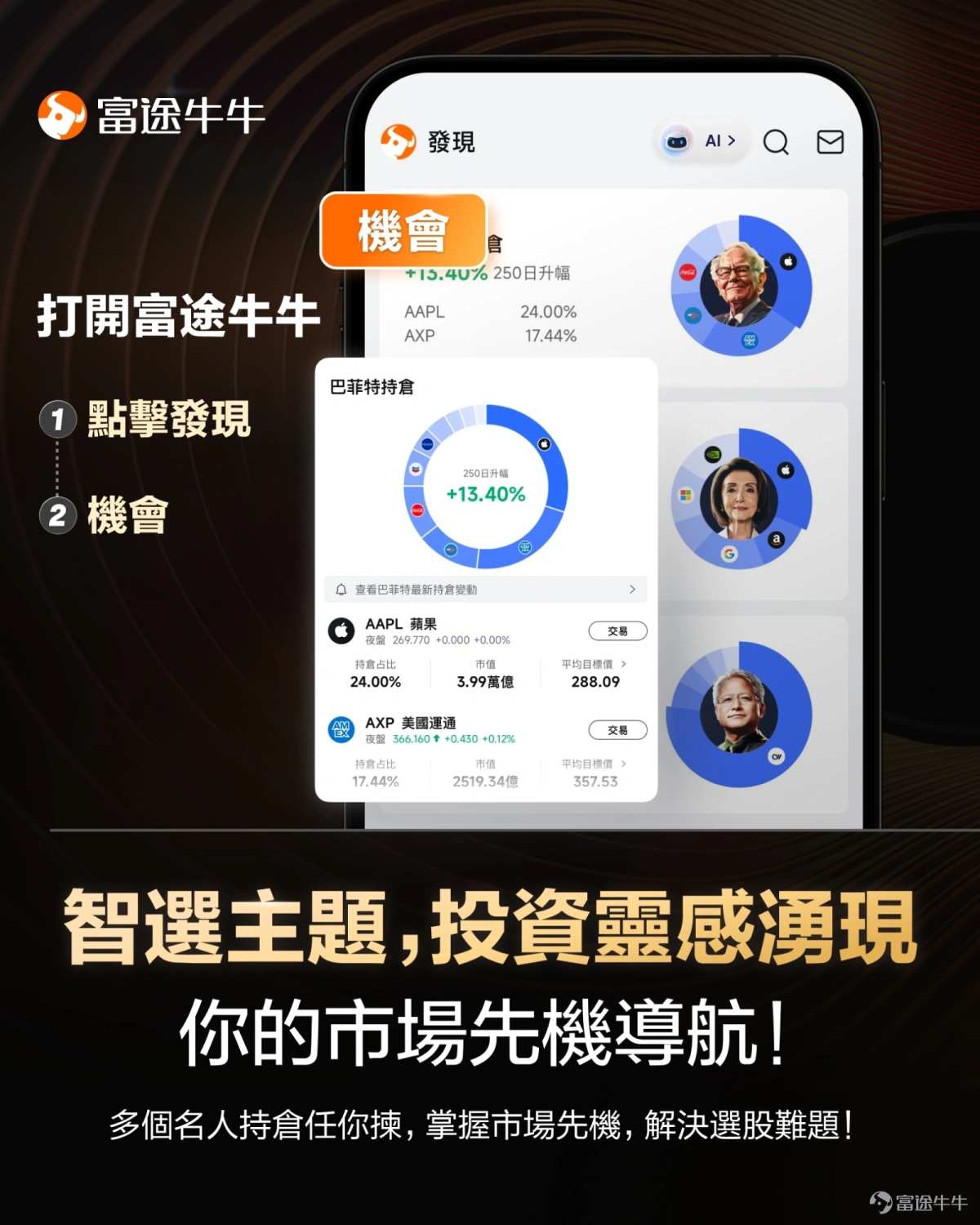
 Futubull【机会页】Celebrity portfolio tracking opportunities have been launched! Multiple celebrity portfolios are available for selection, allowing you to follow the strategies of major players with one click, accurately locking in high-quality investment targets, and investing with greater confidence!
Editor/Jayden