Source: Smart Investor
I still go to the office every day. It's just that now, doing many things takes much longer than before.
The places Greg can visit in a single day outnumber the places I could cover in a week during my prime, let alone now.
 If Greg has any objections to any of the deals I’ve made, then we won’t proceed with them.
We still haven’t come across anything we truly want to buy. We didn’t find it before, and we still haven’t found it now.
The market is far from reaching a point where it feels exciting or where valuations appear particularly attractive.
Ultimately, what we’re buying are businesses. Sometimes we buy the entire company, sometimes just a portion, but fundamentally, we’re acquiring businesses. That’s what I truly like to hold.
If the price is low enough, it’s not impossible for us to significantly increase our position in Apple again. But the current market won’t offer such an opportunity.
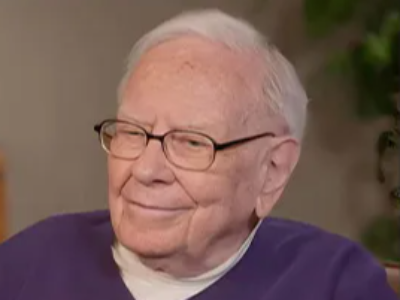
Warren Buffett’s first public interview after stepping down as CEO of Berkshire Hathaway was with Becky Quick, a CNBC anchor he is most familiar with.
Well, Buffett seems to have lost some weight, but his mind remains incredibly sharp.
The occasion for this interview likely stems from Buffett (taking advice) and restarting the charity lunch auction, which had been suspended for three years, beginning on May 7.
For nearly 40 minutes, under Kuke's probing questions, we discussed a wide range of topics without restrictions. These included life after stepping down as CEO, thoughts on Greg Abel, the current market and cash allocation, Apple and tech stocks, as well as his views on artificial intelligence, the Federal Reserve, nuclear risks, and the Epstein documents.
When the topic of Epstein came up, Buffett said, 'After the whole thing went public, I never spoke to him (Bill Gates) again. I also don’t want to put myself in a position where I know too many details because, at some point, I might be called to testify.'
Laughing to death.
At 95 years old, Buffett still 'goes to the office every day' and revealed that he has recently made new purchases, albeit only 'a little,' since no major opportunities worth buying have yet emerged.
The core essence remains unchanged. The market has fallen significantly, but in his eyes, 'It’s far from being exciting or appearing particularly attractive in terms of valuation.' There is plenty of cash, but it is merely a tool waiting for good business opportunities to arise. Apple has generated hundreds of billions of dollars in profits for Berkshire, yet if the price were low enough, he wouldn’t hesitate to buy back shares aggressively again.
At the end of the day, what he repeatedly emphasized was still that most quintessential Buffett statement: 'What you’re buying is the company itself.'
Going deeper than the market is the worldview that constantly emerged during this conversation: concern for the continuity of philanthropy, worries about the risks of nuclear weapons, and a clear-eyed understanding of human frailties.
Cherish every opportunity while Warren Buffett is still passionately preaching.
Intelligently compiled and shared with everyone. Enjoy it!
01 Restarting the Charity Auction
Kuke: This is also the first time we’ve sat down to chat like this since you stepped down as CEO of Berkshire Hathaway. Warren, welcome, and it’s great to see you this morning.
Buffett is very pleased to be here.
Quinn, the reason you are here today is particularly special. Over the past 22 years, you have been raising funds for Glide Foundation in San Francisco through an annual charity lunch auction.
By 2022, when you announced the conclusion of this initiative, the total amount raised had exceeded 50 million US dollars. I remember that the final auction raised 19.1 million US dollars, after which everyone assumed it was officially over.
However, today you bring new news. This charity auction is being relaunched, and this time with a new partner.
In addition to yourself, Stephen Curry and Ayesha Curry will also participate. The three of you will jointly launch a new charity lunch auction. In addition to Glide Foundation, the beneficiaries will also include the Currys' foundation, Eat. Learn. Play.
The auction will begin at 7:30 PM Pacific Time on May 7 and end at 7:30 PM on May 14. All proceeds will be donated to these two foundations.
Why have you decided to come back and do this again?
Buffett, let me first explain why I initially got involved in this.
It started because my first wife, Susan, was living in San Francisco at the time. She told me that this person was genuinely committed to charity. The person she referred to was Cecil Williams.
In 1963, he arrived at that church. Back then, it was a declining church, and the surrounding community was changing. The remaining hundred or so congregants did not welcome him.
But later, he transformed that place into something entirely different.
He gave hope to those who had already been abandoned by this world and allowed them to regain a sense of life.
One Sunday, I went there without much expectation, but as I looked at Cecil, I realized exactly what he was doing. He wasn’t putting on a show; he was serious.
Later, Susan said to me, 'Why don’t you raise some money for them?' The idea of the lunch auction probably came from her as well. So we started doing it.
The first three times, since it was mostly local, we raised about $25,000 each time. Then we thought about listing it on eBay, and bidders suddenly came from all over the world.
After that, the amount kept rising overall. Although it didn’t increase every year, the event certainly gained much wider recognition.
The final auction reached $19 million. That particular instance was special largely because everyone knew it would be the last one.
I remember it was Justin Sun who won the bid—he had done so once before. But I didn’t call him or do anything particularly proactive. The event itself naturally inspires enthusiasm.
Quirk: Many times, you’ve had the meal with the winning bidder at Smith & Wollensky restaurant in New York.
Buffett: Yes, usually there. Some winners preferred to remain anonymous, while a few came specifically to Omaha because they had particular topics they wanted to discuss.
But I think most people will eventually feel that the meal was worth it. I have always been very willing to do this myself.
Quirk: So why did you stop later?
Buffett: Because I am older now, and my energy is indeed not the same as before.
I was probably about 93 years old at that time. Actually, it’s the same reason why I stopped teaching later on. I started teaching at the age of 21 and continued until I was 88 or 89.
At some point, your body tells you that it’s time to let someone else take over. Just like when I handed over Berkshire Hathaway later on.
Different things have their time to let go.
We originally thought that this matter had been arranged properly and someone would continue it. However, for various reasons, it still didn’t continue.
Over the past two years, it seemed that someone from the board temporarily took over once in the first year, but essentially, the auction stopped after that.
Quirk: So, the money didn’t keep coming in later?
Buffett: Yes, it stopped. Cecil is about the same age as me. In the end, I could barely hear him on the phone. But the only thing he cared about was whether this matter could continue.
As for this restart, I can't quite remember who initially proposed it. I just thought, why not do it again and get it going once more.
Later, the Curry family also expressed willingness to join, which made it even more natural. After all, they are based in the Bay Area, and their work has always been about serving the local community. The foundation 'Eat. Learn. Play.' founded by Stephen and Ayesha is itself rooted in the Bay Area, serving the children and families there.
Quirk: Many people who are unfamiliar might have learned about the Glide Foundation through the movie 'The Pursuit of Happyness,' so they have some impression of it. But why did you think of reaching out to Stephen Curry? How did this come about?
Buffett: Actually, there’s no need for me to elaborate on this. Who else could be more suitable than him?
He has always been working with the children of Oakland. Those kids, probably aged from five to fifteen, he plays basketball with them. He truly is a very good person.
I haven’t met him in person yet, but we talked at length over the phone. This is something he genuinely cares about, and he can absolutely carry it forward.
By the way, regardless of how much money this year's auction raises, I will contribute an equal amount, donating separately to the Glide Foundation and the Curry family’s foundation.
Stephen probably doesn’t know about this yet, but I will do it. I just hope that both sides can expand and sustain their efforts further.
Stephen is an idol to millions, tens of millions of people. So I really believe this initiative can continue and fulfill Cecil’s original vision for it. If it were to end now, I would feel deeply saddened.
After all, Cecil truly dedicated his entire life to it.
He has always believed that everyone deserves to be treated kindly. Even if the world has given up on them, he hasn't.
Perhaps at first, he merely provided someone with a meal or a bit of food. But later, he did more and more. He has never abandoned anyone.
Quinn And I know your second wife, Astrid, likes him very much too.
Buffett Yes, she likes him a lot. I took her to meet him. When you see him standing there, telling those who have been abandoned by the world, 'I will give you food, I will give you a bed, I will help you find a way to survive; we won't give up on you,' it's hard not to like this person.
Just seeing this scene makes it difficult not to like him. Moreover, he truly has never abandoned anyone.
02. Going to the office every day still 'makes some contribution' to investment.
Quinn Warren, you've led Berkshire for so many years, on a long and highly successful journey. How is life different now compared to before?
Buffett Actually, the difference isn't significant. Except... I mean, I still go to the office every day.
Quinn You still go to the office every day.
Buffett Yes, I still go every day. It's just that now, doing things takes much longer than before. To be honest, there isn’t much I can do anymore.
On top of that, Greg Abel is so exceptionally capable that it almost makes me feel a bit embarrassed.
You know, Berkshire Hathaway has nearly 200 companies under its umbrella.
In the past, I was very familiar with all these matters—the names of the managers, their spouses' names, and even if we hadn't met for a long time, I still had a general idea about them.
But now, for me, it is easier to write one letter a year and spend the rest of the time on my own affairs.
The number of places Greg can visit in a day exceeds the number of places I could cover in a week during my peak, let alone now.
Therefore, from many perspectives, this transition could have occurred earlier. Even if it had, Greg would still have performed better than I could.
Of course, I can still contribute a little at this point, but only very minimally.
Quack: So, do you still participate in investment decisions?
Buffett: Yes, I still participate. But if Greg thinks something is not right, then I won’t proceed.
Now, some calls are first directed to him, and he will also call me to inform me about them.
Actually, like me, he probably doesn’t like most opportunities either. But if someone calls to discuss a deal, he will still let me know.
Quinn: By 'discuss a deal,' do you mean people from investment banks calling him?
Buffett: Yes, people from investment banks. You know, they try to sell you everything.
I usually end the call within ten or fifteen seconds. Greg is more patient than I am and will talk for a bit longer.
But I really don’t know how he manages his time because he also plays ice hockey with us.
He isn’t the type of person who is completely devoted to the company like I was back then, but it seems effortless for him to handle so many things.
Still making 'a few new purchases' but haven't come across anything truly desirable yet.
Quinn: Speaking of investments, Berkshire Hathaway holds a significant amount of cash. How much cash is on hand right now?
Buffett: I can’t give you the exact figure, but it’s not too different from before. It’s likely still over 350 billion USD in cash and U.S. Treasury bonds.
Quinn: So this week, did you purchase another 17 billion USD worth of Treasury bonds?
Buffett: Yes, $17 billion worth of treasury bonds.
I believe Berkshire Hathaway is one of the largest holders of treasury bonds, and likely one of the largest bidders as well.
Interestingly, back when I got involved in the Salomon incident, it was because they had bought too many treasury bonds. Now if we buy too much, people probably wouldn’t really get upset with us.
Of course, according to the rules, in an auction, you are not supposed to exceed a certain percentage, like 35%. These operations are conducted through primary dealers. To be honest, I don't fully understand the specific mechanisms.
In our office, there is a colleague who is specifically responsible for executing our stock and bond purchases. In other places, such work might require twenty or thirty people. But he loves his job, and I enjoy watching him handle everything in such an orderly manner.
His office is only about twenty feet away from mine. Every hour or hour and a half, he brings me updates on the day’s trading activities.
Quinn: This means you are fully aware of what Berkshire Hathaway does in the market on any given day.
Buffett: Yes. Before the market opens, I usually call him because I want to see what happened pre-market, and sometimes adjust the limit orders accordingly.
I don’t spend all day monitoring a large number of stocks, but occasionally I add a new position, and the limit prices are adjusted daily.
Quinn: So, before you do these things, do you need to confirm with Greg, or do you communicate with him regularly?
Buffett: Greg sees those trade tickets every day, and he probably looks at them too. It’s just that he doesn’t get them as quickly as I do.
I see them immediately, but on his end, they might only be aggregated after the market closes or later in the day. However, if Greg has any objections to any of my trades, then we wouldn’t proceed.
Quinn: So you’re still making new purchases?
Buffett: Yes, but only a little.
But we still haven’t come across anything we really want to buy. We didn’t find anything before, and we still haven’t now.
04. The Market Is Far From an Exciting or Cheap Level
Quinn: Let’s talk about this. The market has dropped significantly. Strictly speaking, both the Dow and Nasdaq have entered correction territory, marking the worst quarterly performance for stocks in the past four years. Do these assets look cheaper to you now?
Buffett: No. Since I took over Berkshire Hathaway, there have been three instances where the market fell by more than 50%.
If you look back, the most severe was probably during 2007 and 2008. Of course, there was also that Monday when the market dropped 21% in a single day.
Compared to those times, this decline is nothing. We’re far from reaching levels that would excite us or seem particularly attractive in terms of valuation.
Quinn So, you don't think it's a good time to buy just because it's now 5% or 6% cheaper?
Buffett A 5% or 6% discount doesn't mean much to us. We're not here to make that 5% or 6%.
At the end of the day, what we're buying are businesses. Sometimes we buy the whole company, sometimes just a part of it, but essentially, we're buying businesses. That's what I really like to hold.
More than two-thirds of our capital is invested in the businesses we own.
On January 3 this year, we also purchased shares of Occidental Petroleum, amounting to $9.7 billion. In my view, compared to buying the entire company, there are certainly pros and cons, but the underlying principle is the same. It's essentially a business, and it's a company we hope to hold for the long term.
Quinn It sounds like you haven't found any companies worth buying a stake in recently, nor have you come across businesses you want to acquire entirely. After all, you have over $350 billion in cash on hand.
Buffett And we receive phone calls all day long.
Many of these calls are frankly absurd. As I mentioned earlier, I can say 'no' within five seconds. Greg is a bit more polite than I am, but I'm serious about this.
I don't mind taking these calls, at least to see what others are planning. But the offers they present are far from attractive in terms of price. Moreover, what they truly want to achieve is simply a deal.
Quinn So, are you waiting for the next market downturn to deploy this cash? If so, do you think that moment is approaching?
Buffett: If the market really experiences a significant decline, we will certainly take action.
However, our decision to act is not because of the decline itself, but because at that point, stocks become cheaper and companies genuinely attractive to us.
When we buy, it’s not for the purpose of selling next week or next month, so our judgment must be correct.
Take a look: we’ve held American Express for thirty years, Coca-Cola for nearly thirty-five years, almost forty. Of course, there were also some investments where I quickly changed my mind later on.
But our goal has always been to hold the company itself. For example, when we bought Occidental Petroleum, we envisioned holding it even fifty years from now.
The world may change, but when we buy, it’s never with the intention of reselling.
We made over 100 billion US dollars on Apple, and if the opportunity arises, we would consider buying back in.
Quinn: However, you also sold a substantial amount of a stock that made you a lot of money, like Apple.
Buffett: There will always be people who say we sold too early.
Quinn: But you also bought in very early, so overall, this investment was highly successful.
Buffett: Just from this one deal, we’ve probably made over a hundred billion US dollars.
Quinn: But do you have any regrets about selling too early?
Buffett: No, not at all. I don’t have the ability to predict how a stock will perform next week or next month. If it’s cheap, I’ll buy it; if it’s obviously cheap, I’ll buy even more—provided I truly understand the business.
To this day, Apple remains our largest single holding.
Quinn: And you’re happy to keep it that way?
Buffett: Of course. If I weren’t comfortable, I could sell anytime.
To me, it’s an extraordinary business. It’s better than many of the companies we own outright. For example, we own a railroad company whose total value exceeds our stake in Apple. But in my eyes, they are fundamentally the same—they’re both businesses.
Of course, in a sense, the railroad business might be more predictable.
You’d think that in fifty or a hundred years, it will likely still be around. But in terms of return on capital, it can’t compare with Apple.
Take Apple, for instance. You probably own its products, and so do your kids. Not just one or two—we probably have twenty in our house.
Quirk: Yes, all kinds of devices are like that.
Buffett: Actually, the Bell Telephone Company back in the day had a similar characteristic, but it was regulated.
Quirk: So, would you be concerned that tech giants like Apple might face stronger regulation in the future?
Buffett: I think consumers like them too much. I don’t believe Washington will really do anything to destroy something that every voter loves and uses every day themselves.
Apple’s products have this unique quality. Think about it—what else is as useful to people as Apple’s products?
After Tim Cook took over the hand dealt to him by Steve Jobs, he played it exceptionally well. Of course, Jobs did things that Cook could not have done; conversely, Cook achieved things that Jobs might not have been able to accomplish.
But Jobs handed the company over to an extraordinary person. After all, he personally chose Cook.
Ultimately, Cook is an exceptional manager and also a very good person. I don’t know how he does it, but he seems to get along with everyone in the world.
I certainly don’t have that ability, and my partner Charlie Munger even less so.
So, I’m glad Apple remains our largest holding. It’s just that I didn’t want its position to grow so large that it almost equaled the sum of all our other holdings combined.
Quinn understands. In other words, you still care about this nuance.
Buffett: Of course. If the price is cheap enough, it’s not impossible for us to buy Apple shares aggressively again. But at the current market price, no. The market won’t offer such an opportunity right now.
Quinn: How much would it have to fall for you to think, 'Oh, this is really attractive now?'
Buffett: That depends on the specific stock. Overall, many stocks still move together, rising and falling in tandem with strong correlation.
But I don’t consider myself someone who knows where the market is headed next. I just feel that I can make a fairly reliable judgment about what a business is roughly worth.
As for where the stock market will go next, I don’t know, and I don’t think anyone else does either.
Quinn: You’ve never been the type to chase technology stocks. While everyone sees Apple as a tech company, you’ve always viewed it more as a consumer company.
Buffett: Yes, a consumer company.
Quinn: What about now, with all these tech stocks and the wave of artificial intelligence? Will you follow it? Will you study or participate?
Buffett: No, because I’m not good at that.
Besides, it's too late for me to enter now. I don't learn new things as quickly as I used to. To be honest, I still haven't figured out many functions of my phone.
But one thing I do understand is that if you have this product, your children will want it too, and it really is incredibly useful—shockingly so. A product this useful can also be sold all over the world.
Moreover, people naturally worry about whether it will be troublesome to transfer their photos and personal data from one system to another. This creates a natural stickiness.
In fact, back then, I only needed to visit Nebraska Furniture Mart and talk to customers to understand a lot. Sixty years ago, I looked at American Express the same way. At that time, everyone thought American Express was finished after the 'salad oil scandal.'
I went to a national bank and asked them: Can American Express still sell its traveler’s checks at a premium? It turned out that their traveler’s checks were priced higher than those of Citi, Bank of America, and Barclays.
This means that while everyone outside was worried about whether it would go bankrupt, its products were actually being sold at a premium in the market.
Later, when they started promoting credit cards, it was the same situation. Their competitors, like Diners Club and Carte Blanche, had entered the market earlier.
But when American Express later entered the market, instead of adopting a low-price strategy, they set their prices even higher than their competitors.
This alone speaks volumes about how consumers viewed American Express at the time.
06. Hope the Federal Reserve Sets a Zero-Inflation Target
Quinn Warren, I would like to ask you about your view on the economy. The Federal Reserve is actually in a bit of a dilemma right now, having to balance between its two mandates: the potential resurgence of inflation on one side, and the possible weakening of the job market and economic growth on the other.
If you were in the position of the Federal Reserve right now, which of these two issues would concern you more?
Buffett: If I were at the Federal Reserve, the thing that would worry me the most is that I am managing the global reserve currency.
The US dollar currently seems unlikely to run into any problems. I also think it indeed looks hard for anything to go wrong. But if something did go wrong, I wouldn’t want to bear that responsibility at all. After all, the entire world relies on it functioning properly.
Moreover, last time, during the 2007-2008 financial crisis, Congress actually thought for a while that they knew better than the Treasury Department or those who were truly dealing with the crisis. When they initially rejected TARP (Troubled Asset Relief Program), they really made things worse.
I think now, people understand these matters a little better than they did back then. The Federal Reserve doesn't 'burn money'; the Federal Reserve can print money.
Quinn: President Trump has also been pushing the Federal Reserve to cut interest rates. If you were in that position, would you cut rates right now?
Buffett: I don’t know what I would do. All I can say is that Jay Powell’s response at the very beginning of the pandemic—I remember it was March 2020—was correct.
I believe if he had waited another two or three weeks to act, it would have turned into a disaster. Once the dominoes start falling, they just keep falling one after another. And that tipping point is often closer than people think, and it falls faster than people imagine.
So I think what he did at that time was completely correct, and the scale of his actions was even greater than what Bernanke did back then.
Quinn: Hasn't the Fed kept rates too low for too long? At the time, they kept saying inflation was only 'transitory.'
Buffett: On this issue, I think even Powell himself might look back and feel that it would have been better to pivot earlier.
Personally, I actually wish the inflation target were zero. Because once you start saying that 2% inflation is acceptable, over time, the compounding effect is quite astonishing.
It's like telling everyone that if your money earns less than a 2% return, you're actually moving backward. Not to mention, you may still have to pay taxes on that 2% nominal gain. So I don't really like this target.
Quinn: So, is inflation the thing you're more worried about? This is something Greenspan used to talk about all the time.
Buffett: I do care about inflation. But what I'm really more concerned about is the stability of the banking system.
The banking system appears strong from some perspectives but very fragile from others. For instance, in recent annual reports, JPMorgan disclosed that it now processes transactions worth $10 trillion every day, many of which are unsecured positions.
Of course, they know what they're doing—trust me on that. No one is smarter than Jamie Dimon and his team.
Even so, during the 2008 period, I didn’t want to see even a single day of unsecured exposure out there. Back then, no one knew who was reliable anymore.
The world is highly interconnected, and once panic sets in, everyone panics. They may not admit it verbally, but when things get bad enough, even calling up the biggest investment banks won’t get you an answer. And if they do pick up, they’ll quote you an impossible price, like 'buy at 10, sell at 20, and we'll see how it goes.'
The greatest concern about the war remains nuclear weapons.
Quinn Let’s shift topics and discuss your perspective on what’s currently happening in the Middle East. Let’s start with crude oil and energy. Berkshire Hathaway owns a utility company. With oil prices rising to current levels, what impacts do you foresee?
Buffett The direct impact, of course, is that our two oil investments—Chevron and Occidental Petroleum—are likely to see significant gains.
But this doesn’t mean I can predict what will happen there next. I have no idea what tomorrow will bring.
Quinn You have long been involved in advocacy related to nuclear issues, and I believe you are still funding efforts in this area. If I remember correctly, nuclear issues have always been your top priority in charitable endeavors.
Buffett It is the most fundamental issue among all problems.
When I was young, my teacher told me that the sun would burn out in 4.5 billion years. At the time, I was quite calm about it. I thought, well, I can accept that.
But now, nine countries possess nuclear weapons. Something will inevitably happen one day. Even when only two countries had nuclear weapons, we were already terrified.
Consider the situation today: North Korea already has them, and Iran wants to acquire them. The implications are self-evident. To be honest, I don’t have an answer.
In 1938 or 1939, what we did back then was the right decision. If you search online now, you’ll find that it might have been the most important letter in history.
Leó Szilárd couldn't directly deliver the message to Roosevelt at the time. As a renowned nuclear physicist, this fact itself is quite intriguing. He knew that as long as Einstein signed the letter, it would definitely reach the White House.
Eventually, he managed to convince Einstein to sign. One month after the letter was sent, Germany began its invasion of Poland.
I don't think Roosevelt understood uranium-235 any better than I did. But he knew that with Einstein's signature on the letter, he had better take some action.
Ironically, the reason this initiative was launched was the fear that Germany might develop it first. In the end, however, it fell into Japan's hands.
But the problem is, even today, we still haven't learned how to coexist with this reality.
Eighty years have passed since then.
There have been too many moments when things almost spiraled out of control. There were misinterpreted training tapes that nearly pushed the President to the brink of making a decision; such incidents have indeed occurred before.
At the current rate, this planet cannot remain safe for another 500 years.
When I was young, people told me it had 4.5 billion years left.
Back then, we really had no choice but to do what we did. I'm not trying to justify anyone’s actions. My father was in Congress at the time, and if it came to a vote, he would have supported it. On the day Japan surrendered, everyone was cheering. But once that step was taken, there was no turning back.
Quinn But today, this issue has turned into a different reality. Just before you arrived, Nikki Haley was on 'Squawk Box' saying that she believes the President should order an intervention now, to go into Iran and locate those stockpiles of enriched uranium. It’s clearly a very controversial position.
Buffett Of course it's controversial. But if I were the President of the United States — though I certainly have no desire to be President — I would support doing whatever is necessary to resolve this issue, regardless of the method.
I once asked a president a question. I said, if the Soviet Union had already launched their missiles, and they were already in the air, and our policy was 'Mutual Assured Destruction,' would you order the Strategic Air Command to launch all of ours as well?
Knowing full well that it wouldn’t change anything, it would only result in millions, even tens of millions more deaths, and make an already severely polluted atmosphere even worse. As for what the ultimate outcome would be, no one knows.
Quinn What was his answer?
Buffett That president said that during his term, he thought about this issue almost every day. Because at midnight, a major might rush in and tell him: We’ve confirmed it. This time it’s not a flock of geese flying over the Arctic, not a training video mistakenly inserted, we know they’ve really launched.
Mr. President, you only have ten minutes to decide. How should I instruct the Strategic Air Command? Should we also launch all of ours?
By the way, I once served on something like a 'Strategic Advisory Committee.' In the end, it was more of a political arrangement. They always wanted to raise more funds, so they figured putting someone like me on the committee wouldn't hurt.
Quinn So what did that president ultimately say? What was his real answer?
Buffett He said, I think the answer is: Yes, I would order the launch. Because that is the policy of the United States.
Quinn So if you were president today, or you were advising the president, what would you say? Would you support taking action against Iran's uranium enrichment facilities?
Buffett I would say that whether it’s within a hundred years or two hundred years, who knows, but one day something will happen that causes these weapons to be actually used. And we’ve already reached a point where we can’t take back the nuclear weapons that exist in the world today.
Ultimately, I think the most dangerous situation is when someone’s hand is already on the button and they have no way out. Perhaps they are nearing death themselves, or they are facing immense humiliation, or they’ve been cornered.
Quinn In other words, people who have been pushed into a desperate situation.
Buffett Yes, people who have been pushed into a desperate situation.
Quinn So in your view, this remains one of the most important issues.
Buffett Exactly. I just don’t know what the answer is. But I do know one thing: if Iran really had nuclear weapons, things would only get harder, not easier. Right now, they don’t.
No. 8, 'Epstein' scandal broke and haven’t spoken to Bill Gates since
Quinn Let’s change the topic. Since you began donating in 2006, you’ve given away nearly $600 billion, most of which has gone to the Bill & Melinda Gates Foundation. Recently, many emails related to Bill Gates have surfaced in the ‘Epstein documents.’ What are your thoughts on these revelations?
Buffett I won’t specifically address the parts related to Bill Gates.
But what I want to say is that this incident has once again made me realize that, after all, human beings are human. It is truly astonishing.
Think about it—this person was already a convicted individual, an extremely skilled fraudster, yet he still managed to deceive so many people. As for how he did it, he probably exploited the most vulnerable aspects of each person.
For some people, it might be sex; for others, it could be power; or perhaps something else entirely. Whatever it was, he was able to pinpoint that weakness.
I find it hard to imagine that someone could take such manipulation to this extent.
Moreover, I think many of those involved always believed that once he passed away, everything would be over. They had essentially been lying about their connections with Epstein all along.
Quake: Are you saying that they have consistently downplayed and concealed their ties with Epstein?
Buffett: Yes. I mean, they would rationalize it in one way or another. But now, everything has been laid bare.
To be honest, I am really grateful that this matter didn't extend to Omaha, or that I don’t live in New York. If I were in New York attending parties, who knows, maybe I would have ended up at some unfortunate event myself.
After all, there’s always someone wanting to take a picture with you, and I usually oblige. I’m quite accustomed to taking photos with students, often in humorous poses, like pretending to pick someone’s pocket or proposing to a lady.
So, thank God I never had anything to do with that guy. I remember reading the Vanity Fair article about him back in 2003.
Quinn: Is that the article that portrayed him as a mysterious and eccentric figure?
Buffett: Yes. Although from the perspective of avoiding defamation lawsuits, the article wasn't particularly thorough, but it clearly depicted him as a fraudster.
Quinn: I recently reread that article as well.
Buffett: Indeed. More interestingly, he initially gained prominence at Bear Stearns, where people actually knew him.
He lied to them about many things. Ace Greenberg was a close friend of mine. Perhaps by then Jimmy Cayne had taken over the management of the company—I'm not entirely sure.
But Ace was always cautious about such matters. He even hired someone—a son of a friend of mine—whose job was to go around checking traders' drawers for any old items or large hidden positions. In other words, he was always very guarded when it came to people.
Yet, despite all this, it seems Ace's daughter also dated or went out with Epstein at some point. That guy might truly be the greatest conman in history.
However, lying is one thing; trafficking minors is another matter altogether.
Quinn: Exactly, it involves sexual exploitation of minors.
Buffett: And he has already been prosecuted for it. Although he later managed to maneuver his way through the legal process somehow. As for who was in charge of the judicial system at the time, whoever it was, ultimately, he hardly spent any real time in prison.
But he has a knack for drawing everyone in. Who knows what kind of deals he offered those people to make things turn out that way. He could deceive almost anyone.
Quinn Have you felt any concern as a result? First, did you learn anything new from these 'Epstein documents'?
Buffett Of course. My eyesight isn't good now, so I can't read by myself, but I have a friend who reads to me.
What shocked me the most was how successful one person could be at pulling off such deceptions.
However, didn’t P.T. Barnum once say something along the lines that there's a sucker born every minute? Men are drawn to sex, some like tax evasion—whatever it is, Epstein would find your weakness and strike precisely.
Of course, that doesn't excuse the actions of those on the other side.
Quinn In your opinion, what will the consequences be?
Buffett In my view, it might turn out similarly to what happened in 1969.
After the Johnson administration ended, the Ford Foundation hired a large number of people coming out of government. Later, Congress started taking action. For them, targeting foundations was more advantageous than leaving them untouched.
And foundations have never lacked money or influence in Washington. That’s actually quite frustrating, and perhaps we can discuss it further another time.
In summary, I remember there was a major revision to the tax legislation in 1969, which was linked to this background.
As far as I recall, the chairman of the House Ways and Means Committee at that time was probably Wilbur Mills, though I am not entirely certain about the details. However, on that occasion, there were indeed significant changes made regarding what foundations could and could not do.
I believe this time is likely to produce a similar impact.
Quirk: So, based on what you've read in the 'Epstein Files,' has anything made you reconsider your past donations to the Gates Foundation or whether you should continue donating in the future?
Buffett: There are many things I was unaware of before.
Quirk: Such as? What are some things you are only now learning for the first time?
Buffett: There are many things I did not know before.
At that time, the foundation had three trustees, and I was one of them. We held meetings only once a year. I did not ask many questions. To be honest, if I had felt from the beginning that I needed to keep asking questions, I might not have entrusted my funds to the foundation in the first place.
Moreover, the CEO of the foundation may not always be involved in these matters. But strictly speaking, he is not a true CEO. Ultimately, it is Bill who remains in control of the foundation.
I became truly aware of some issues around the time the divorce officially took place. Because less than a month later, I resigned from my position as a trustee of the foundation.
Quinn, what exactly did you know back then?
Buffett: To be honest, I had no idea what was going on inside. That doesn’t necessarily mean something terrible happened, but I truly didn’t know, and I didn’t ask.
Quinn: Are you saying that at the board level of the foundation, you didn’t raise these questions?
Buffett: Right. Ever since I made that decision in 2006, I’ve maintained that stance over the years. I don’t think it’s my place to get involved in things like other people’s marital issues.
During meetings, they talk about a lot of trivial details, but those things aren’t really important.
Quinn: Did you discuss these matters with Bill Gates?
Buffett: No. After everything became public, I never spoke to him about it. I also don’t want to put myself in a position where I know too many details because I might be called to testify later.
Quinn: Will you continue to donate to the Gates Foundation? Since 2006, you’ve almost always donated around June every year.
Buffett: This arrangement was something I committed to, so in principle, yes. Most of the time, I complete the donation around June 30th.
But this time, I’ll wait and see how things unfold. The stock isn’t going anywhere; it’s not like if I don’t donate now, it will vanish immediately. I’ll take some more time and see what else comes to light.
There were things I didn’t know all these years, including how their marriage would end. Sometimes you can sense when a couple might be going through a rough patch, but every marriage has its ups and downs. There are always moments of dissatisfaction and irritation.
So, let’s wait and see. Right now, it’s either 3.5 million pages or over 3 million pages — the exact number is staggering. These are the so-called 'Epstein documents.' A significant portion of the content has been redacted.
Anyone who had ties with Epstein must have been uneasy from the moment they realized these materials would one day be made public. At this point, there’s no way to suppress it any longer.
 Futubull【机会页】Celebrity portfolio tracking opportunities have been launched! Multiple celebrity portfolios are available for selection, allowing you to follow the strategies of major players with one click, accurately locking in high-quality investment targets, and investing with greater confidence!

Editor /rice