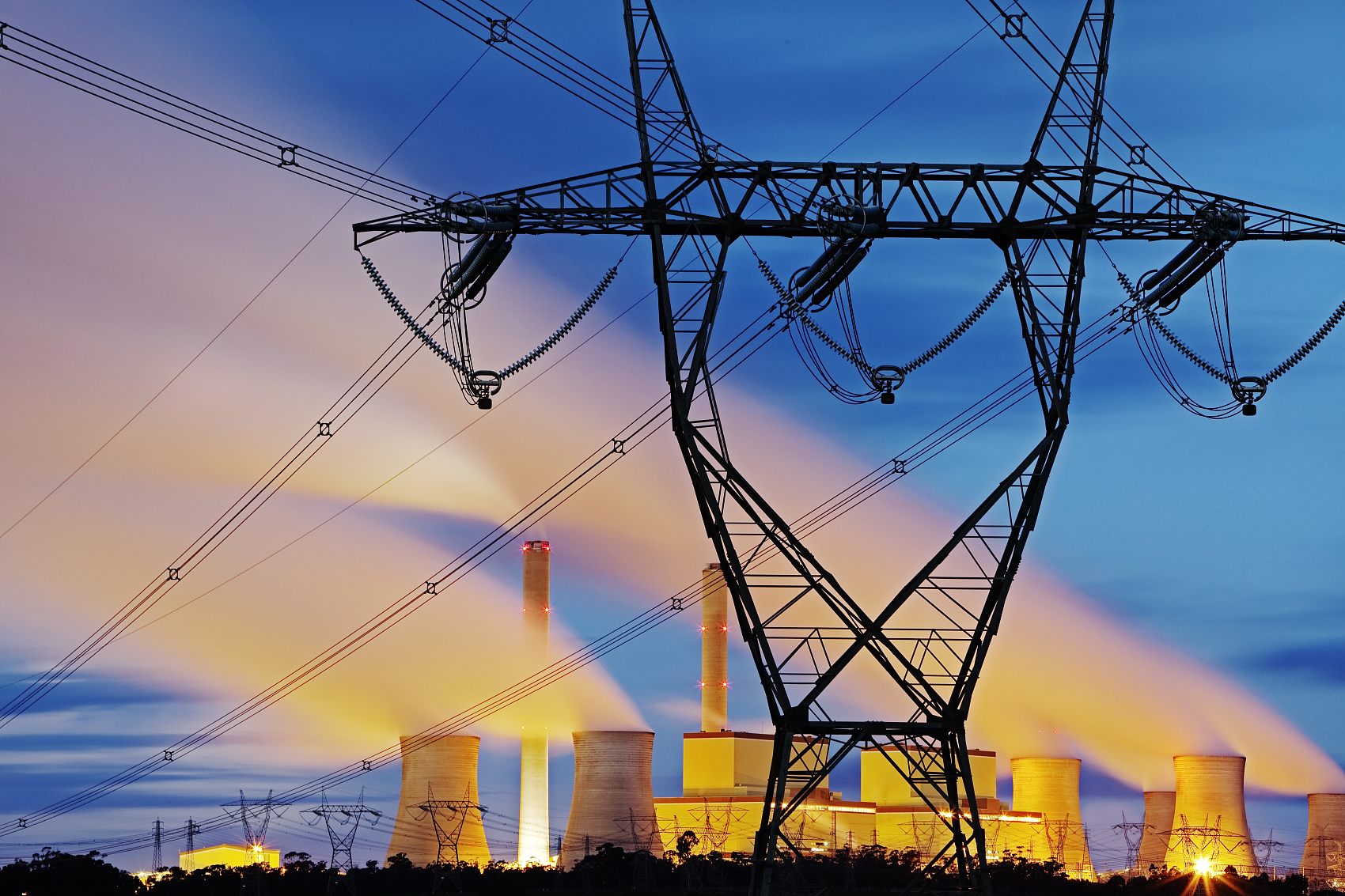
Microsoft is in exclusive negotiations with Chevron and Engine No. 1 regarding a $7 billion power plant project in Texas. Microsoft, Chevron, and the investment fund Engine No. 1 are discussing a long-term agreement related to the construction of a large-scale energy complex in western Texas that will supply electricity to a major data center campus.
American tech giant$Microsoft (MSFT.US)$is currently in exclusive negotiations with American oil and gas behemoth$Chevron (CVX.US)$, along with renowned investment fund Engine No. 1, to reach a long-term agreement that will provide robust support for a large-scale energy complex in West Texas, thereby powering an ultra-large AI data center campus led by Microsoft.
According to media reports citing people familiar with the matter, the planned ultra-large natural gas power plant in West Texas is estimated to cost approximately $7 billion, with an initial power generation capacity of up to 2,500 megawatts, making it one of the largest projects of its kind in the U.S. Due to ongoing negotiations, these sources requested anonymity.
 In a jointly issued statement, the companies said: 'Chevron, Microsoft, and Engine No. 1 have signed an exclusivity agreement regarding a proposed power generation system and power purchase arrangements. The commercial terms have not been finalized, and no final agreement has been reached.'
$Chevron (CVX.US)$and Engine No. 1 had previously disclosed some details of their planned large-scale power plant but did not reveal the end-user. If an agreement is reached with Microsoft, it will secure a major long-term client for the plant's electricity output and help provide significant financing and funding support for its construction. The project could potentially begin official operations as early as 2030, but still requires approval from U.S. tax and environmental regulatory bodies, as well as consensus among the three companies on commercial terms.
It was reported that the Trump administration publicly required large technology companies in February to 'take responsibility for meeting their own electricity needs.' Subsequently, the White House pushed Microsoft, Google, Amazon, and Meta (Facebook’s parent company) to sign commitments requiring large AI data center operators to fully bear the costs associated with relevant energy infrastructure and to increase new power supply independently. The U.S. government's policy direction urging tech giants to self-generate power is also actively promoting the investment theme of 'AI's ultimate destination is electricity' to become increasingly popular.
The American artificial intelligence technology industry appears to be entering a new phase of 'capitalized proactive power procurement' and 'self-power generation'. For global tech giants like$Microsoft (MSFT.US)$、$Alphabet-A (GOOGL.US)$and$Amazon (AMZN.US)$, electric power resources are increasingly becoming a core competitive barrier in the AI era. On one hand, the U.S. power grid is facing interconnection queues, transmission bottlenecks, and shortages of large-scale equipment. PJM, one of the largest grid operators in the United States, has stated that the growth in demand for data centers is outpacing new supply, potentially leading to a power shortfall as early as next year. On the other hand, tech companies closely associated with artificial intelligence technologies have moved beyond merely signing PPAs (long-term power purchase agreements) to directly tying themselves to underlying power generation assets.
$Microsoft (MSFT.US)$Through an agreement with$Constellation Energy (CEG.US)$, efforts are being made to restart the Three Mile Island nuclear power plant to supply electricity to a large-scale data center under its leadership;$Meta Platforms (META.US)$agreed in a revised Louisiana agreement to cover all service costs for its ultra-large data center, and is striving in a Texas contract to integrate over 5,000 megawatts of clean power resources, spearheading the construction of its largest data center worldwide in Richland Parish.
These latest moves by tech giants seem to indicate that whoever can lock in baseload power, large-scale transmission channels, and unit resources faster will be better positioned to expand the next wave of AI computing power. The so-called 'self-built power systems' in reality usually do not mean completely detaching from the grid or creating an isolated network, but rather tech companies themselves investing to secure power sources, covering grid connection and supporting infrastructure costs, and building dedicated or semi-dedicated power projects when necessary.
A $70 billion investment ignites the self-powered era as Microsoft and Chevron make a bold bet on a Texas energy giant.
$Microsoft (MSFT.US)$As a long-term supporter of OpenAI, the developer of ChatGPT, despite its stock price just recording the worst quarterly performance since the 2008 financial crisis, it continues to invest heavily in building data centers to compete in the artificial intelligence field.$Alphabet-A (GOOGL.US)$and$Amazon (AMZN.US)$The ongoing struggle for dominance in the cloud computing sector and absolute leadership in cloud-based AI training and inference platforms continues.
Securing reliable baseload power is becoming a critical challenge — and$Chevron (CVX.US)$the collaboration with Engine No. 1 is expected to address this challenge through their extensive natural gas production in West Texas and large turbine contract projects.
New-generation large data centers often choose locations far from major population centers but closer to fuel sources due to their immense power requirements. The project site selected by Chevron and Engine No. 1 is near Pecos City, close to the Texas-New Mexico border, situated in the heart of the Permian Basin—the largest oil and gas producing region in the United States.
The natural gas produced as a byproduct of oil extraction in the Permian Basin is so abundant that it frequently exceeds pipeline transportation capacity. As a result, some of the natural gas has to be burned off due to the inability to transport it to areas of demand, making the region an ideal location for power plant construction. Landbridge Co. LLC, a major landowner in the area, stated that at least nine large data center projects have been proposed by technology companies in northern and western Texas over the past two years.
The key force behind Chevron's entry into the AI-powered energy sector lies in its long-term collaboration with Engine No. 1, the activist investment firm that successfully initiated a high-profile campaign against Exxon Mobil in 2021. This partnership has already secured orders for seven large natural gas turbines from GE Vernova Inc., and the demand for such equipment is extremely strong, with new customers often facing multi-year waiting periods.
$Chevron (CVX.US)$It was stated that this major power project located in Pecos is expected to commence operations by 2027 and will gradually increase its generation capacity to 2,500 megawatts within three years. According to the U.S. Department of Energy, this is equivalent to the power output of more than two typical nuclear reactors. If successful, this large-scale power plant could eventually expand to a maximum capacity of 5,000 megawatts.
Under the entity name 'Energy Forge One LLC,' Chevron has applied for several tax incentives from local governments in West Texas. Its air emissions permit application submitted to the Texas Commission on Environmental Quality was deemed administratively complete in October.
The endgame of AI is electricity, and a 'super bull market' in electric power stocks is set to震撼来袭震撼来袭震撼来袭震撼来袭震撼来袭.
With the Trump administration pushing American tech giants into the 'self-powered' era,$Microsoft (MSFT.US)$、$Alphabet-A (GOOGL.US)$and$Meta Platforms (META.US)$major players have recently been transforming electricity from a public utility into a proprietary factor of production tied to supercampuses of AI data centers through long-term purchase agreements, co-located gas units, nuclear restarts, supporting transmission infrastructure, and cost-sharing arrangements.
This policy orientation toward 'self-power generation' objectively transforms AI data centers from heavy electricity consumers into 'power infrastructure investors,' shifting demand from mere 'grid connection capacity' to comprehensive capital expenditures (CAPEX) on full sets of power equipment, including self-owned power sources, grid-connected systems, and campus-specific distribution networks. This implies that AI, often referred to as an 'electricity-guzzling behemoth,' is poised to trigger an unprecedented 'super bull market' for electric utilities.
In his State of the Union address to Congress, Trump stated that technology companies would be required by the government to build dedicated-level power supply systems for their expanding AI infrastructure rather than drawing additional power from local grids or significantly increasing the load. Chevron made it clear last year that its gas-fired power plants for data centers would initially bypass the existing transmission grid to mitigate the risk of raising residential electricity prices. This marks the beginning of a 'power-grabbing' era for American tech companies and the advent of a 'contract-based self-power generation' era.
$Alphabet-A (GOOGL.US)$、$Microsoft (MSFT.US)$as well as Meta Platforms, the parent company of Facebook.$Meta Platforms (META.US)$The global AI data center construction and expansion process, which is currently being driven forward with great momentum, increasingly highlights the importance of power resource supply. This is why the investment theme 'the ultimate limit of AI is electricity' is gaining significant traction. More notably, if the 'self-powering' pathway becomes institutionalized across the United States and even in Europe and other regions, it will undoubtedly systematically shift a substantial portion of AI capital expenditure toward power equipment and grid technology stacks.
The logic behind global capital markets recently promoting power equipment and grid chains as the 'new main theme' is clear: the supercharged arms race in AI has extended demand from GPU/TPU/AI server computing clusters to power generation equipment (gas turbines), transformers/switchgears, transmission and distribution capacity expansions, grid connection projects, and dispatch software. From a power systems engineering perspective, 'self-power generation' does not equate to 'off-grid operation'; more commonly, it involves Behind-the-meter power sources (large gas turbines, renewable energy + storage, or even nuclear PPAs) combined with dual redundancy via utility grid connections.
For instance, Siemens Energy, the European industrial giant, is benefiting significantly from AI-driven demand for gas turbines and grid equipment, with its performance and stock price directly linked to the 'AI data center construction boom.' It specifically highlights the power infrastructure demands driven by North America's AI construction progress. E.ON, Europe's largest grid operator, is also ramping up investments to prepare for the large-scale expansion of AI data centers in Europe, and the utility sector of the European stock market has become one of the beneficiaries of AI-related trends.
Editor/Melody