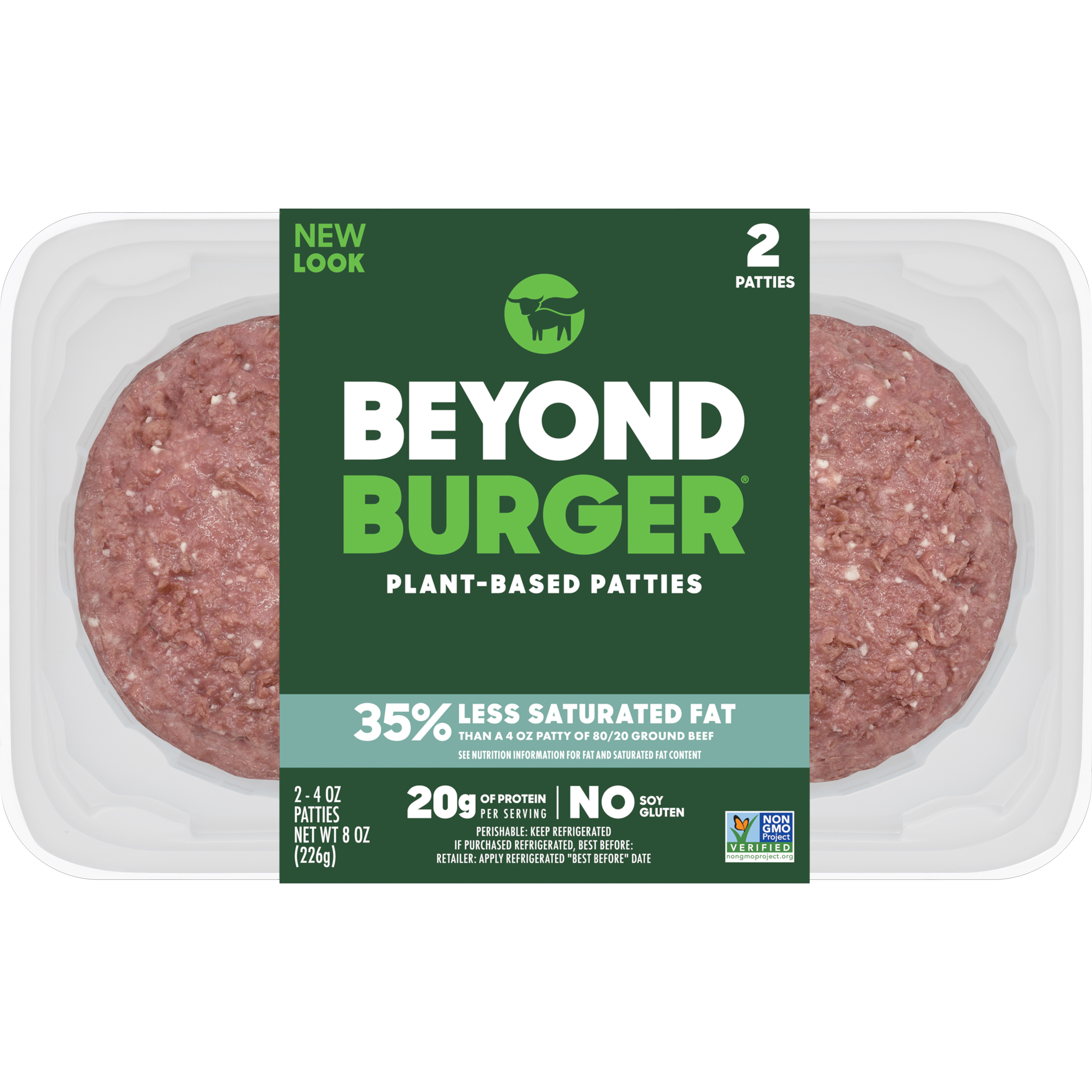
After two rounds of release delays, Beyond Meat (now officially renamed Beyond The Plant Protein Company, BYND.US), a pioneer in the global plant-based meat industry, recently disclosed its financial report for the fourth quarter and full year of 2025. The report shows that the company’s revenue has continued to decline significantly, hitting the lowest annual revenue record since its listing. Losses have expanded notably, and multiple delays in financial disclosures due to internal control issues have led to a drop in share price, resulting in a delisting warning from Nasdaq. Facing the persistent weakness in industry demand, this former capital market star is initiating a comprehensive brand transformation, downplaying the 'meat' label, and betting on 'low-controversy' new products like sparkling protein drinks in an attempt to break through into new sectors and reverse its performance.
Core performance metrics collapse across the board, with revenue hitting a new low since the IPO.
In the fourth quarter of 2025,$Beyond Meat (BYND.US)$the results once again fell short of Wall Street expectations. Financial data reveals that during the period, the company achieved net revenue of $61.6 million, a significant year-over-year decline of 19.7%, falling below the analysts’ average forecast of $62.6 million. The core drag on revenue came from sales volume, with product sales declining 22% year-over-year, accompanied by varying degrees of sales contraction across all channels.
Profitability showed even more dismal results. In Q4, the company’s adjusted EBITDA loss reached $69 million, far exceeding the market-expected loss of $19.8 million and significantly widening from a loss of $26 million in the same period last year. Gross profit plummeted 86% year-on-year to $1.4 million, with gross margin plunging from 13.1% in the same period of 2024 to just 2.3%, bringing profitability close to rock bottom.
 At the same time,$Beyond Meat (BYND.US)$The company provided a pessimistic outlook for the first quarter of 2026, projecting net revenue between $57 million and $59 million, significantly lower than the market consensus of $66.8 million, citing 'high uncertainty' in the current operating environment. Following the earnings release, the company's stock plummeted approximately 12% in after-hours trading.
On an annual basis, the company delivered its worst performance since going public. For the full year of 2025, cumulative revenue amounted to $275.5 million, a year-on-year decline of 15.6%. Annual gross profit plunged 82% year-on-year, while operating losses doubled to $332.7 million, including a $38.9 million compensation related to trademark litigation. During the year, the company implemented multiple rounds of layoffs to reduce operating costs.
Notably, thanks to nearly $549 million in cash proceeds from debt restructuring completed during the year, the company achieved a net profit of $220 million in 2025, successfully reversing a net loss of $160 million in 2024. This debt restructuring also helped reduce financial leverage, extend debt maturities, and bolster balance sheet liquidity, providing limited financial cushion for future transformation.
Weak demand across all channels, compounded by internal control risks and a delisting crisis.
$Beyond Meat (BYND.US)$Behind the ongoing pressure on performance lies a demand winter for the plant-based meat industry as a whole, along with the company’s complete collapse in all-channel operations.
On the demand side, with persistently high inflation in Europe and the United States, consumer price sensitivity has increased significantly, leading to a preference for cheaper fresh animal meat products over higher-priced plant-based processed foods. This has resulted in continued weak demand for Beyond Meat’s core products. Founder and CEO Ethan Brown acknowledged that the company’s performance directly reflects the ongoing headwinds faced by the plant-based meat category. According to NielsenIQ data, overall sales of plant-based meat products in the U.S. have declined cumulatively by 26% over the past two years.
On the channel front, the company's full-channel revenue in the fourth quarter suffered across the board, with international markets bearing the brunt of the downturn. In the U.S. domestic market, retail revenue fell by 6.5% year-over-year, primarily due to weak category demand and a reduction in distribution channels for certain products; foodservice revenue plummeted 23.7% year-over-year, mainly because of the expiration of a chicken product sales contract with a fast-food chain in the prior year, compounded by continued softness in end-user demand.
The performance in international markets was even more dismal, with retail revenue plunging 32.5% year-over-year, largely affected by declining hamburger category sales in the EU market and contraction in some Canadian retail channels; foodservice revenue also dropped nearly 32% year-over-year, as orders for hamburger and chicken products from multiple fast-food chain customers significantly decreased. For the full year 2025, the company’s retail and foodservice channel revenues declined 17.5% and 18.1% year-over-year, respectively.
On the internal control and capital markets front,$Beyond Meat (BYND.US)$risks have been continuously accumulating. Due to material weaknesses in internal controls related to inventory accounting, including issues with overstock or obsolete inventory valuation, the company currently cannot estimate when the annual report will be formally submitted. This marks yet another consecutive delay in financial disclosures—back in the third quarter of 2025, the company had postponed its earnings release due to the assessment of related asset impairment expenses.
Meanwhile, the company's stock price hit a historic low in 2025, briefly becoming a "meme stock" driven by retail investor抱团 (retail investor抱团 refers to coordinated buying by individual investors), repeatedly denying bankruptcy rumors throughout the year. In March 2026, the company received a delisting warning from Nasdaq after its share price remained below the minimum listing requirement of $1 for 30 consecutive trading days. If compliance is not restored by August 31, 2026, the company faces the risk of being delisted.
Launch comprehensive brand transformation, betting on low-controversy new products to break through into adjacent categories.
Faced with the worsening business situation,$Beyond Meat (BYND.US)$the company has launched its largest strategic transformation since its founding, focusing on brand repositioning and category expansion, completely breaking out of the growth bottleneck in the plant-based meat sector.
The company officially completed its brand renaming, changing its long-standing name from Beyond Meat to Beyond The Plant Protein Company, gradually phasing out the “meat” label in its branding. Its strategic positioning shifted from being a single-category plant-based meat substitute producer to a full-spectrum plant protein enterprise. “We are repositioning our brand strategy to enter adjacent category tracks. We believe that our brand, technology, and commitment to clean plant-based nutrition can create greater value for consumers,” Brown said during the earnings call. He emphasized that the brand renaming does not deviate from the core mission of plant protein but rather opens up broader market opportunities.
On the product side, the company is pinning its core growth hopes on “low-controversy” new products, with the key initiative being the Beyond Immerse sparkling protein drink series. The product sold out immediately upon launch, targeting fitness enthusiasts, working professionals, and students, particularly focusing on the GLP-1 user segment. Brown revealed that the company has completed 6-7 rounds of product iterations based on consumer feedback, adjusting the flavor and sweetness of the 20g high-protein version. The optimized product has shown significantly enhanced competitiveness.
Meanwhile,$Beyond Meat (BYND.US)$It introduced fava bean crumbles, a product that does not mimic animal protein, and established the Beyond Test Kitchen platform as the central launch vehicle for all new retail innovations. The company explicitly stated that it will continue to expand into new categories such as beverages, whose market size far exceeds the current plant-based meat segment. At the same time, the company emphasized that while expanding into new categories, it will maintain its leadership position in the plant-based meat sector.
Regarding the industry’s current challenges, Brown noted that the downturn in the plant-based meat sector is closely linked to anti-science rhetoric in public discourse and the divisive political climate in the United States. The resurgence of red meat consumption is viewed as a short-term market fluctuation, and the fundamental long-term drivers of the industry remain intact. He added that the company’s accumulated technology and R&D capabilities in the plant protein space are sufficient to support breakthroughs in new categories.
Editor/Melody