
Guolian Minsheng Securities stated that driven by surging electricity prices, subsidy implementation, and rigid demand expansion, the global residential energy storage industry is entering an upward cycle. Shipments are expected to reach approximately 35GWh in 2025, a year-on-year increase of nearly 50%.
In Europe, geopolitical conflicts have caused electricity prices to double, while intensive subsidies have accelerated the increase in penetration rates; Australia has resolved the imbalance between strong solar power generation and weak storage through subsidies increased to AUD 7.2 billion; in the United States, power shortages triggered by AI data centers and the VPP model support medium- to long-term installations; emerging markets are seeing off-grid rigid demand released due to declining photovoltaic and storage costs.
Surging electricity prices,密集落地的补贴, and structural expansion of the刚需 market are driving the global residential energy storage industry into a new upward cycle of prosperity.
 In its in-depth report on the energy storage industry released on the 31st, Guolian Minsheng Securities pointed out that global residential energy storage system shipments are expected to reach approximately 35GWh in 2025, representing a year-on-year increase of nearly 50%. This marks the industry's entry into a new cycle of demand release after inventory adjustments.
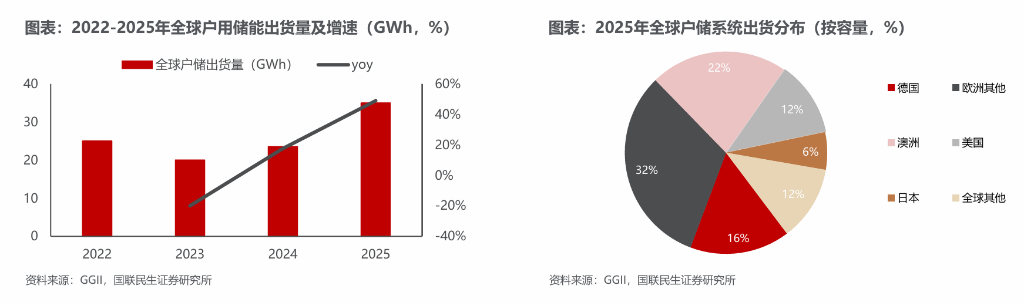
Looking ahead to 2026, geopolitical conflicts in Europe will push up natural gas and electricity prices, Australia’s subsidy budget will be increased to AUD 7.2 billion, power shortages in the United States will continue to deepen, and emerging markets will experience both off-grid rigid demand and declining photovoltaic and storage costs. These four core regions are expected to simultaneously enter an upward installation cycle.
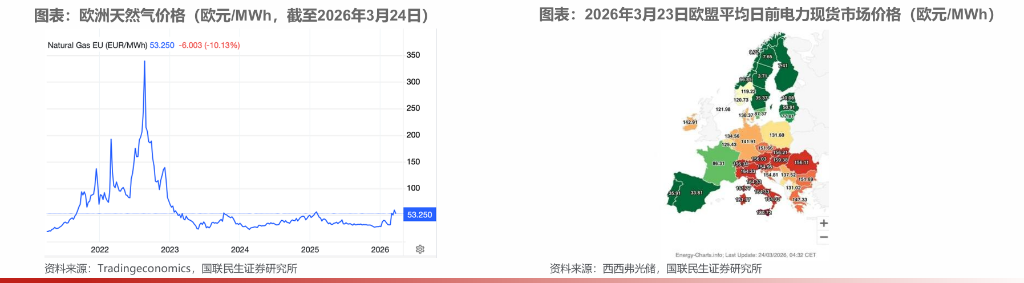
The catalyst for the European market is the most direct. The U.S.-Iran conflict led to the blockade of the Strait of Hormuz, causing the Dutch TTF natural gas price, a benchmark for Europe, to double within weeks of the conflict outbreak, once exceeding EUR 60/MWh. As of March 23, 2026, the average day-ahead spot electricity prices in Italy, Austria, Hungary, and Romania had exceeded EUR 150/MWh, with Germany and the UK surpassing EUR 140/MWh. Meanwhile, multiple countries including the UK, Poland, and Hungary have successively implemented residential storage subsidies, while the phasing out of net metering policies and the widespread adoption of dynamic electricity pricing have further enhanced the economic viability of household storage systems.
Europe: Sharp rise in electricity prices + intensive subsidies catalyze low-penetration markets
The European residential storage market benefits from both structural demand and policy-driven catalysts, with the current sharp rise in energy prices accelerating demand release.
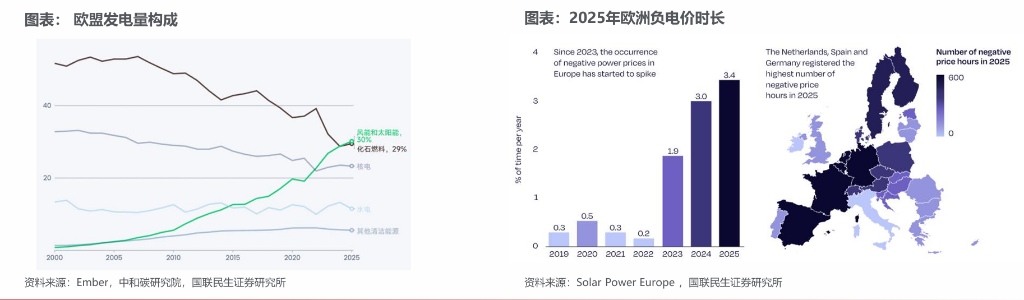
In terms of supply and demand dynamics, by 2025, the proportion of wind and solar power generation in the EU had risen to 30%, surpassing fossil fuels for the first time. However, the temporal mismatch between renewable energy output and electricity load has intensified grid integration pressures. In 2025, negative electricity price durations exceeded 500 hours in Spain, Germany, and the Netherlands, and surpassed 450 hours in Belgium, France, and Poland, highlighting the increasing importance of storage in stabilizing the grid.
Penetration rates remain low, indicating significant room for growth. As of the end of 2024, Europe's rooftop photovoltaic installations totaled approximately 215GW, representing only about 10% of the potential installable capacity of 2,340GW. Between 2022 and 2024, the average penetration rate of residential storage systems in residential photovoltaics across Europe was 20%. By country, in 2024, the penetration rates of newly installed residential storage systems in Germany and Italy reached 79% and 76%, respectively, while those in the UK, Austria, and Sweden ranged between 29% and 54%, indicating that new installations are significantly more active than existing penetration rates.
From an economic perspective, three factors combine to systematically enhance the return on residential storage systems. First, the phasing out of net metering policies incentivizes self-consumption. The Netherlands plans to fully phase out net metering by 2027, while Germany will eliminate fixed feed-in tariffs for distributed photovoltaic systems under 25kW starting in 2027, likely triggering a rush to install systems. Poland, France, Romania, and Croatia have also tightened their net metering policies. Second, the widespread adoption of dynamic electricity pricing opens up opportunities for peak-to-valley arbitrage.
Germany will mandate the implementation of smart meters and dynamic electricity pricing starting January 2025. According to data from the German smart home company Tado°, residential users adopting dynamic electricity pricing saved up to 34% on their electricity bills compared to wholesale average prices in the first half of 2024. Additionally, the refinement of Virtual Power Plant (VPP) mechanisms offers an extra revenue stream. The EU has explicitly allowed aggregators to represent small distributed energy resources in all electricity markets, including wholesale, balancing, and ancillary services. Countries such as Germany, the UK, France, and Italy have subsequently implemented supporting policies.
Subsidy measures are being rolled out intensively. The UK launched the "Warm Homes Program" at the end of January 2026, planning to invest £15 billion by 2030 to promote the adoption of solar and storage systems, with a target of installing rooftop photovoltaic systems on 3 million households. Poland plans to implement the "Household Energy Storage Subsidy" program between 2026 and 2030, with a total budget of 1 billion Polish Zloty, covering 30% of eligible costs. Hungary introduced a household energy storage subsidy with a total budget of 100 billion Forint, covering up to 80% of investment costs per household, with applications opening in February 2026. Germany established a €100 billion Climate Transition Fund (KTF), and Spain received EU approval for a €700 million aid plan, where subsidies for user-side energy storage projects can reach up to 65%.
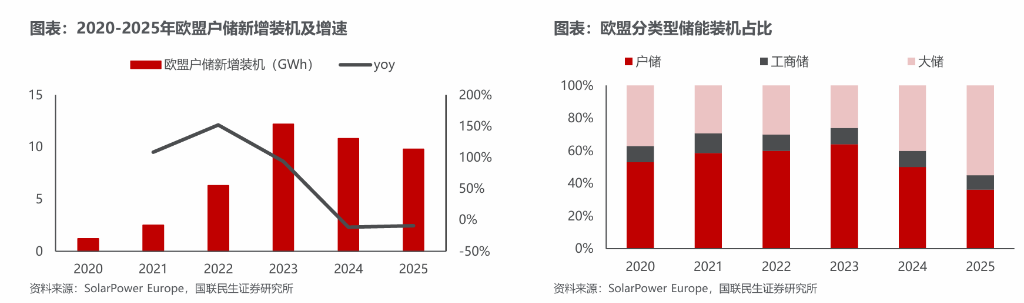
Overall, new installations of residential energy storage in the EU are projected to reach 9.8 GWh in 2025, marking a second consecutive year of decline. Looking ahead to 2026, under the combined influence of intensified subsidy implementation, improved revenue models, and rising electricity prices driven by geopolitical conflicts, European residential energy storage installations are expected to return to a high growth trajectory. If the US-Iran conflict persists, European natural gas prices and electricity costs may rise further, providing additional upward momentum.
Australia: Severe Lack of Energy Storage Despite High Photovoltaic Penetration, Subsidy Effects Significantly Exceed Expectations
The Australian market faces a structural contradiction of high photovoltaic penetration alongside a severe lack of energy storage. Government subsidies have triggered a market response that significantly exceeded expectations.
By the end of 2025, Australia's rooftop photovoltaic installations reached 28.3 GW, surpassing the total capacity of all coal-fired power plants in the country at 22.5 GW. Over 4.3 million households had completed installations, achieving a penetration rate of 39%. The share of rooftop photovoltaic generation increased from 7.2% in 2020 to 14.2%. However, by the end of 2025, only 454,000 households had installed energy storage batteries, resulting in a residential storage penetration rate of just 10.6%, highlighting the significant mismatch.
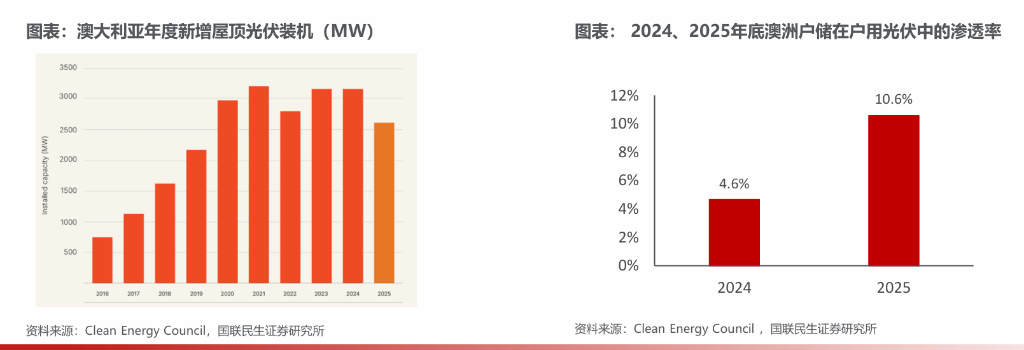
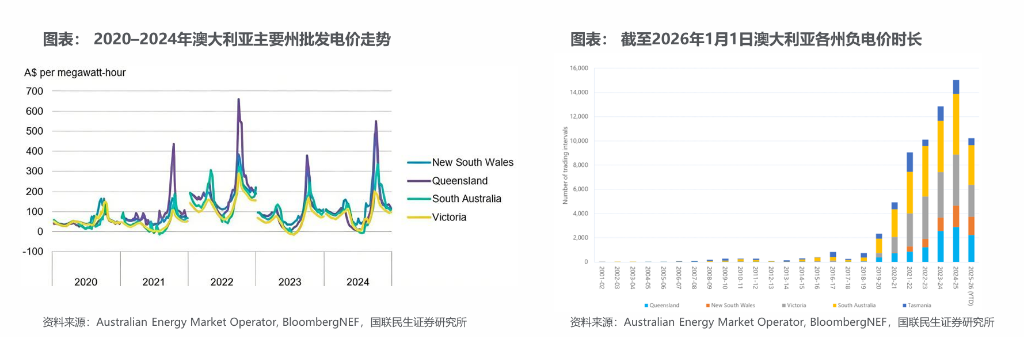
The rapid expansion of renewable energy has led to increased intraday electricity price volatility and frequent negative pricing. In the fourth quarter of 2025, renewables accounted for more than half of Australia’s energy mix for the first time, with 48.4% of trading periods in South Australia experiencing negative prices. Widening peak-to-valley price spreads and frequent negative pricing have created favorable arbitrage opportunities for residential energy storage, enhancing economic incentives for households to install energy storage systems.
Subsidy policies have activated latent demand. In July 2025, the Australian federal government launched a AUD 2.3 billion "Home Battery Subsidy Program," offering subsidies of up to AUD 372 per kWh for energy storage systems with capacities ranging from 5 to 50 kWh, roughly covering 30% of installation costs. According to the Clean Energy Council of Australia, 183,000 new residential energy storage systems were added in the second half of 2025, representing a 305% year-over-year increase, with a total of 269,000 new installations for the year. In December 2025, the Australian government increased the subsidy budget to AUD 7.2 billion and introduced a tiered subsidy mechanism based on capacity, aiming for 40 GWh of new energy storage capacity by 2030. Guolian Minsheng Securities forecasts that demand for residential energy storage in Australia is likely to maintain strong growth in 2026.
United States: Persistent Deepening of Electricity Shortages, TPO Model and VPP Jointly Support Medium- to Long-Term Installations
After experiencing policy shocks in 2025, the U.S. residential energy storage market is expected to sustain high medium- to long-term demand, supported by electricity shortages and emerging business models.
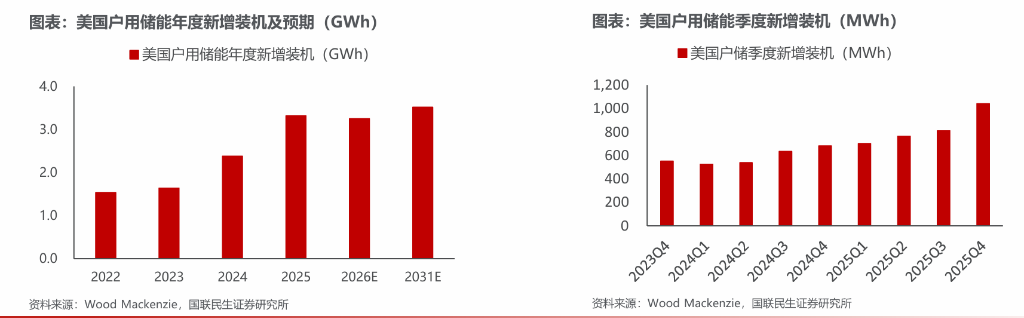
In 2025, the "Beautiful" Act will eliminate the 30% tax credit for residential photovoltaic and energy storage projects, triggering a surge in installation demand. According to Wood Mackenzie data, the newly installed capacity of U.S. residential energy storage in 2025 is expected to reach 2.685GW/3.318GWh, with year-on-year growth in power and capacity at 92% and 39%, respectively. Looking ahead to 2026, residential systems under third-party ownership (TPO) models are classified as commercial projects and can continue to benefit from tax credits. Users may adopt system usage through leasing or power purchase agreements, potentially serving as an alternative to self-owned photovoltaic and storage systems and providing market continuity after the policy phase-out.
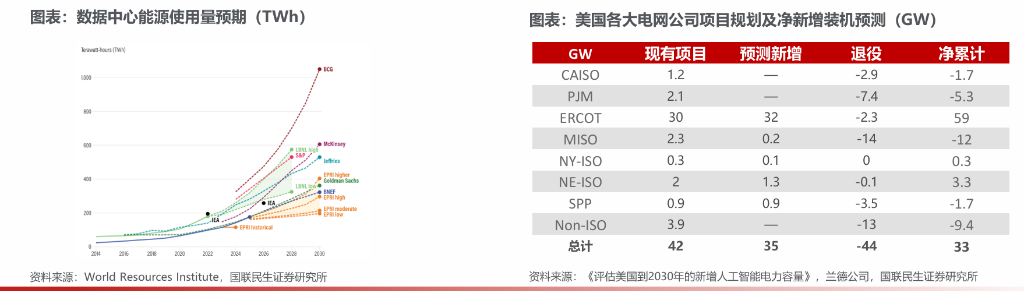
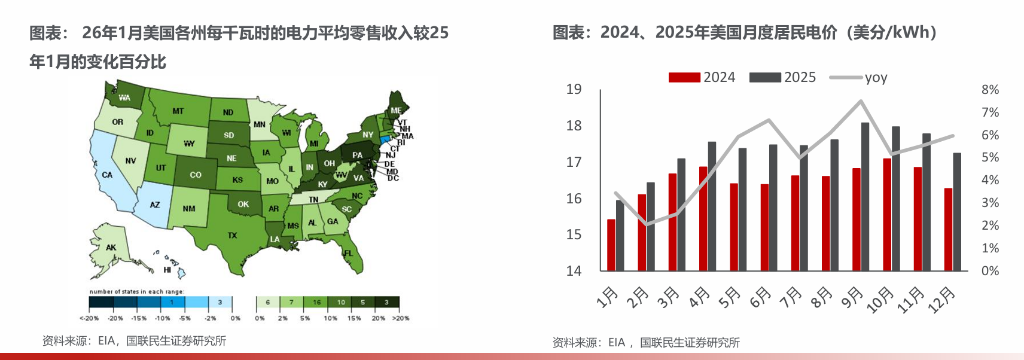
Power shortages represent a deeper structural driver. The proliferation of AI data centers, coupled with the retirement of traditional power plants, has led to a widening gap between electricity supply and demand. According to estimates by the RAND Corporation, by 2030, electricity demand driven by AI data centers is projected to reach 158 to 253GW, while the net available capacity increase of the U.S. grid will be only about 33GW. Supply-demand imbalances are already evident in pricing: the average U.S. residential electricity price rose by 5% year-on-year in 2025 to 17.30 cents/kWh and further increased by 9.5% year-on-year in January 2026, with Virginia and Florida witnessing respective increases of 13.8% and 10.4%. In February 2026, a severe winter storm left over 500,000 users without power, once again exposing vulnerabilities in the grid.
The Virtual Power Plant (VPP) mechanism is becoming increasingly sophisticated, further broadening revenue sources for residential energy storage. Currently, owners of residential energy storage batteries in approximately half of U.S. states have the opportunity to join VPPs, providing grid services and earning compensation. The U.S. Department of Energy aims to increase VPP installed capacity to 80 to 160GW by 2030 to meet 10% to 20% of national peak load demands. Wood Mackenzie forecasts that U.S. residential energy storage installations will likely remain high from 2026 to 2031.
Emerging Markets: Electricity Shortages Drive Demand While Cost Reduction Unlocks Off-Grid Potential
Residential energy storage demand in emerging markets exhibits distinct characteristics of essential needs, with declining costs of photovoltaic and storage systems unlocking latent purchasing power.
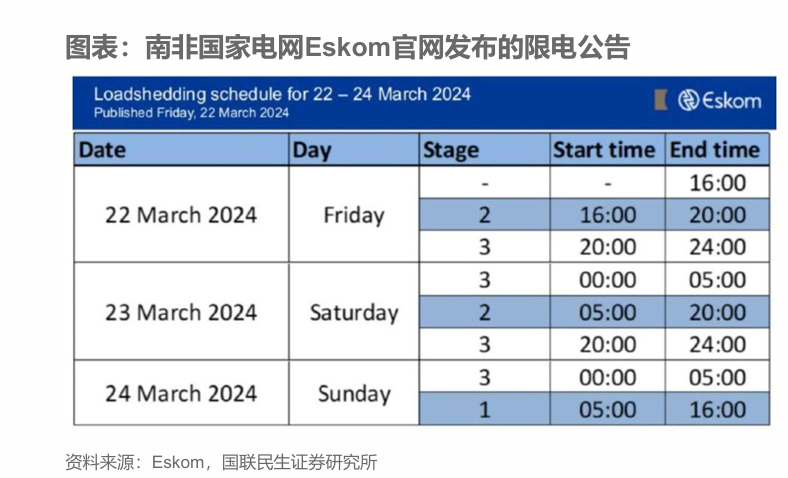
Regions such as India, Pakistan, Southeast Asia, and Africa face long-term instability in electricity supply due to fuel shortages, weak power generation capabilities, and aging grids, leading to frequent blackouts and rising electricity prices. Declining costs of photovoltaic and storage systems have enabled more households to afford installations. Residential photovoltaic and storage systems not only ensure power supply during outages but also reduce overall electricity costs through self-generation and consumption, providing sustained support for robust demand.
Geopolitical conflicts in the Middle East are also catalyzing factors. Turmoil in regions such as Iraq, Israel, and Lebanon has resulted in frequent power shortages and outages, underscoring the critical need for residential energy storage. U.S.-Iran tensions may exacerbate power supply challenges in the Middle East, compounded by post-disaster reconstruction needs, potentially accelerating residential energy storage installations in the region.
Editor/Melody