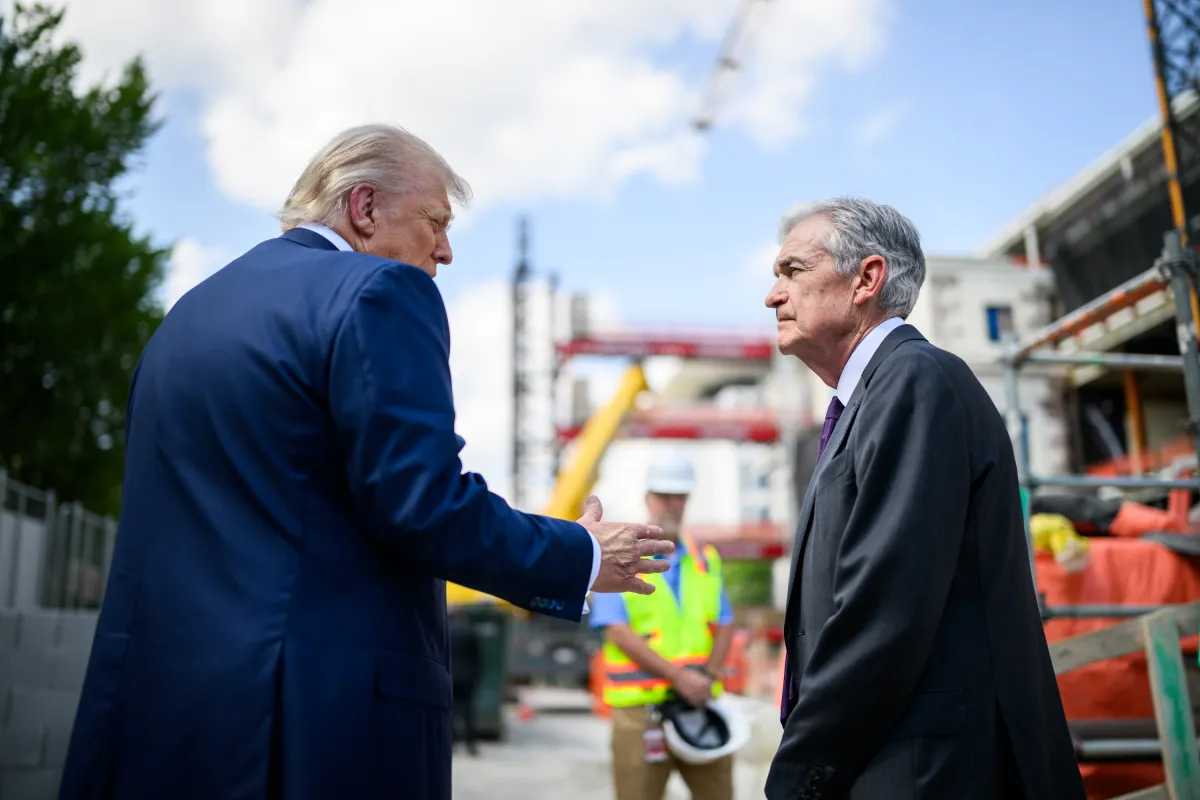
In the five weeks since the Iran conflict began, a consistent pattern has emerged in the U.S. stock market: gains at the start of the week followed by declines beginning Thursday. Iranian media mocked Trump, stating that 'his speech objectives have failed just as his military objectives have,' noting that the market has already seen through this.
The Middle East conflict has now lasted five weeks, creating shocks to the global economy. During this period, the U.S. stock market has developed a predictable pattern: strong rallies at the start of the week, consolidation midweek, and then—like clockwork—a downturn every Thursday and Friday.
European stock markets, emerging markets, and even certain U.S. Treasury bonds have shown similar dynamics to varying degrees. However, $S&P 500 Index (.SPX.US)$this pattern is particularly pronounced. Since the outbreak of the Iran conflict, the index has cumulatively risen during the first three trading days of each week but plunged by 9% on Thursdays and Fridays.
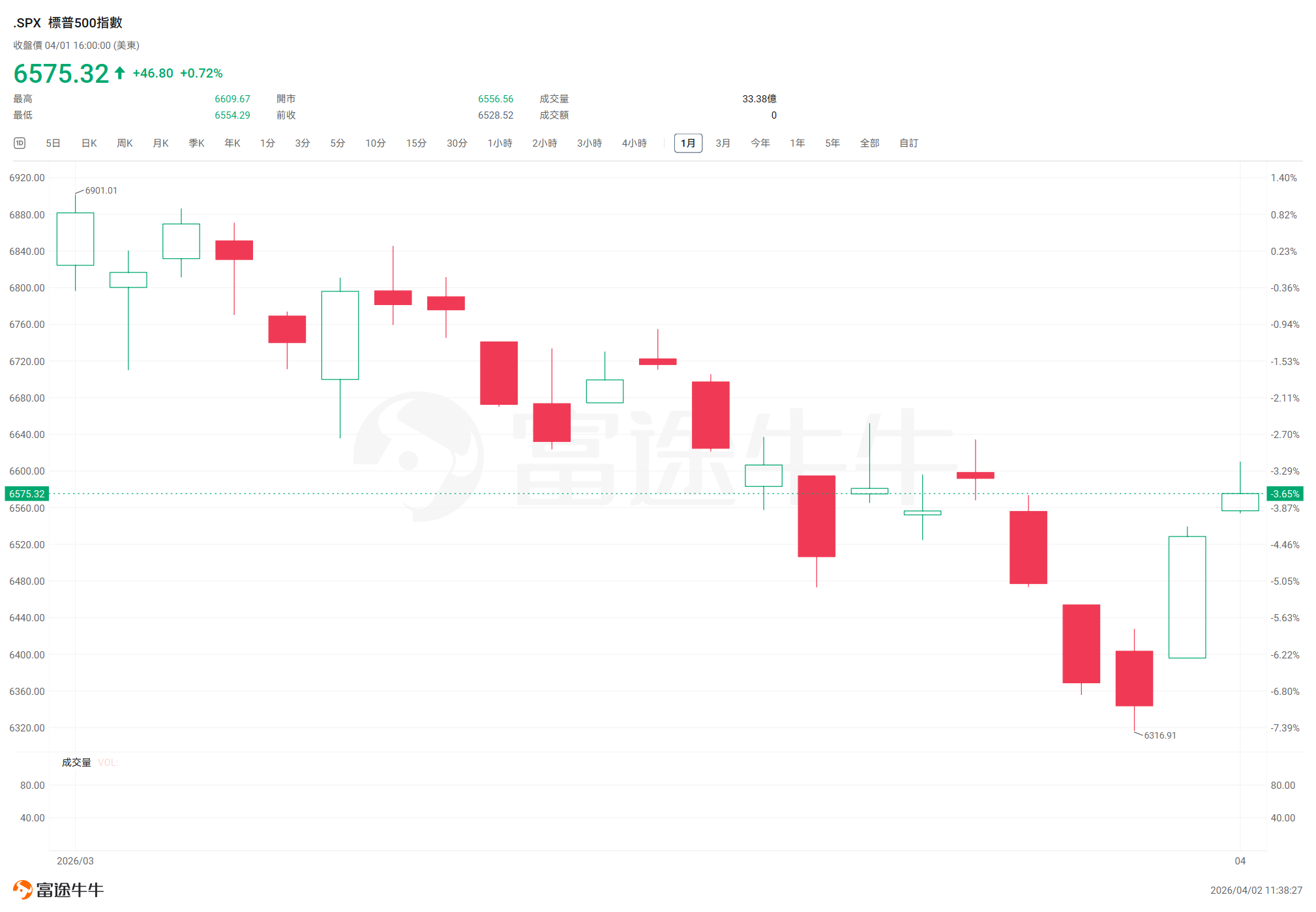
 Experts say the logic behind this is straightforward. Weekends represent a two-day non-trading period—or three days if it includes a holiday. During this time, many developments could occur in the conflict—especially given Trump’s penchant for making major moves when the market is closed—further impacting the global economy. As a result, many investors tend to reduce their equity holdings before the weekend.
Joe Gilbert, portfolio manager at Integrity Asset Management, stated, 'Entering a trading void with unknowable risks' is an unsettling proposition. 'At this point, reducing risk ahead of the weekend feels easier than holding positions.'
This week started with exceptionally bullish sentiment, with the S&P 500 rising more than 3%, driven by optimism that Trump was eager to extricate the U.S. from the Iran conflict he himself initiated.
However, the daily trading patterns formed during the war serve as a warning sign for those hoping this marks the end of the sell-off. Steve Sosnick, chief strategist at Interactive Brokers, noted that bullish sentiment typically gives way to risk aversion as the week progresses.
Trump has just addressed the nation regarding the situation in the Iran conflict. His speech did not provide reassurance and should be a cautionary note for investors on Thursday. His recent remarks are consistent with his style since launching airstrikes alongside Israel—oscillating between declaring imminent victory and threatening significant escalation against Iran.
Both sides continue to exchange missile strikes. After recording the strongest rebound since May on Tuesday, the upward momentum in U.S. stocks slowed on Wednesday. Trump stated that day that he would continue to 'bomb Iran into oblivion' until the Strait of Hormuz—a key channel for Middle Eastern oil exports—was reopened. Iranian officials dismissed the threat, saying they were not intimidated by Trump's 'absurd theatrics.'
Due to persistently high oil prices and the lack of signs of a swift ceasefire, Sosnik doubts whether this week's rally can be more sustainable compared to the initial rallies of previous weeks. 'I think the downward trend is still ongoing,' he said, 'until the situation truly returns to some degree of normalcy.'
According to Iran's Tasnim News Agency, Iranian authorities stated that the intent of Trump's speech today was to justify war and alleviate deep public concern within the United States. However, the overwhelming negative reaction to Trump's speech has completely backfired on his objectives. Currently, aside from White House members (who have no choice but to support him), no one considers Trump's efforts successful! Trump's failure in achieving the goals of his speech mirrors his failure in achieving military objectives. The market has thoroughly seen through Trump's tactics and reacted negatively.
Trump’s renewed warning to Iran may bring greater volatility.
Following Trump’s warning that the U.S. would deliver an 'extremely severe' blow to Iran within two to three weeks, Asian stock markets fell and the dollar rose during Thursday’s session, continuing market tensions. This disappointed traders who had hoped for clearer signs of an end to the conflict.
Jumpei Tanaka, Head of Investment Strategy at Pictet Asset Management Japan Ltd., stated that Trump’s speech did not offer what the market had hoped for—namely, a signal pointing to the end of the conflict. On the contrary, he hinted at the possibility of escalation, stating that the U.S. could launch an extremely severe strike against Iran within the next two to three weeks and warning that if no agreement is reached, Iran’s power plants could become targets. Consequently, these remarks were interpreted as negative factors for the stock market.
Although everyone hopes to move past the current predicament, much remains unresolved from the events in the Middle East over the past month. The question now is how these developments will impact the global economy over the coming quarters. With the occurrence of the oil shock, the likelihood of the Federal Reserve cutting interest rates has further diminished.
Tomo Kinoshita, Global Market Strategist at Invesco Asset Management Japan, noted that as it becomes increasingly clear that the war is not moving toward resolution, the market has again shifted toward falling stock prices, declining bond prices, and a stronger dollar. There is growing awareness that the conflict with Iran could have widespread spillover effects on the economies of many countries and regions.
Carol Kong, Economist and Currency Strategist at Commonwealth Bank of Australia, stated that Trump appears to have failed to assure the market that the war will de-escalate from this point onward, nor did he indicate that the U.S. will help ensure access to the Strait of Hormuz. The reality is that U.S. military assets continue to amass in the region, leaving the possibility of a ground offensive still on the table. This means the dollar will likely remain well-supported in the short term.
Seek more market analysis?Ask Futubull AI!Accurate answers, comprehensive insights, seize key opportunities!

Editor/Melody