
As the Middle East conflict enters its fifth week, the global economy continues to be impacted. A predictable pattern has emerged in the U.S. stock market: strong gains at the beginning of each week, narrow fluctuations mid-week, followed by significant declines every Thursday and Friday.
As the Middle East conflict enters its fifth week, the global economy continues to feel the impact, with the U.S. stock market forming a predictable pattern: strong gains at the beginning of each week, narrow fluctuations mid-week, and then, as if on cue, significant declines every Thursday and Friday.
Similar patterns have emerged to varying degrees in European and emerging market stock indices, as well as in some U.S. Treasury bonds. However, this trend is particularly evident in the S&P 500 Index. Since the outbreak of the Iran war, the index has recorded cumulative gains during the first three trading days of each week but has fallen by a total of 9% on Thursdays and Fridays.
 Experts indicate that the logic behind this is not complicated. There are two days (or three days during holidays) over the weekend when trading is suspended, during which further events stemming from the war could shock the global economy. This is especially true given that U.S. President Donald Trump has a habit of initiating major actions when markets are closed. As a result, many investors tend to reduce their equity positions ahead of the weekend.
Joe Gilbert, portfolio manager at Integrity Asset Management, stated that entering a trading halt with unknown risks is an unsettling thought. “Compared to holding positions, it has become easier to reduce risk before the weekend.”
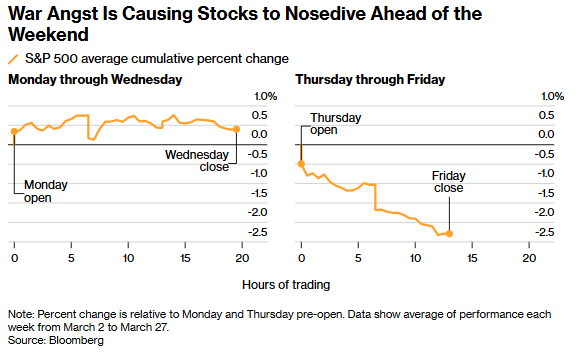
The bullish sentiment at the start of this week was particularly strong, driven by optimistic expectations that Trump was eager to disengage from the conflict he initiated. The S&P 500 once surged over 3%. However, on Thursday morning, Trump, in a televised address, pledged to continue bombing Iran in the coming weeks to 'send them back to their Stone Age.' This statement quickly dampened market optimism. S&P 500 futures fell more than 1%, while oil prices soared, signaling renewed pressure on U.S. stocks for Thursday.
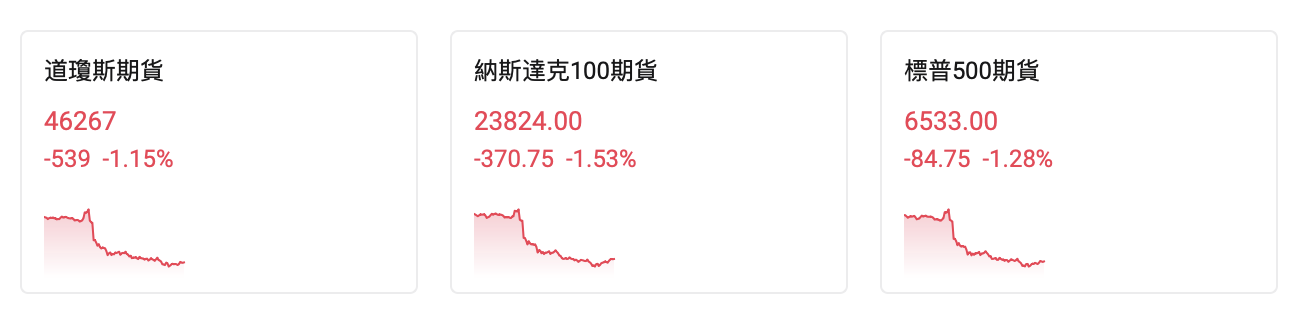
Steve Sosnick, chief strategist at Interactive Brokers, noted that optimism typically gives way to risk aversion as the trading week progresses.
Trump’s national address followed a familiar pattern since the U.S.-led airstrikes began: oscillating between claims of imminent victory and threats of escalating attacks on Iran. Earlier in the day, he used similar rhetoric, stating that he would continue “blowing Iran back to nothing” until the Strait of Hormuz, a critical channel for Middle Eastern oil exports, reopened. Iranian officials dismissed these threats, saying they were not intimidated by Trump's “absurd theatrics.”
Sosnick believes that with oil prices remaining high and no signs of a ceasefire in the near term, the sustainability of this week’s early gains does not appear stronger than those of other weeks. “I think the downward trend will persist,” he said, “until there is concrete evidence of a return to normalcy.”
 Looking to pick stocks or analyze them? Want to know the opportunities and risks in your portfolio? For all your investment-related questions,just ask Futubull AI!

Editor/Doris