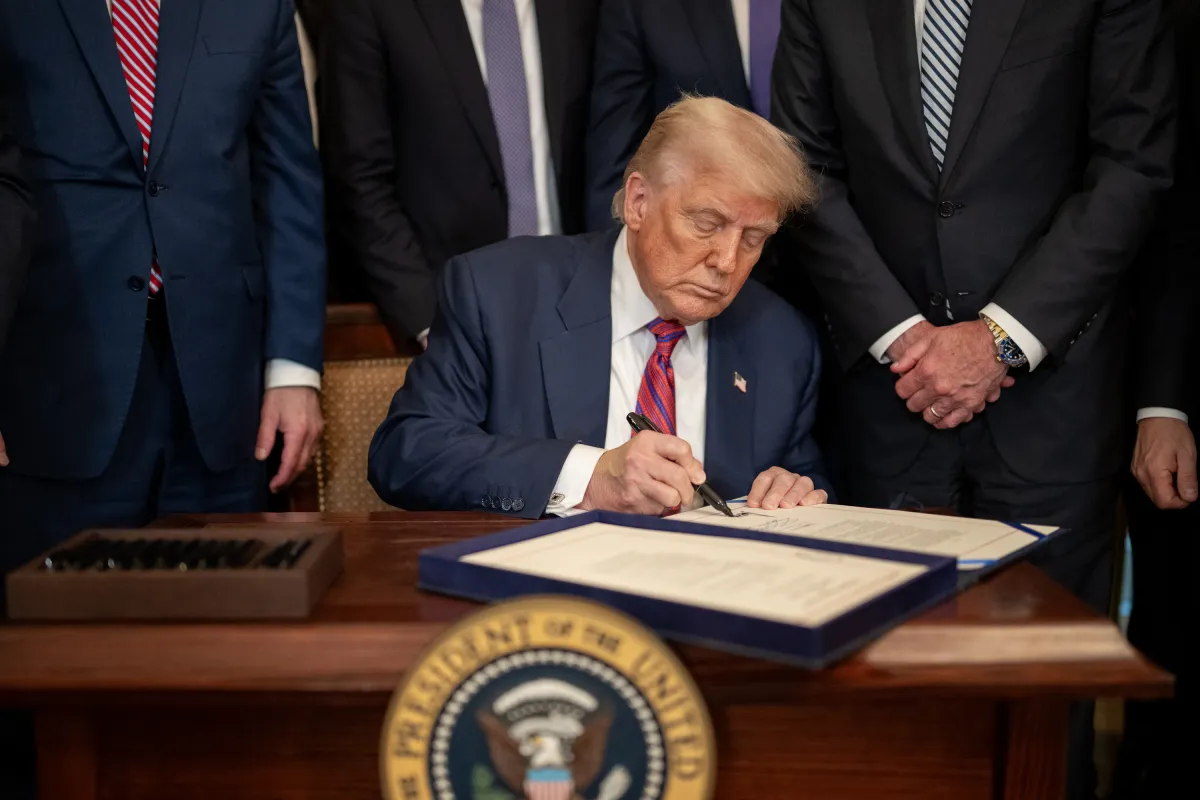
In response to Trump's hints of withdrawal and his demand that oil-consuming countries "take the lead" in ensuring the security of the Strait, the UK announced that it will host an international conference this week on the Strait of Hormuz to discuss plans for restoring navigation in the waterway. The meeting will involve 35 countries, including France, Germany, Italy, the Netherlands, Canada, and others. Countries around the world are seeking a balance between diplomatic mediation and military assurance.
A meeting of 35 countries led by the UK will be held this week to discuss contingency plans for restoring navigation through the Strait of Hormuz. This may represent the latest collective international response following Trump's pressure on global energy consumers to independently secure the Strait.
According to CCTV News, UK Prime Minister Starmer stated on April 1 that the UK Foreign Secretary Cooper will host an international conference on the Strait of Hormuz this week to discuss plans for restoring navigation in the strait. The meeting will involve 35 countries, including France, Germany, Italy, the Netherlands, Canada, and others, in addition to the UK. After the meeting, UK military personnel will convene separately to discuss how to ensure safe and smooth passage through the Strait of Hormuz after the conflict ends.
 The immediate backdrop to the meeting is the withdrawal signal sent by Trump. As previously reported by Wall Street Wisdom, during a national address, he stated that the Strait of Hormuz would "naturally" reopen, explicitly demanding that oil-consuming nations "lead" the effort to secure the passage, while asserting that the US would provide assistance but that relevant countries should assume primary responsibility. Additionally, on March 30, Trump informed his aides that he was willing to end military operations against Iran even if the Strait remained largely closed, citing that forcibly reopening the waterway would exceed the initially planned four-to-six-week combat timeframe. Subsequent efforts to reopen the Strait may be handed over to European and Gulf allies.
Just weeks ago, the Strait of Hormuz handled about a quarter of the world's maritime oil trade, but with the conflict now entering its second month, the number of commercial vessels transiting the strait continues to decline. Asia, as the region most dependent on this shipping route for energy supplies, is facing increasing supply shocks, and governments are under mounting pressure to take action on diplomatic and security arrangements.
The UK hosts a 35-nation meeting, with diplomatic sanctions and military options simultaneously included on the agenda.
According to reports, Starmer stated that after the multilateral meeting hosted by Cooper concludes, UK military personnel will hold a separate meeting specifically to discuss how to ensure safe and smooth passage through the Strait of Hormuz after the conflict ends.
France and Japan have reached a consensus on the positions regarding a ceasefire in Iran and shipping safety. French President Macron, after a phone call with Japanese Prime Minister Sanae Takagi, stated that both sides agreed to call for a ceasefire and ensure safe passage for shipping in the region. Takagi also told the Diet in late March that "international cooperation is crucial for ensuring safe passage through the Strait of Hormuz and reducing tensions as soon as possible." She also held separate phone conversations with the leaders of the Philippines, Malaysia, and the Marshall Islands regarding this matter.
Analysts generally anticipate limited military involvement from Asian countries. Japan’s constitution explicitly prohibits the use of force in overseas conflicts, and for most Asian countries, participation in this meeting primarily signifies engagement in diplomatic consultations rather than a commitment to military intervention.
Asian countries pursue multiple approaches, seeking diplomatic breakthroughs independently.
According to reports, governments across Asia, from India to the Philippines, are engaged in direct negotiations with Iran over the safe passage of vessels while seeking diplomatic solutions within small circles and even exploring barter arrangements.
The report cites sources familiar with the matter stating that while India does not support Iran's control over the strait, it prefers leveraging multilateral forums such as the United Nations to encourage Tehran to open shipping lanes rather than adopting a confrontational approach. Sources also indicated that Indian officials are concerned that if Trump proceeds with occupying Iran’s Kharg Island, it could escalate tensions further.
According to Xinhua News Agency, China and Pakistan jointly proposed a five-point initiative calling for an immediate ceasefire and ensuring the safety of navigation through the Strait of Hormuz, presenting a comprehensive plan to restore peace and stability in the Gulf and the broader Middle East region.
At the energy cooperation level, efforts by all parties are accelerating. India is providing fuel supplies to neighboring countries such as Sri Lanka and Bangladesh. According to a Reuters report citing internal Japanese government documents, a Japan-government-backed oil and gas producer is negotiating with Indian counterparts on a barter deal involving liquefied petroleum gas in exchange for naphtha and crude oil.
Trump hints at withdrawal, increasing pressure on allies to take over
Although Trump mentioned in his speech that the U.S. "will provide assistance," his overall stance has placed greater pressure on allies to act independently. Former Japanese diplomat Masafumi Ishii stated that cooperation with like-minded partners is a prerequisite for progress, and divergent positions among parties will complicate the entire process.
Koichiro Tanaka, former Japanese diplomat and professor at Keio University, believes that the current situation offers a window of opportunity for Japan's diplomacy to revitalize its role, even if not as an active participant: "At the very least, we can maintain some channels of communication."
Notably, according to reports, Trump is also weighing a complex and high-risk operation—seizing Iran's uranium reserves—which adds further uncertainty to the trajectory of the situation.
Analysts: Negotiations may be a temporary measure; long-term constraints still require institutional safeguards
William Klein, who served as a diplomat in the U.S. for over two decades, stated that negotiating with Iran on shipping issues might serve as a temporary solution, but no country wants to see one nation—especially Iran—control the Strait of Hormuz indefinitely.
"Many countries might support a ceasefire agreement that allows the strait to reopen, even if Iran effectively retains control," said the former diplomat, now a partner at FGS Global's Berlin consulting office. "However, in the long term, we anticipate coordinated efforts to establish higher thresholds for restricting Iran's use of its leverage over the waterway."
Editor/Melody